
In today’s hyper-saturated glow of China’s urban nightlife, clubs are often framed as sites of liberation—a neon-drenched sanctuary where the rigid hierarchies of the day dissolve into rhythm. For Beijing-based artist Chen Wei, the dance floor is also a "fictional space" where the psychological tensions of contemporary life are staged, scrutinized, and dissolved. His photography, particularly his series Noon Club, meticulously reconstructs the architecture of China’s nightclub hedonism to reveal something far more sobering: a generation of people caught between the desire for transcendence and the gravitational pull of a tightening social reality.
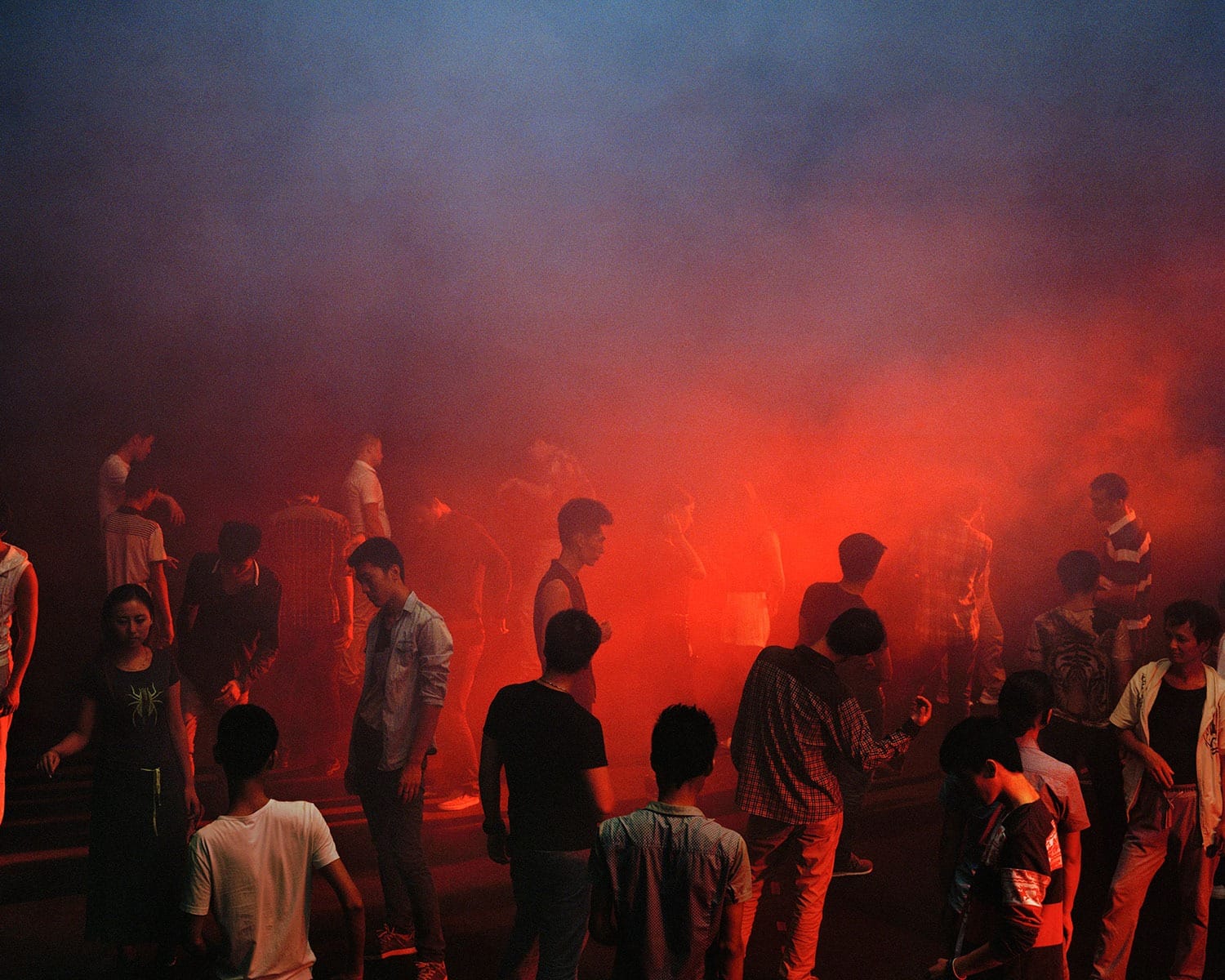
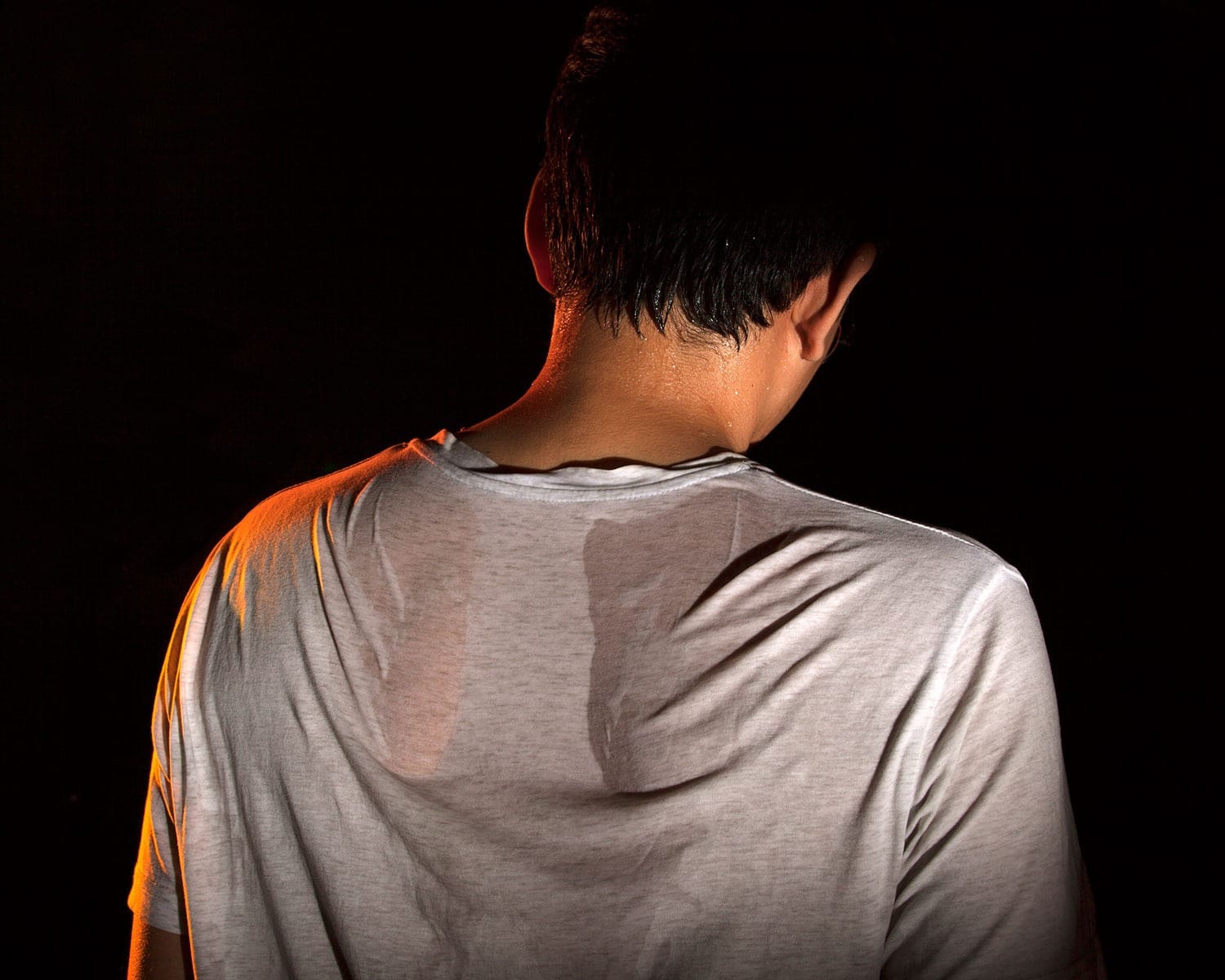
Chen Wei’s photographs do not capture candid moments. Instead, he builds elaborate, diorama-like sets in his studio, handcrafting every detail from the sweat-slicked skin of dancers to the specific tint of a laser beam. In In the Waves, he portrays young clubbers in states of supposed ecstasy, yet their eyes are vacant, their bodies physically divided and isolated even in a crowd. He famously directs his models to fake their enjoyment, exaggerating poses to highlight that clubbing in modern China is often a temporary fix—a performance of freedom that cannot be sustained past the morning light.
This staged quality is a deliberate metaphor for the broader Chinese experience. A Guardian piece analyzing his work notes that nightclubs are one of the few places where large gatherings are permitted, yet Chen shows that even within these walls, there exists an invisible visual discipline.
"In this country, I can't just make whatever I want," Chen told The Guardian. "I know the politics, so I keep myself in check".
This is how his work captures the restlessness and alienation of young creatives in Beijing, by shining a light on the mental toll of living in a state of constant social and political negotiation. It is also why they are aligned with the United Nations Sustainable Development Goals of Reduced Inequalities and Good Health and Well-Being.
The urgency of Chen’s work when it comes to rules, norms, and censorship faced by Chinese creatives has been cast under sharp, tragic light by the recent case of the artist Gao Zhen. One half of the renowned Gao Brothers duo, the 69-year-old artist was detained in August 2024 while visiting family in China. Gao was arrested on charges of "slandering heroes and martyrs"—a law introduced in 2018—with Miss Mao, satirical sculptures of Mao Zedong he created over fifteen years ago, fresh in the mind of authorities. As of late 2025, Gao remains in detention at the Sanhe City Detention Center, with his health reportedly deteriorating and his wife and young son, a U.S. resident and citizen, barred from leaving China under national security exit bans.
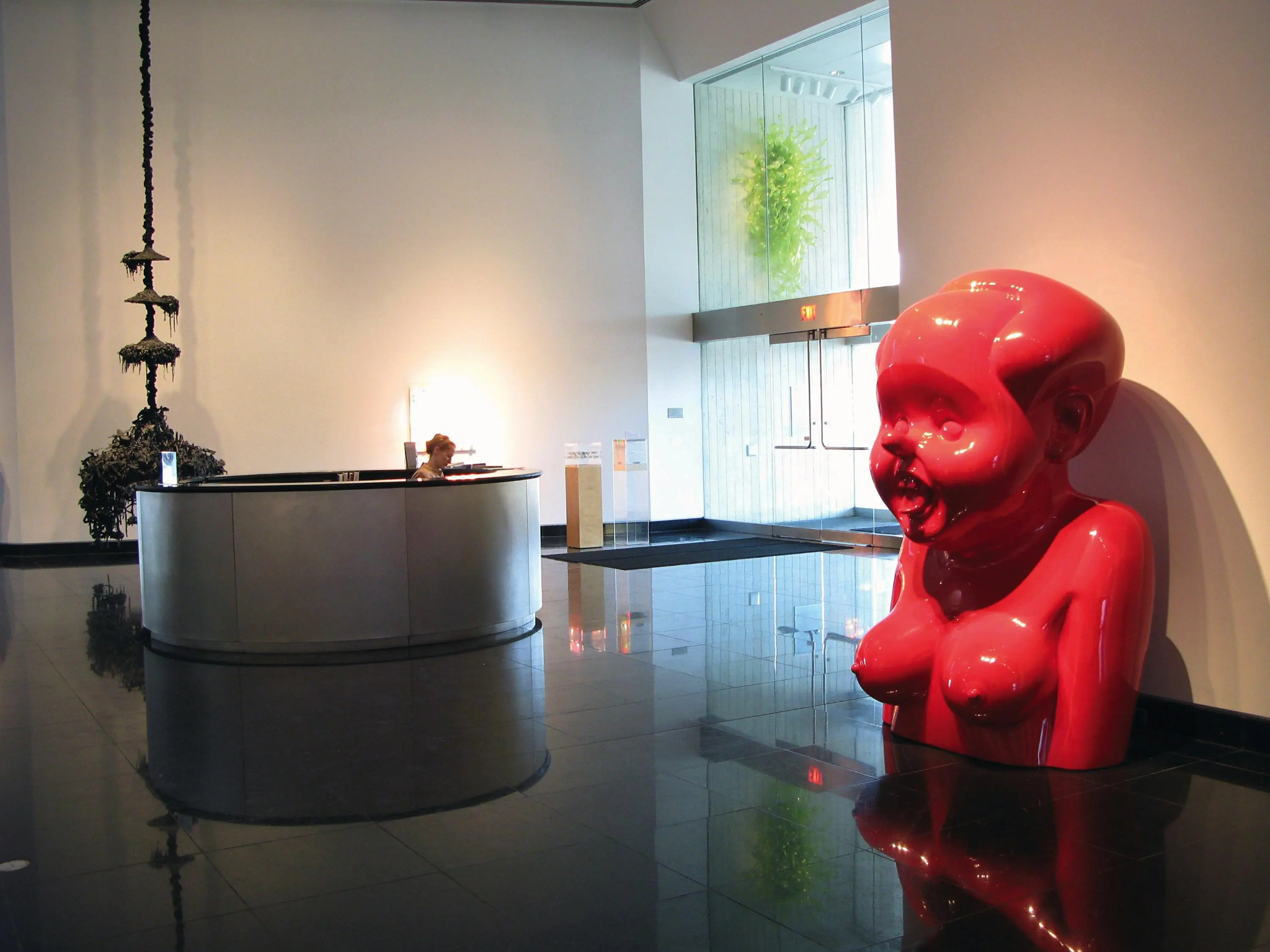
As described by Human Rights Watch, the detention of Gao Zhen marks a chilling "step back toward China's painful past." It illustrates that the fictional safety of the art studio or the nightclub is increasingly porous. Chen Wei’s work uses the club to reflect on a generation that has largely stopped talking about politics in favour of personal pursuits. Gao’s arrest serves as a reminder that despite the young generation’s aversion to politics, it has a way of creeping up into their lives. The state’s memory is long, and its tolerance for critique is shrinking still.
Chen Wei’s "enchanted bodies immersed in smoke and laser beams" are, in many ways, the spiritual descendants of the avant-garde to which Gao Zhen belongs. They are searching for a dream in a space where "waves can either kill you or carry you away." By framing the club as a "laboratory for subversion" that is simultaneously a site of "assimilation," Chen questions who is allowed to be visible and what the cost of that visibility truly is in today’s China.
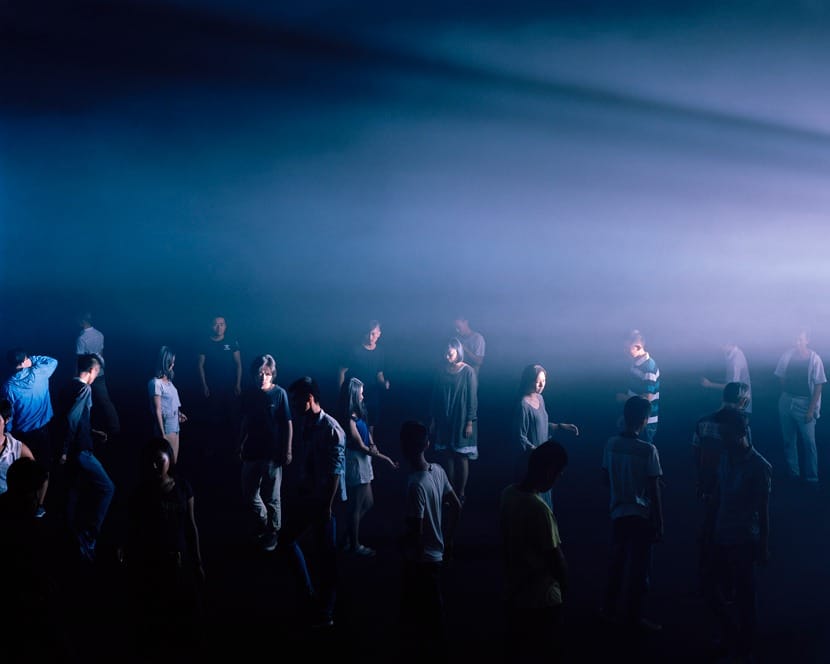
As Gao Zhen awaits a trial that has been described by human rights organizations as a violation of basic rights, Chen Wei’s silent, staged photographs feel more prescient than ever. They become a visual archive of a society at a crossroads, where the intoxicating lights of the present are forever haunted by the shifting shadows of the past.
Find out more about Chen Wei’s work on his gallery’s page here, and follow the developments regarding Gao Zhen’s case via Human Rights Watch here.