
For over a century, the artistic identity of Bali has been filtered through a lens known as "Baliseering"—a colonial-era construct that romanticized the island as a passive paradise and its women as exotic, decorative objects. Subsequently, in the traditional canon of Kamasan painting, arguably Bali’s most sacred classical style, women appear as subservient figures in epics dominated by male heroes.
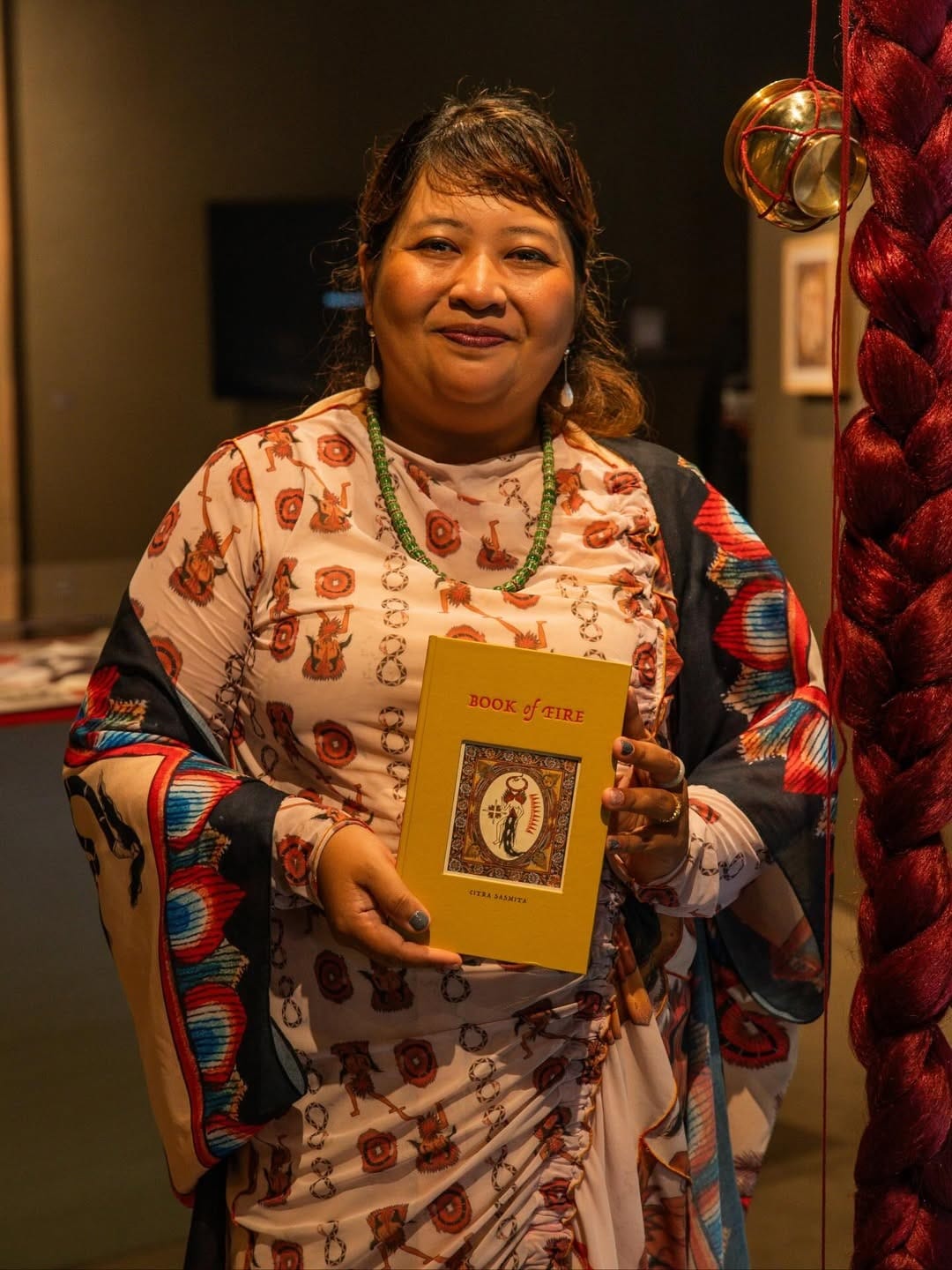
However, Balinese artist Citra Sasmita is taking a torch to this history. In her latest exhibition and first book launch of the same name, Book of Fire at Ruang Arta Derau (RAD), Sasmita "hacks" the tradition, seizing the tools of the patriarchy to paint a new, ferocious genealogy of womanhood in Bali. This is why Sasmita’s work is a confrontation with the systemic erasure of women in Balinese tradition, aligning powerfully with the United Nations Sustainable Development Goals of Gender Equality and Reduced Inequalities.
As a woman artist, Sasmita grew up outside the privileged circles of the ruling Brahmin castes of Bali; hence, it was only natural that she utilize her practice to dismantle the rigid social hierarchies that have historically silenced Balinese women. Her ongoing project, Timur Merah (The East is Red), of which Book of Fire is a crucial chapter, reclaims the narrative authority of women in the history of Kamasan.
Traditionally, Kamasan paintings serve a didactic purpose, retelling moral Hindu epics like the Ramayana. While Sasmita’s work retains its traditional aesthetic—the earthy ochre tones, the two-dimensional puppet-style figures—she fundamentally alters the subjects they represent. In Book of Fire, male protagonists are absent. In their place are women who are neither goddesses nor victims, but elemental forces. They are depicted with multiple limbs, birthing trees, or wielding fire—symbols of an autonomy that transcends the domestic sphere to which they were once confined.
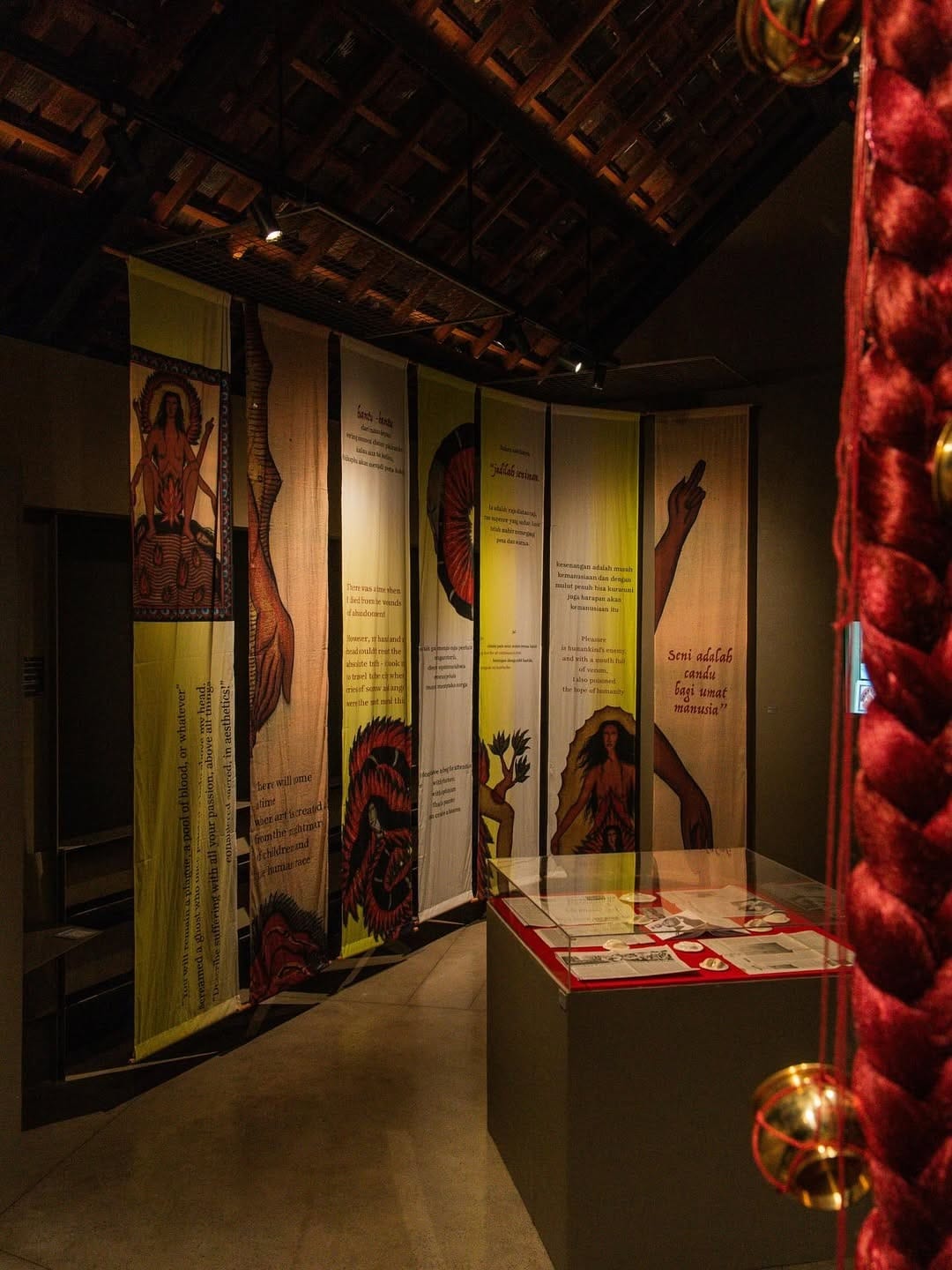
The metaphor of fire is central to this visual manifesto. As noted in recent reviews by Bali Politika, fire in Sasmita’s work is not a tool of destruction, but of purification. It represents the "burning away" of patriarchal dogmas and the colonial gaze that has long trapped the Balinese female body. The women in her paintings are often intertwined with nature, yet they are not passive parts of the natural landscape; they are the active architects of this new cosmology. This imagery then suggests that true equality requires a fiery dismantling of the old structures before a new world can be built.
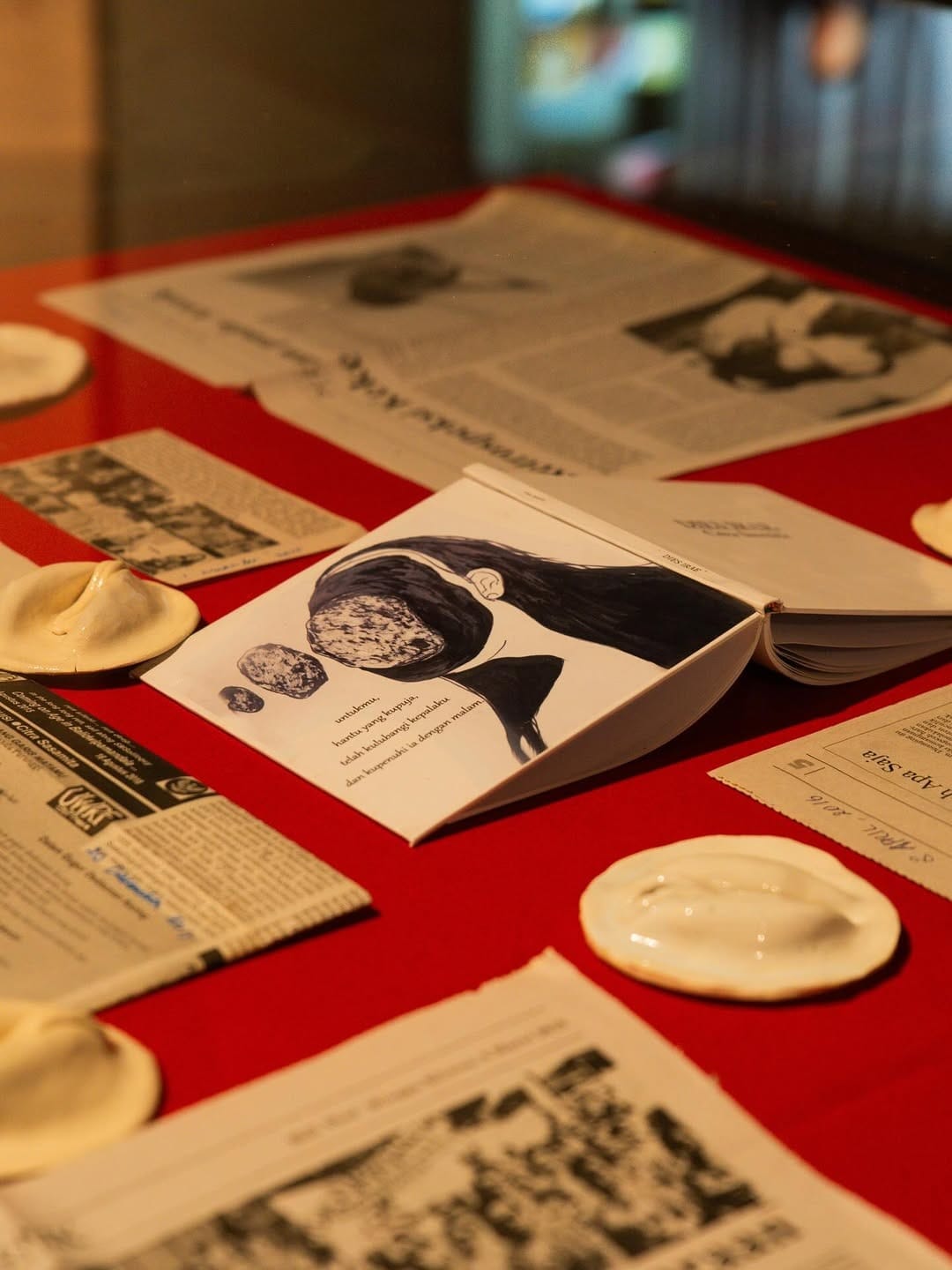
Critics have observed that Sasmita’s work creates a counter-mythology. By depicting female bodies that are grotesque, powerful and unashamed, she challenges the concept of beauty as a currency for women. Her figures are often engaged in acts of mutual care or collective struggle, illustrating that resilience is a communal act. This focus on female solidarity offers a sharp rebuke to the inequalities embedded in both traditional caste structures and the modern art market that pits women artists against each other.
In pieces such as Fragments from Book of Fire, highlighted by Ocula, viewers witness the physical manifestation of this resistance. The canvas becomes a battleground where the female form liberates itself from a "marginalized" experience, asserting itself as a central, sacred force.
Citra Sasmita’s Book of Fire proves that heritage is not only defined by static museum pieces to be preserved in amber, but also a living language that can be negotiated by today’s realities and people. By speaking this ancient language with a modern, feminist tongue, Sasmita ensures that the future of Balinese art includes the voices of its women who were once only allowed to stand in the background.
Explore more of Citra Sasmita’s revolutionary work through her gallery representation or read local critiques of the exhibition here. For more information, check Sasmita’s website on www.citrasasmita.com or Instagram @citrasasmita_work and Ruang Art Derau’s website www.radruangartaderau.com or Instagram @rad_ruangartaderau.