
With over 4.2 billion views on TikTok in early 2024, the coquette aesthetics trend has become one of the most sought-after fashion trends of the moment. The style is defined by the colour baby pink, dreamy dresses and most importantly, an excessive amount of dainty ribbons.
One artist, Dayris Felix, has been especially defining the trend with her paintings of domesticated animals dressed head-to-toe in innocent and girlish coquette attire. The California-based artist’s works, which she primarily shares on her Instagram page, are often found in stray TikToks or Instagram memes discussing the trend, becoming a sort of unnamed heroine that helps to shape the trend’s overall aesthetics. However, her artworks can be interpreted in a not-so-innocent manner, and the same can be said about the coquettish aesthetics trend.
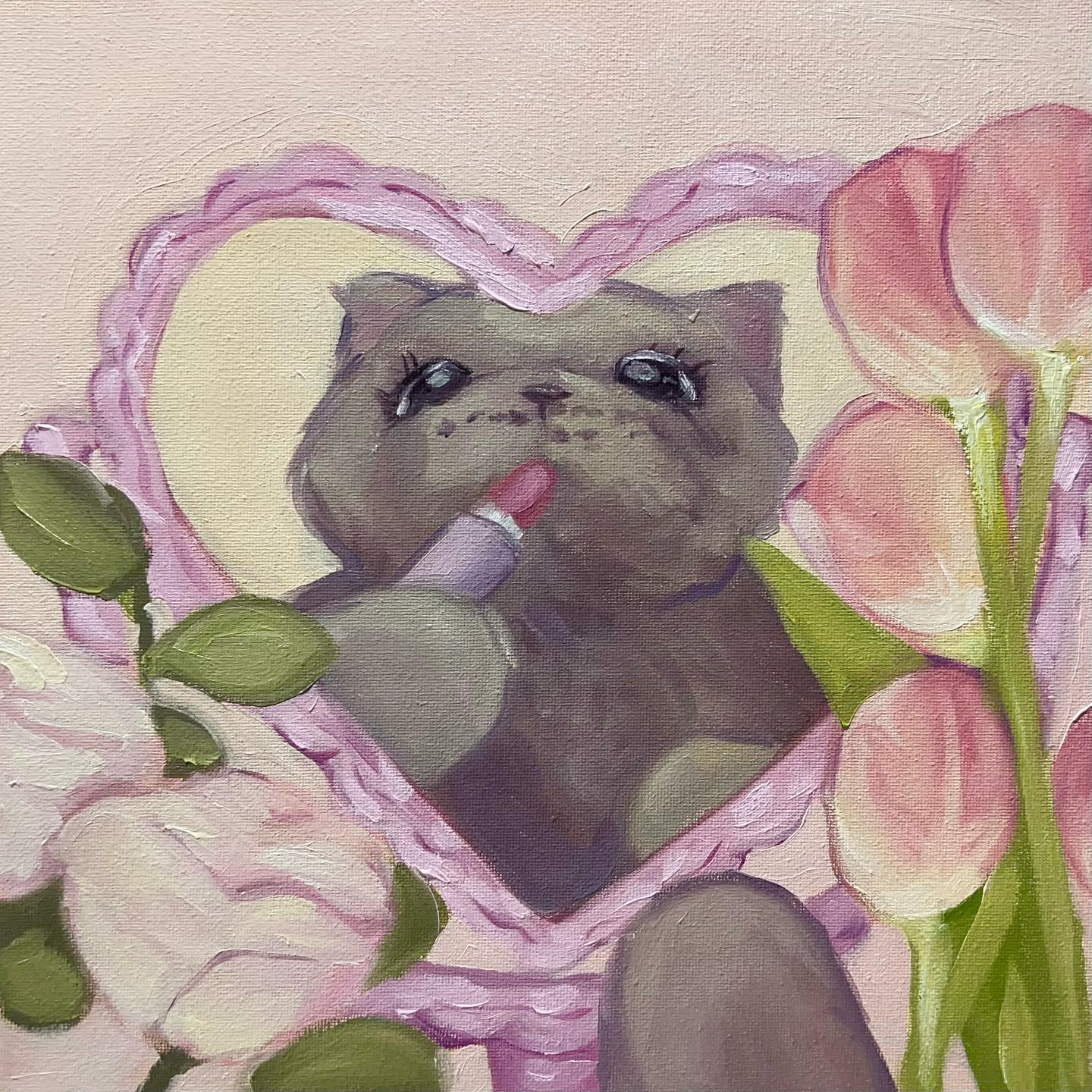
Critics warn of the coquette aesthetic's ability to infantilize women, serving to further other women in a patriarchal society as dainty little rabbits. However, according to Vox, the meaning of the trend is not quite sinister. It might actually be the same as the meaning behind any other trend— to sell products that appear in the associated social media videos and posts.
In the case of Felix’s art, however, more in-depth reading is certainly possible. Pink ribbons and dresses are often present in Felix’s work, as is elsewhere in the trend. Still, another especially prevalent element is how Felix’s animals are often seen putting on makeup. These pieces recall the issue of how the makeup sold to accompany coquette products is affecting the lives of real domesticated animals through animal testing. This is why her works can reflect the United Nations Sustainable Development Goal of Responsible Consumption and Production.
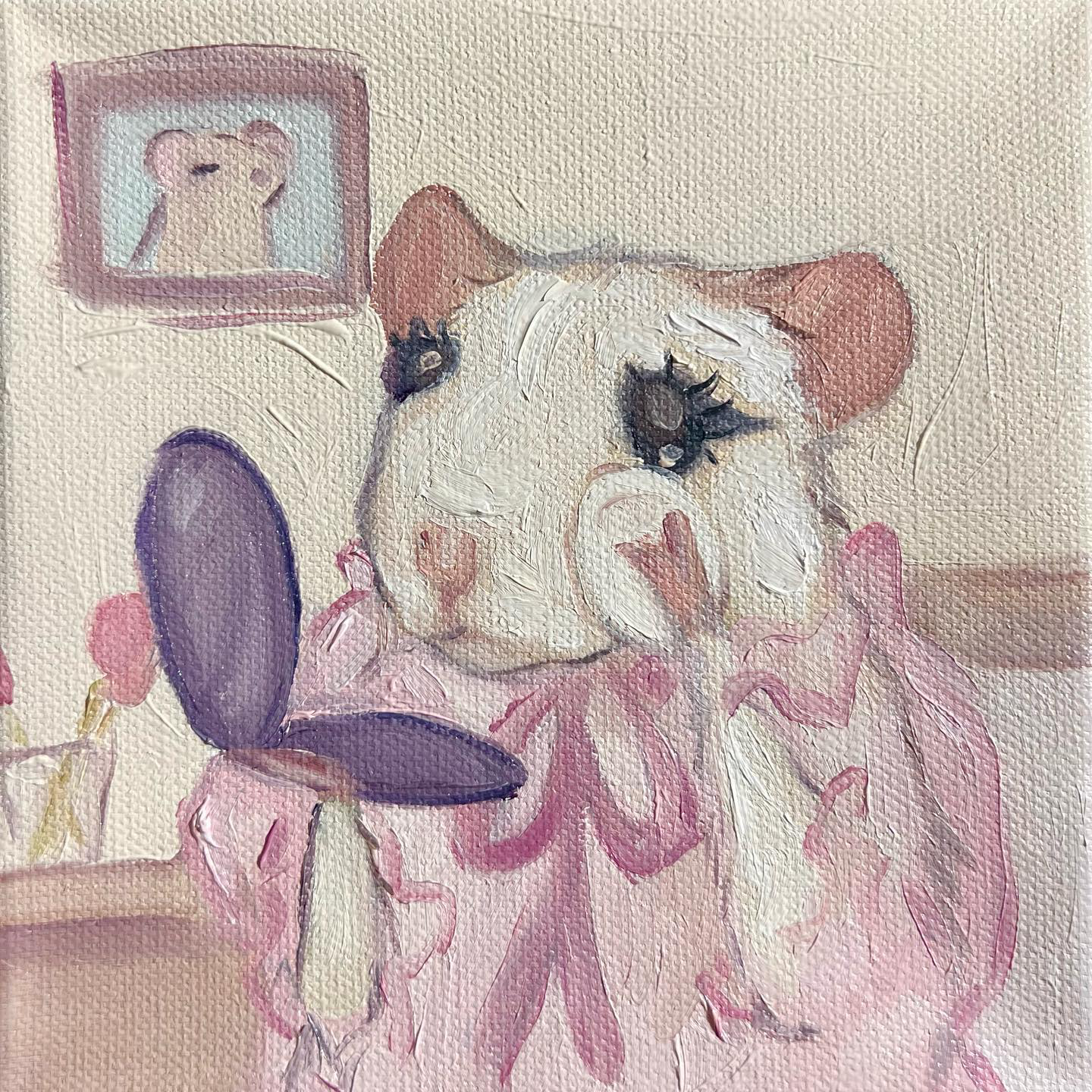
One such painting depicts a white rat applying powder, with a particularly melancholic expression. Visually, white rats tend to allude to laboratory rats, which, according to Cruelty-Free International, is still, even in 2023, the go-to subject for cosmetic testing around the world. Around the world, these rats are force-fed and killed to test cosmetic products, which would explain their melancholic expression in the painting.
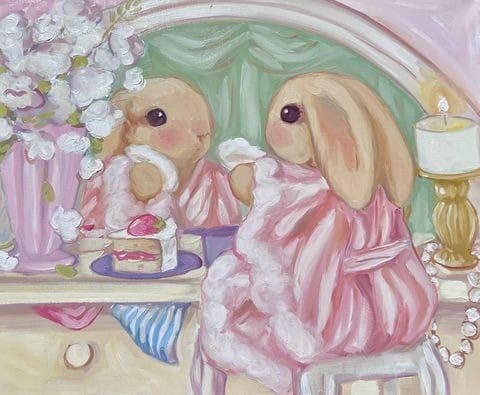
Another painting portrays a rabbit with lop ears sitting in front of a makeup vanity desk. It wears a fluffy pink robe while applying powder to its adorable face. The rabbit gazes blankly into the mirror as if drowned in troubling thoughts. Rabbits are yet another animal which have historically been subjected to animal testing for makeup and other toiletries. However, PETA (People for the Ethical Treatment of Animals) recognizes that there have been waves of change on the horizon, as in 2022, rabbit-safe regulations helped spare 27,000 rabbits in Taiwan from being tested to develop the swine fever vaccine. This is but a step in the right direction when considering the total of an estimated 400,000 rabbits that are used for product testing each year globally.
Dayris Felix's coquette aesthetic paintings can help her viewers dive deep beyond the trend's delicate surface, offering a meaningful reflection on the issue of widespread and normalized animal testing. Her work acts as a powerful medium to raise awareness. She urges her audiences to reassess their choices and factor in ethical considerations when purchasing beauty products.
Find out more about Dayris Felix and her paintings by checking her Etsy shop or Instagram @dayrisfelix.