
If you live in the city, nature often recedes into the background—it becomes a blur of green wallpaper against which human life unfolds. Biologists call this phenomenon "plant blindness," an inability to recognize or value the specific botanical lives that sustain us. Jakarta, Indonesia based artist Elma Lucyana, whose life is without doubt surrounded by concrete in the metropolitan city, is waging a war against this invisibility with paint and paper. She creates monumental giant flowers and plants, using this radical shift in scale to transform the passive organisms into imposing architectural structures that people cannot help but ponder upon. This is why her work is relevant to the United Nations Sustainable Development Goal of Life on Land.
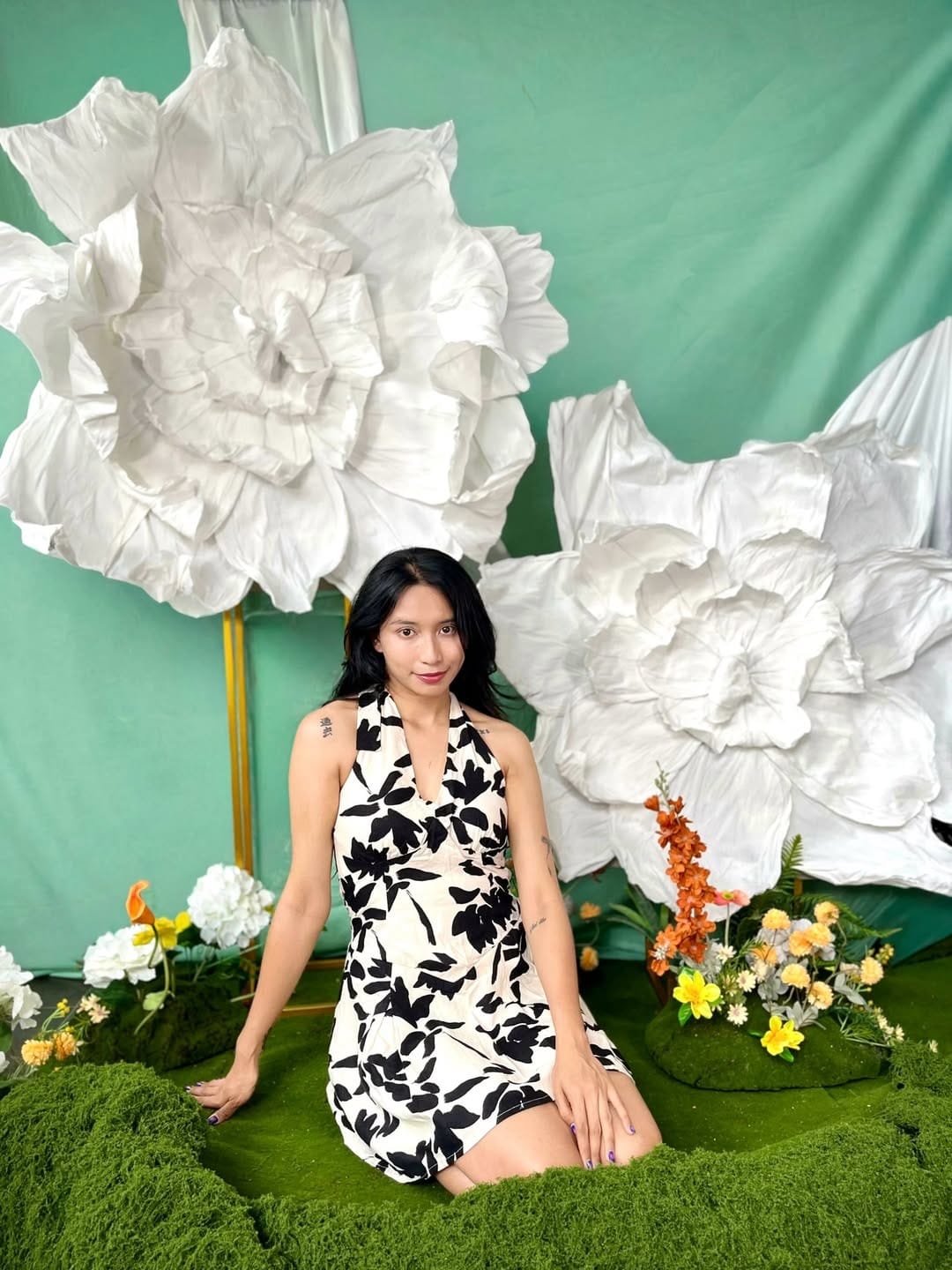
Lucyana’s approach to the canvas is informed by her background in interior design. You can see this in how she constructs flowers instead of just depicting them, radically magnifying each plant’s anatomy with accuracy. Her work shows in detail a plant’s vexillary aestivation (the specific arrangement of petals in a bud) and the visceral "bleed" of colour across the surface, granting flowers a structural integrity usually reserved for rooms and buildings. In her hands, a petal’s image is transformed from ephemeral thing to a weight-bearing wall, a shelter, a fortress.
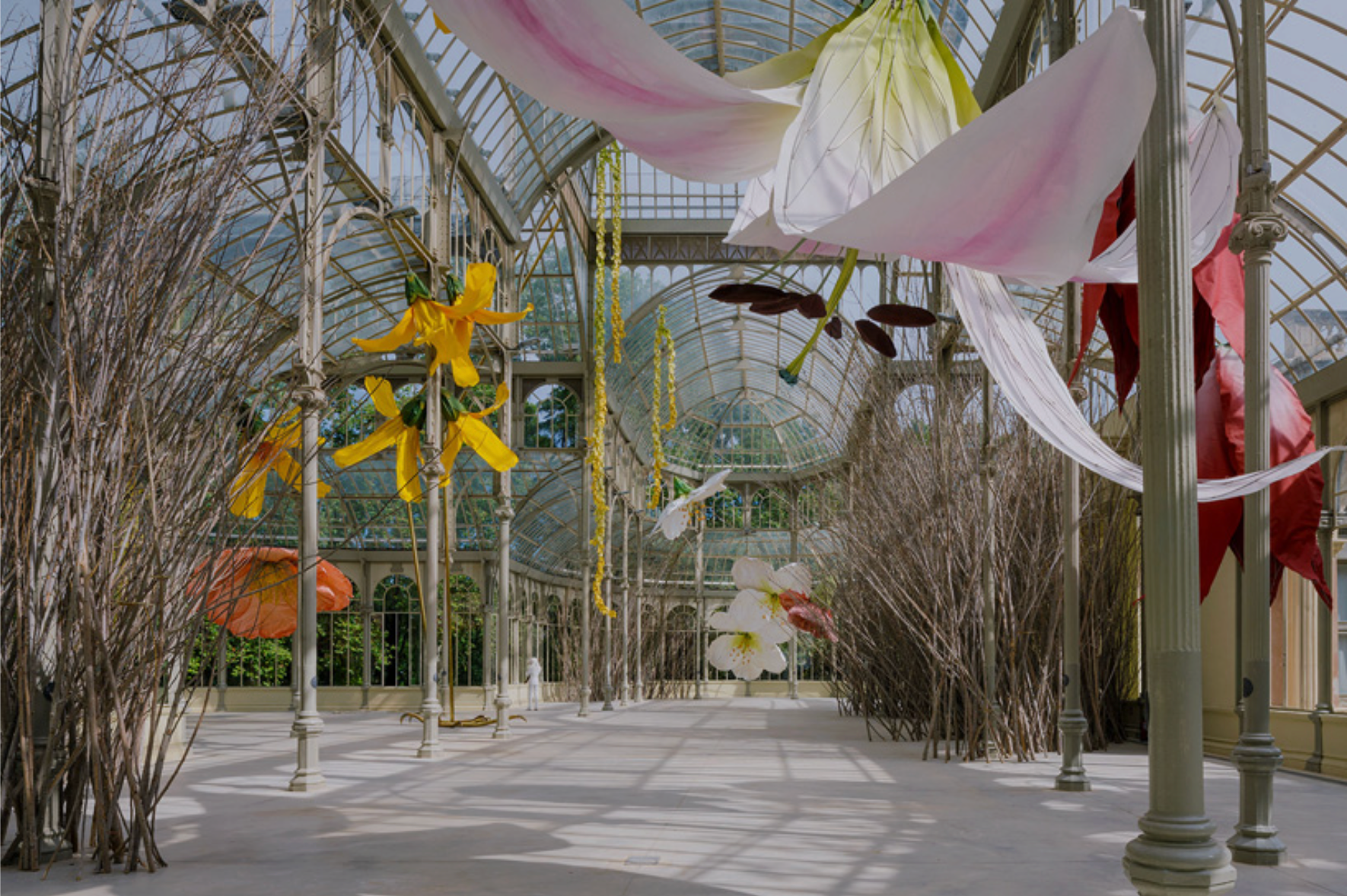
This structural weight is critical when her works are placed in conversation with others in the contemporary art world. Comparisons can be drawn to Kosovar artist Petrit Halilaj, whose installation To a raven and the hurricanes which bring back smells of humans in love from unknown places transformed the Palacio de Cristal in Madrid into a giant nest of massive flowers that loom as large as the building itself. As reported by Designboom, Halilaj used botanical gigantism to create various plants and animal characters with personal meaning to him, making it a very personal work that celebrates love and a space for social visibility as he himself is a gay man living in a patriarchal society.
The article outlines how the large scale of the flowers “encourages viewers to escape, even momentarily, the notion that humans are the center and measure of all things, and recognize ourselves as just one more element among many.” Here then, his work and Lucyana’s complement each other, inviting viewers to celebrate their connection to nature and each other.
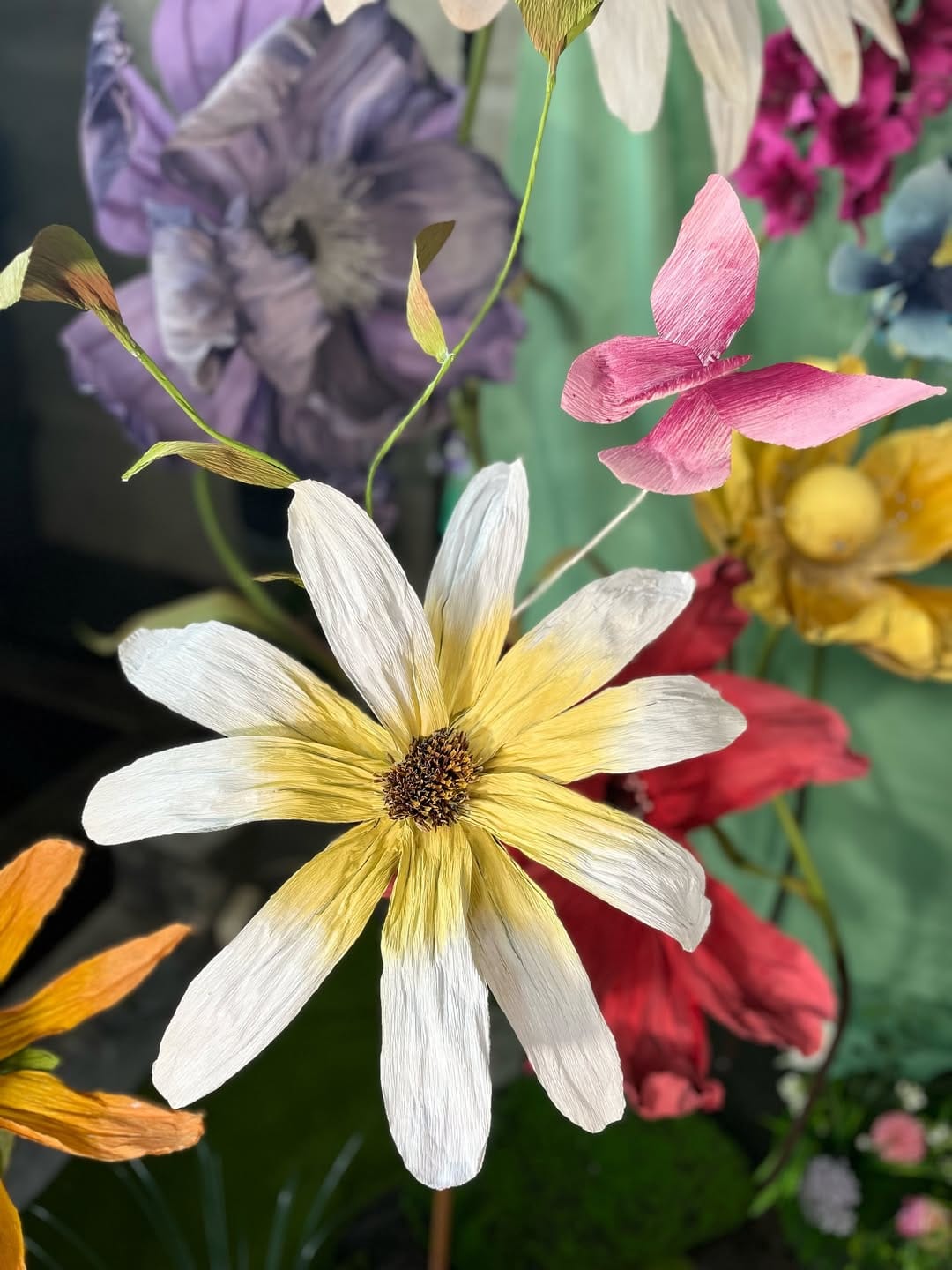
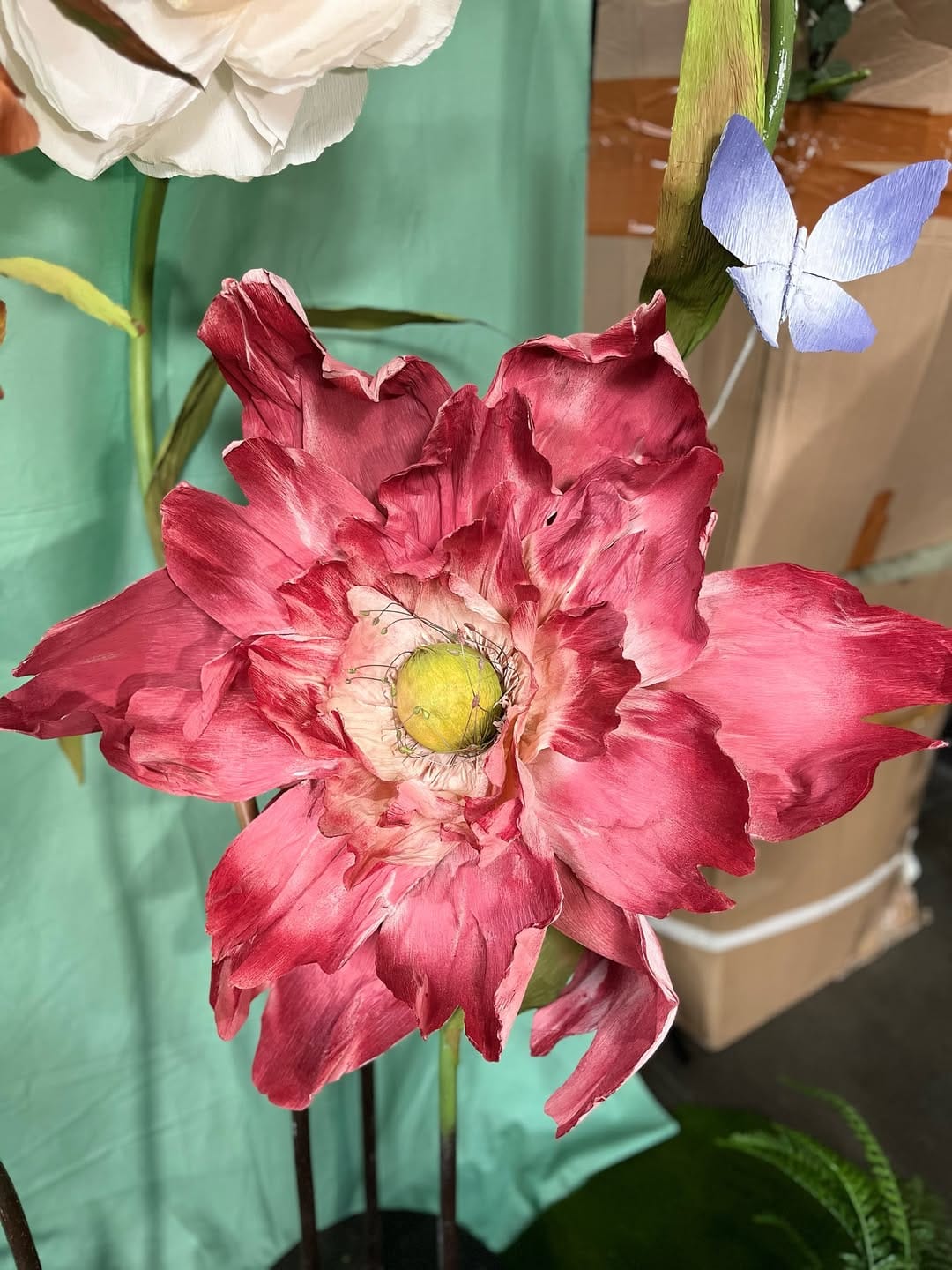
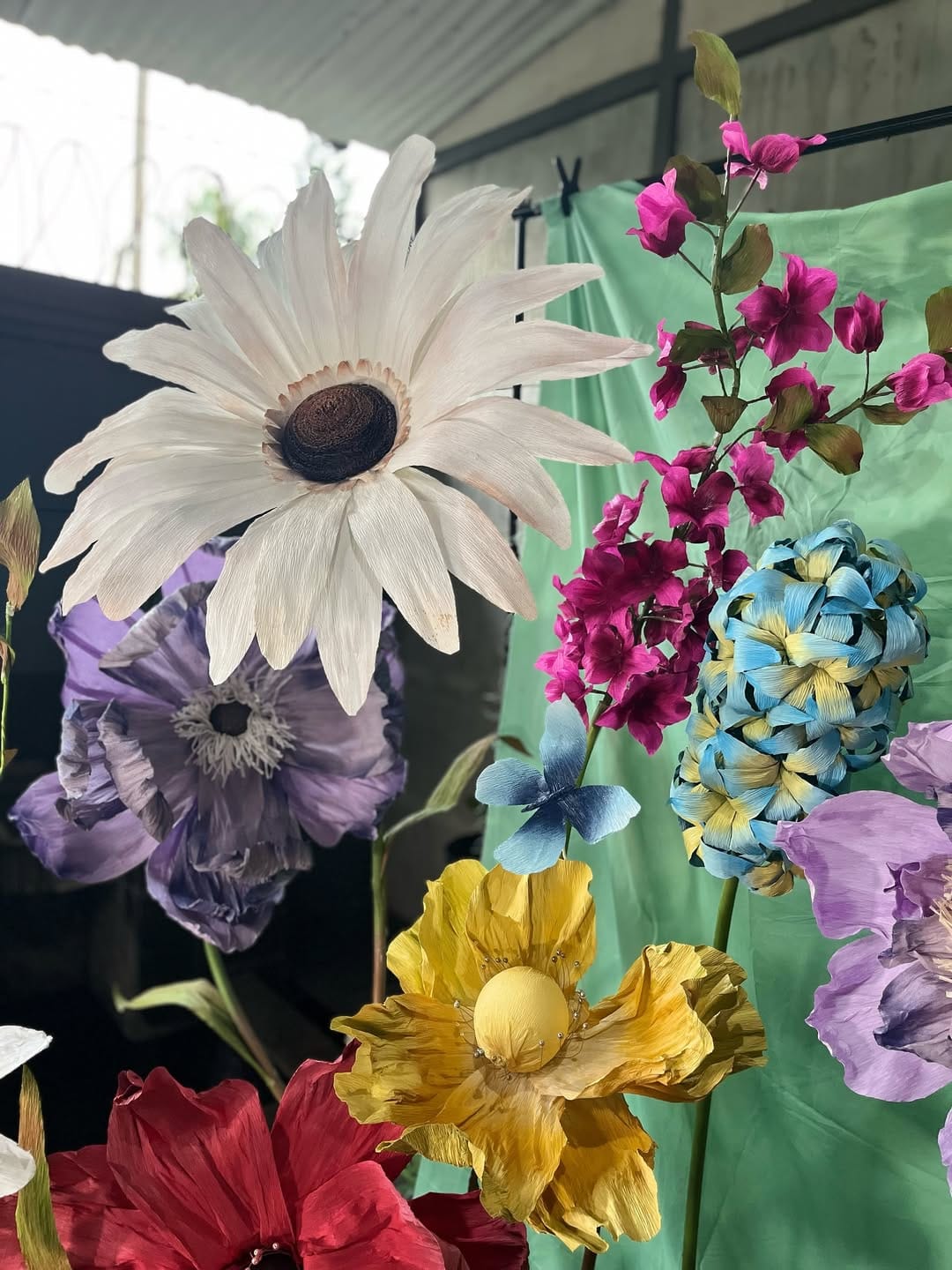
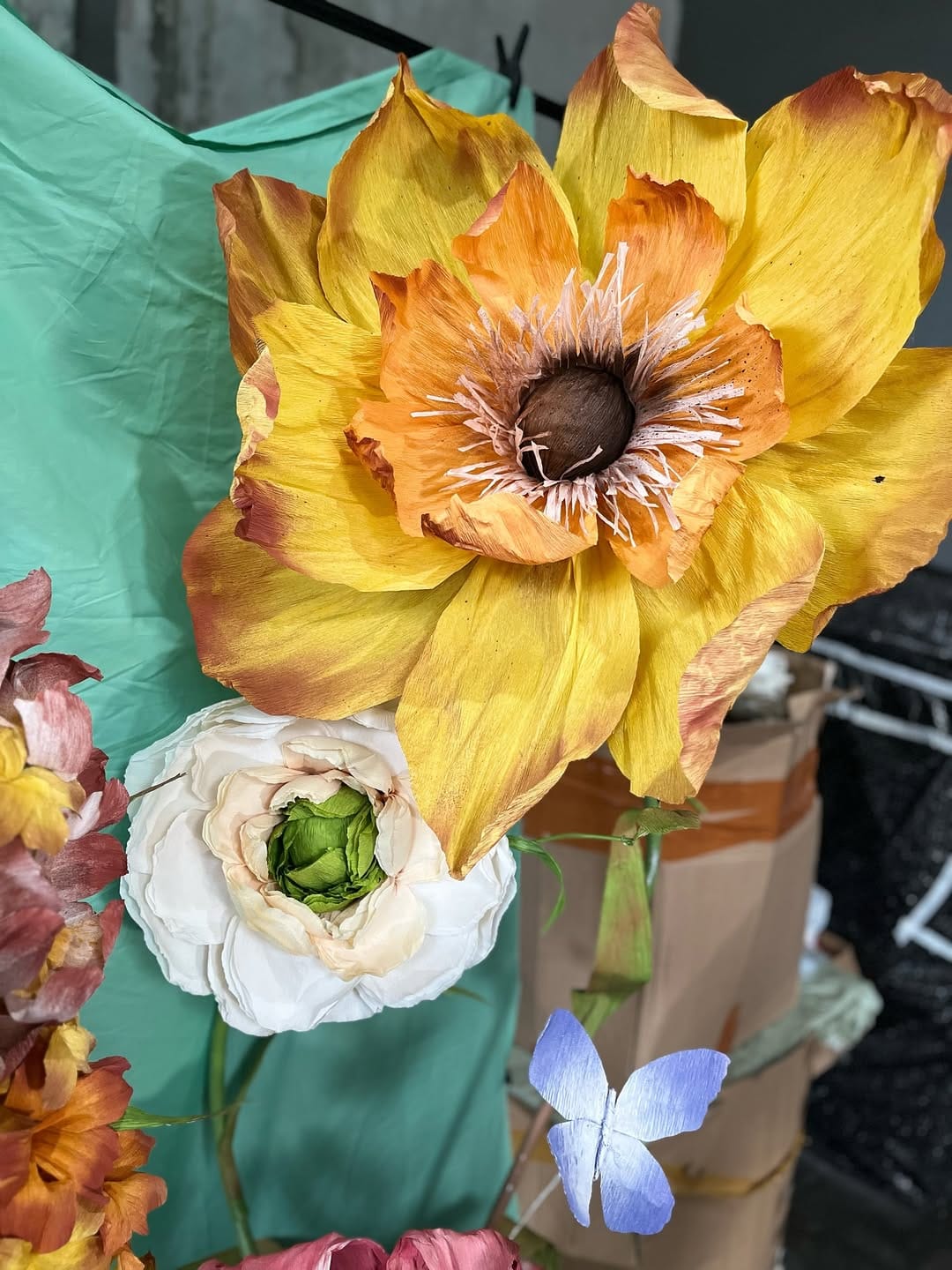
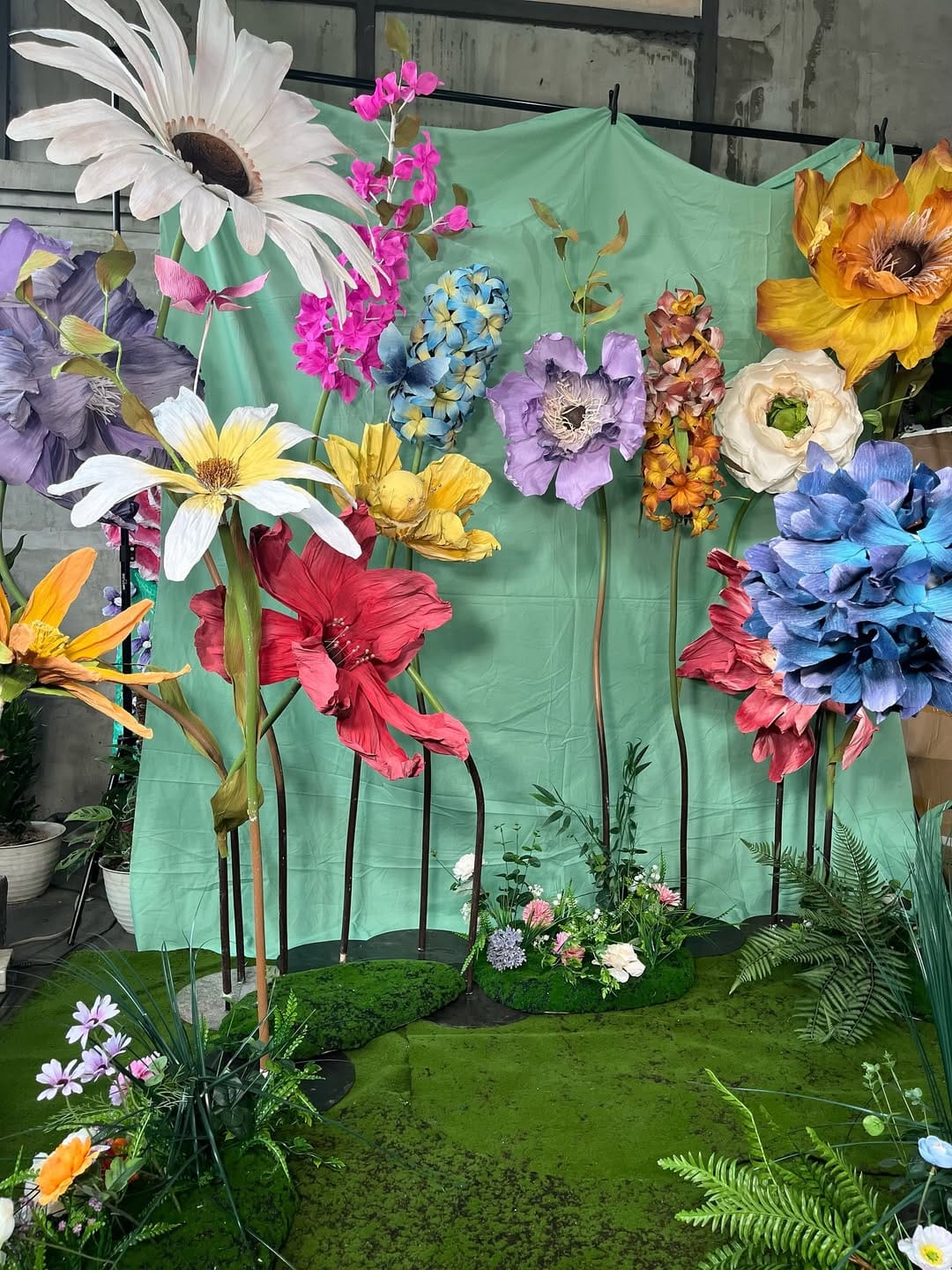
Flower Set by Elma Lucyana. Image courtesy of Instagram/@elmalucyana.
These artistic interventions arrives at a desperate moment for global biodiversity. A groundbreaking study led by the Royal Botanic Gardens, Kew, and highlighted by BBC News, reveals a startling statistic: nearly 45 percent of all known flowering plant species face the threat of extinction. As detailed in further coverage by Mongabay, these plants—often overlooked in favor of "furrier" endangered animals—are the foundation of our ecosystems and the source of nine out of ten medicines. The loss of these species is not just an aesthetic tragedy but a structural collapse of life on Earth.
By scaling these overlooked species up to the size of human beings, Lucyana’s mixed-media canvases act as a defensive re-wilding of the cultural space. She forces the viewer to confront the reality that the "small" things they ignore are actually the giants upon which their survival rests. Elma Lucyana’s work reminds her audiences that to save life on the planet, they must first learn to see it. Her giant blooms serve as an urgent corrective to our blindness, proving that in the fight for the planet, visibility is the first step toward preservation.
To connect with the artist and view her latest large-scale botanical works, follow Elma Lucyana on Instagram or visit her Linktree for a complete portfolio and exhibition updates.