
In Bali, a piece of cloth has never been considered simply for its utility. From the sickness-warding double-ikat of Geringsing to the black-and-white Wastra Poleng that wraps sacred banyan trees in a delicate balance of chaos and order, traditional Balinese textiles function as bebali—sacred vessels woven with spiritual power. Yet, as the island navigates the rapid currents of globalization, there exists a risk that these profoundly woven traditions will become nothing more than museum-bound relics. Balinese contemporary artist Gusti Kade Dwi Kartika (affectionately known as Gusade) has taken matters into his own hands and uses traditional Balinese textiles as a radical point of departure for a new visual language. This is why his works are aligned with the United Nations Sustainable Development Goal of Reduced Inequalities.
Born in 2000 in Jembrana, Bali, Gusade grew up immersed in the communal tapestry of customary practices and traditional arts. Today, he holds a unique dual perspective. By day, he serves as a Traditional Textile Conservator and Art Handler at the Saka Museum, meticulously preserving the physical integrity of historical fabrics. Then in his studio, he deconstructs them. This daily oscillation between historical preservation and modern innovation allows Gusade to breathe contemporary life into traditional Jembrana embroidery, safeguarding cultural heritage in a rapidly urbanizing world.
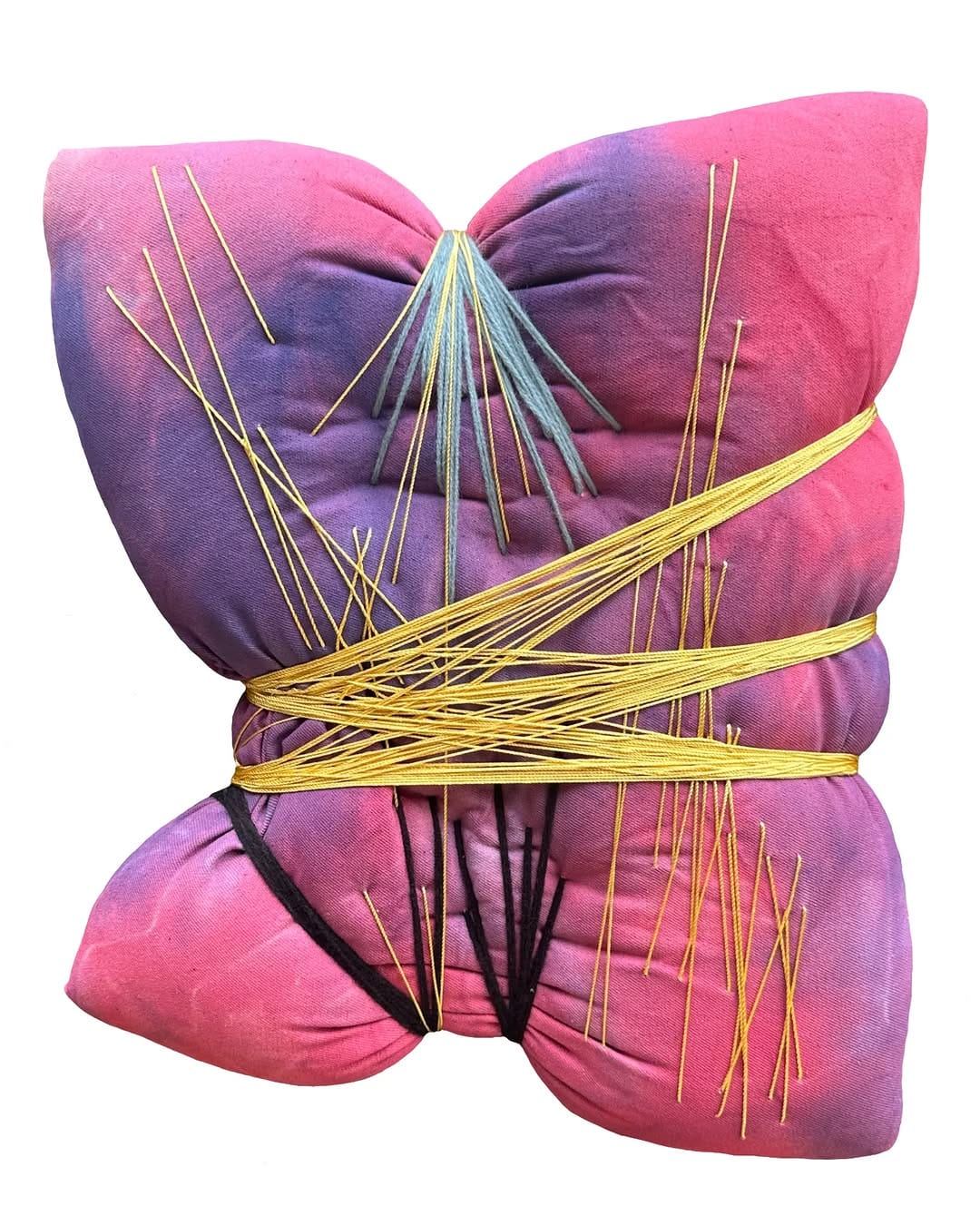
Instead of reproducing conventional motifs found in traditional textiles, Gusade strips Jembrana embroidery down to its foundational elements. In his acclaimed Tangled Series, the artist treats the canvas as a site of emotional and cultural collision. He masterfully combines raw canvas and traditional embroidery threads with striking, industrial elements like holographic stainless steel. The resulting works are visceral fields of knotted threads and erratic geometries, a site of contestation between what is traditional and what is new.
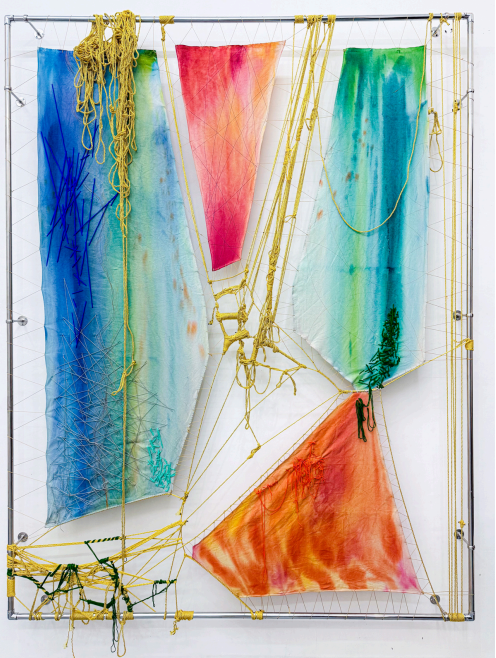
These uneven textures and fragmented patterns represent the inner struggles of what Gusade conceptualizes as clashes of values in a modernizing society. The interlaced knots formed in apparent disorder act as metaphors for the complexities that traditions undergo today. They reflect the Balinese philosophy of Tri Hita Karana—the essential balance between humanity, nature and the divine—while acknowledging the chaotic reality of contemporary identity. It is an artistic echo of the Wastra Poleng fabric, where opposing forces must overlap to maintain the life force. Furthermore, his reverence for the materiality of the thread and raw canvas aligns deeply with the sustainable, intentional nature of indigenous craftsmanship over mass-produced textiles.
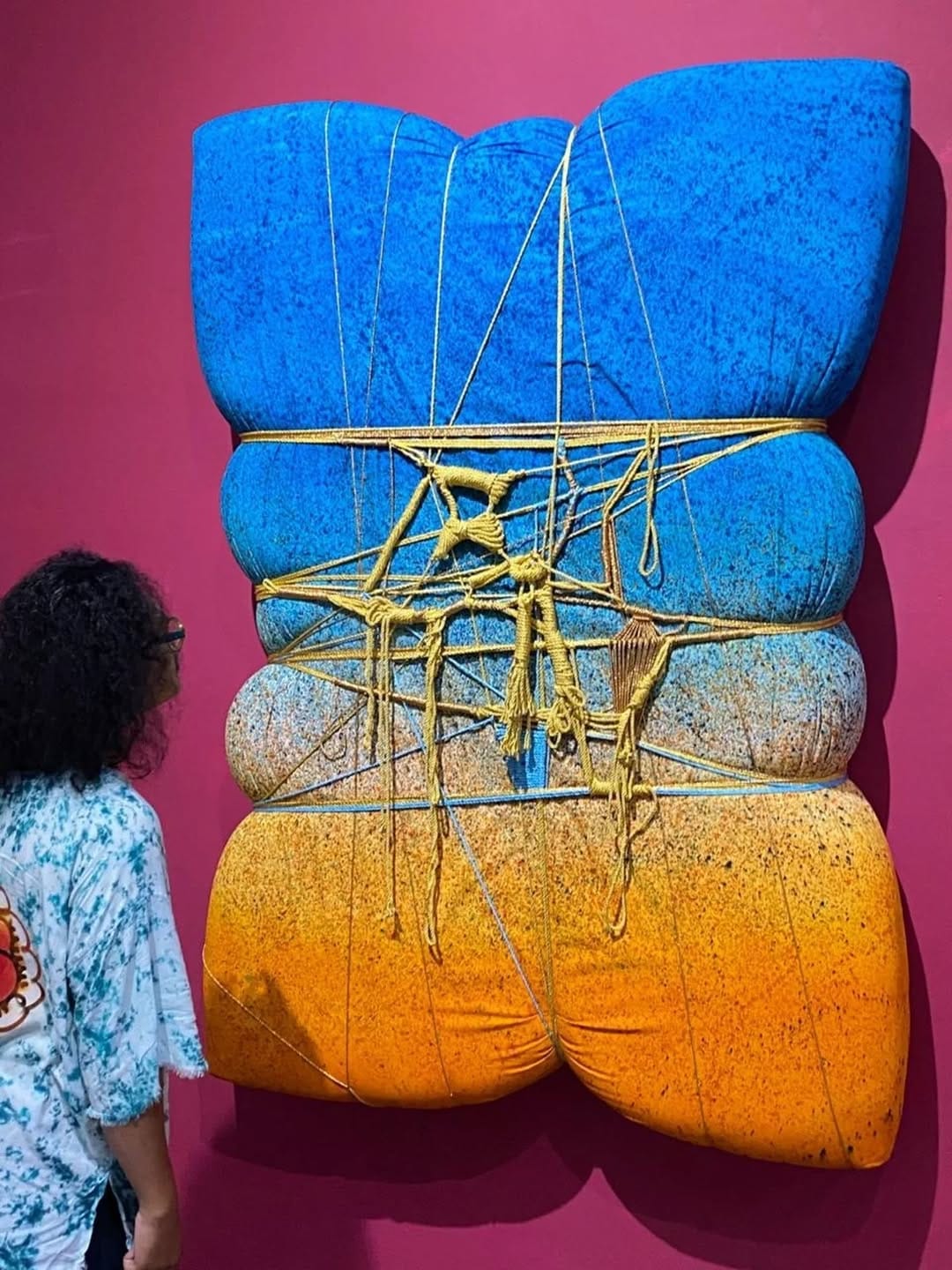
Perhaps the most revolutionary aspect of Gusade’s work is its subtle political weight. Historically, the global art market has maintained a rigid, often Western-centric hierarchy that elevates fine art (like oil painting and sculpture) while relegating indigenous textile practices to the realm of “craft" or anthropology. Gusade actively subverts this narrative. By translating the hyper-local techniques of Jembrana embroidery into grand, conceptual, and abstract contemporary forms, he positions Balinese textiles as a significant bargaining tool within the global art discourse.
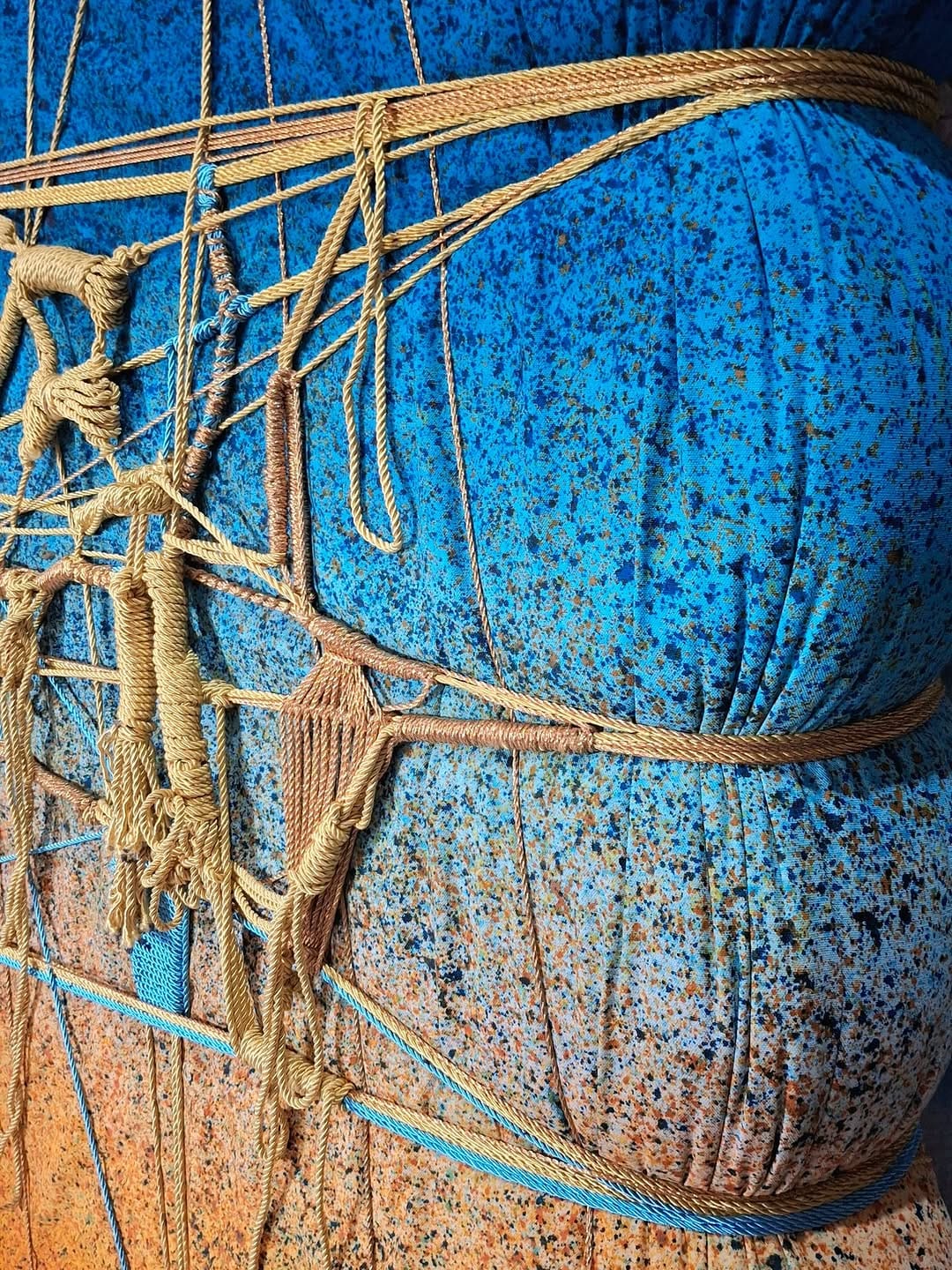
In doing so, Gusade demands that indigenous knowledge systems be recognized on equal footing with Western artistic traditions. His wall sculptures insist that the local weaver's loom holds as much intellectual and conceptual rigour as the modernist painter's easel. He gives a contemporary voice to the marginalized artisans of his homeland, ensuring their techniques are not just preserved behind glass but are actively participating in global cultural conversations.
For more information about Gusade’s work, check out his Instagram @gusade__.