
James Patrick is an Australian artist who is quite literally putting himself in a box to break down the barriers of the traditional art world. Known for his viral performance piece, The Art Vending Machine, Patrick spent his time at The Other Art Fair Sydney inside a custom-built vending machine, painting and dispensing original works to buyers for the price of a snack. This allowed him to bypass the so-called "red tape" of galleries and grants, giving anyone access to his artworks. His work challenged the elitism of art ownership and proved that whether as artist or as a general audience member, art belongs in the hands of the public, not just in ivory towers.
The Art Vending Machine by James Patrick. Video courtesy of James Patrick’s channel.
Beyond the performance piece, Patrick’s practice is deeply rooted in the concept of art as a sanctuary. During the isolation of the COVID-19 lockdowns, he turned to hyper-detailed drawings—most notably his Venom series—as a necessary mental escape. This focus highlights how artistic constraints and discipline can serve as a refuge from the anxieties of the modern world.
To understand the man inside the machine, we sat down with James Patrick to discuss the "Art Behind Bars" philosophy, the ethics of AI, and why he wants to make the art world smile. All this is why his work is aligned with the United Nations Sustainable Development Goals of Reduced Inequalities and Good Health And Well-Being.
1. Your Art Vending Machine piece at The Other Art Fair Sydney went viral for brilliantly changing the way people buy art. What initially sparked the idea to literally put yourself inside a box, and what was the physical experience of performing in there like?
I've always been fascinated by human potential. About 15 years ago I was reading Cellblock Visions, a book about prison inmates and their art practices. Being encaged with little to do and little digital distractions, art was often seen as a viable way for inmates to improve their mental health. Approximately 12 years ago I somewhat imprisoned myself inside Sydney's G-Star Raw shop window drawing a commissioned giant artwork for them. Over the years of creating art live I started thinking about the relationship between technology, AI and art and how it influenced both the art being produced and celebrated.
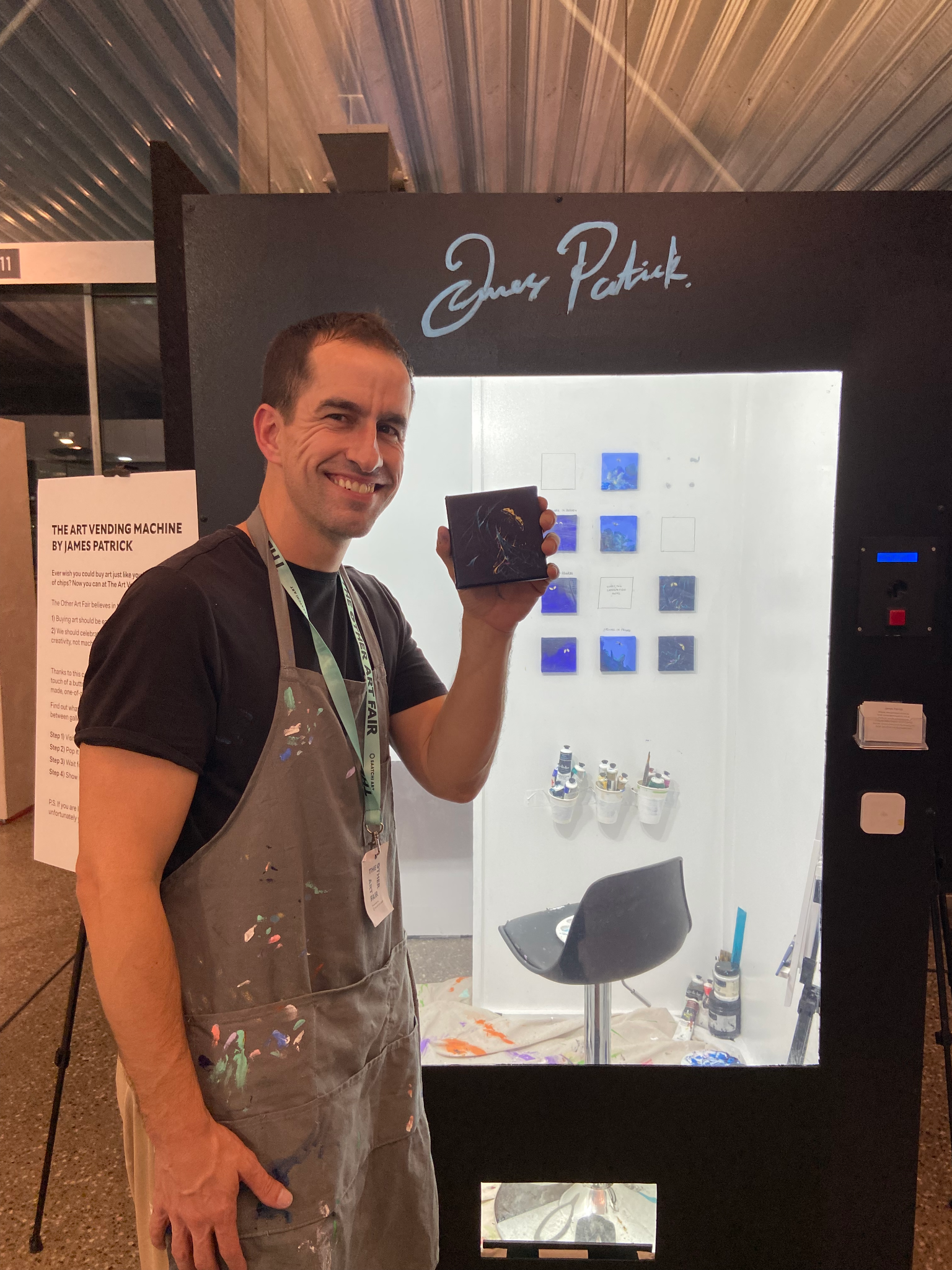
2. By dispensing original artworks through an act that people usually associate with getting snacks, you are directly challenging the exclusivity of the traditional art market. In your view, what are the most damaging glass ceilings in the art world today, and why is the concept of "Art for All" so fundamental to your practice?
I think applying for grants and working with organisations involves a lot of red tape. These organisations apparently favour working with artists, but in turn create lengthy application processes that are often the least favourable thing for creative people to complete.
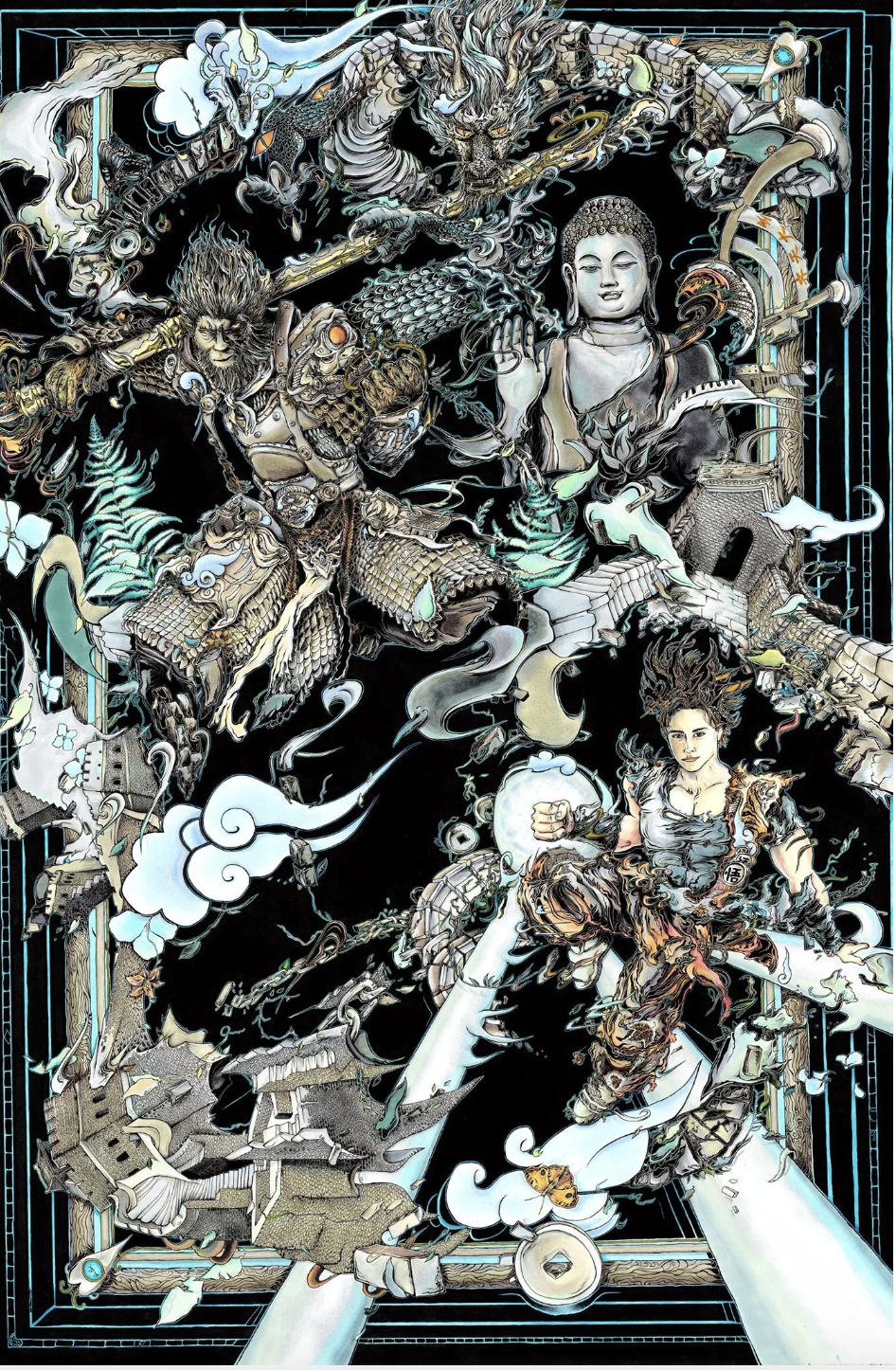
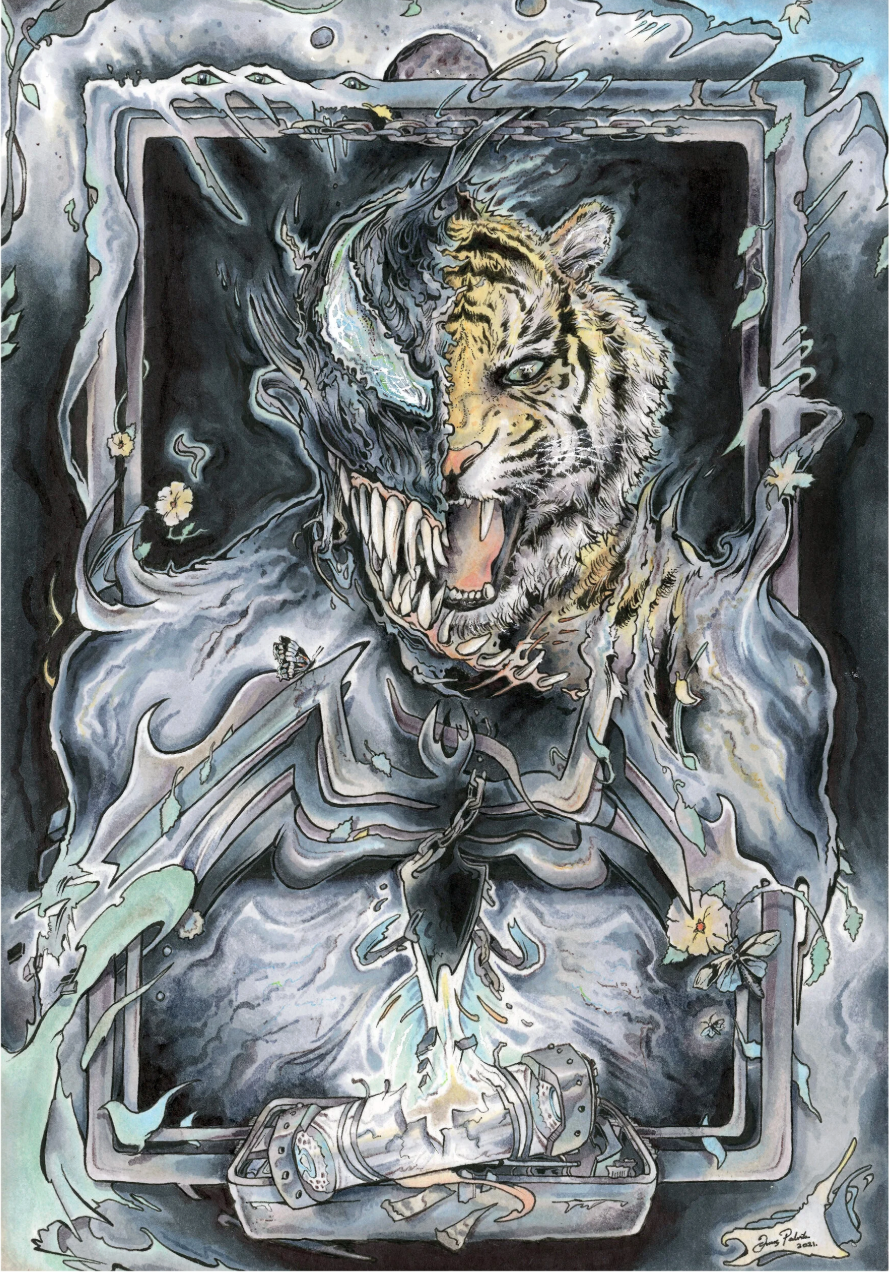
Venom series by James Patrick. Image courtesy of James Patrick’s website.
3. You created your highly detailed Venom series during the intense isolation of the COVID-19 lockdowns, noting that you needed an artwork to "bury yourself into." Can you elaborate on how the physical act of drawing served as a mental health refuge for you during that time?
I've always found that focusing my mind and moving my hands toward something creative, can calm absolutely any anxiety constantly surrounding us with the 24/7 news cycle. This was especially present during COVID as there was a lot of uncertainty regarding numbers of cases and related health implications.
4. You often gravitate toward drawing complex characters and anti-heroes like Venom. Do you find that exploring these darker, more chaotic subjects helps you process real-world anxieties?
It's probably too short an answer to say YES right? haha. Growing up I tended to draw darker, grittier, and sometimes gore-related artwork, often dealing with adolescence and a weird sense of trying to fit in. As an older artist now there still are parts that remain in my style, but I think the subject matter has softened slightly as I've become a father and also just grown up a bit.
5. In your 50 Shades of Green project, you worked with strict creative constraints. How do self-imposed limitations and deep discipline actually help your mental focus and artistic growth?
Similar to my exploration of Cellblock Visions, I think constraints and limitations are often an advantage, not a weakness. Especially in our world of endless information and so many options for every single thing we want to buy. Placing a limitation like "only green" instead forces me to go deep into one idea, rather than wide of the endless possibilities of creative creation.
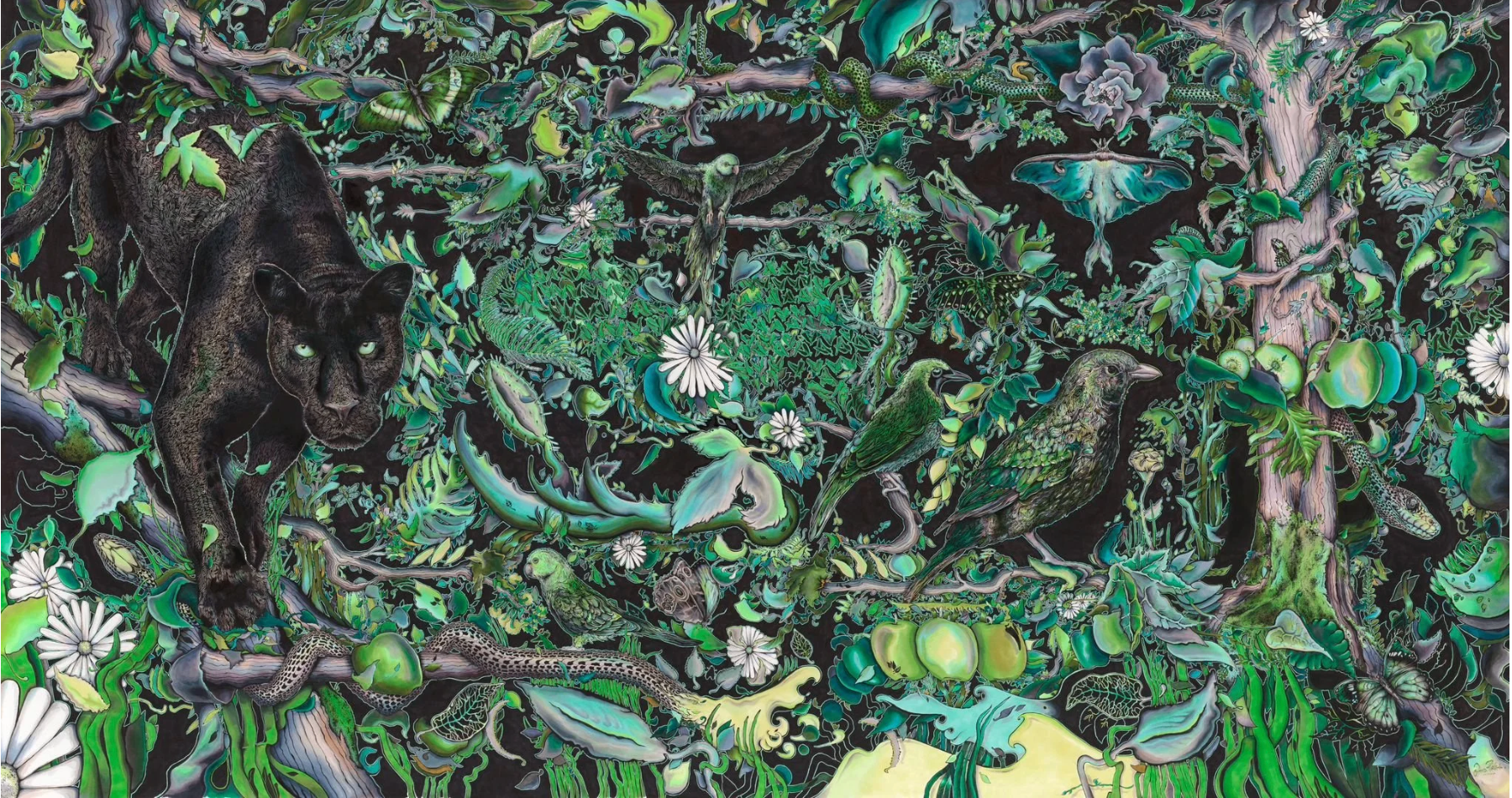
6. As someone who works with deeply traditional, hyper-detailed drawing techniques but also engages with modern, digital/NFT-inspired concepts, how do you see the physical and digital art worlds intersecting in the future?
I believe every technological breakthrough brings both pros and cons regarding how these tools are used. Overall I would like my art to make people think about how these tools affect the artist, but I in no way want to discourage anyone from using these tools ethically. I think the relationship between AI and art is a major topic right now, and rightly so as the lines of ownership for ideas and content are slowly being blurred, similar to social media.
7. Why is this interaction of the physical and digital important to you?
I guess because I did grow up pre-social media, there were fewer ways to get your art seen by anyone aside from your mum, dad and my dog Edward. The digital landscape has created more artists who can monetise their creativity and I think that is a big positive. But like with any positive technological innovation there are always a few downsides that need to be highlighted. Art for me is a great way to beautifully and subtly start a discussion that inspires ideas.
Drawesome by James Patrick x G-Star. Video courtesy of James Patrick’s channel.
8. Looking ahead, if you could change one major thing about how everyday people interact with and purchase art, what would it be? What is your next project to continue breaking down these barriers?
I want people to smile when they see me and my art, and hopefully walk away with a new perspective on how people buy art, or even sometimes be motivated to create art for themselves. My next project will be a Skill Tester, a Claw Machine structure with me inside painting again. This one is exciting so stay tuned!
James Patrick’s work acts as a reminder that art is at its most powerful when it is accessible, tactile and deeply human. By subverting the way we purchase and interact with creativity, he is selling snacks for the soul, rebuilding the relationship between the creator and the community. Whether exploring the 50 Shades of Green or preparing to climb back into a box for his next performance, Patrick’s mission remains clear: to prove that art is a vital tool for mental resilience and a universal right for all. We look forward to seeing him inside the "Claw Machine" soon!
Find out more about the work of James Patrick and his upcoming performances by following his journey on Instagram at @artistjames or visiting his website at www.jamespatrick.com.au.