
At 71, Kiki Smith has become one of the most influential multidisciplinary artists of her generation, yet she describes her creative process with the humble term: "meandering." This almost pejorative word is meant to describe the visceral impact of a career that began in the 1990s. Smith started her career by "taking the body out of its skin", exposing the raw, abject reality of human anatomy. This practice has since evolved into weaving those very bodies into a larger cosmic and ecological form.
Printmaking with Kiki Smith. Video courtesy of Museum of Modern Art (MoMA).
Her latest exhibition, Woven Worlds at Moderna Museet, Malmö collates this journey, revealing a didactic process where motifs like the wolf, the moon and the female form are recycled and transformed to relate to one another across decades. Her work highlights the planet’s precarious state by showing how the human body and mind, especially a woman’s body and mind, interact with it. This is why her work United Nations Sustainable Development Goals of Life on Land and Well-Being.
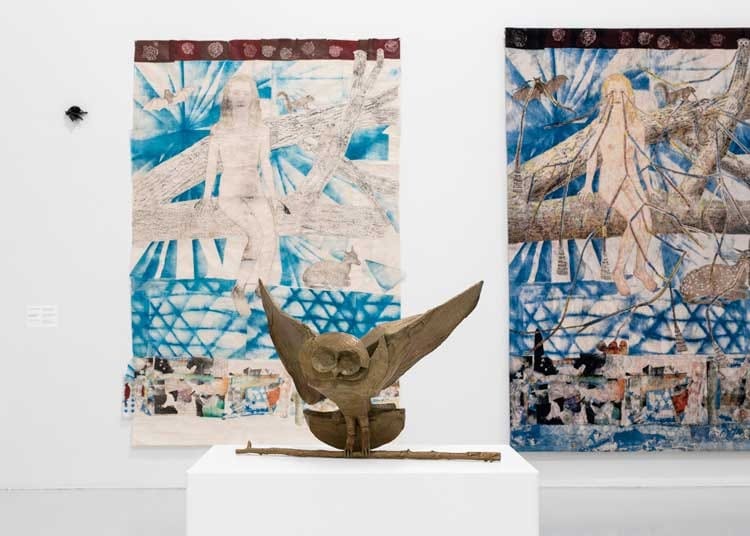
Smith notes that we are currently living in "tremendously treacherous times," where a collective "uncaringness" threatens the biodiversity of our planet. Rather than presenting a rigid political agenda, Smith uses folkloric and anatomical symbols to create a language that bridges the gap between scientific rendering and mystical storytelling. Her work gives equal weight to a minute bronze snail, an oak leaf, or a monumental tapestry, creating a democratic vision of existence where human beings are not masters of nature, but equal participants who deserve equal exposure. As described in her Pace Gallery profile, her work seeks to reveal the interconnections between spirituality, mortality and the natural world.
The Malmö exhibition offers a rare look at the artist’s evolution, exposing the way an idea matures over time. There, audiences see how Smith often revisits the taxidermy drawings she made in 1994, collaging and chopping them into new configurations. This process is most evident in her monumental Jacquard tapestries, such as Earth. These works are born from a fusion of ancient textile tradition and modern technology, as Smith works with computerized looms, painting on digital prints and scanning them back into the system to create pieces that are at once technologically precise and aesthetically amorphous.
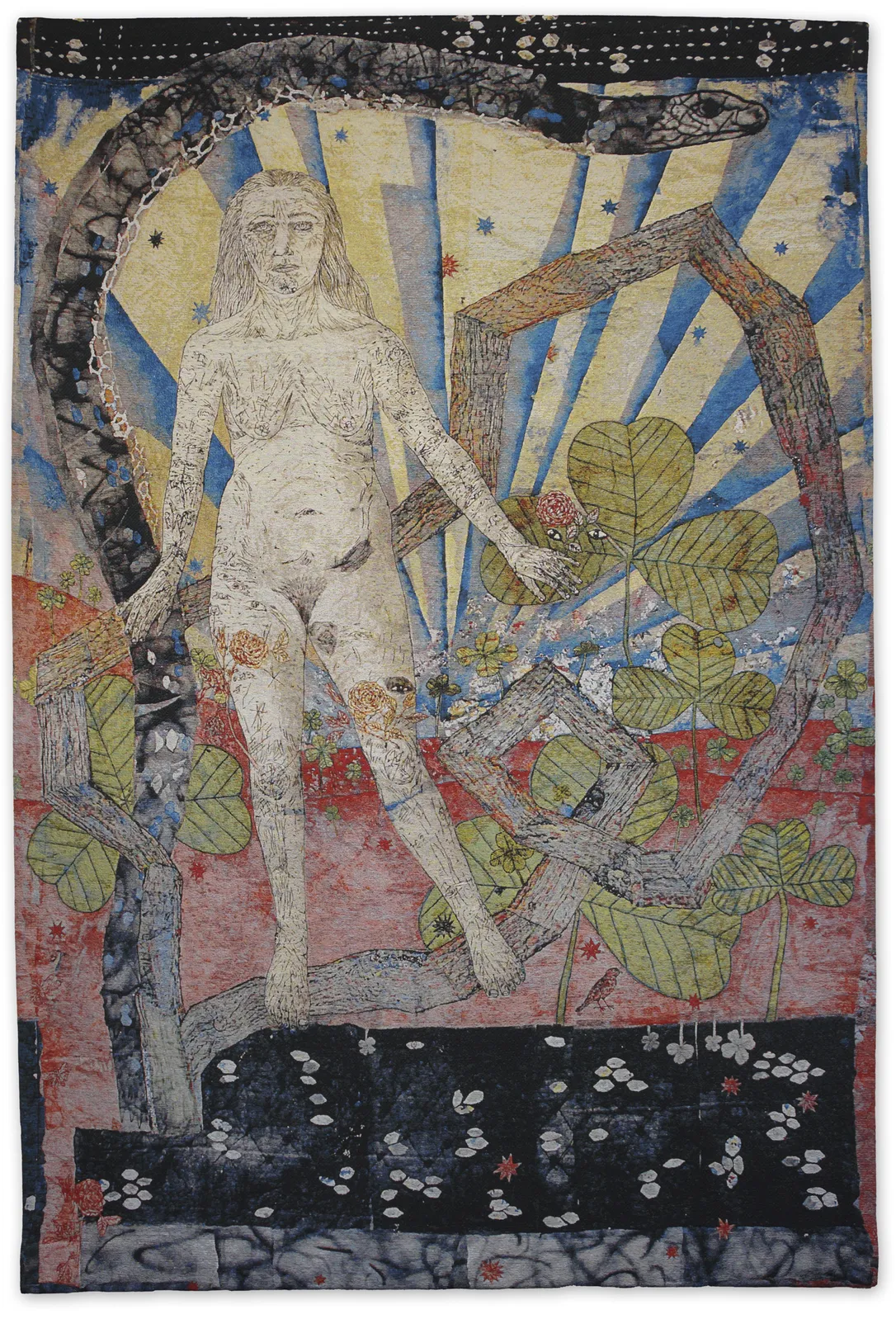
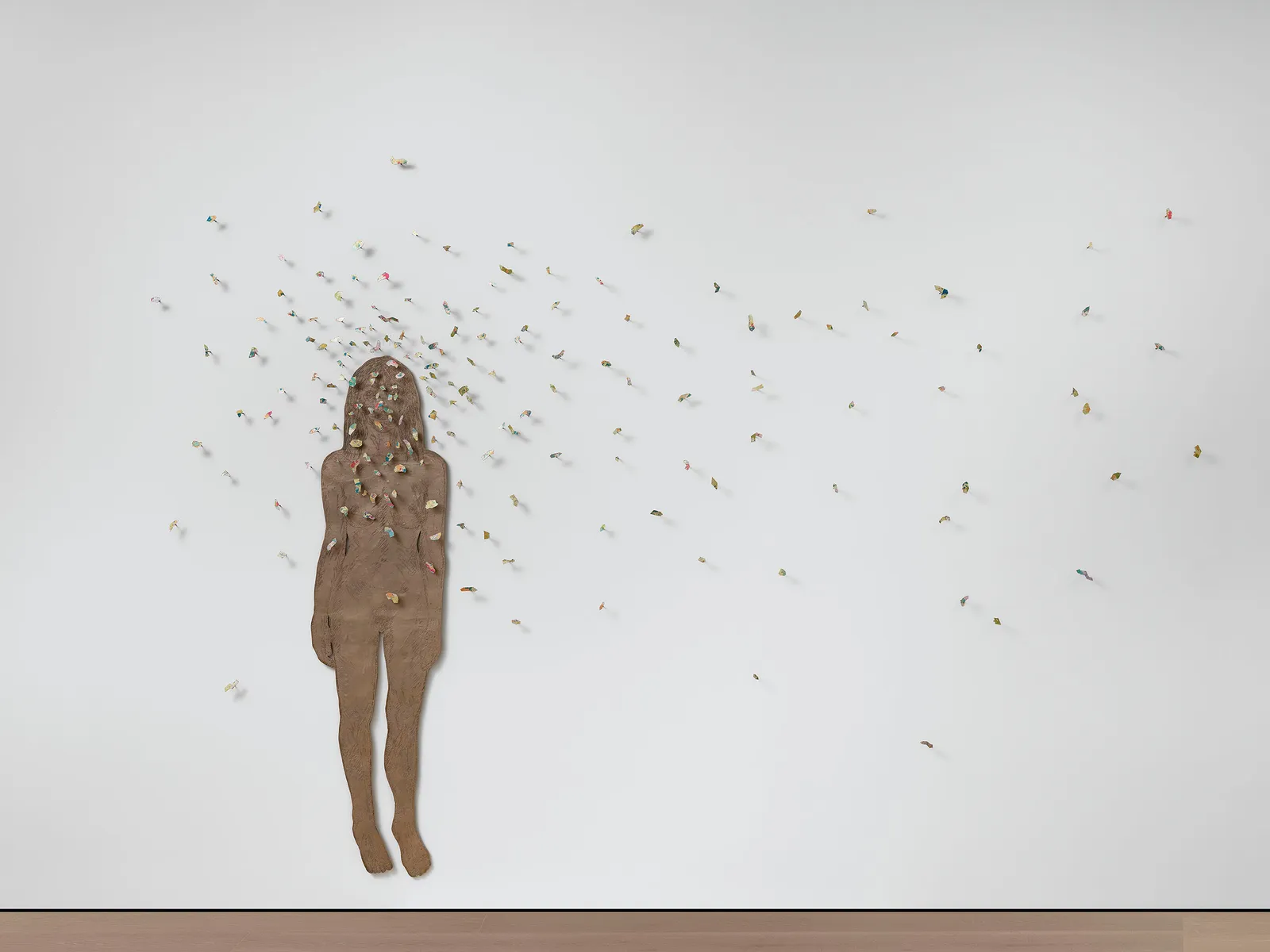
Smith’s work is also a laboratory for mental and spiritual reflection. She’s often spoken about the "ridiculous monotony" of art-making—the hand-colouring of prints or the carving of wax—as a meditative practice. This attentiveness provides a freedom from oneself, a sanctuary of mindfulness in a restrictive society. Her sculptures, such as Quiver, which depicts a female form radiating small particles, remind the viewer that they are all composed of the same celestial matter. This spiritual equalizing helps reduce the existential alienation of modern life, fostering a sense of belonging to a larger, infinite whole.
Ultimately, Smith’s Woven Worlds argues that art is a vehicle for creating space in a world that tends to be restrictive. Her meandering path suggests that there are no wrong ways to go through life, only opportunities to learn and reveal new dimensions of the self. By exploring themes found in her retrospective exhibit and MoMA Collection, we see that in her world, to look at a wolf or a star is to look in a mirror, recognizing that people’s survival is inextricably woven into the survival of the land itself.
For more information about Kiki Smith’s work, check out her Pace Gallery or Museum of Modern Art (MoMA) page.