
At first glance, the canvases of 29-year-old Malaysian artist Aiman Zamri—better known as Miman—can feel unsettling. His works are populated by ghostly figures with tangled hair, shadowy faces and an unnerving multiplicity of eyes. It is easy for the casual observer to misidentify these surrealist portraits as horror or folklore, perhaps drawing from deep-seated regional beliefs in supernatural entities, as explored in recent academic studies on Malaysian cultural icons and the Pontianak.
However, beneath the seemingly eerie surface lies an exploration of human psychology. As he shared in an interview with Bernama, Miman’s art is not designed to frighten, but is a vital form of personal mental therapy and a powerful statement on the healing capacity of creative expression. Miman is redefining how we understand emotional resilience by translating unspoken internal experiences into striking visual narratives. This is why his work is relevant to the United Nations Sustainable Development Goals of Good Health and Well-Being and Decent Work and Economic Growth.
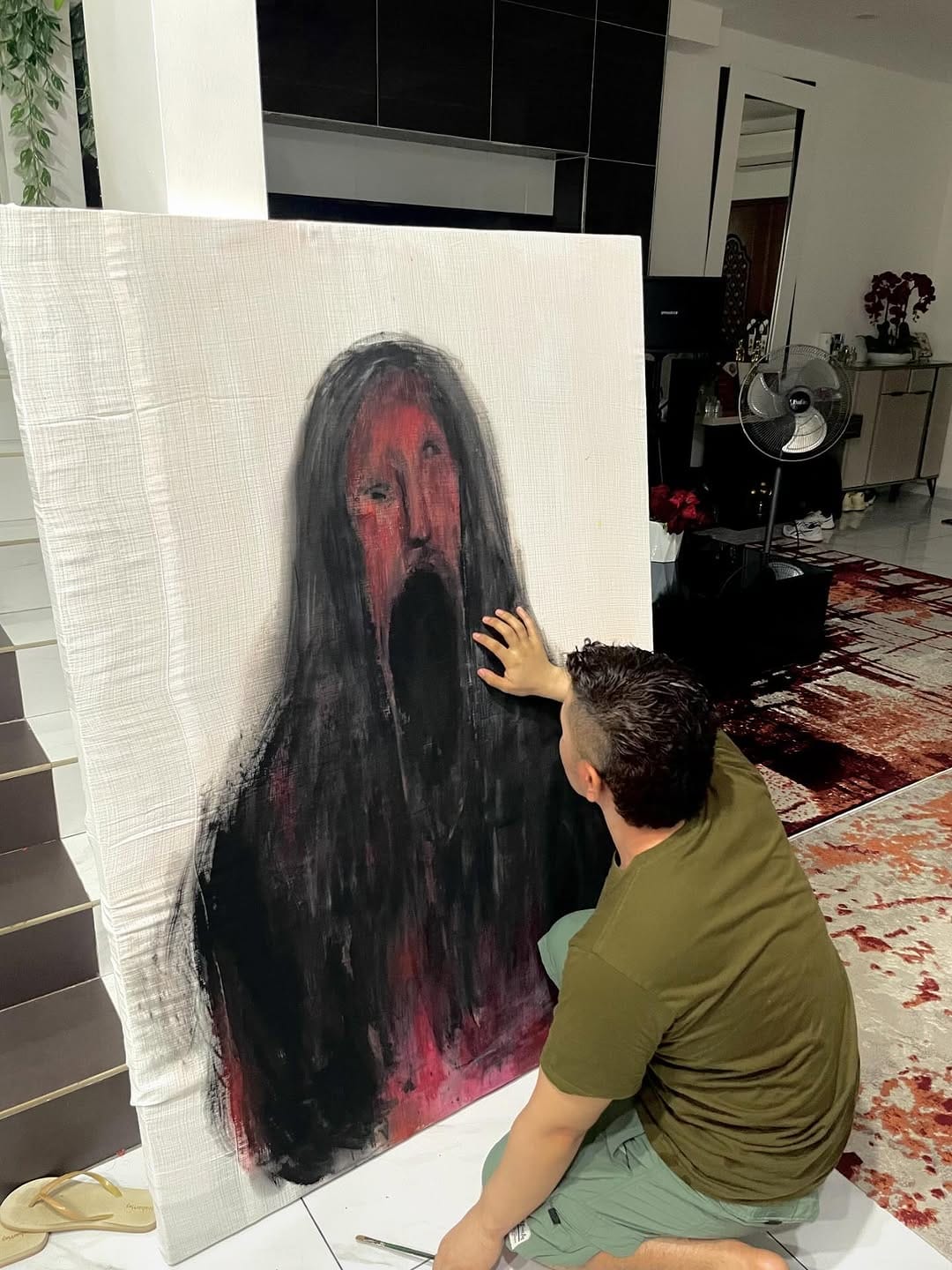
Miman began fully exploring dark surrealist themes in 2019, utilizing the canvas to map out his subconscious. While the public often associates dark art with depression or trauma, the Klang-born artist actively rejects this stereotype. As noted by Free Malaysia Today, he paints from a complex spectrum of emotions, including joy, calm, confusion and emptiness.
Video of Miman's painting process, November 2025. Video courtesy of Miman Zamri's Instagram.
This approach reduces the stigma surrounding complex or "dark" thoughts by normalizing them as a natural part of the human experience. A recurring motif in his paintings is the eye—a symbol he views not as an omen of life and awareness. "Even a stone or statue looks alive when you paint eyes on it," he explains. His viral masterpiece, The Guardian, perfectly encapsulates this ethos. Often mistaken by netizens for a mystical entity, the piece was actually inspired by the form of an owl, which Miman conceptualized as a fierce protector of emotions. By creating a visual language for his feelings, he demonstrates how art functions as a healthy, empowering coping mechanism.
The Guardian, by Miman Zamri, September 2025. Video Courtesy of Miman Zamri's Instagram.
Miman's work also serves as a public education in emotional and visual literacy, as surrealism, his choice of style is an art movement dedicated to bypassing rationality to access the subconscious, and challenges viewers to look beyond literal interpretations. When people interact with Miman’s art, as highlighted in Harian Metro, their reactions are often intense and highly personal. Some experience fear, while others are moved to tears or reminded of vivid dreams and memories.
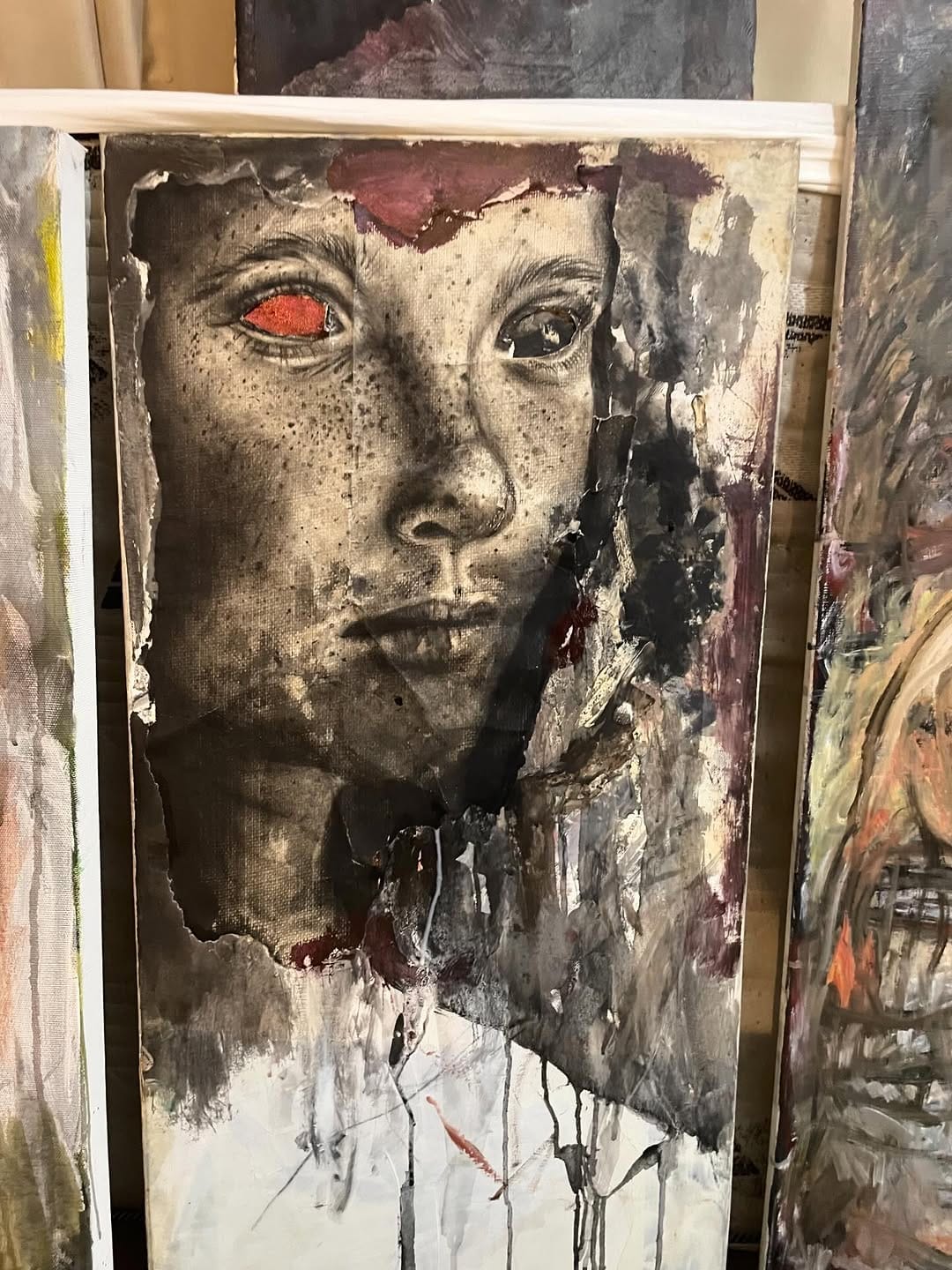
Miman welcomes these diverse interpretations, noting that translating his subconscious into a physical medium brings him far more satisfaction than painting standard landscapes. He prompts audiences to confront and analyze these visceral reactions, fostering an appreciation for the vast diversity of human expression. This educates the public on mental health realities outside of traditional medical frameworks, proving that emotional education can happen in a gallery just as effectively as in a classroom.
Ultimately, Miman Zamri’s surrealist art reminds us that the human mind is complex, sometimes dark, but always resilient. Through his commitment to emotional honesty, he has transformed his subconscious into a canvas of healing—pioneering a space where art, mental health and professional success beautifully coexist.
Find out more about Miman Zamri’s work on his Instagram @miman_zamri or TikTok @mimanwonderland.