
Paul Thomas Anderson’s One Battle After Another is a thrilling depiction of dormant revolutionaries fleeing from authorities commanded by a cartoonishly racist government tightening its grip on left-wing insurgents. But the story it tells holds greater significance than its climactic gunfights and revolutionary violence typical of 1960s left-wing guerrillas like the Black Panthers and the Weather Underground. The film reveals the intricacies of resistance and its inevitable entanglement in personal responsibility and raw emotion, which ultimately compromise the French 75’s revolutionary objectives. The narrative culminates in a central claim: resistance, though flawed, remains perpetual and unflinching, at once self-righteous and heroic, and must evolve with the changing machinery of state repression to secure liberation. The themes present in the film echo the UN Sustainable Development Goal of Peace, Justice, and Strong Institutions.
In the movie’s opening, the French 75 come off as more of a ragtag group of anarchists rather than a principled movement. To be sure, their actions are sincere and heroic: they break into an immigration detention center and hold the soldiers at gunpoint to free the captives. However, the flaming passion born out of their revolutionary vigour quickly comes to the surface as Perfidia—played by Teyana Taylor—uses her newfound position of power for her own arousal and humiliates the Colonel and main antagonist Steven Lockjaw—played by Sean Bean—at gunpoint. After the operation’s success, another member engages in celebratory gunfire out the window of their car while Perfidia passionately kisses her boyfriend, Pat Calhoun, played by Leonardo DiCaprio. In another mission, she pleads to have sex with Pat right as a bomb they planted goes off. Their blatant indulgence in wanton violence for vaguely defined notions of resistance actually serves to harm the overall movement and puts a target on their back, as Lockjaw develops an obsession for Perfidia and eventually captures her, leading to the destruction of the French 75.
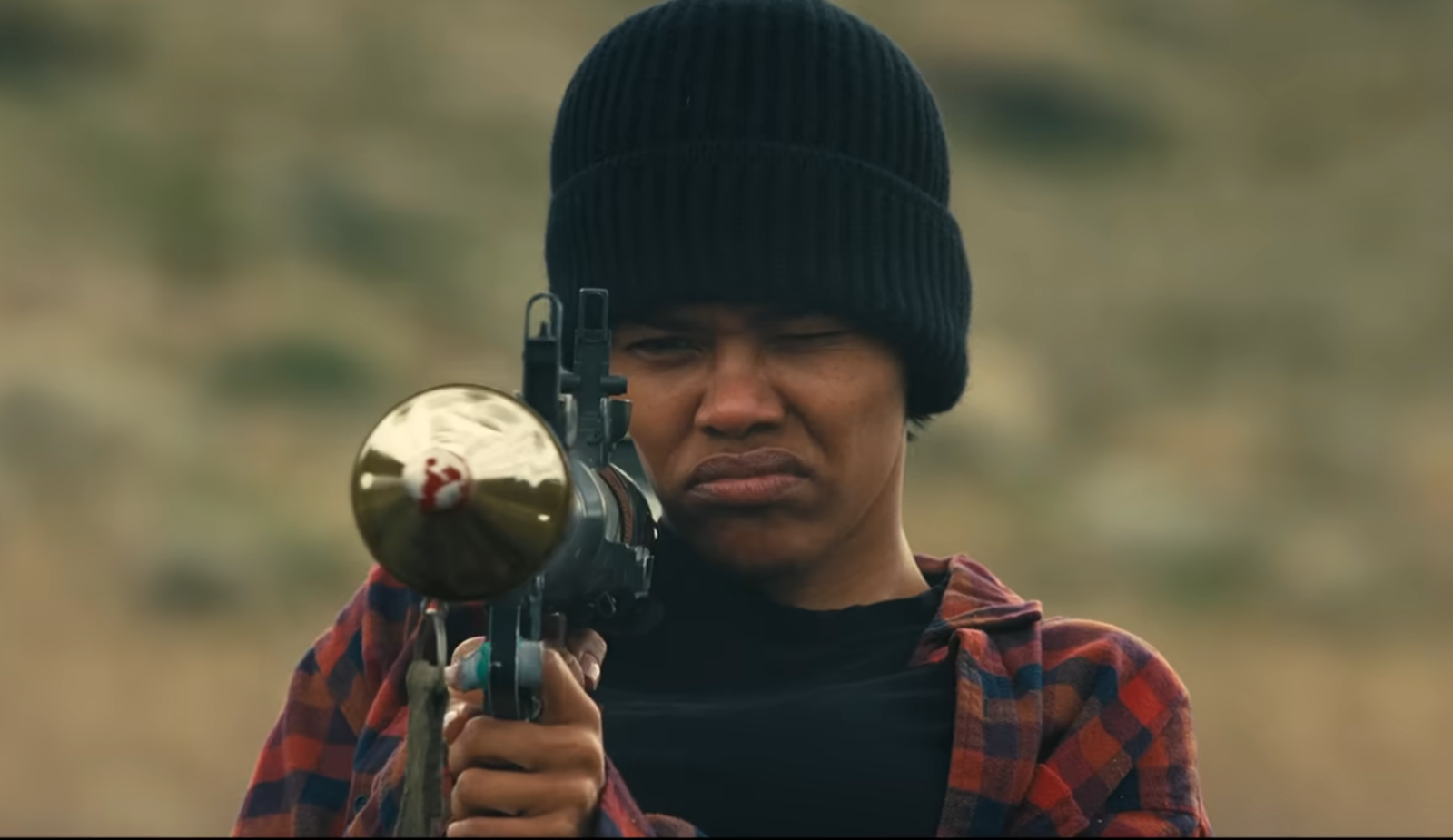
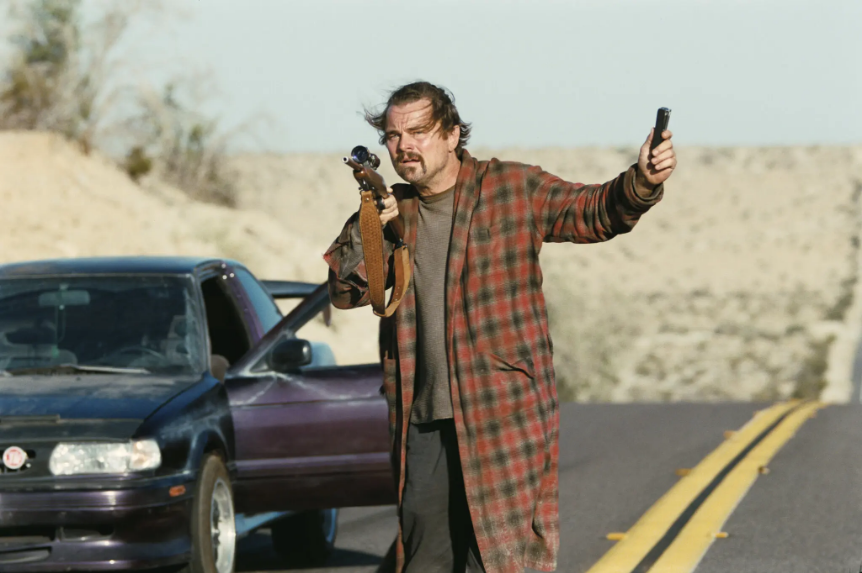
Bob Ferguson (left) and Perfidia in the more action-packed moments of the film. Images courtesy of the official trailer.
The film is visually brilliant, using the iconic and chaotic shaky camera style to convey the melancholy of a post-revolutionary era intermixed with long sequences that mirror Ferguson’s intense paranoia and Sergio’s organized resistance. The many wide shots portray the intensity of 1970s politics while simultaneously evoking current events, creating a visual style that blurs the boundaries between reality and fiction, past and present. The events that unfold capture the same sense of absurdity that characterizes modern American politics in all its ruthlessness: from mass riots against armed policemen to rebel skateboarders helping fleeing immigrants, Paul Anderson masterfully captures the irrationality of an empire in decline, raging against its inevitable downfall after spreading itself too thin in the pursuit of global dominance. Colleen Atwood’s subtle and ingenious costume design adds to the immersion: the eccentric revolutionaries are cloaked in scruffy attire signifying their status as rebels in hiding, while Lockjaw and his ilk are obsessed with their own vanity, with their laughably thin clothing betraying the vapidity of the money-hungry lackeys of the ruling class.
History is littered with well-meaning but misguided revolutionaries whose actions were weaponized to invalidate the entire cause. For example, the aforementioned Weather Underground was a white anti-racist group consisting of a bunch of rich kids who built bombs in their parents’ townhouses. They eventually transitioned into what many would consider a cult, encouraging isolation from their family members and engaging in psychoactive drug use to challenge societal norms that they felt needed to be destroyed. The results included coercive sex and group orgies to challenge monogamy and conducting forced criticism sessions to ensure full dedication to the group. This perversion of resistance individualized leftist revolutionary ideas, reframing class conflict as a matter of personal purification rather than a quest for societal transformation. The group was later partially condemned by Fred Hampton, a figure they revered: “...its leaders take people in situations where they can all be massacred, and they call it revolution.”
While not directly analogous to the French 75, the history of the Weather Underground illustrates the consequences of ego-driven violence in the pursuit of liberation for icon status that Perfidia herself succumbed to. The French 75’s subsequent descent into violent excess undermines the very principles of justice they sought to establish. The goal of One Battle After Another seems to mirror the belief that real revolution relies on the creation of more just, sustainable systems that can ensure peace for all citizens.
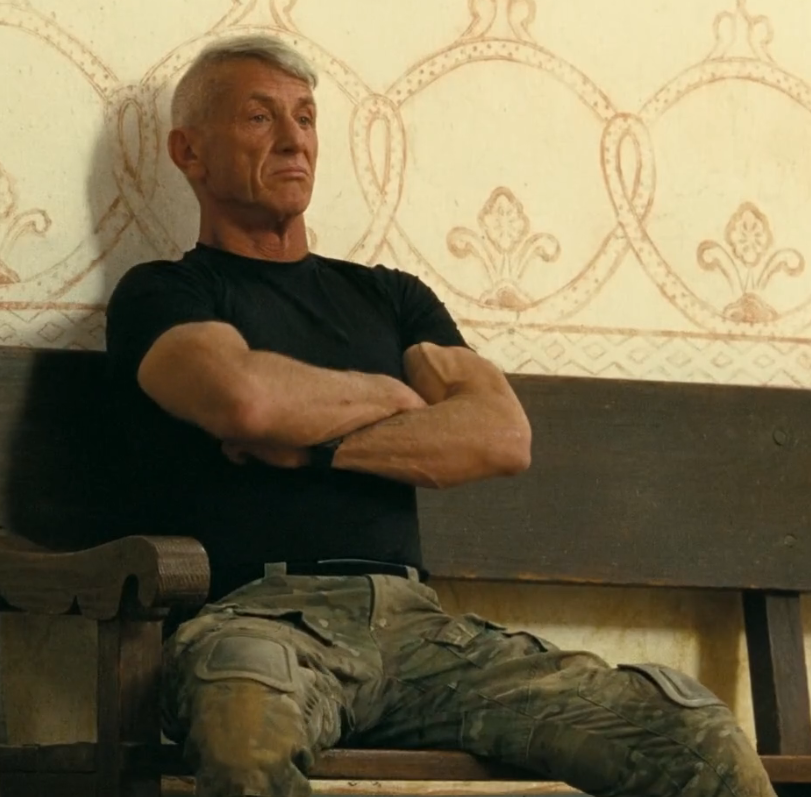
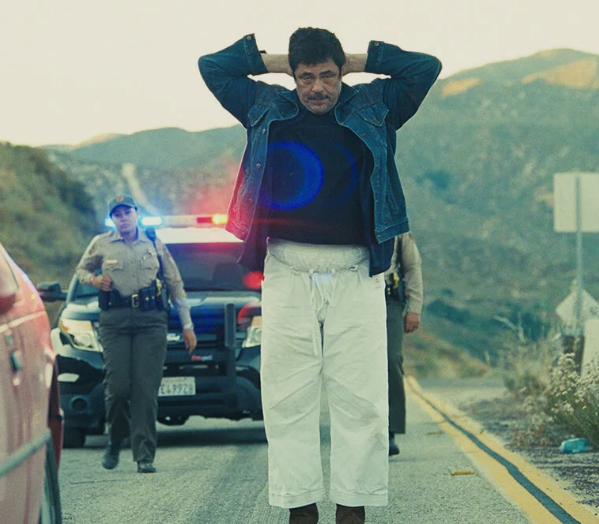
Colonel Lockjaw in a comically thin shirt (left), Sergio St. Carlos calmly surrenders to the police after helping Bob Ferguson escape Baktan Crossing. Images courtesy of IMDB.
Sensei Sergio—played by Benicio Del Toro—juxtaposes the French 75’s past activism with his quiet, systemic protection of undocumented immigrants in Baktan Crossing. Unlike the French 75 in their prime, Sergio does not declare war against the government or make himself known to the authorities. Instead, he operates a network of safe houses for undocumented immigrants and is well-known and trusted by his community, who inform him of Lockjaw’s police raid, allowing the swift evacuation of everyone at risk. He refuses the seduction of symbolism and the temptation to become the face of the revolutionary vanguard. He maintains a calm demeanour while completely hidden from Lockjaw’s radar. He understands the asymmetry in power between himself and the state, so he relies on discreet communication, whether it’s with local skateboarders or his karate students, to keep the vulnerable safe—methods that the government would never suspect, let alone penetrate. When it comes to the French 75, we see who they’re fighting, not who they’re fighting for, whereas we actively see the faces of Sergio’s allies. Resistance doesn’t always mean confrontation with the government; it means allocating your energy to those directly under threat.
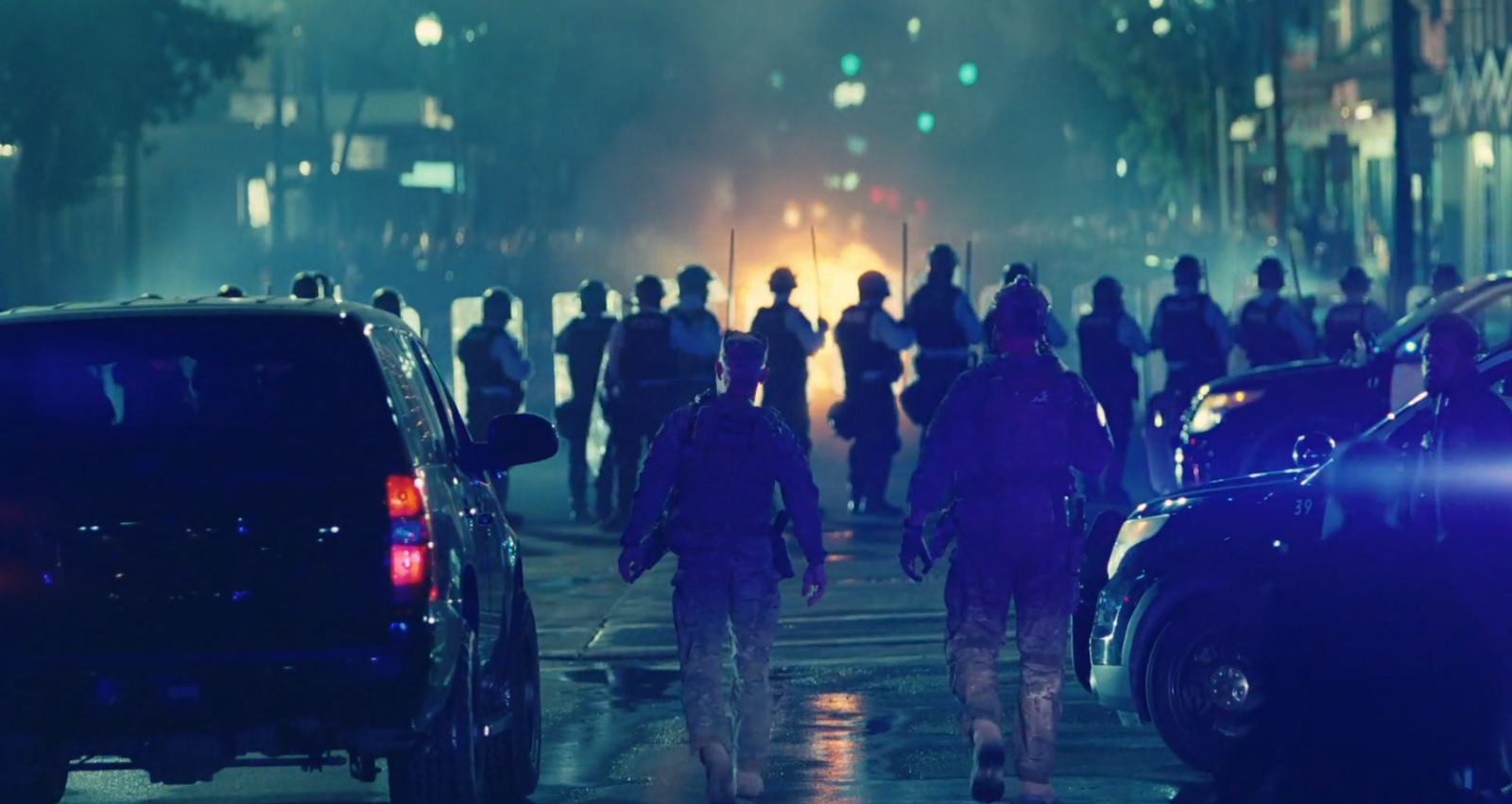
Anderson clearly showcases the multifaceted nature of resistance. We can track how activism and its approaches change over time. The chaotic era of 1960s America consisted of the devastating Vietnam War and global decolonization, instilling a sense of revolutionary zeal among the American youth that made them challenge the status quo. In the present, the empire has consolidated its control and largely quelled public, especially violent, dissent, making activism and resistance more of a political game rather than an external battle. But in both eras of the film, emotional attachment to the cause and a staunch belief in emancipatory principles guide Perfidia and Sergio.
The film portrays resistance in its dual forms—violent and nonviolent—as equally legitimate confrontations with an oppressive state. It underscores that emotions are inseparable from revolutionary ambitions: they surge through every act of defiance, sometimes clouding the clarity of original objectives. These emotions cannot be suppressed; rather, they must be harnessed as a force of mobilization and channelled towards the ultimate goal of liberation. Although nascent, revolution is an inevitable process that expands relentlessly toward victory, with a tragic consequence: to give oneself to the struggle is the likelihood of never witnessing its completion.