
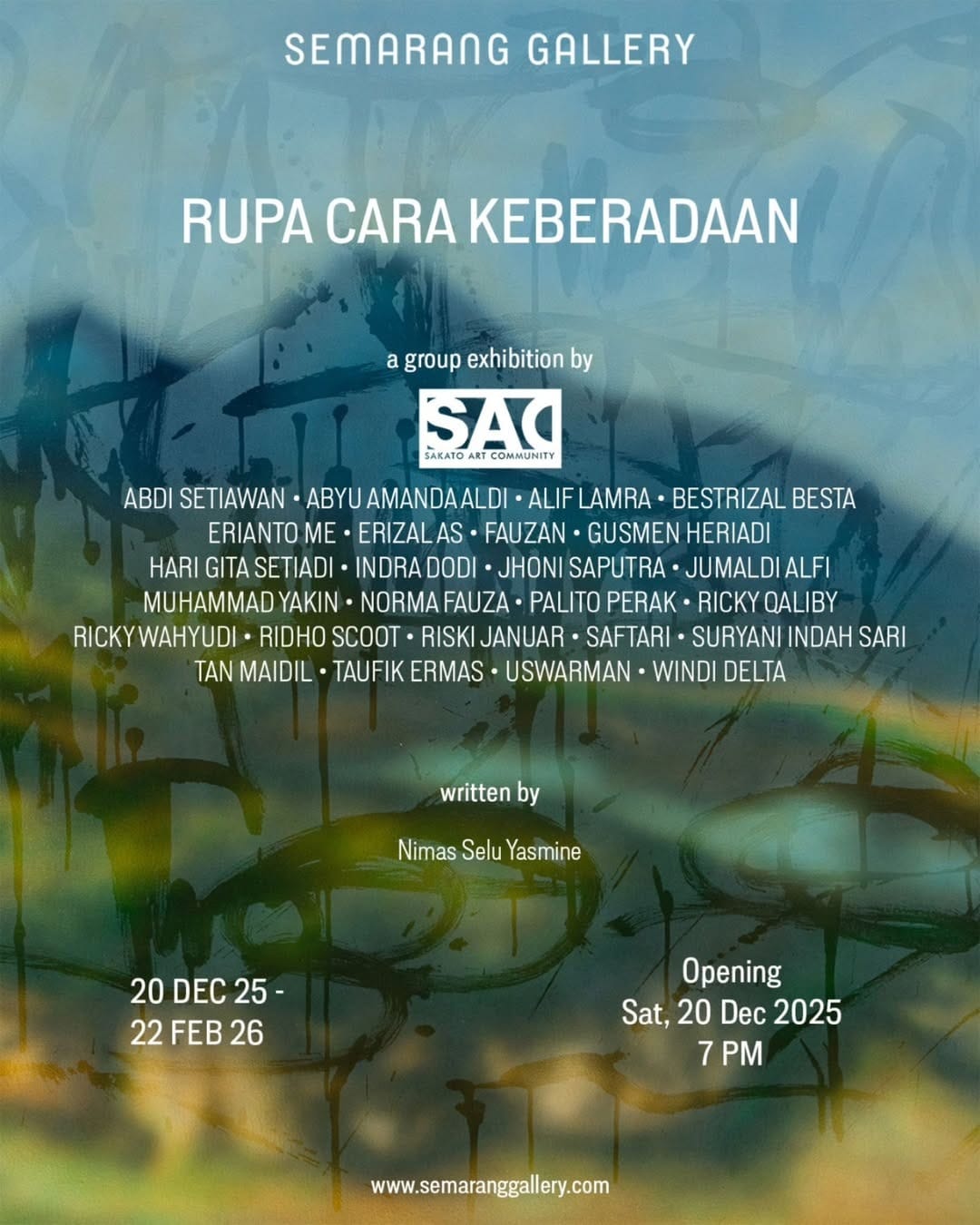
In 1972, John Berger famously opened Ways of Seeing by stating that "The relation between what we see and what we know is never settled." He argued that our vision is manipulated by habit and convention, particularly within a culture obsessed with ownership and property. Over fifty years later, this tension between seeing and knowing forms the critical heart of Rupa Cara Keberadaan (Forms of Ways of Being), a profound group exhibition by the Sakato Art Community, a Minangkabau-based collective. Hosted at Semarang Gallery and running until February 22, 2026, the exhibition is a visual inquiry into the fragility of modern life, dismantling the illusion of permanence and ownership in a world defined by rapid acceleration and material excess.
Curated by Nimas Selu Yasmine, the exhibition unites twenty-five artists to confront a singular, pressing question: “how do we maintain a sense of self when our lived experiences feel fragmented by the speed of consumption?” In an era where identity is often conflated with what we buy—a concept Berger critiqued as the "glamour" of publicity—Rupa Cara Keberadaan positions existence not as a fixed state of ownership, but as a fluid, often messy process of negotiation with our environment. It suggests that our internal fragmentation is a mirror of the external ecological fractures we have caused. The works on display expose the ecological wounds inflicted by a society that prioritizes speed over sustainability. This is why the exhibition is relevant to the United Nations Sustainable Development Goal of Responsible Consumption and Production.
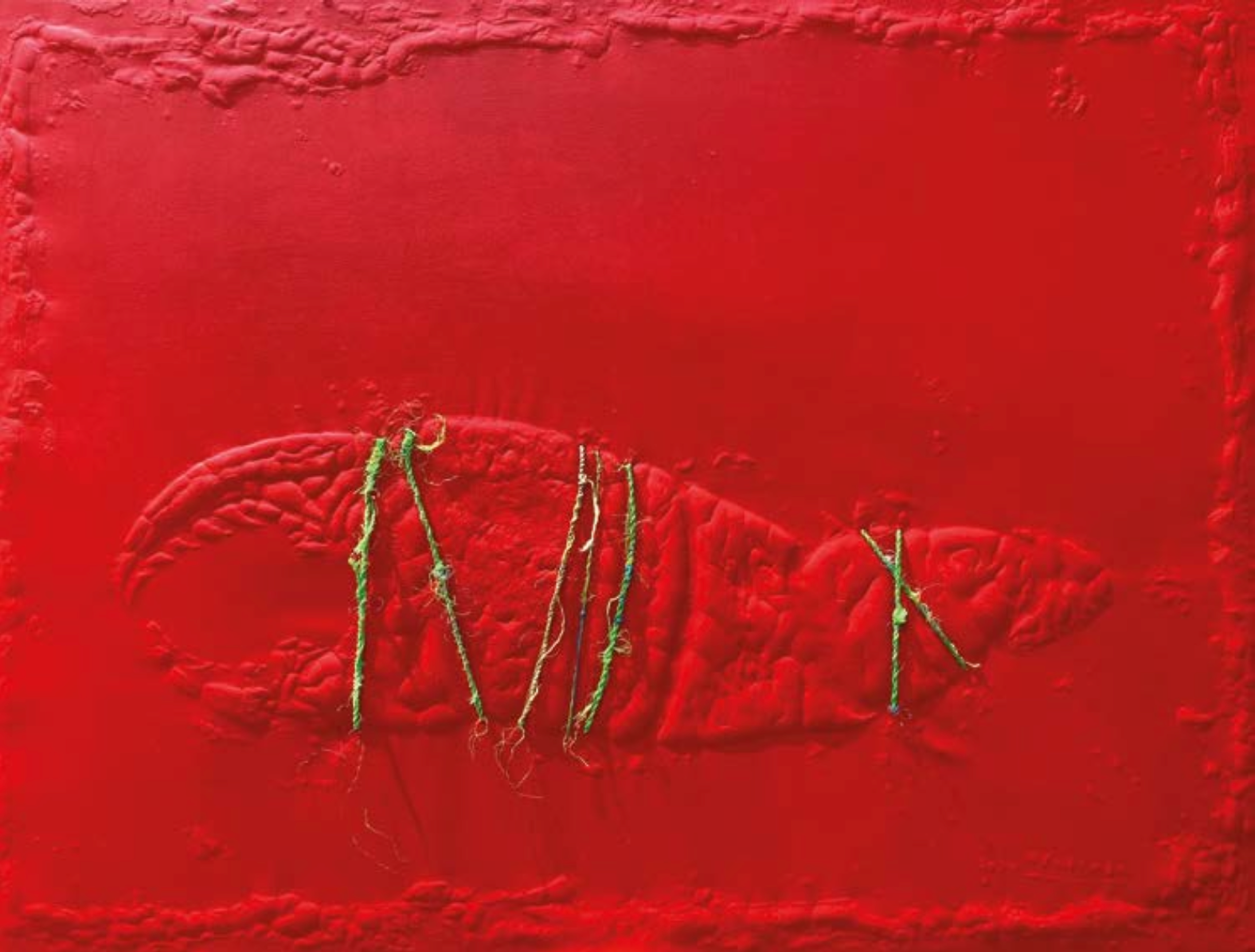
The works of Uswarman, such as Terikat Plastik (Bound by Plastic), which shows a single-fractured crab pincer bound by threads, challenge the viewer to look beyond the surface of objects. In the tradition of Berger’s critique of oil painting—which historically celebrated the merchant’s possession of merchandise—Uswarman’s strokes often dissolve the solidity of forms. Instead of presenting objects as pristine commodities to be desired, he renders them through mixed media as part of a chaotic, shifting landscape. His work hints at the debris of culture, the accumulation of things that define our "ways of being." It forces the audience to confront the materiality of their existence: we are what we consume, and more terrifyingly, we are what we throw away.
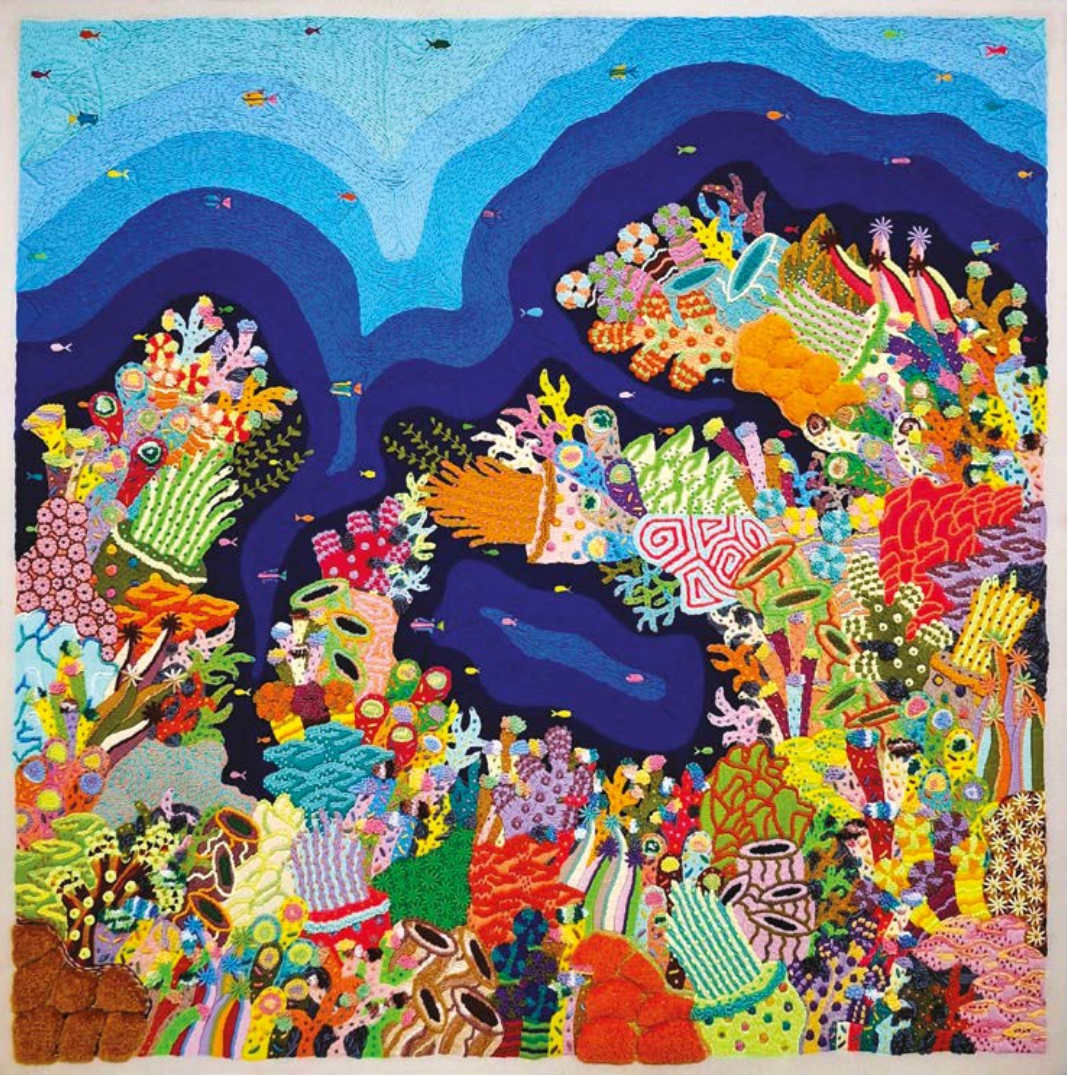
Similarly, mixed media and embroidery on canvas pieces by Suryani Indah Sari bridge the gap between internal philosophy and external reality. Her works evoke a dialogue with nature that is stripped of romanticism, presenting the environment not as a backdrop for human drama, but as a vibrant yet silent witness to our excesses. Her different coloured threads show all of the components of a coral reef, highlighting the intricate, though overlooked, web of life that sustains not only the natural world but also human life. Consider how oceanic planktons are responsible for producing half of the world’s oxygen, and yet only 20 percent is consumed by marine life. This is why her art serves as a corrective to the "spectator" mentality; it states loudly that we are not watching the climate crisis from a distance; we are woven into its very fabric.
The exhibition implies that "seeing" is an act of responsibility. To truly see the art of Rupa Cara Keberadaan is to acknowledge the unsustainable pace of our current reality. The practices of Sakato Art Community remain rooted in the communal values of West Sumatra, and offer a counter-narrative to the individualism of consumer culture. They remind us that existence is relational—formed through memory, social bonds, and our impact on the earth.
In a world that demands we constantly look forward to the next purchase, Rupa Cara Keberadaan demands we stop and look around. It uses the canvas to deconstruct the ways we are seeing instead of being, one that has led us to an ecological precipice, offering a chance to reimagine a way of being that values preservation over possession.
Find out more about the Rupa Cara Keberadaan by checking the Sakamoto Art Community Instagram @sakatoartcommunity or the Semarang Art Gallery website www.semaranggallery.com and Instagram @semarang_gallery.