
Australian artist Sally Hastings challenges our perceptions around consumer goods with her striking surrealist gummy snake paintings that blur the line between appetizing and unsettling. Her paintings use the familiar image of candy snakes to replace the figurative depiction of real-life snakes, highlighting the often-overlooked consequences of human consumption on wildlife, particularly on snake populations. Despite sharing that her work draws on themes of nostalgia, pop culture and kitsch Australiana, this particular body of work can also be read as a reflection on how the seemingly small choice to purchase shelf-top candy can have a long-term impact on the delicate balance of ecosystems. This is why her work is relevant to the United Nations Sustainable Development Goals of Responsible Consumption and Production and Life on Land.
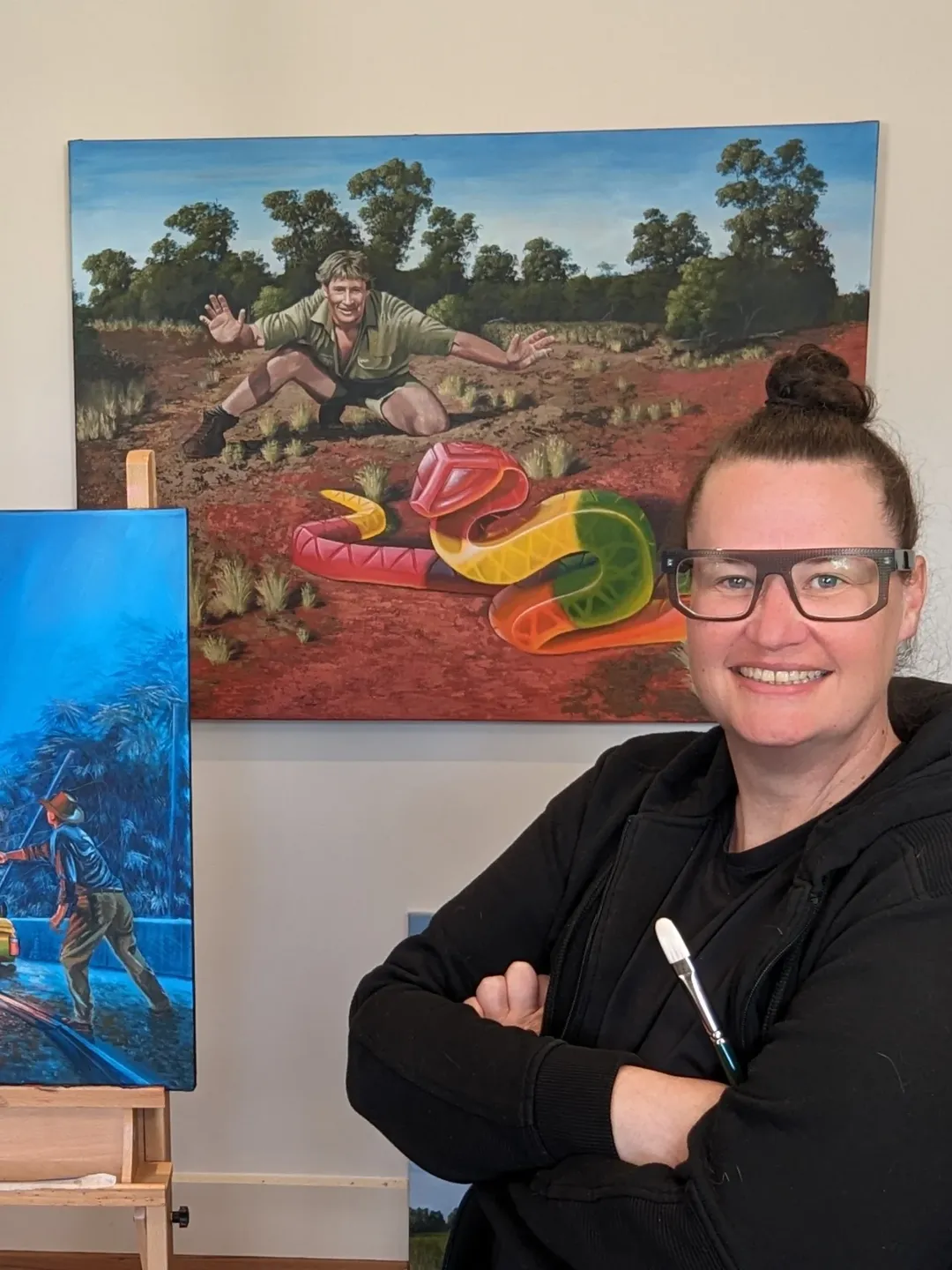
One of Hastings’ most notable works is a series of paintings depicting the late Australian conservationist and television persona, Steve Irwin handling her signature gummy snakes in the Australian outback. In an Instagram post, Hastings shared these paintings to commemorate Steve Irwin Day, which falls on November 15 annually to carry on Irwin’s message of conservation and to support his charity, Wildlife Warriors. This only goes to show Hastings’ commitment to ensuring that her art is able to help raise the public’s awareness of animal conservation.
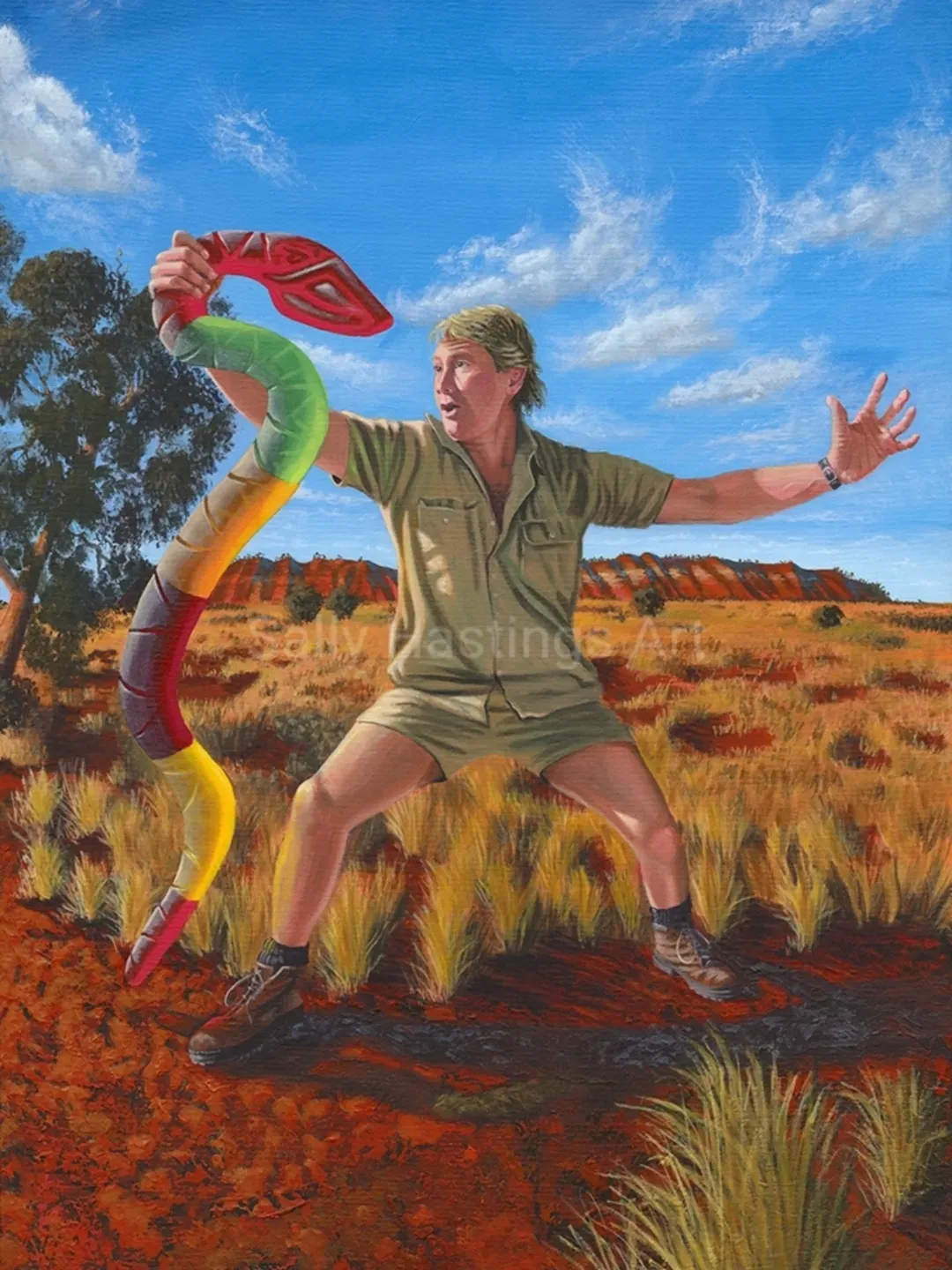
Australian snakes are protected under the Nature Conservation Act 1992 and cannot be killed or taken from the wild. The Act is meant to protect certain species of Australian snakes that have become threatened from land clearing for agriculture, urban development and through the introduction of new animals. Agriculture, including the cultivation of the sugar cane that is then turned into gummy snakes, has proven to be a major cause of Australian snakes' decline. Specific studies have even been conducted to discourage farmers and agricultural practitioners from culling snakes. This is because, despite their fearsome reputation, snakes actually pose very little threat to human beings and act as important middle-order predators that help to keep the ecosystem healthy while ensuring that agricultural lands stay pest-free.
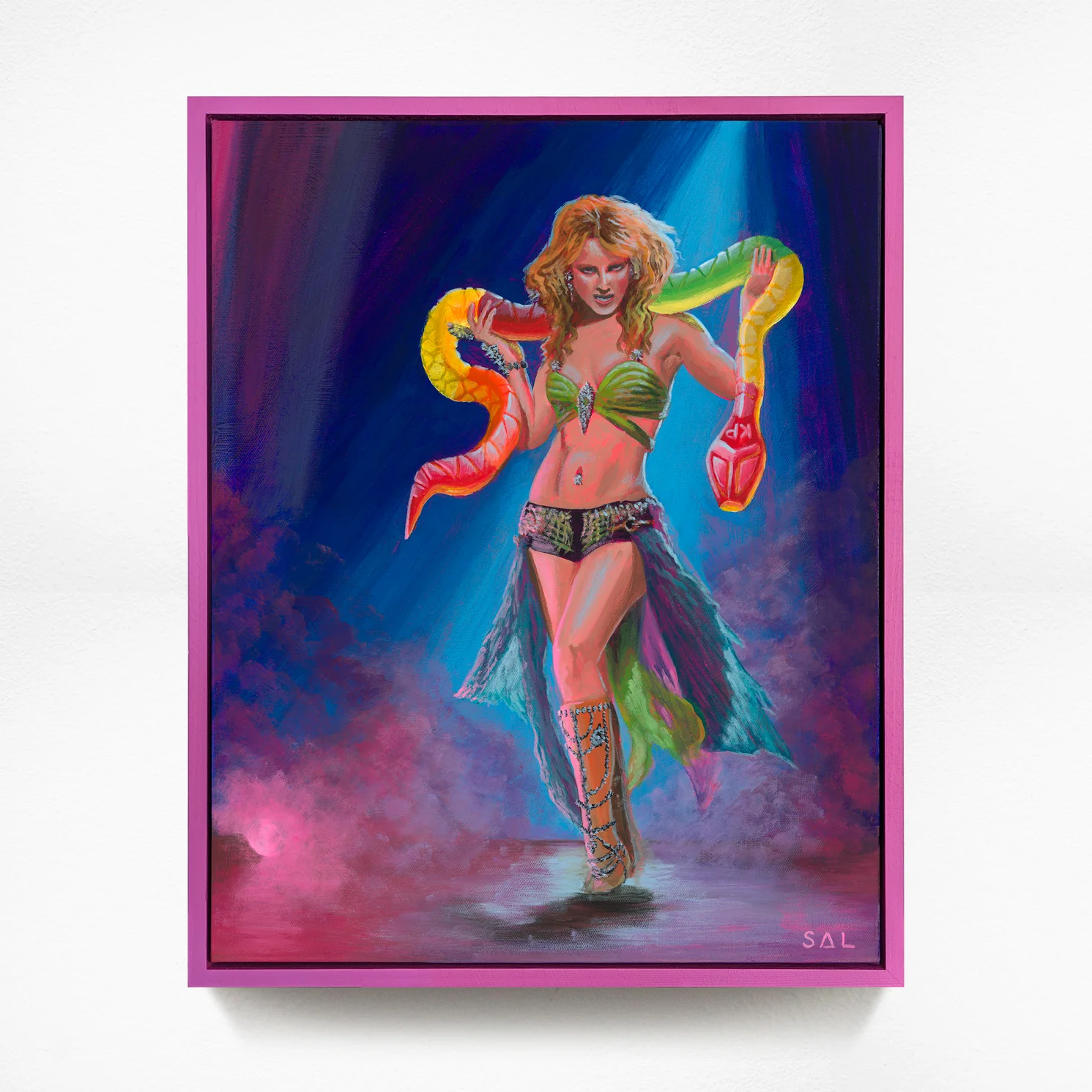
In her other paintings, such as Britney, Hastings has also used her gummy snakes to replace the iconic albino Burmese python that was part of Britney Spears’ 2001 VMA (MTV Video Music Awards) performance. Spears’ choreography involved draping the snake over her shoulders and showing it to stage-side audiences. She later recounted in her autobiography her fear of the choreography as the snake hissed at her several times during rehearsals and the performance itself, conveying its distress. This painting exposes how the snake was commodified and exploited for entertainment, calling for more ethical treatment in the future.
Sally Hastings’ gummy snake paintings are a masterful sleight of hand—they lure her viewers in with the sweet nostalgia of childhood candy, only to reveal the bitter aftertaste of mass human consumption. By replacing the living, breathing serpent with its sugary doppelgänger, she holds a funhouse mirror to people’s relationship with nature: one where they comfortably commodify wildlife for pleasure, yet remain willfully blind to its ecological costs. Whether draped over the shoulders of a pop icon or cradled by a conservation legend, her surreal confections are not just playful absurdities; they are urgent, sticky questions about ethics, exploitation and the fragile ecosystems that are so often taken for granted. In the end, Hastings challenges her audiences to look past the kitsch and see the real snake in the grass—their own complicity.
Find out more about Sally Hastings and her paintings by checking her website www.sallyhastingsart.com.au or Instagram @sally_hastings_art.