
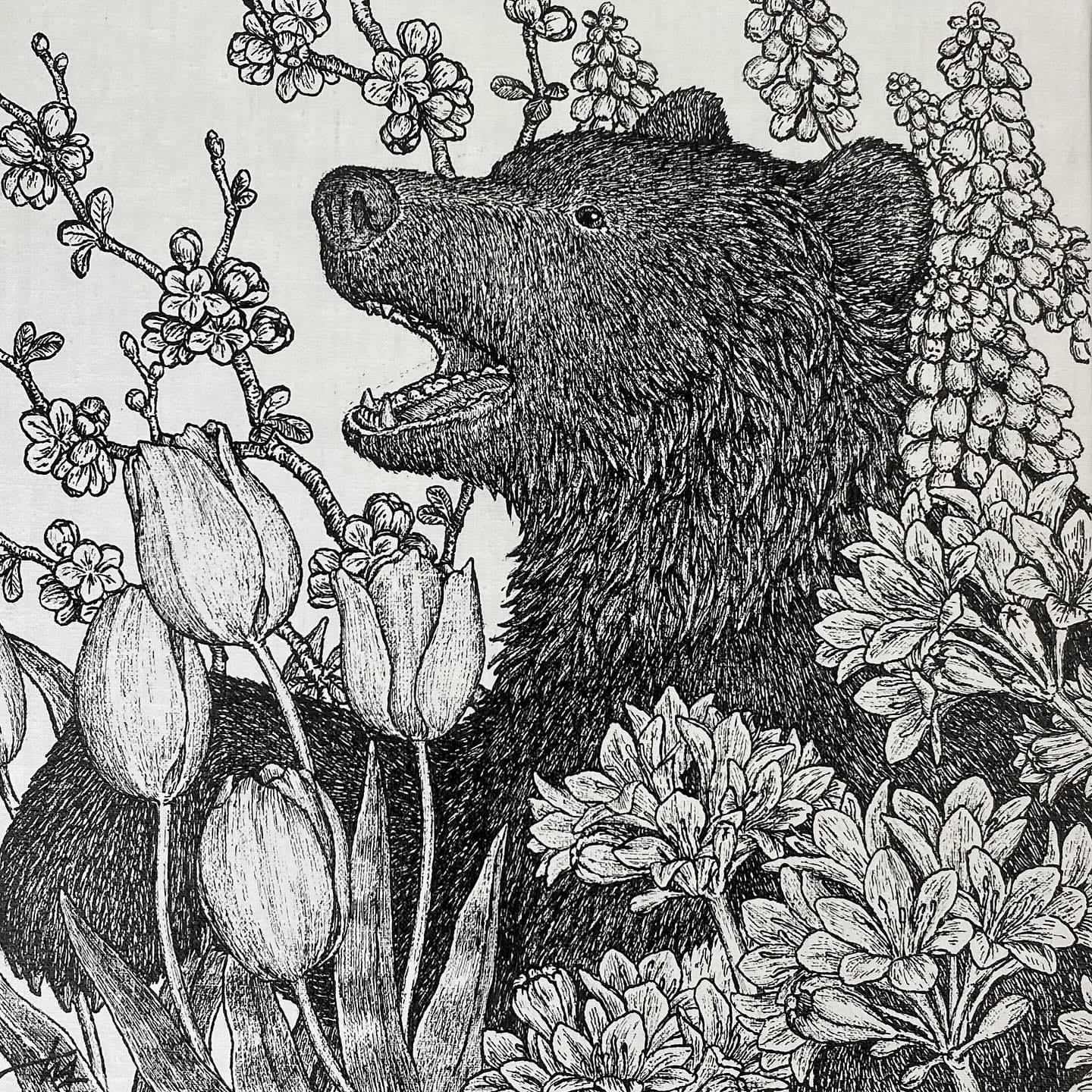
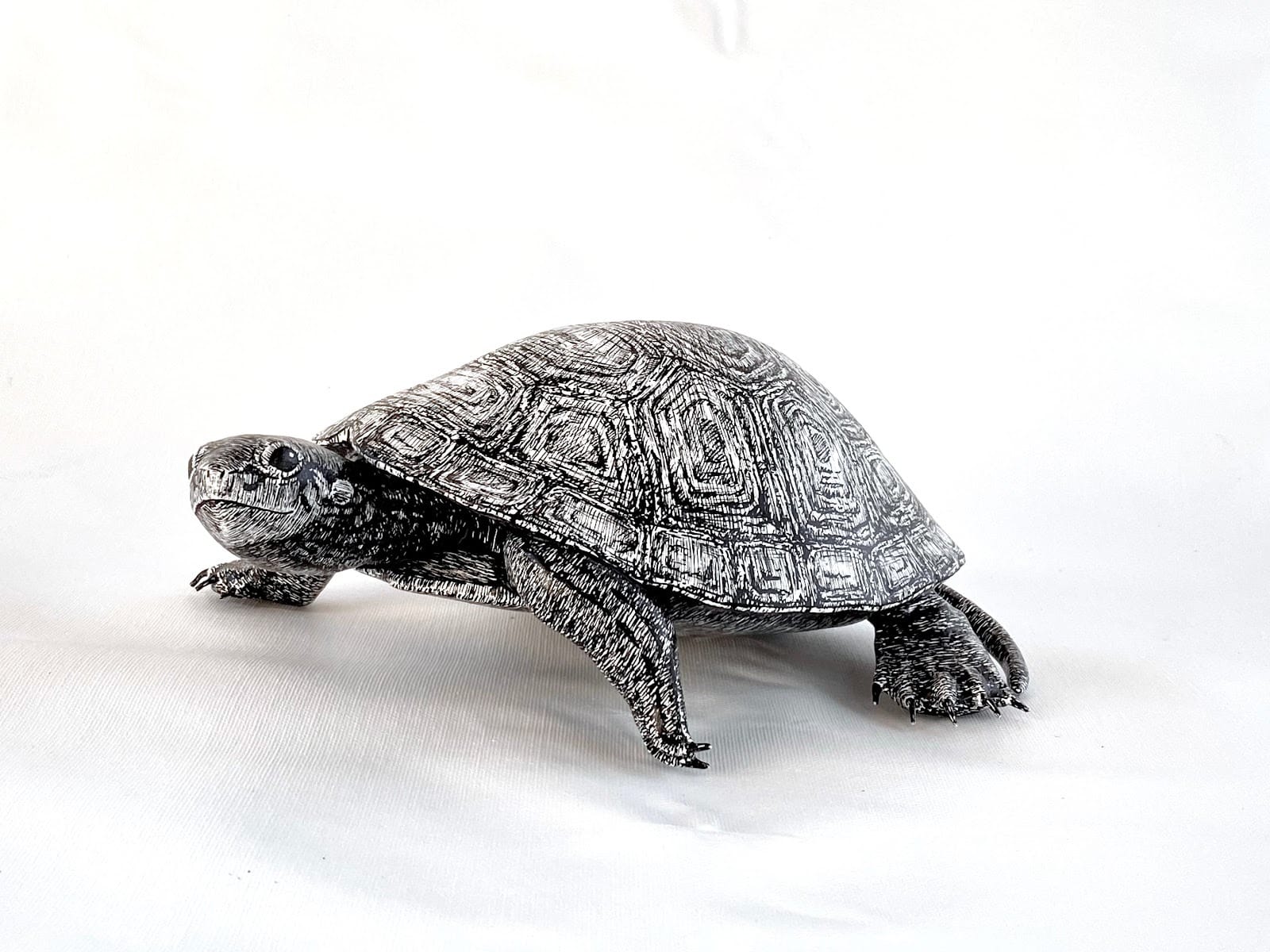
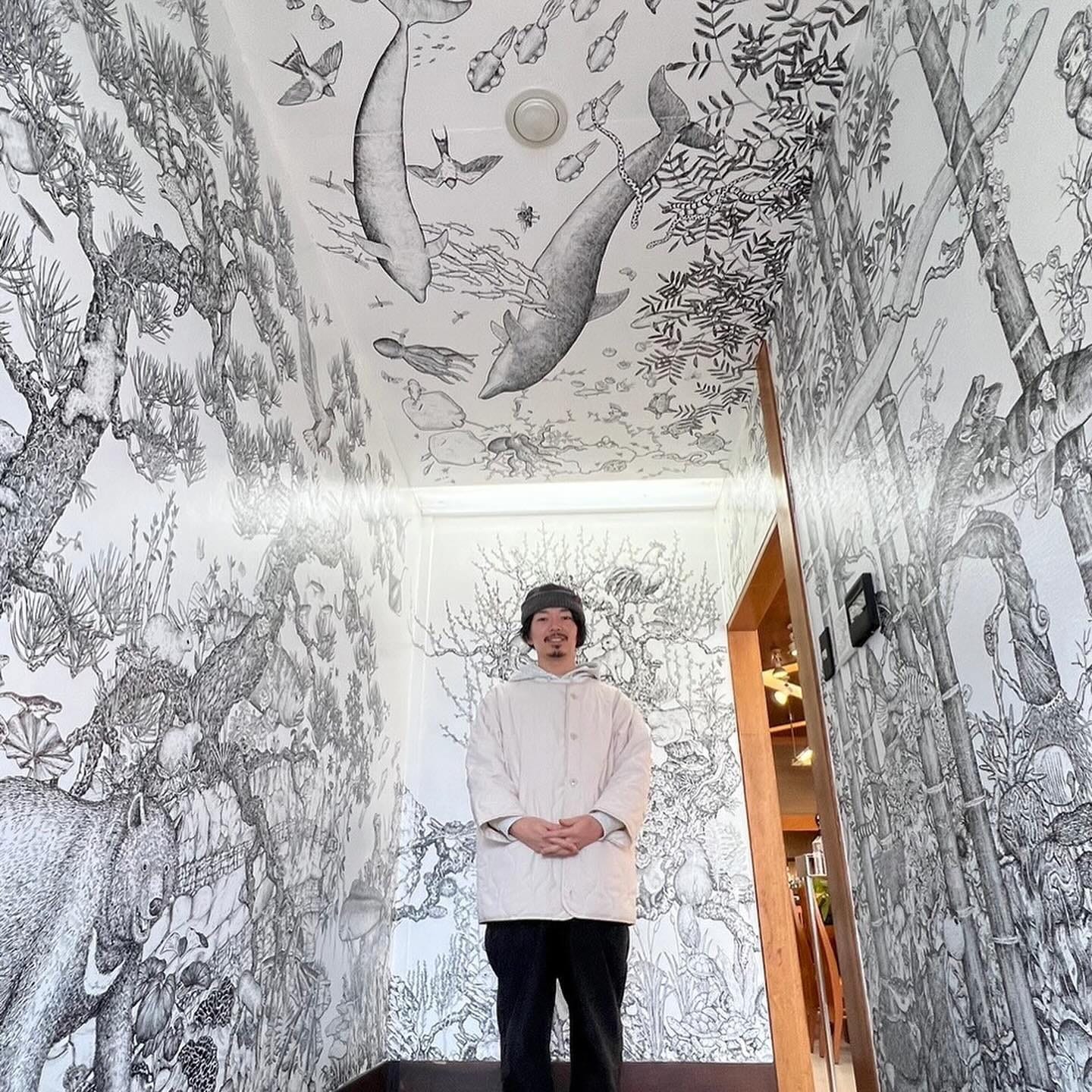
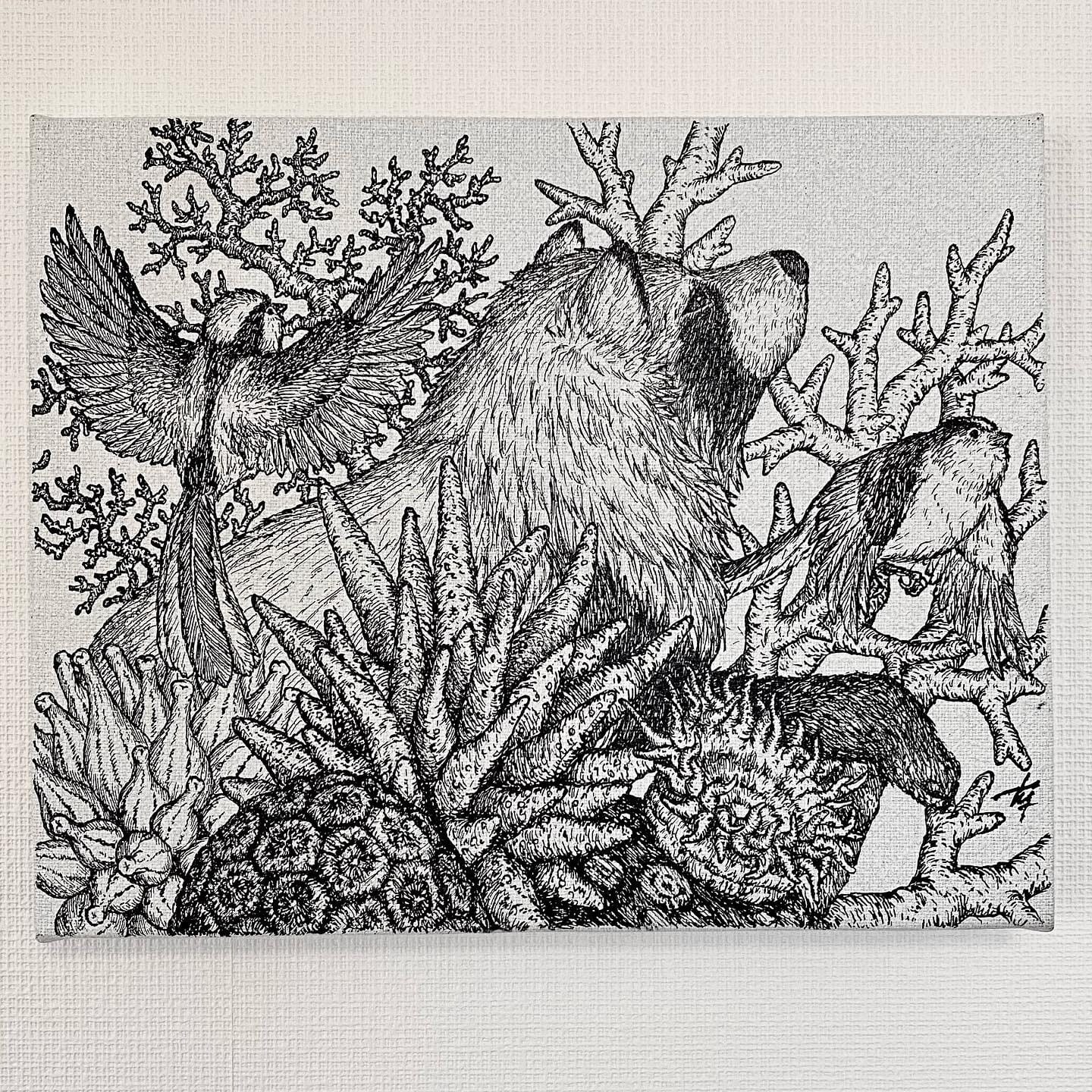
Japanese artist Tomoaki Murayama works with the humble medium of pen on paper, and yet he’s able to elevate it and use it to create intricate, life-like scientific illustrations of flora and fauna. He also takes this practice one step further by using the medium to create 3D dioramas of wildlife sceneries, the likes commonly found in natural history museums.
Murayama’s choice of medium is deliberately made to emphasize how, even in these supposedly true-to-life depictions of wilderness, human intervention is palpable. His pieces become reminders of the immense footprint that humankind has had on the planetary ecology, a force which has impacted every living thing in land, water and air. He makes his viewers reflect on the United Nations Sustainable Development Goals of Life on Land and Life Below Water.
In creating his pieces, Murayama begins by first trying to adopt an animal’s point of view. For example, he would begin a piece that depicts a tortoise in nature by first going out to nature and crouching, putting himself at a tortoise’s height to witness firsthand how a tortoise sees the world.
“When I was in elementary school, I would go to the garden or mountains with a small toy figure and see nature from the figure's perspective. Then the stone becomes a cave, the sand becomes a forest, and the stump becomes a large castle,” shared Murayama about his process.
What Murayama is trying to embody is a posthuman consciousness, the overarching philosophical outlook of the 21st century that views humankind as equals to any other part of the planet's ecosystem. Unlike previous centuries, posthumanism states that humankind’s points of view are not the norm. This came only after rampant ecological catastrophes and climate change, which has led humanity to realize that the only way to move forward in peace is to also consider how their actions impact the lives of animals, plants and other elements of nature.
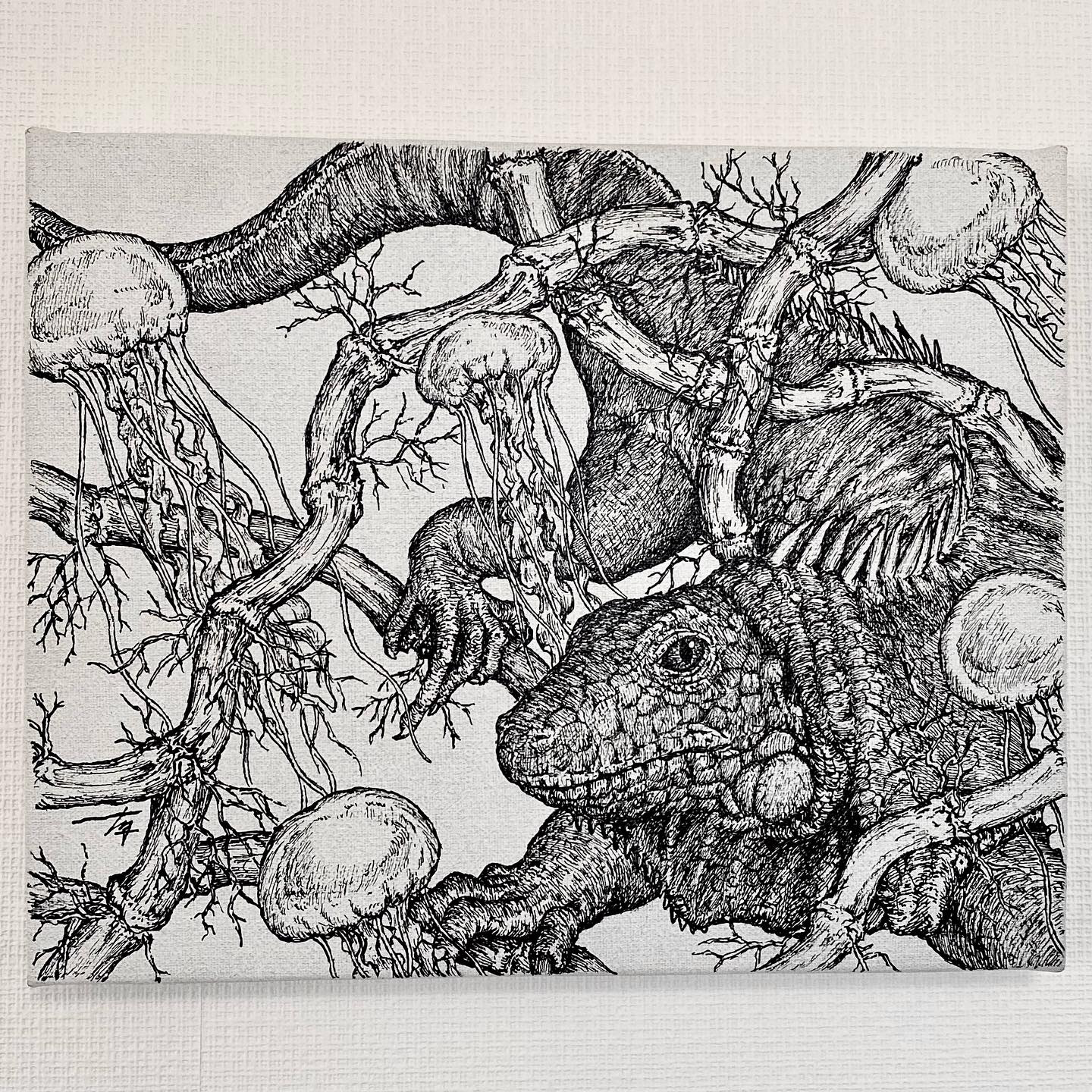
Murayama’s pen on paper pieces embodies a posthuman consciousness perfectly, as it shows that humanity has the capacity to also empathize and understand nature. This is exemplified by how pen and paper, man-made tools, are able to render nature realistically, a symbol of humankind’s capacity to empathize with nature and find ways to exist in harmony with it. Murayama also goes deeper into this sentiment through his series A Piece of Harmony, where he has drawn together in one paper species of animals and plants that would not be found together in their natural habitats.
As an example, his piece Iguana shows an iguana floating amongst a shoal of jellyfish. By depicting these species together in his signature pen on paper drawings, Murayama not only show human kind’s connection with nature, but also highlights how different species exist as complementary components of a planetary ecosystem, despite the fact that they are not found in a single space together. Each species has a role to play in the grander scheme of things, a cycle that keeps the planet hospitable for humankind and all the wonderful creatures they share it with.
Find out more about these pen and paper pieces and other pieces by Tomoaki Murayama by checking their Instagram on @tomoaki_art.