
At first glance, the work of Thai artist Wanda Chaima appears to be a celebration of childhood whimsy. Her canvases are awash in candy-colored hues, populated by characters with wide eyes, animalistic ears, and exaggerated, cartoonish expressions. They invite the viewer to smile, to lean in, to feel safe.
But this safety is an illusion—a deliberate aesthetic trap designed to lower our defenses. Once drawn in, the viewer realizes that these playful figures are not celebrating innocence but are screaming in silence. They hint at a mirror that uncovers how mental well-being is repressed in the name of modern life and productivity. This is why her work is aligned with the United Nations Sustainable Development Goals of Decent Work and Economic Growth and Good Health and Well-Being.
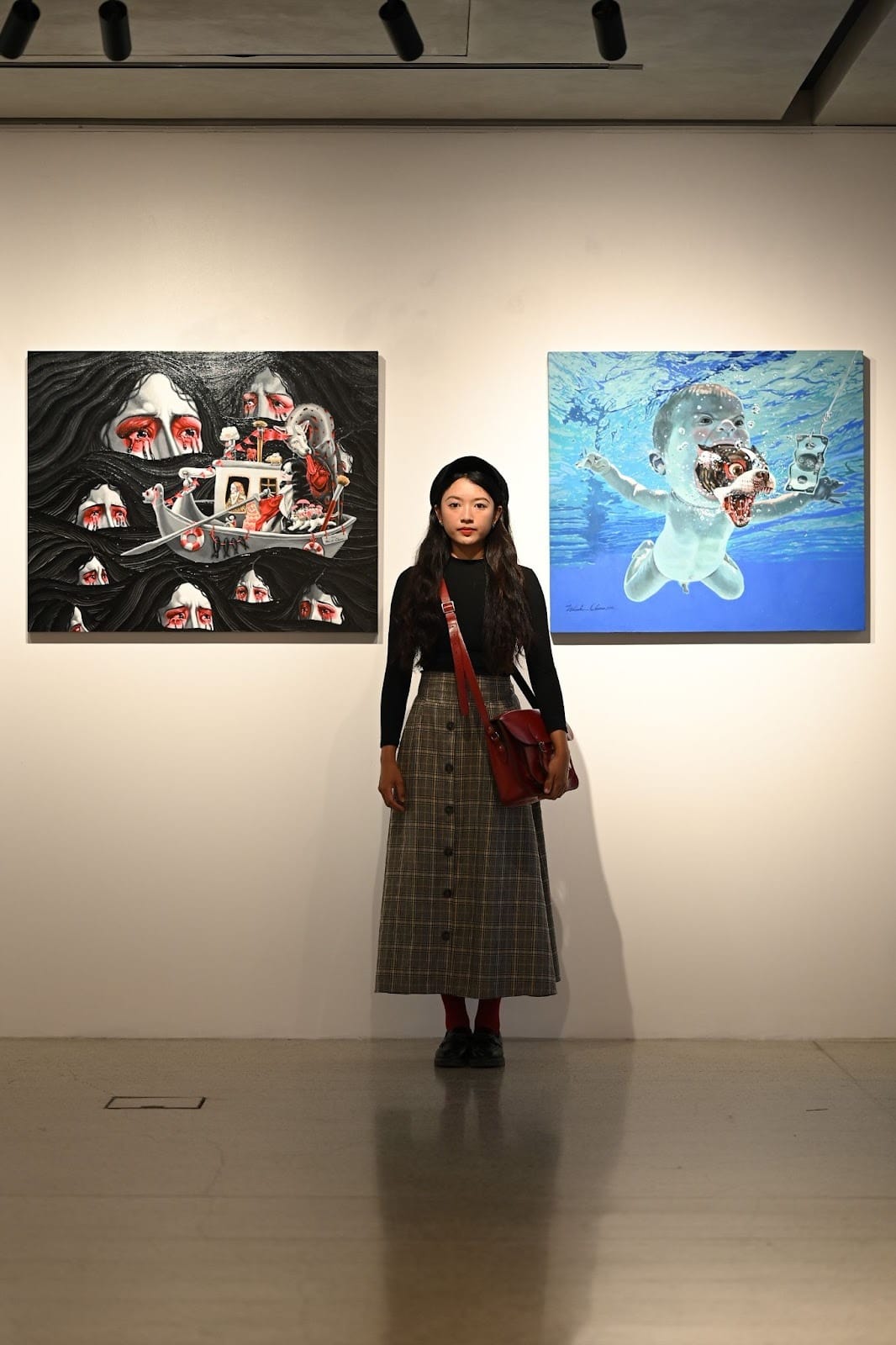
Take, for example, the two works that she presented in the group show Fractured Realities, hosted at Central: The Original Store. There, Chaima dissects the darker corners of the modern psyche, exploring the disconcerting truths of human behaviour that polite society prefers to ignore in two very different ways. Her first work touts darker colours, animals and little girls are seen rowing a boat in a sea made by the tears of women. This work is more immediately an attack on the senses, where the dark undertones of a young woman’s life are laid bare. Meanwhile, her second work sees her recreating Nirvana’s iconic Nevermind album cover that presents a baby swimming after cash. Chaima has added her own touch to the album cover’s anti-capitalism message by including a dog that’s sprung out of the baby’s mouth.
Animals and animalistic traits—ears, tails, or claws—are recurring symbols in her work, suggesting a duality between our civilized selves and our raw, instinctual emotions. These traits serve as a reminder that despite our attempts to sanitize our lives, we are governed by primal fears and desires. When we repress these "beastly" parts of ourselves to fit into societal boxes, the result is the mental chaos depicted on her canvases.
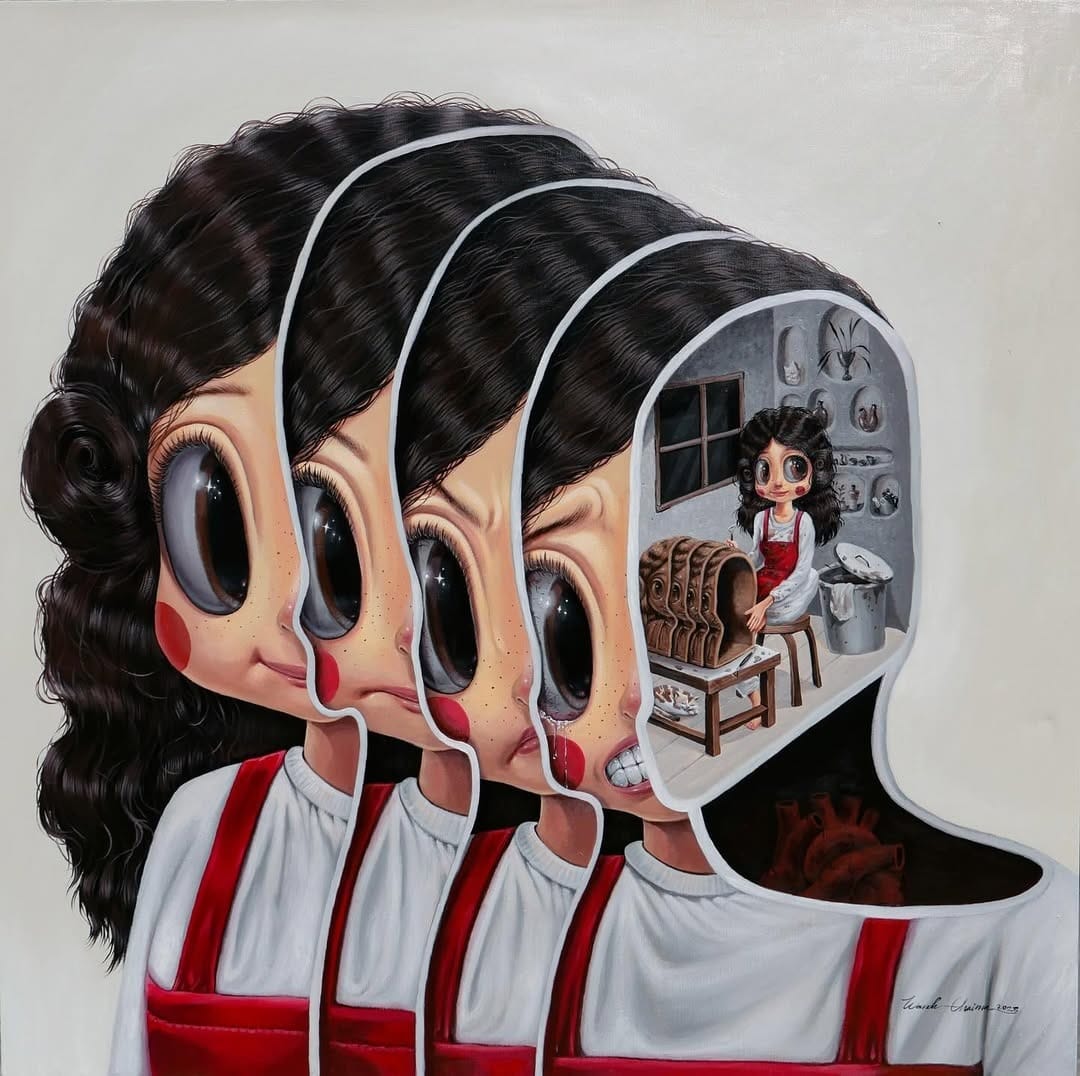
As seen in her work Yummy and more, the core tension in Chaima’s work also lies between the internal emotional state and the external mask. Her characters often sport expressions that are slightly too wide, smiles that are strained, or eyes that betray a deep sense of emptiness. These are visual metaphors for the masks we wear to survive in a high-pressure society. In a world that demands constant productivity and curated happiness—especially on social media—Chaima highlights the psychological cost of maintaining composure. Her "fractured realities" are the cracks in the facade, the moments where the unhealed traumas of living leak through the performance of being okay.
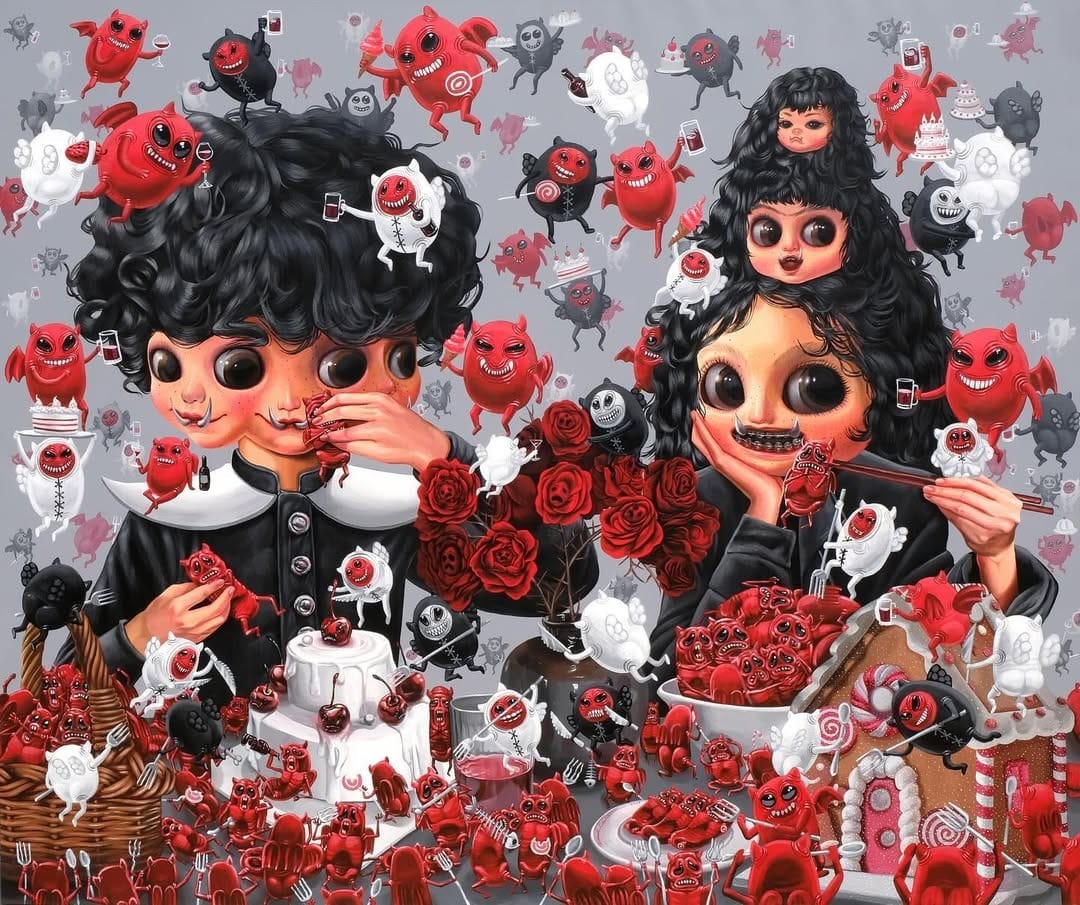
By engaging with Chaima’s art, the audience is invited to a form of visual therapy. They suggest that the first step toward mental well-being is not the elimination of pain but the acknowledgment of it. Chaima refuses to hide the ugly parts of the human experience; instead, she paints them in bright pinks and blues, making them accessible, shareable, and impossible to overlook. She proves that art does not need to be somber to be serious. Her work acts as a mirror, reflecting our own anxieties back to us with a wink and a warning: the only way to heal the fracture is to stop pretending it isn't there.
Explore the vibrant and vulnerable world of Wanda Chaima on her Instagram @wandawawa or read more about the exhibition via the Bangkok Post.