
If you have driven through the winding streets of Bali, you have most likely seen road signs that spell out "Hati-Hati Ada Upacara" (Caution: Ceremony in Progress). These are temporary warnings asking travelers to slow down, to yield, and to respect the sacred processions that are spilling out from temple grounds and onto its surrounding lands that have been transformed into public roads. In the hands of Balinese artist I Wayan Suja, this familiar road sign transforms into an urgent existential warning, pondering its deeper environmental and socio-cultural meaning in today’s Bali.
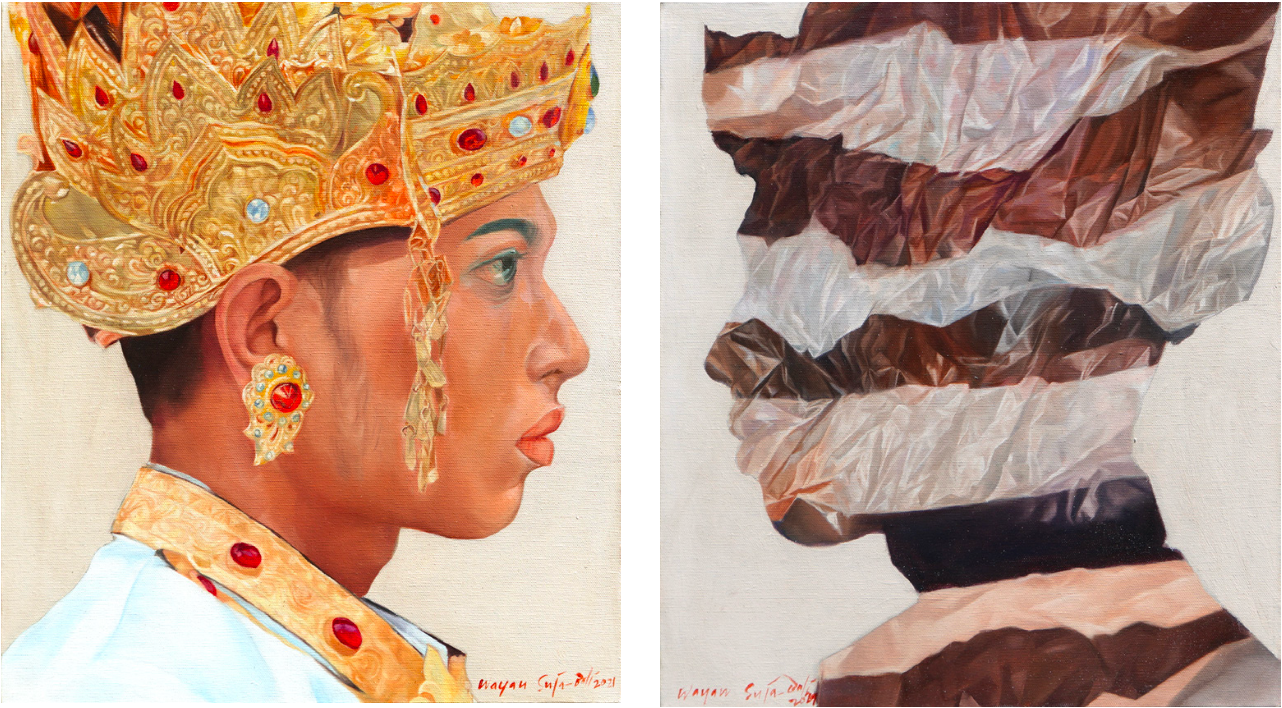
Running from December 20, 2025, to January 20, 2026, at Komaneka Fine Art Gallery in Ubud, Suja’s retrospective Aesthetics of Caution (Estetika Hati-Hati) asks us to hit the brakes and revisit how tourism, consumerism, and a constant exchange with external cultures are shaping Bali today. Curated by Made Susanta Dwitanaya and Savitri Sastrawan, the show traces two decades of Suja’s artistic evolution, revealing a body of work that is as visually seductive as it is psychologically unsettling. This is why the exhibition is aligned with the United Nations Sustainable Development Goal of Responsible Consumption and Production.
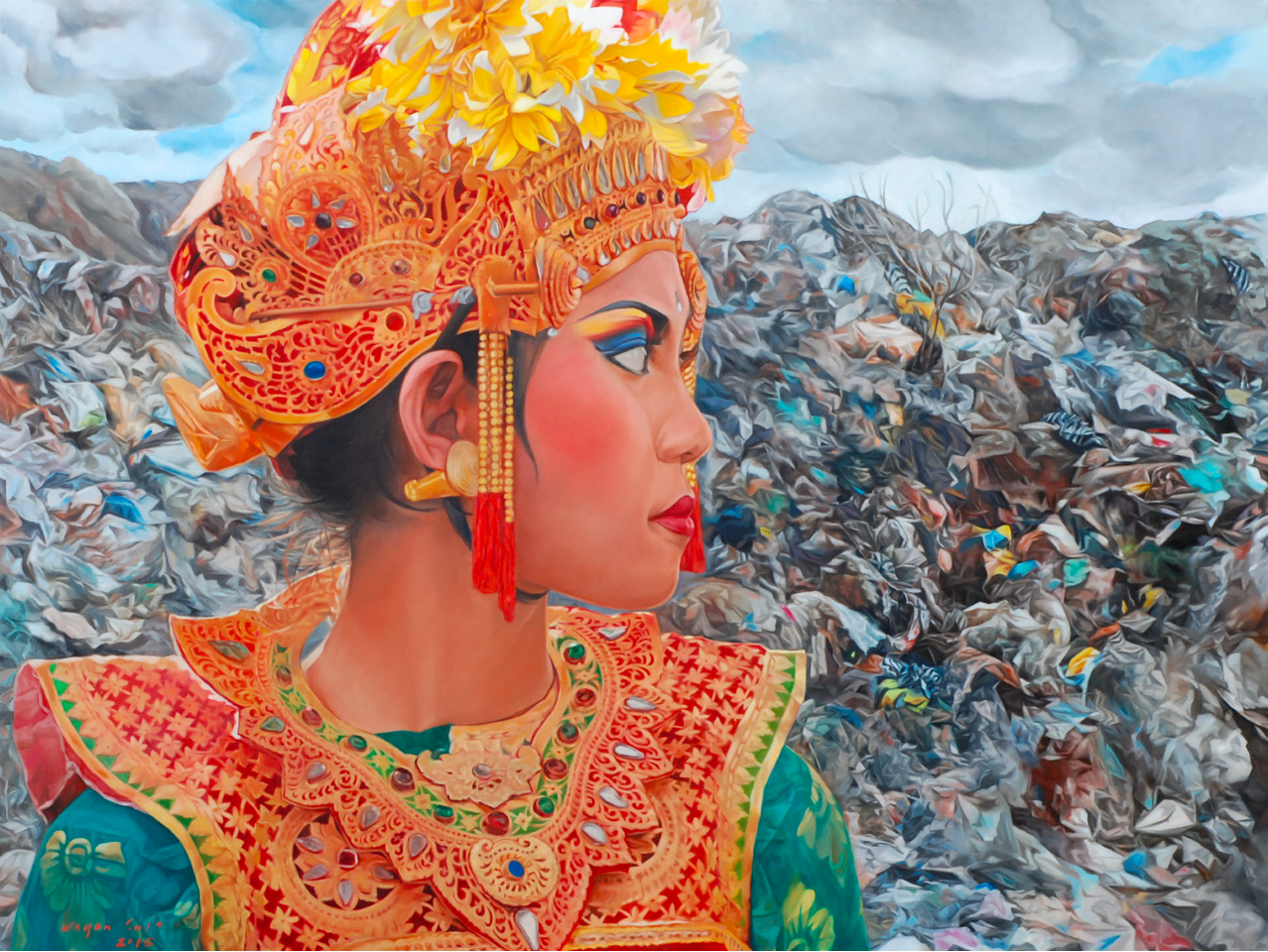
Suja himself is a central figure in the post-Reformation art collective Klinik Seni Taxu, which has long interrogated the friction between Balinese tradition and modern consumerism. As the exhibition highlights, his critique is delivered with a glossy, suffocating silence that can be found in his renowned "plastic" phase. This is seen in pivotal works such as those exhibited in his solo show Plush-Tick from 2007, where he paints traditional Balinese figures tightly wrapped in transparent cling film.
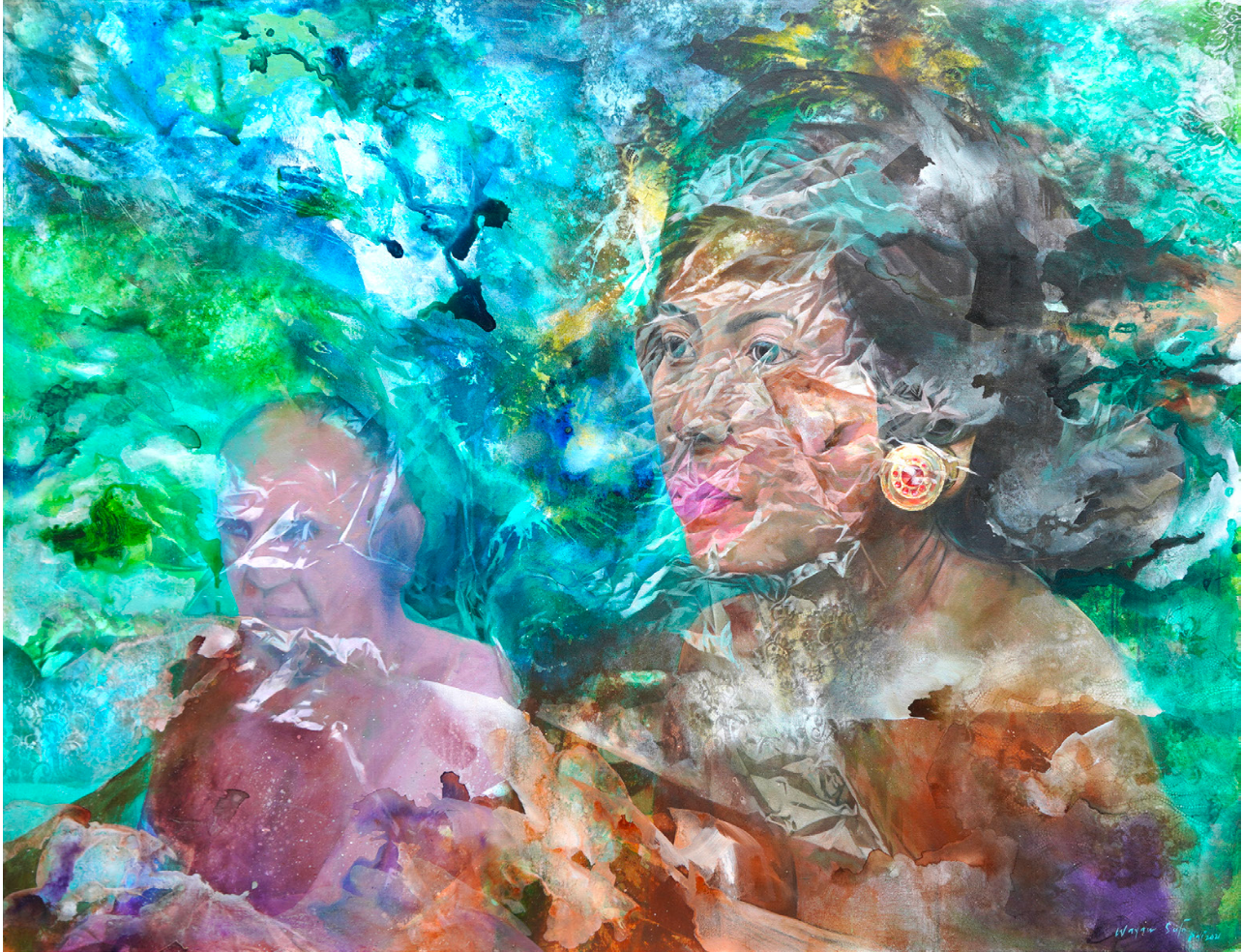
These images are striking metaphors for how over-tourism is slowly but surely eroding Bali’s land and heritage. In 2024 alone, the small island welcomed 6.3 million visitors, with 2025 numbers projected to only increase. Through his works, Suja likens this phenomenon to how today’s mass-produced goods are often packaged and sold in plastic. This is a material that, while allowing for “safe” consumption, also comes with dire environmental and health concerns in the long run. He depicts Balinese dancers and artifacts encased in plastic, critiquing how the island’s identity has been packaged as a pristine commodity for the tourist’s gaze.
The plastic wrap evidently creates a physical barrier; it preserves the image of an “exotic" Bali, yet it simultaneously suffocates the living, breathing human beings and nature that support its existence, an existence that is not always marketable. It suggests that in the public’s hunger to consume the beauty of Bali, they are slowly killing the very thing they claim to admire.

Here then, the exhibition title, Aesthetics of Caution, warns that Balinese culture is becoming yet another disposable product—appearing shiny on the outside, yet generating social and political wounds underneath its surface. Furthermore, the physical reality of plastic that can be found in his paintings also highlights how Bali, like many tourist destinations, is battling a severe plastic waste crisis. Suja’s work bridges the gap between the metaphorical pollution of culture and the literal pollution of the environment. He forces the viewer to question the sustainability of their own gaze: are we preserving these traditions and natural landscapes, or are we merely consuming them until they are discarded? Aesthetics of Caution ultimately urges everyone to look beyond the glossy veneer of the travel brochure and confront the fragile, warped reality of life on an island under pressure.
For more information check Wayan Suja’s Instagram @yansudja and Komaneka Art Gallery’s website www.gallery.komaneka.com or Instagram @komaneka_gallery.