
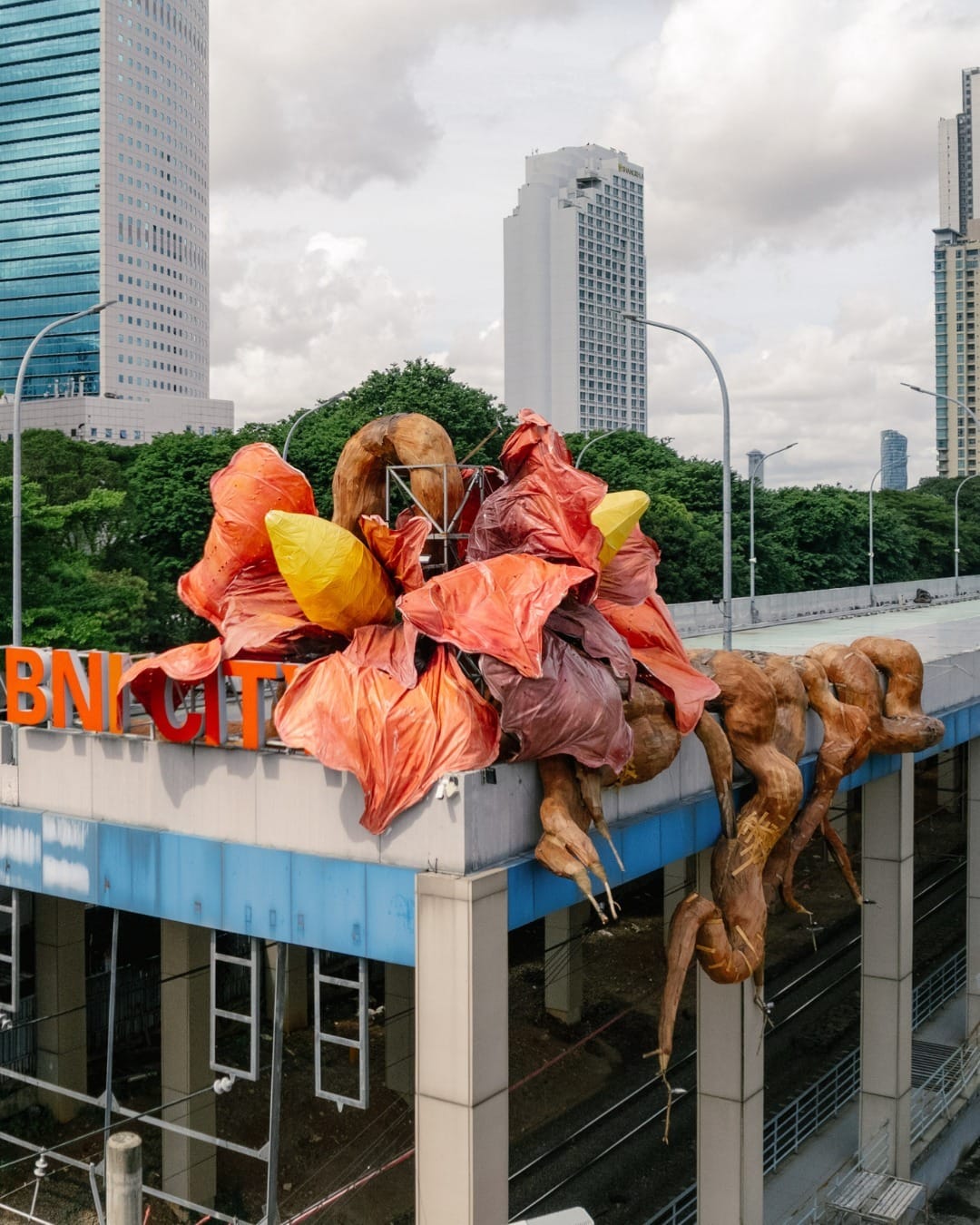
Train stations are typically viewed as rigid, high-velocity spaces of transition, dominated by concrete, steel, and the relentless ticking of the clock. However, at the heart of Jakarta’s bustling Sudirman Baru BNI City Station, the script is being rewritten. Through the newly launched SCENIC Art Station initiative, this vital public transport hub—which serves up to one million greater Jakarta area commuters daily, alongside international airport travelers—has been transformed into a living archive. The catalyst for this transformation is Yogyakarta-based artist Wisnu Ajitama and his monumental, permanent installation titled Akar Perjalanan (Roots of the Journey). Placed strategically around the station's main signage, the work disrupts the industrial landscape with giant, organic forms, forcing commuters to pause and reconnect with the earth beneath the asphalt.
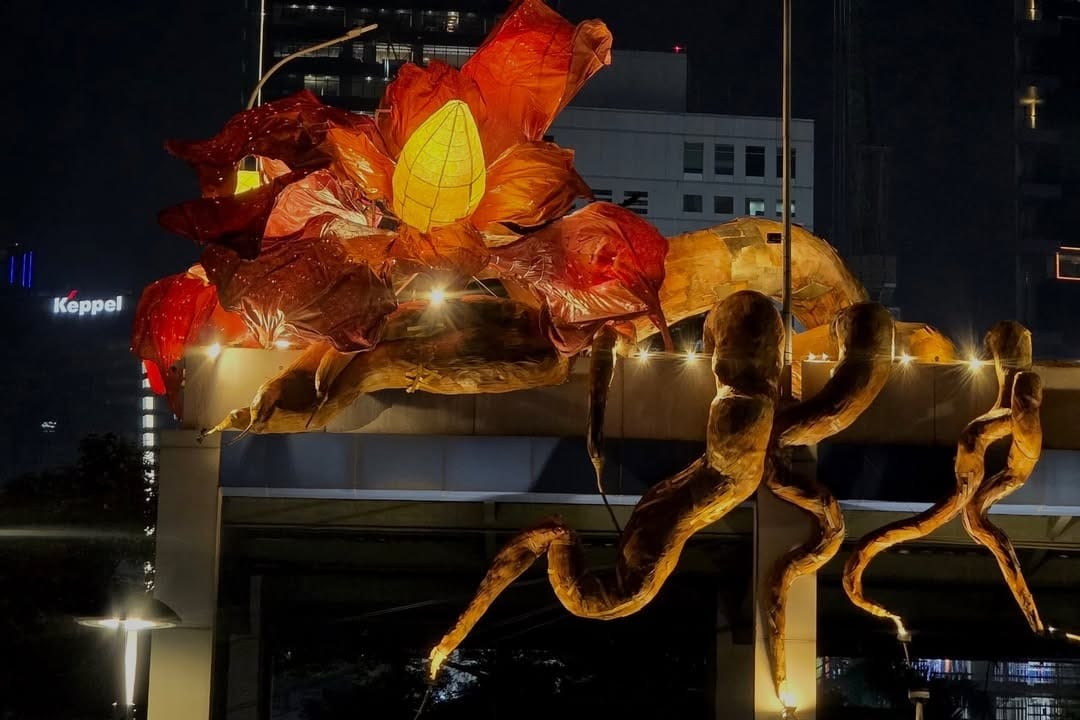
Akar Perjalanan is a visual metaphor curated by Mona Liem, brought to life through a collaboration between the design studio Nusae, the creative agency SenyuMuseum, and the national railway company PT. KAI. The installation features an intricate depiction of dangling roots and blossoming flowers. For Ajitama, the roots represent the deep, often unseen history of a city and its people, while the flowers symbolize the blooming of new possibilities and futures. Central to this large-scale piece is Ajitama’s mastery of webbing, or weaving.
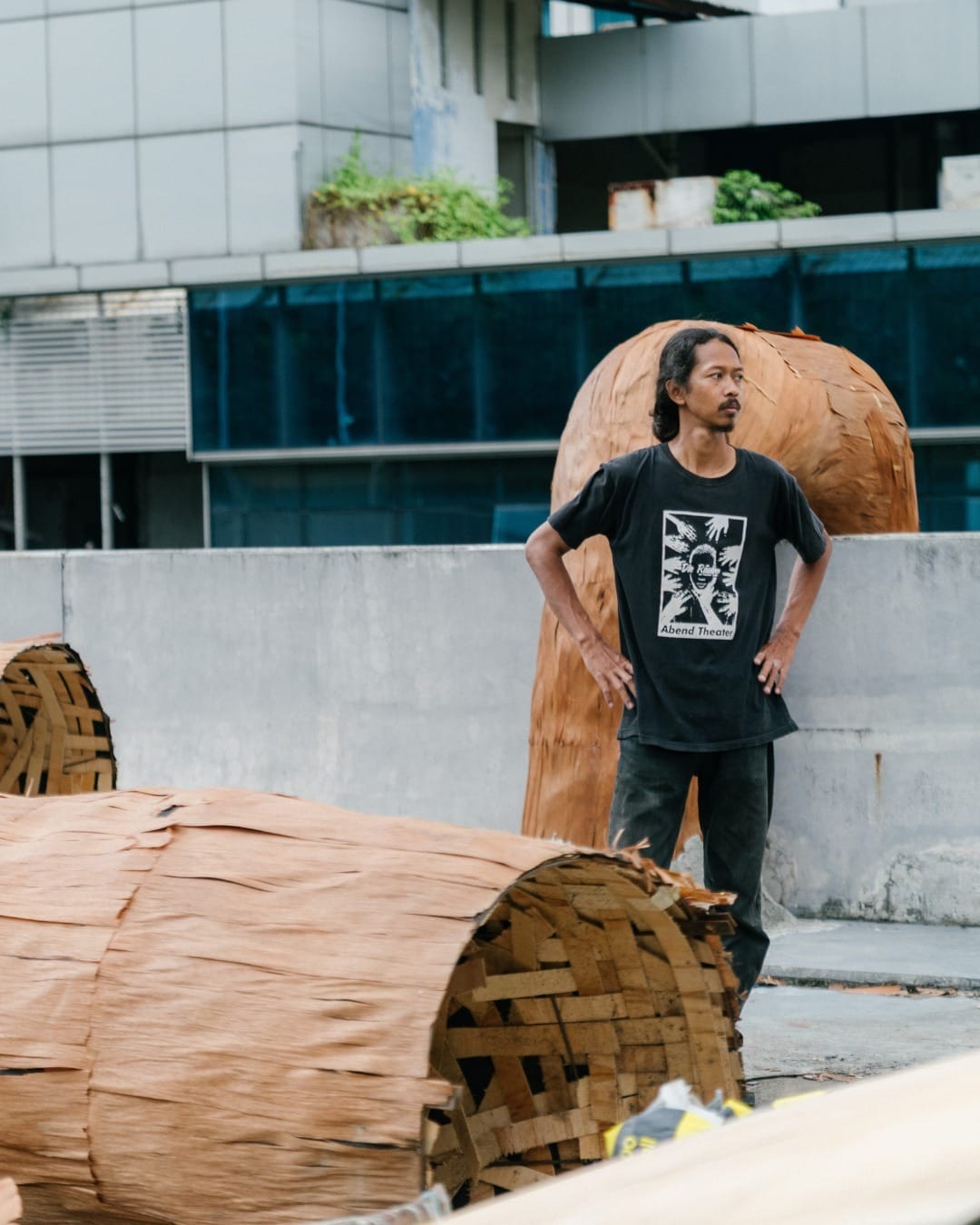
As detailed in his Artist Statement and Portfolio, it is a traditional technique he first experienced in elementary school while weaving coconut leaves to make ketupat for religious holidays. In his artistic practice, webbing is a philosophy of cultural diplomacy. Ajitama views the act of weaving as a method to bridge differing political, social, and cultural viewpoints. Individual strands, which might be fragile on their own, embrace and reinforce one another to create an unbreakable, unified whole. This is why Akar Perjalanan fits the UN Sustainable Development Goal of Sustainable Cities and Communities.
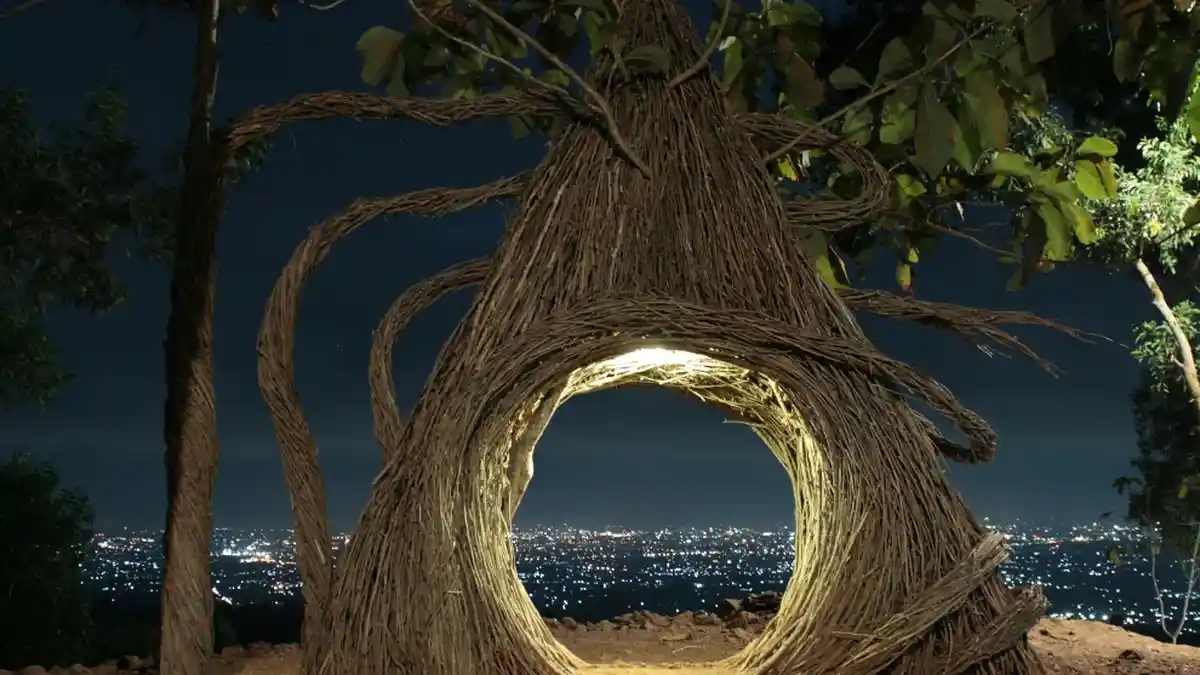
Bringing this deeply organic, community-oriented philosophy to the center of a global megacity represents a fascinating evolution in Ajitama’s career. He is an artist who traditionally operates far from the urban gaze, establishing his land art practice in secluded forests, mountains, and rivers where human activity is minimal. In 2017, for instance, his work Hole of Universe at Hutan Pinus Pengger in Bantul, Yogyakarta, utilized wild ilalang (weeds) to create stunning installation spots. The project was both an aesthetic enhancement to boost local tourism and an active lesson in environmental stewardship. By repurposing cleared and burned vegetation into captivating art, he taught the local community the value of protecting, appreciating, and prospering alongside nature. Now, by adapting this ecological spirit to the concrete and glass of BNI City Station, Ajitama challenges the urban population to acknowledge the natural world that city life so often obscures.
The materiality of Ajitama’s work directly promotes responsible consumption and production. Whether he is utilizing recycled paper, fallen twigs, or repurposed weeds, his commitment to humble, sustainable materials critiques the material waste inherent in modern urban living. Especially in Jakarta, where a waste crisis produces 7,500–8,000 tons of waste daily, overwhelming its 110-hectare Bantargebang landfill that now operates at 80 percent full capacity.
Furthermore, the broader SCENIC Art Station initiative strongly champions a more sustainable and community friendly Jakarta by turning a sterile transit corridor into an inclusive, educational "third space"—complete with an Art Market highlighting local SMEs inside scaffolding-based installations and interactive drawing stations supported by COPIC Japan. It proves that public art in transportation hubs, often associated with stressful commutes, can play a vital role in improving the mental well-being of a city's residents while fostering a collective sense of environmental responsibility.
Ultimately, Akar Perjalanan reclaims the human and ecological narrative within the relentless momentum of Jakarta. Wisnu Ajitama’s intricately woven roots stand as a quiet but powerful rebellion against the sterile nature of modern commutes. They remind the millions of people rushing past that no matter how fast a city moves, its future possibilities are entirely dependent on the health of the roots buried beneath it.
For more information about Wisnu Ajitama’s work, check out his Instagram @wisnu_ajitama.