
Imprinted with a wealth of cultural histories dating back through Chinese dynastic periods, the genre of contemporary ink art has historically been undervalued on the global stage. For decades, the Western-centric art world has frequently marginalized non-Western media, treating them as relics of the past rather than vital components of modern discourse. However, a movement of avant-garde creators has emerged to reclaim and revolutionize this narrative. One of their most prominent ones is Beijing-based artist Zhang Yu, whose radical deconstruction of traditional ink painting serves as a powerful assertion of Chinese cultural sovereignty.
By pushing the boundaries of what constitutes "ink," Zhang directly challenges the historical undervaluation of Eastern artistic genres, asserting that Chinese heritage is not merely an archive to be studied, but a living, sovereign presence in the contemporary global framework. This is why his work is relevant to the United Nations Sustainable Development Goal of Reduced Inequalities.
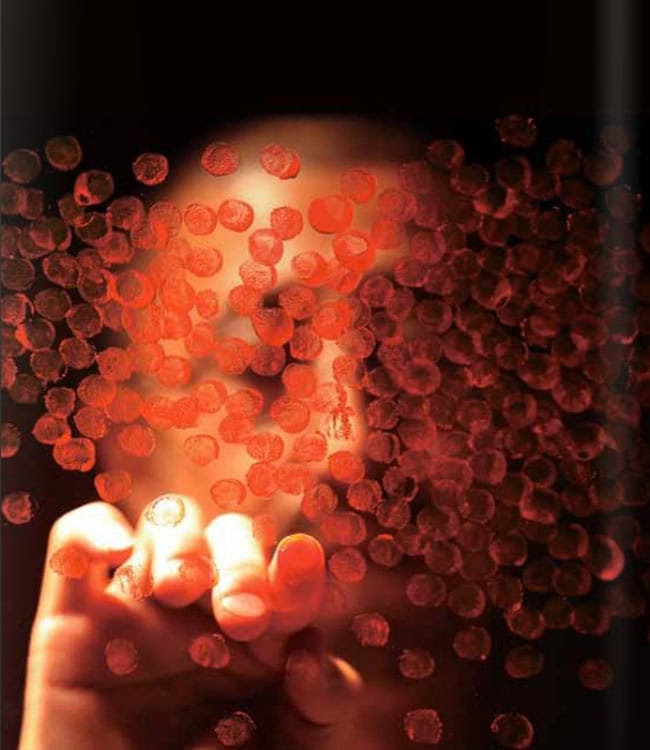
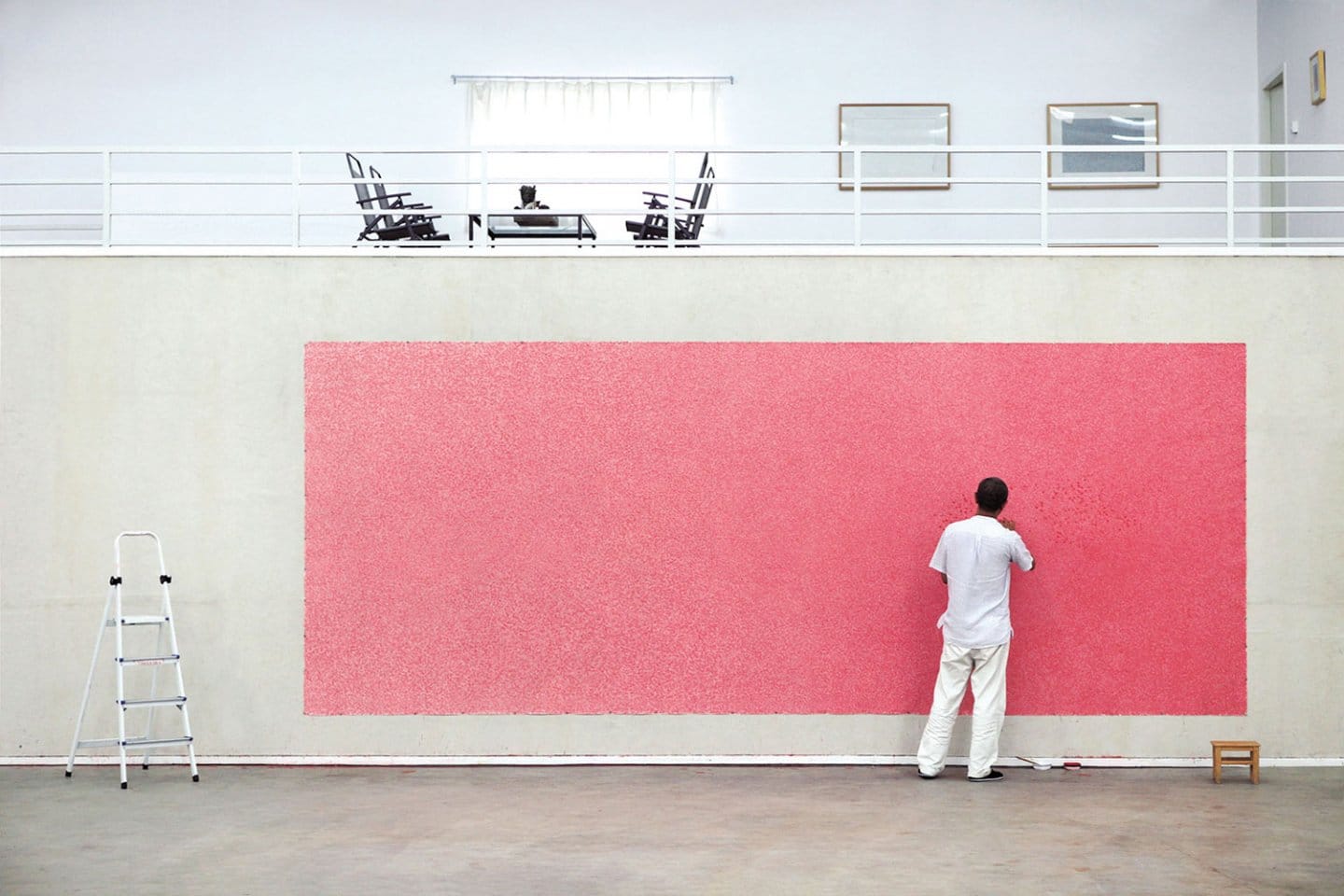
Zhang’s artistic rebellion began by discarding the most fundamental tool of his classical training: the brush. As highlighted in a comprehensive retrospective by Meer, Zhang initiated his internationally recognized Fingerprints series in 1991. Instead of a brush, he used his right index finger to methodically stamp the surface of rice paper.
This meditative, repetitive action allowed Zhang to enter a Zen-like state, thereby deepening his contemporary practice in Buddhist philosophy. Furthermore, he began replacing traditional black ink with clear water—a substance he calls a "Zero Medium." Hovering between presence and absence, the evaporating water leaves behind a structural change in the paper; his work captures a fleeting moment in the space-time continuum.
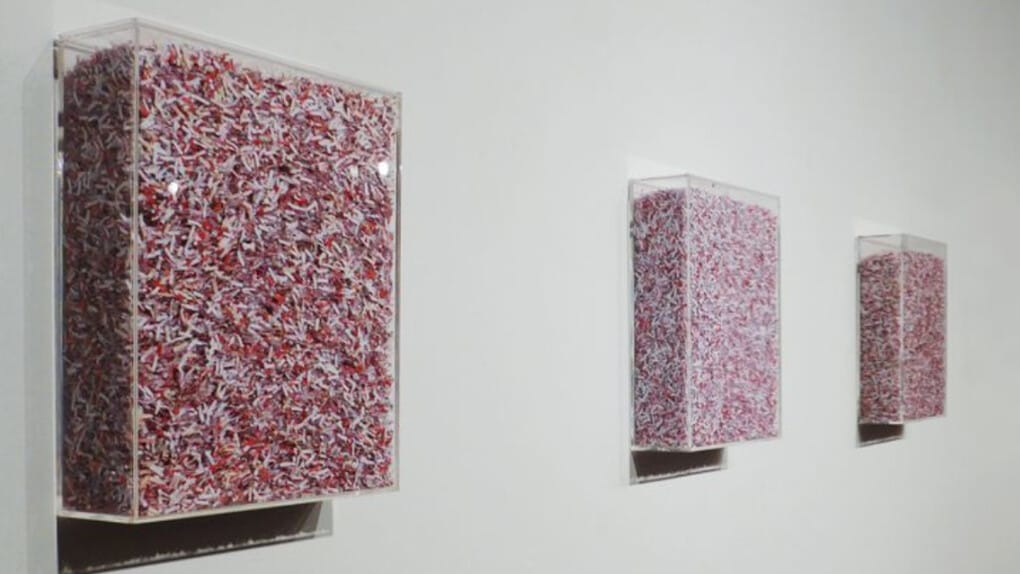
This conceptual evolution of traditional practices safeguards Chinese ink painting as a piece of cultural heritage. By expanding ink art to include unconventional materials like nail polish stamped onto stainless steel, glass bottles and acrylic boxes, Zhang ensures that Chinese identity remains resilient and relevant, actively resisting cultural erasure in a rapidly modernizing world.
Zhang’s commitment to redefining his cultural medium extends into immersive performance and installation art. In the 2016 exhibition Is It Ink Art? at Hong Kong’s Alisan Fine Arts, reviewed by ArtAsiaPacific, Zhang presented the installation Ascending.
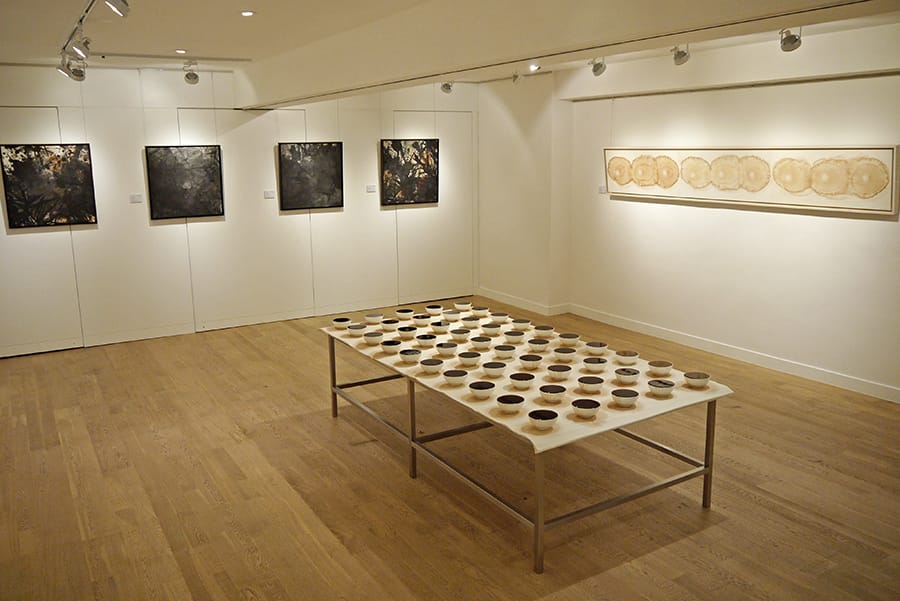
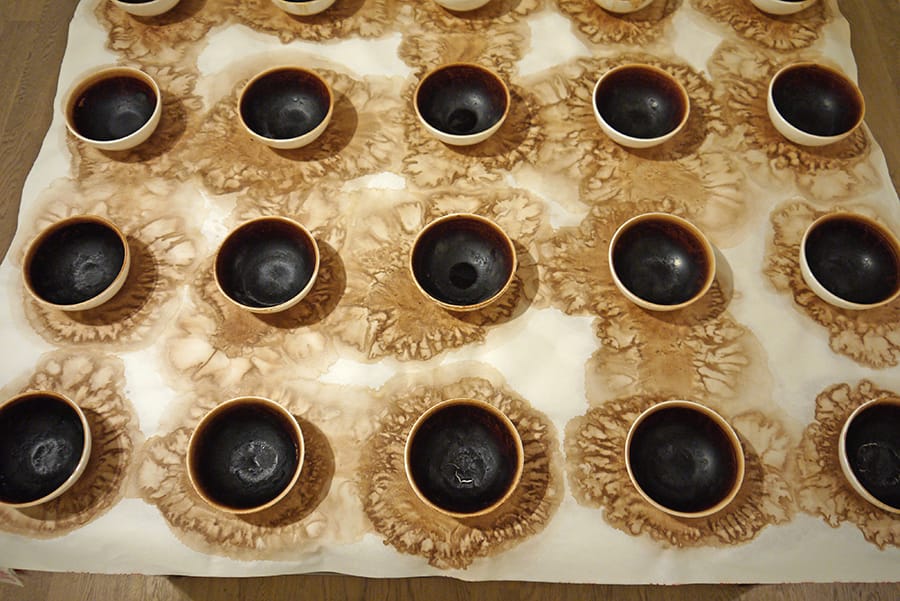
Rather than painting a landscape, Zhang placed 50 white porcelain bowls on eight pieces of traditional xuan paper. Over the course of the exhibition's opening week, he performed a daily ritual of pouring Pu’er tea into the bowls, deliberately allowing the liquid to spill over and stain the paper with reddish-brown rings. By utilizing tea—a material deeply embedded in Chinese domestic and spiritual life—Zhang expanded the vocabulary of ink art. As Zhang infamously declared, "Ink art is not ink painting," proving that the spirit of the medium can transcend its traditional material confines while still honouring its ancestral roots.
Zhang Yu’s mission to elevate Chinese cultural identity is not confined to elite gallery spaces; it is also a social and educational endeavour. In recent years, Zhang has expanded his Fingerprints project into large-scale, interactive installations across academic institutions in Taiwan.
By inviting thousands of university students to place their own fingerprints upon the glass entry doors of their campuses, Zhang transforms a solitary, meditative practice into a collective cultural expression. This socially interactive element promotes an active appreciation of cultural diversity. It teaches younger generations that they are active participants in the continuation of their heritage, demonstrating how culture contributes to sustainable, community-driven development.
Ultimately, Zhang Yu’s avant-garde practice is an act of cultural guardianship. By abandoning the brush and embracing the conceptual weight of fingerprints, water, and tea, he has forged a global artistic language that remains fiercely grounded in Eastern philosophy. In doing so, he ensures that the legacy of Chinese ink art continues to ascend, demanding equality and respect in the modern art world.