
Zhao Xiaoli pours a bucket of deep blue paint onto a vertical canvas, then violently smashes a bouquet of white roses against the board, using the crushed petals as a makeshift paintbrush. In just 30 seconds, a dreamy, ethereal portrait emerges. This highly visceral video format has earned the 32-year-old artist over 10 million followers on Douyin and another million on Instagram. While traditional critics often dismiss her visually pleasing portraits as "kitsch," Zhao has sparked a global phenomenon. She is simultaneously a "Trend Artist" and a "Waste Alchemist," leveraging the power of social media to democratize art, promote environmental consciousness and redefine who gets to decide what constitutes a masterpiece. This is why her work is relevant to the United Nations Sustainable Development Goals of Quality Education and Reduced Inequalities.
Before the glamorous portraits and lucrative brand sponsorships, Zhao’s viral journey began with neighborhood garbage. As highlighted by CGTN, when a neighbor threw out old stools, she saw an opportunity to transform them into vibrant flower stands. Soon, collecting discarded items became the foundation of her practice. A broken 80s TV set sent by her mother, a neighbor's wooden door, a one-legged chair and a vintage washboard have all served as her canvases.
Video of Lemon Zhao Xiaoli and her process. Video courtesy of @lemon_zhaoxiaoli/Instagram.
Zhao breathes new life into abandoned objects by painting a reproduction of Charles Courtney Curran’s By the Lily Pond on a salvaged door, or transforming a washboard's wooden rungs into moonlight-reflecting ripples. This upcycling movement, as China Daily notes, proves that "garbage is not rubbish." Zhao incorporates the history and emotions of the discarded items into her art, teaching her millions of viewers that waste can be diverted from landfills and redefined through a lens of creative sustainability.
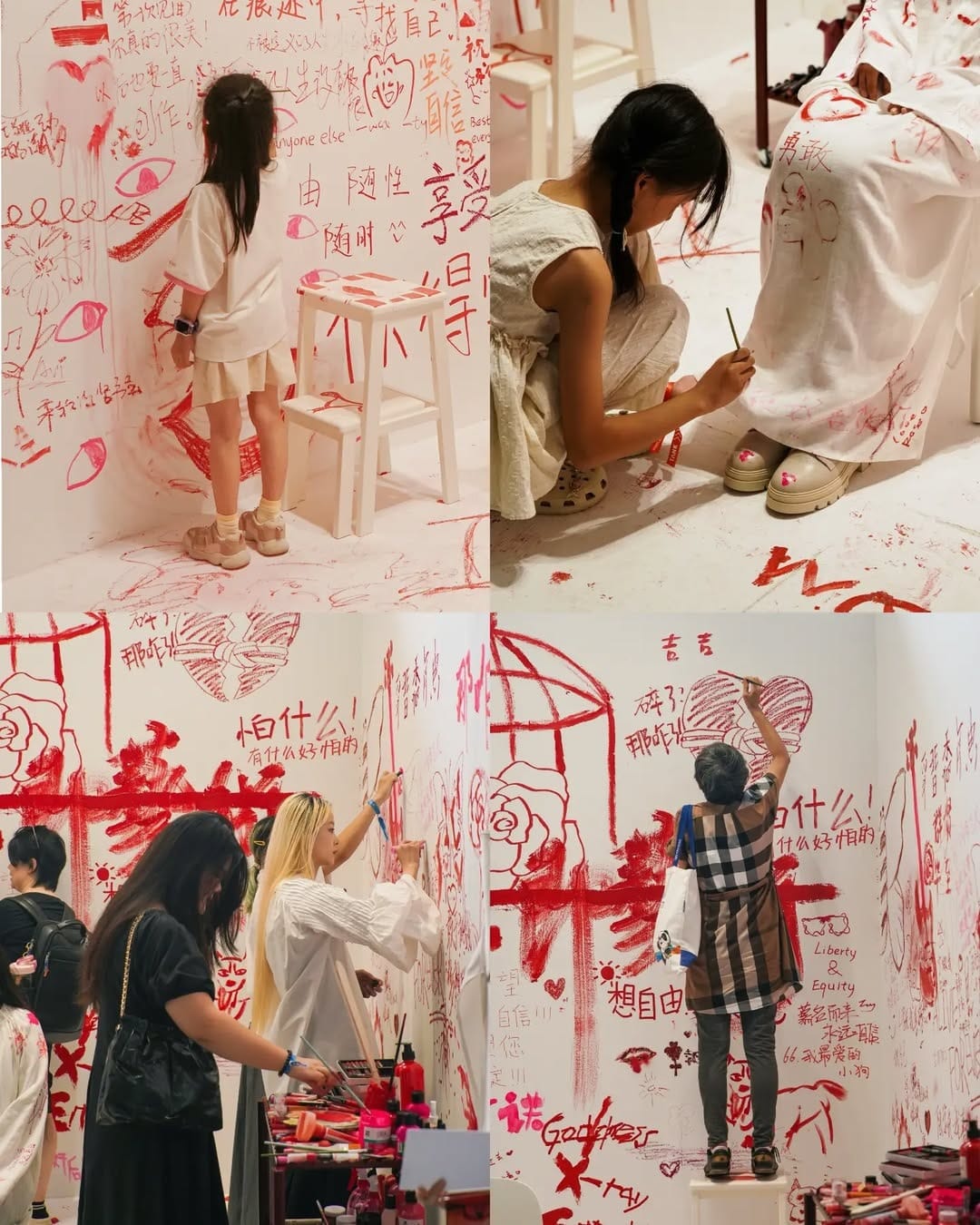
Zhao’s creative process is also a performance piece. Drawing inspiration from the independent spirit of Frida Kahlo and the action-oriented techniques of Jackson Pollock, she breaks the boundaries of traditional painting. Her videos are spontaneous and chaotic—extravagant amounts of paint are thrown, flowers are crushed and her stylish clothes inevitably end up splattered with pigment.
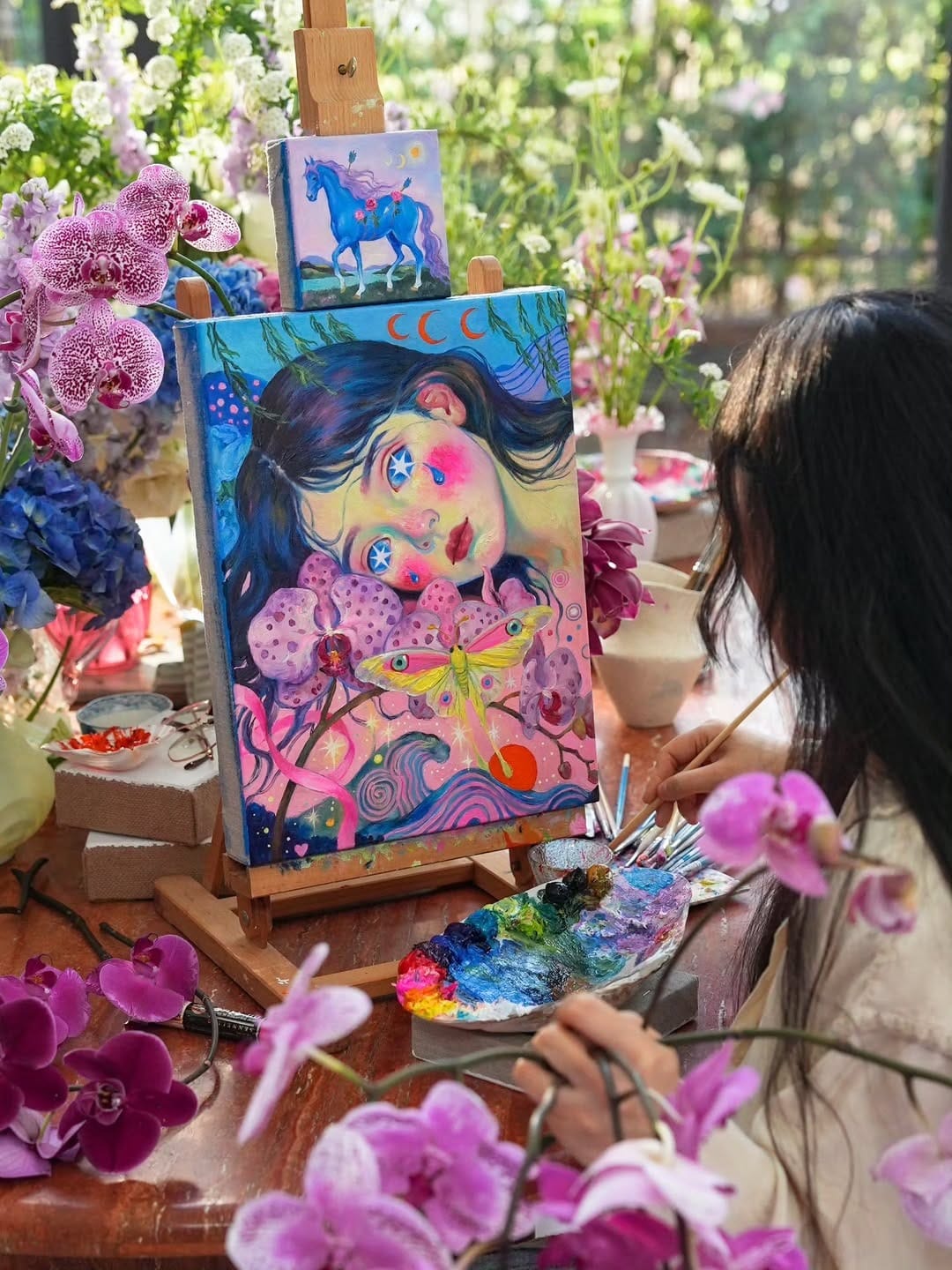
Rather than conforming to the highly intellectualized expectations of the traditional art establishment, Zhao proudly embraces her identity as a "Trend Artist," a term she discussed in detail with The World of Chinese. Her works, characterized by hazy-eyed young girls and dreamy floral aesthetics, merge fine art with fashion and pop culture. It is an unpretentious approach focused on visual pleasure and emotional resonance, actively stripping away the elitist metaphors that often alienate the general public.
This massive digital popularity has deeply disrupted the traditional art world's hierarchy. Established gallerists and advisors have scoffed at her work, comparing it to hotel wall décor. Yet, Zhao’s success represents a monumental shift in art sovereignty, one that reduces inequalities in the creative economy.
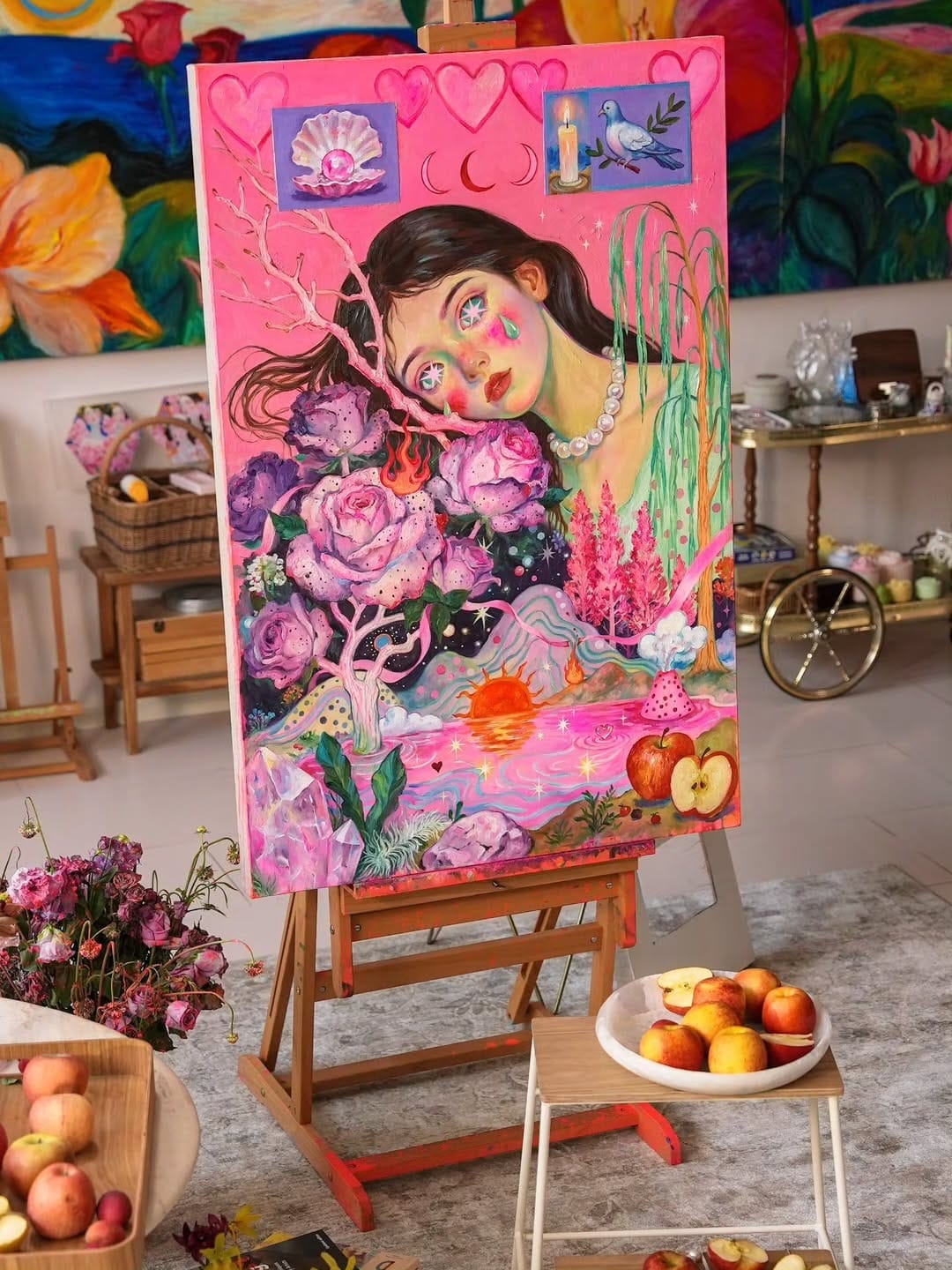
Supported by initiatives like Douyin’s Dou Art Project—which boosts user traffic for digital creators—artists no longer need the validation of elite gatekeepers or exclusive galleries to earn a living. The algorithms have handed the "right to have a say" directly to the masses. Despite her critics, Zhao’s work has successfully crossed over into traditional spaces, with one of her paintings selling for 160,000 yuan at the prestigious Yongle Auction. The way she bypasses institutional barriers empowers a diverse new generation of creators to define their own artistic and commercial value.
Beyond digital metrics and auction sales, Zhao is deeply committed to the belief that art should serve the public as she strives to make art accessible to ordinary people. She recently took her passion offline to serve as a volunteer art teacher at the Siyuan Experimental School in rural Sichuan province, an area where 49 classes previously shared only a single art teacher.
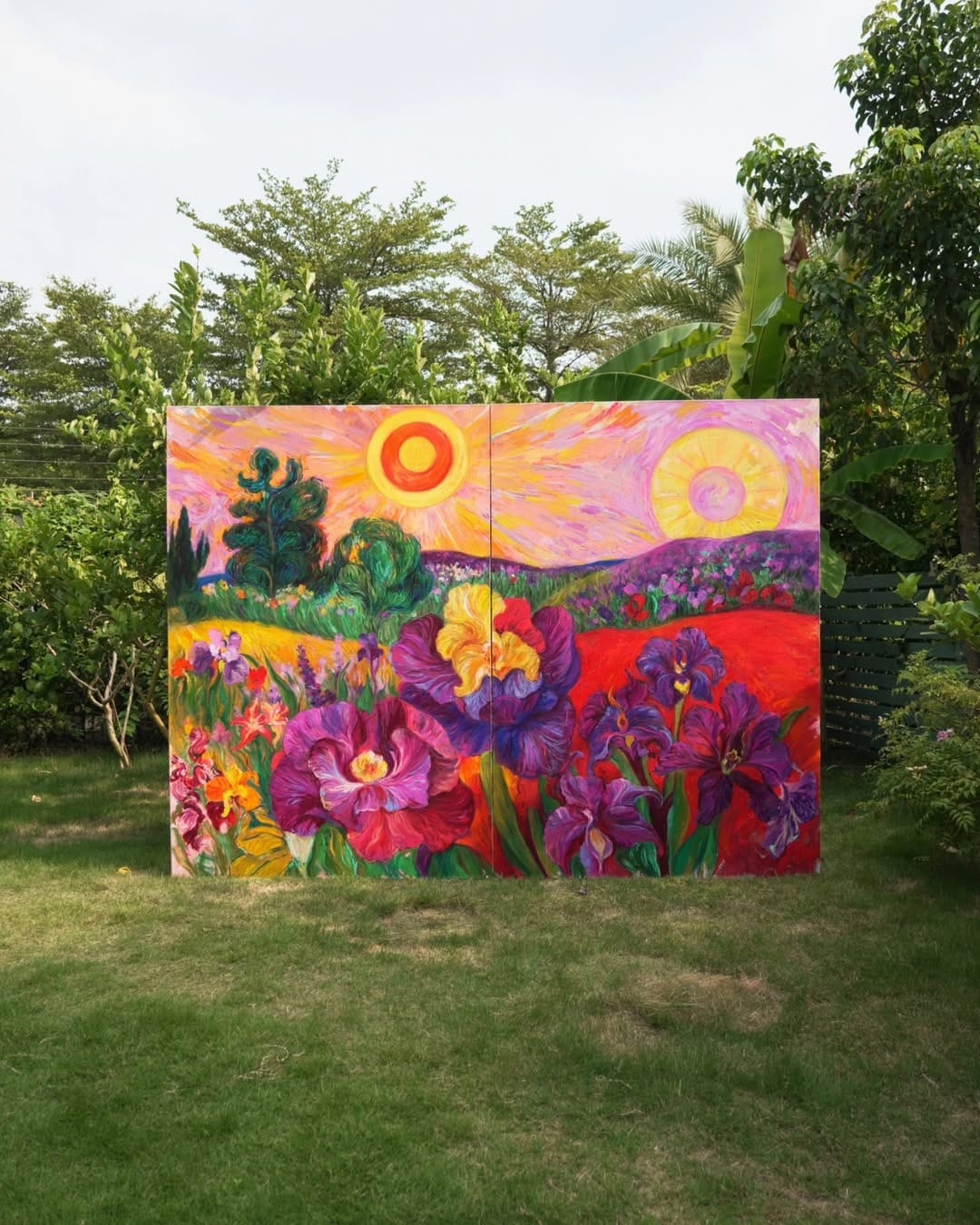
Ultimately, Zhao Xiaoli is mapping a new cultural ecosystem. Through her alchemy of waste, her action-packed digital performances, and her defiance of elite gatekeeping, she has transformed the digital canvas into a space of radical inclusion, environmental stewardship and boundless creative freedom.
Find out more about Lemon Zhao Xiaoli’s work on her Instagram @lemon_zhaoxiaoli or YouTube @zhaoxiaoli123.