
For two years in the 1880s, the British Navy occupied a cluster of islands off Korea’s southern coast and renamed them Port Hamilton. Ayoung Kim had never heard of it. She came across the story while on a residency in Berlin in 2011 and built PH Express out of it, a two-channel video that moves between archival record and invention closely enough that the seam is hard to find. “It was dramatized, but 98 percent of it is factual,” Kim told The Korea Herald in a September 2026 interview, adding that nearly all the dialogue came from archival material she located herself.
Now, that work is being displayed in Canada’s capital. Perhaps, All of Us runs at the Korean Cultural Centre Canada (KCC) from August 25 to October 14, 2026, organized by the Seoul Museum of Art (SeMA) as part of Korea’s Touring K-Arts Project. Thirteen Korean and Korean-heritage artists are included. Conceived in Seoul, the exhibition travelled to Washington, D.C., earlier this year before arriving here, three capitals chosen deliberately.
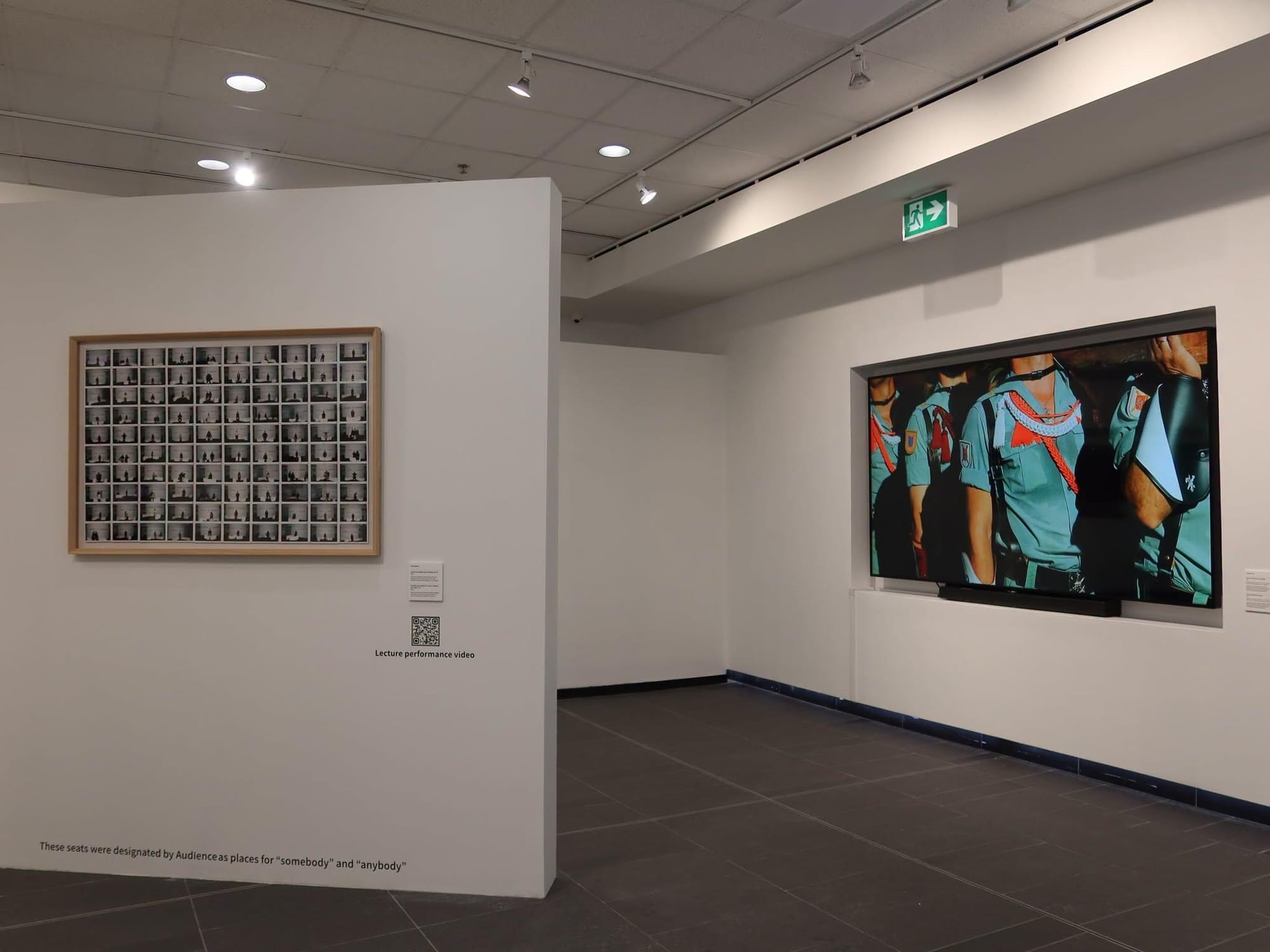
The show speaks to two United Nations Sustainable Development Goals: Reduced Inequalities and Sustainable Cities and Communities. Capitals work as political and administrative centres, the Korean Cultural Centre in Washington, D.C., notes, but they also take shape through the accumulation of countless individual lives, which raises the question of which memories and values a society keeps and which it leaves out. Recovering histories that official accounts passed over addresses the first goal, which targets inclusion regardless of origin. Staging that recovery in a free public gallery on Elgin Street addresses the second, which calls for accessible public space and stronger safeguarding of cultural heritage in cities.
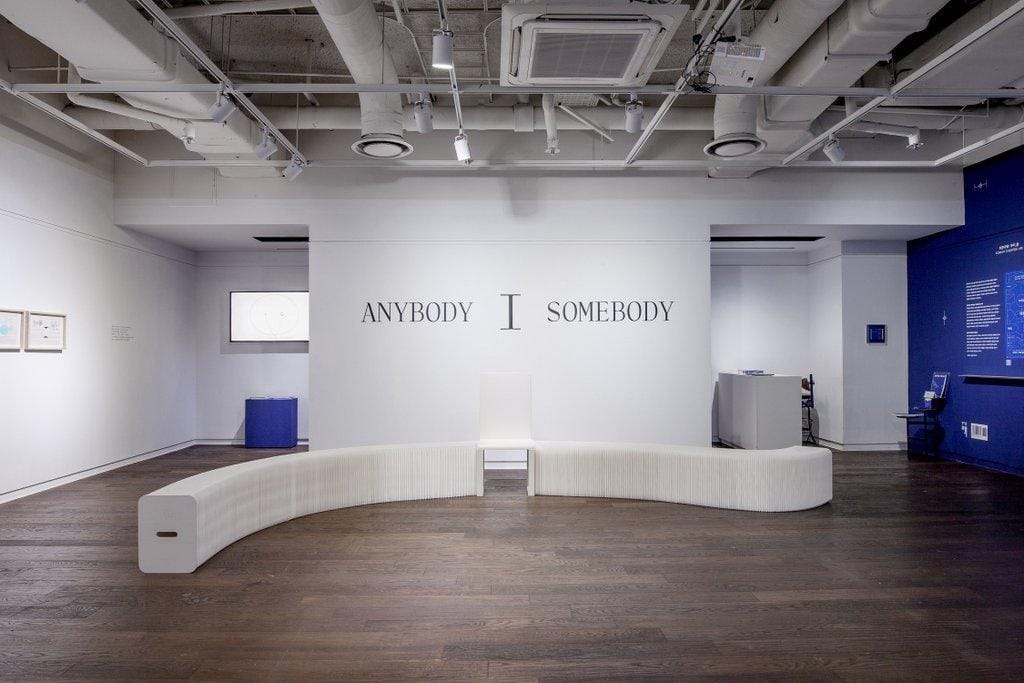
Ottawa offered something Washington did not. On opening night, August 25, artist Park Hyesoo hosted an in-person talk at the Korean Cultural Centre to discuss her featured work, A Place for anybody and somebody, Audience No.43 (2020), which pairs installation objects with video documenting a lecture-performance she staged at the Korea Artist Prize 2019 at the National Museum of Modern and Contemporary Art, Korea.
According to the KCCC, the performance centres on a single question posed to visitors: “On a 10-hour flight, to whom would you give the seat next to you? The steel chair and paper chair on display stand in for the seats. Audience members are assigned to a “somebody” and an “anybody,” turning an ordinary travel decision into a map of how far a person’s sense of “us” actually reaches. Born in 1974, Park works throughout her practice on words that pass as universal, terms like "ordinary," "family," and "loss," and on how much their meaning shifts depending on who is using them.
The exhibition is built in three parts. Our Unknown Country, where Park’s chairs sit, examines how public spaces create social boundaries between “us” and “others.” Time Out of Bounds, which features Kim’s video, revisits historical events that were forgotten or actively silenced. The final section, Perhaps, All of Us, closes on how communities can embrace unfamiliarity and build genuine coexistence within diverse cities.
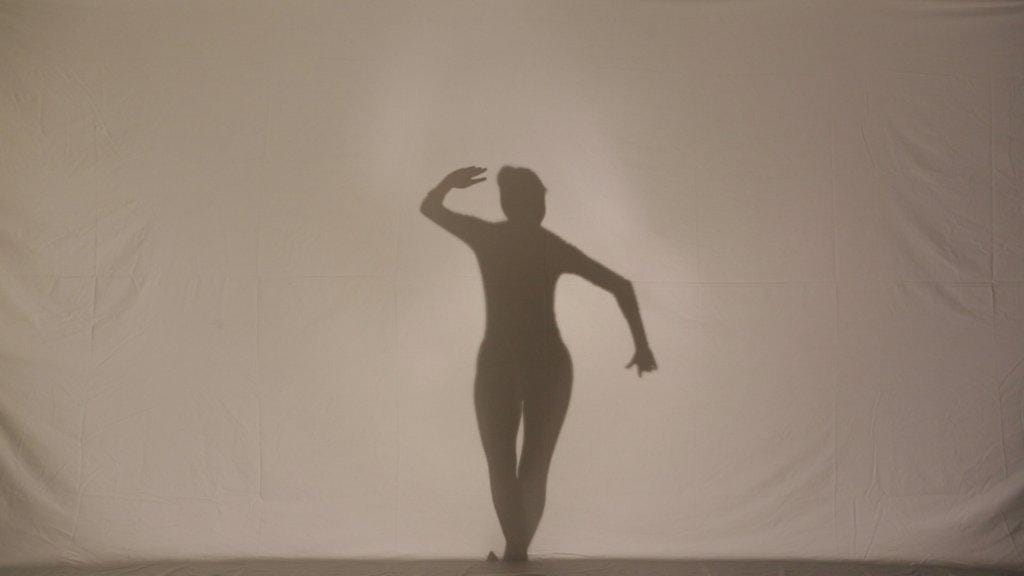
Gala Porras-Kim’s Muscle Memory (2017) sits in that final section and is among the quietest works on view. The video runs six minutes, black and white, silent, following the silhouette of a dancer performing Korean traditional dance without definitive documentation to work from. Dance survives through bodies rather than written record. As K-ARTIST, a nonprofit platform documenting Korean contemporary artists, explains, each dancer’s physique and reading of the choreography reshapes it slightly. Reducing the image to a silhouette pulls attention off the face and costume and onto the body as the only archive this heritage has. Porras-Kim, a Korean-Colombian and MacArthur Fellow in 2025, has spent years examining what institutions preserve and what they lose. “You can’t escape history,” she told ArtReview in 2022.
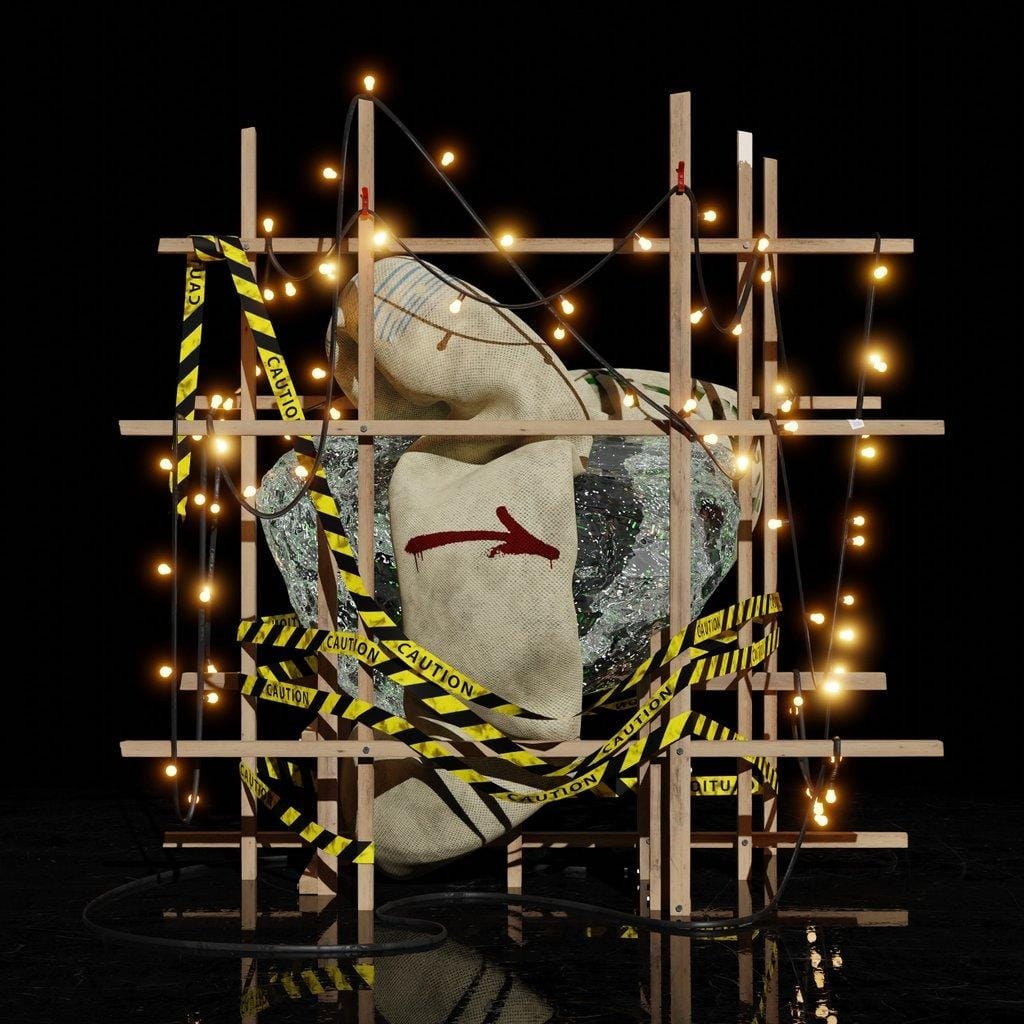
The rest of the show ranges widely in medium, from Jaehun Park’s Ritual for the Iceberg (2022), a 3D simulation video on a square LED display, to Eunu Lee’s Rusty Bronze (2016), urethane paint on Styrofoam, a sculpture imitating a material it is not.
Seoul, Washington, and Ottawa have little in common on paper. Each of them is where a national story gets written down, which means each also decides what gets left off the page. Kim’s islands spent more than a century off it.
Perhaps, All of Us is on view at the Korean Cultural Centre Canada, 150 Elgin St #101, Ottawa, from August 25 to October 14, 2026.