
Decorated South African artist, David Koloane’s renowned series Street Dogs depicts the plight of stray dogs that roam from the townships during apartheid South Africa. These were areas designated under apartheid for the exclusive occupation of Black and other People of Colour. Aside from advocating for the protection and care of these stray dogs, Koloane has stated that “Street dogs also symbolize the way the apartheid system made people live in subhuman conditions... and represent the violence that is endemic in the townships.” This is why Street Dogs by David Koloane is aligned with the United Nations Sustainable Development Goals of Life on Land and Reduced Inequalities.
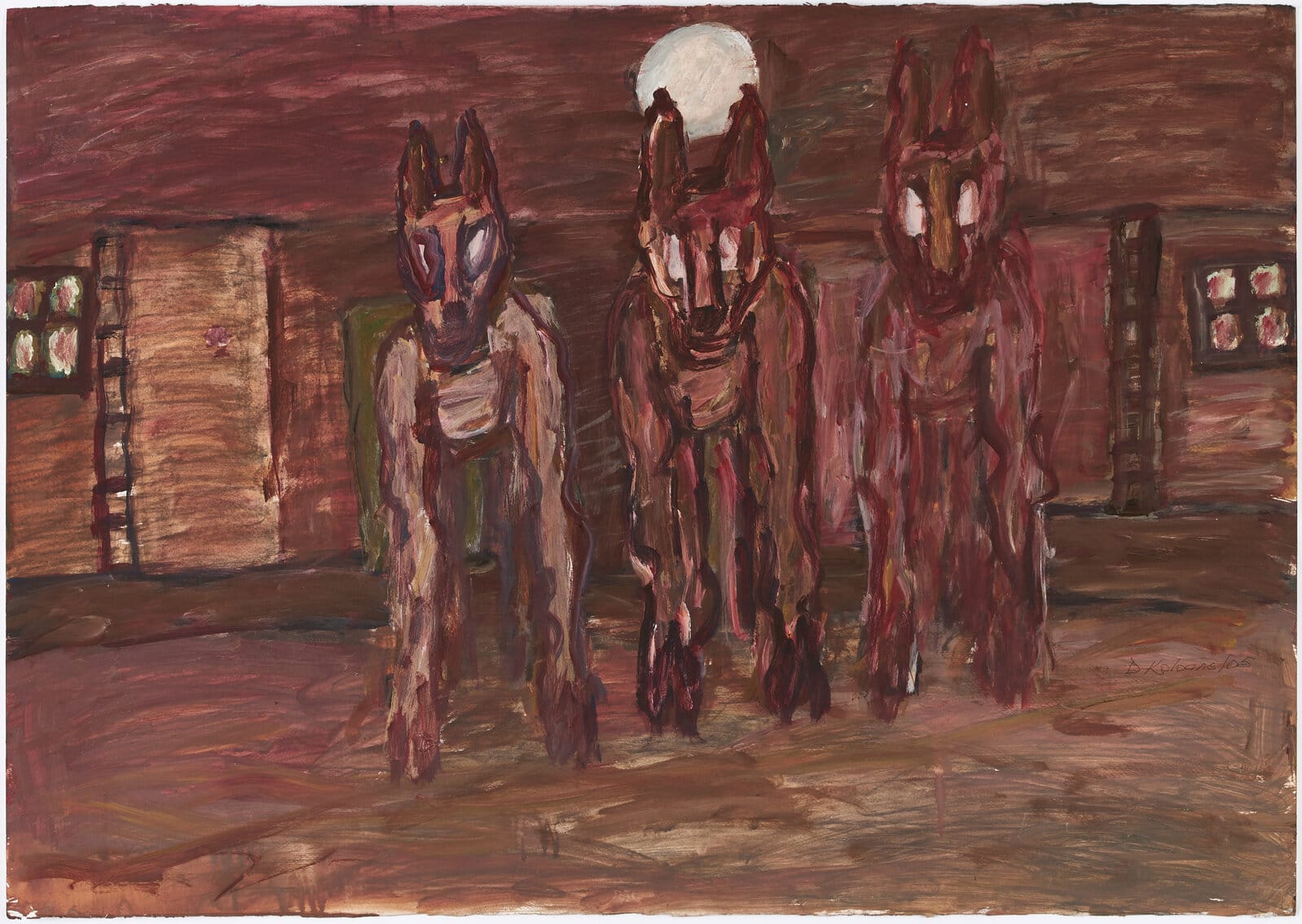
Born in 1938, David Koloane spent his career attempting to improve the lives of Black artists and art in South Africa. Apartheid was a South African government policy established in 1948 to segregate the white minority from its nonwhite majority. Many political and economic policies during apartheid discriminated against people of colour. Koloane advocated for Black artists by not only creating works such as Street Dogs, but also by establishing the first Black Art Gallery in 1977 and by tutoring at the Federated Union of Black Artists (FUBA) in 1979.
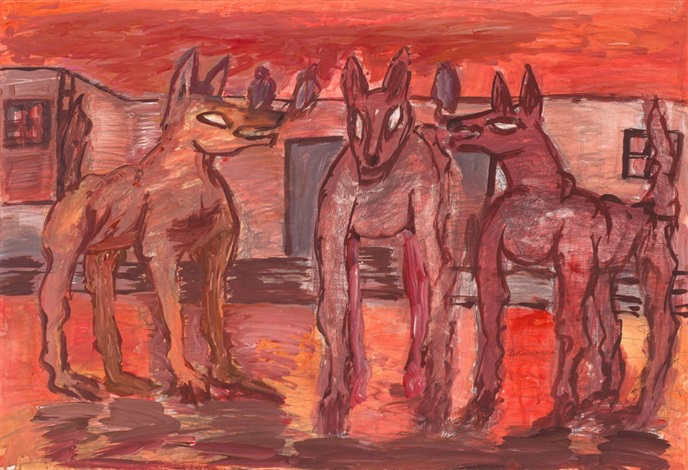
Dogs in the townships were associated with security, aggression, and fear. They were frequently called ‘Umgodoyi,’ a Zulu word referring to these abandoned dogs that lived off the township’s waste. Koloane uses Umgodoyi as a symbol of the socio-political issues, such as homelessness, poverty, unemployment, and violence, that were rife in the townships of South Africa. For Koloane, these issues are all signifiers of homelessness, as a life of uncertainty breeds anxieties that allow people to fall victim to ill-treatment and aggressive ways to survive.
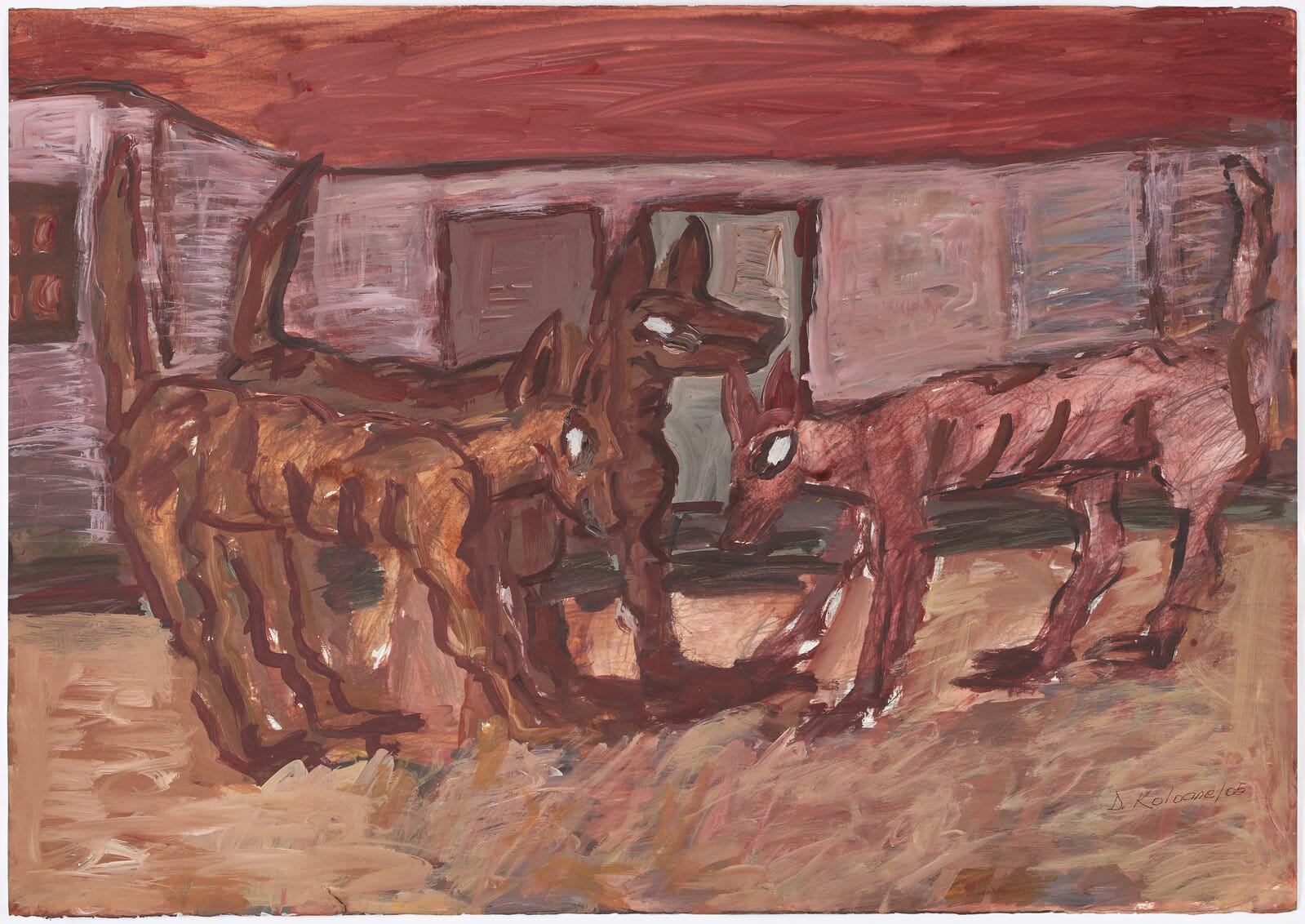
When the African National Congress (ANC) won the 1994 democratic elections after the end of apartheid, one of the key programs they adopted sought to provide housing for all. A report by Al Jazeera has found that many South Africans today are still waiting for the results of this program. “I applied in June 1993 for a council house and imagine it’s 2024 and I am still waiting!” said Cheryl-Ann Smith, a 54-year-old resident who had lived through apartheid. Street Dogs by David Koloane still has a direct link to current socio-economic conditions in South Africa.
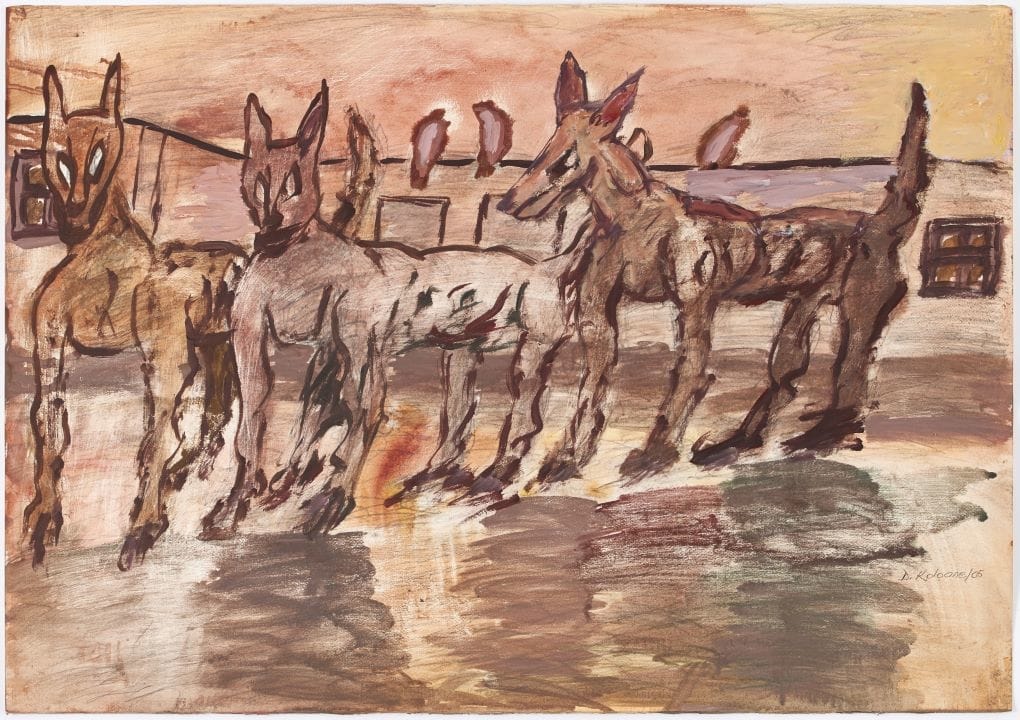
David Koloane’s Street Dogs series is a profound commentary on the lingering effects of apartheid in South Africa. Through his portrayal of stray dogs, Koloane not only advocates for the humane treatment of these animals but also draws a poignant parallel between their plight and the harsh realities faced by Black South Africans during and after apartheid. The dogs, abandoned and living in fear, symbolize the subhuman conditions imposed on people in the townships, reflecting a broader narrative of poverty, homelessness, and violence. Koloane’s work remains relevant today, highlighting the ongoing socio-economic struggles in South Africa and the unfulfilled promises of the post-apartheid era.
Find out more about Street Dogs and other pieces by David Koloane on his gallery, Goodman Gallery’s website www.goodman-gallery.com/artists/david-koloane.