
In today’s modern life, where cities are home to 45 per cent of the world’s population, nature is often a distant concept—a destination to be visited once a year or viewed in documentaries rather than part of daily life. Here, the wildlife that persists in our immediate vicinity—the pigeons, squirrels, and crows—are dismissed as background noise or, worse, urban pests. Canadian artist Joshua Barkman, also known as False Knees, challenges this dismissal with a unique blend of scientific observation and existential humor.
Through his acclaimed webcomic and his book An Illustrated Guide to Animal Behavior, Barkman gives a voice to "urban wilderness," bridging the emotional gap between humans and the biodiversity that can be found in their own backyard. His work suggests that if we look closely enough, the struggle for existence happening on a telephone wire is just as profound as any human drama. This act directly campaigns for the welfare of these animals, aligned with the United Nations Sustainable Development Goal of Life on Land.
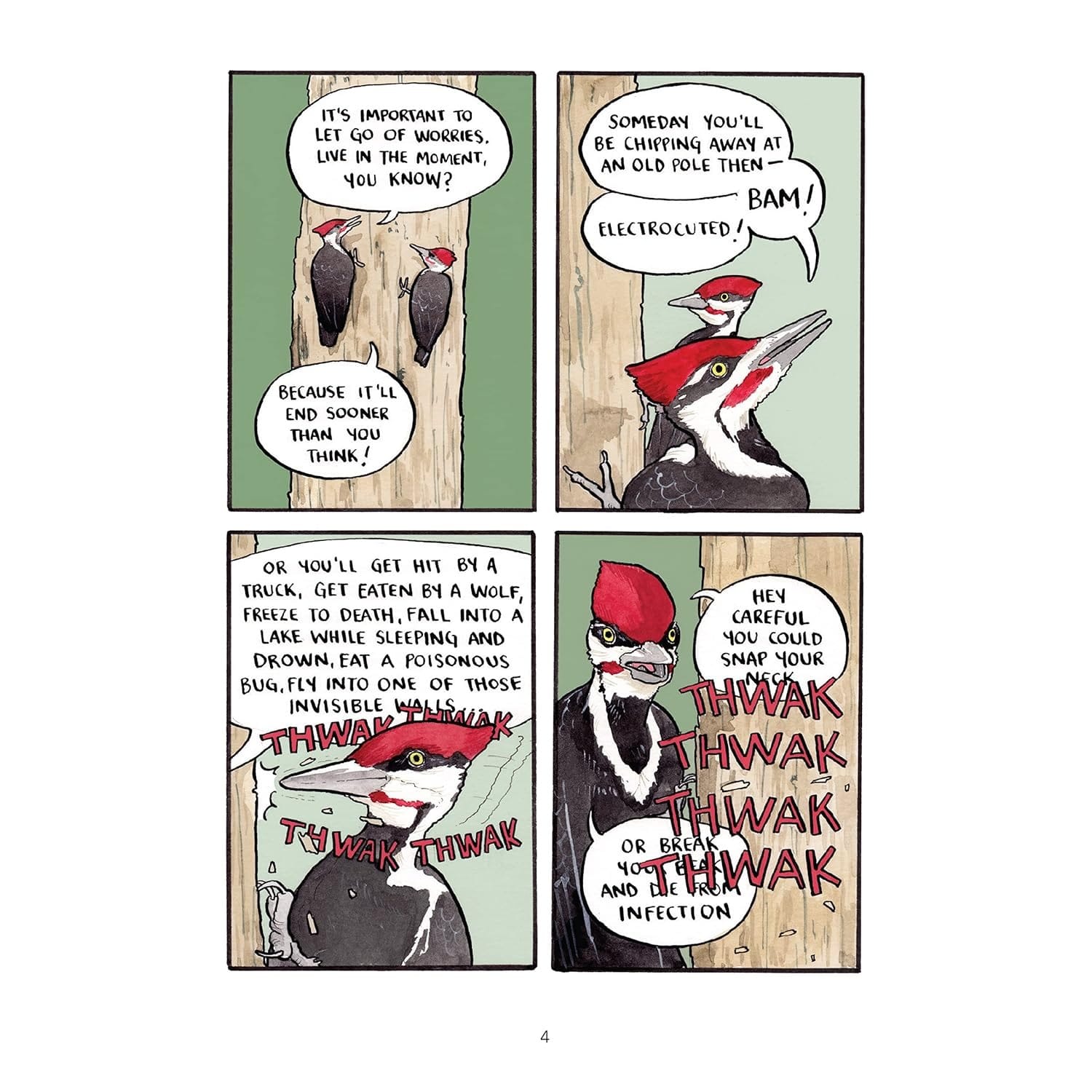
Barkman’s artistic style functions on a deliberate contradiction. Visually, his work is grounded in traditional naturalism; his gouache and watercolor renderings of Ontario’s wildlife, his native home, are detailed, textured, and anatomically respectful. Yet, the dialogue balloons convey a modern, millennial anxiety. A chickadee doesn't just chirp; it questions the validity of its own existence. A squirrel doesn't just hoard nuts; it contemplates the futility of planning for a future that is structurally uncertain. By anthropomorphizing and “making fun” of these species, Barkman elevates them in the same vein that fables, classic tales of animals, do. He posits a world where animals are not biological automations but sentient beings grappling with complex inner lives. A reality that the contemporary human often overlooks.
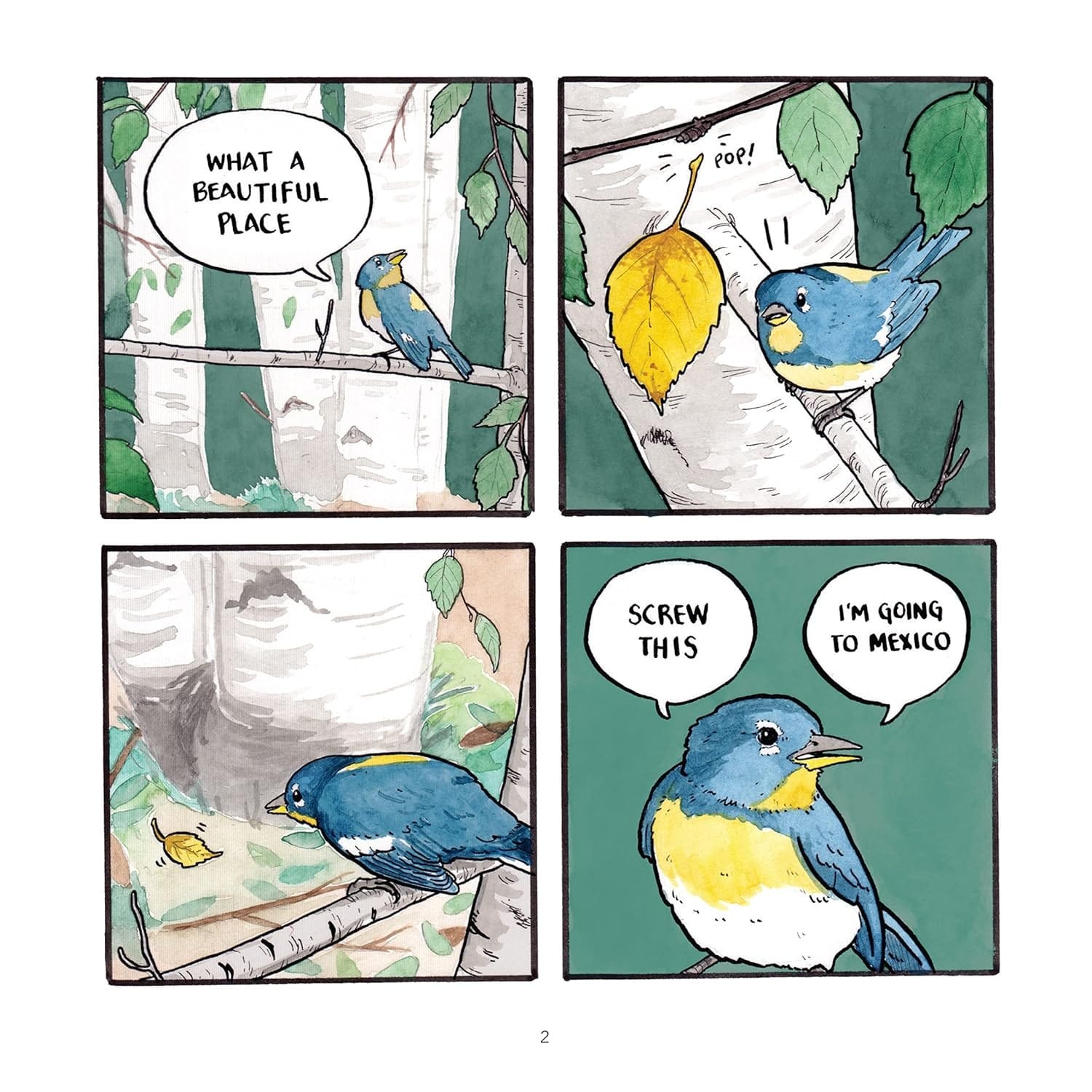
This approach acts as a gateway drug to ecological empathy. Through his work, the mundane animal species are granted dignity. The crow, often reviled as a scavenger, becomes a philosopher of the street. The Canada goose, often chased out of parks, becomes a stoic warrior. For a reader, this shift in perspective is crucial. It shows that caring for nature is not just about preserving exotic rainforests but also about recognizing the value of all terrestrial ecosystems, including the modified landscapes of our cities. By making us laugh at a bird’s existential crisis, Barkman tricks us into caring about the bird itself.
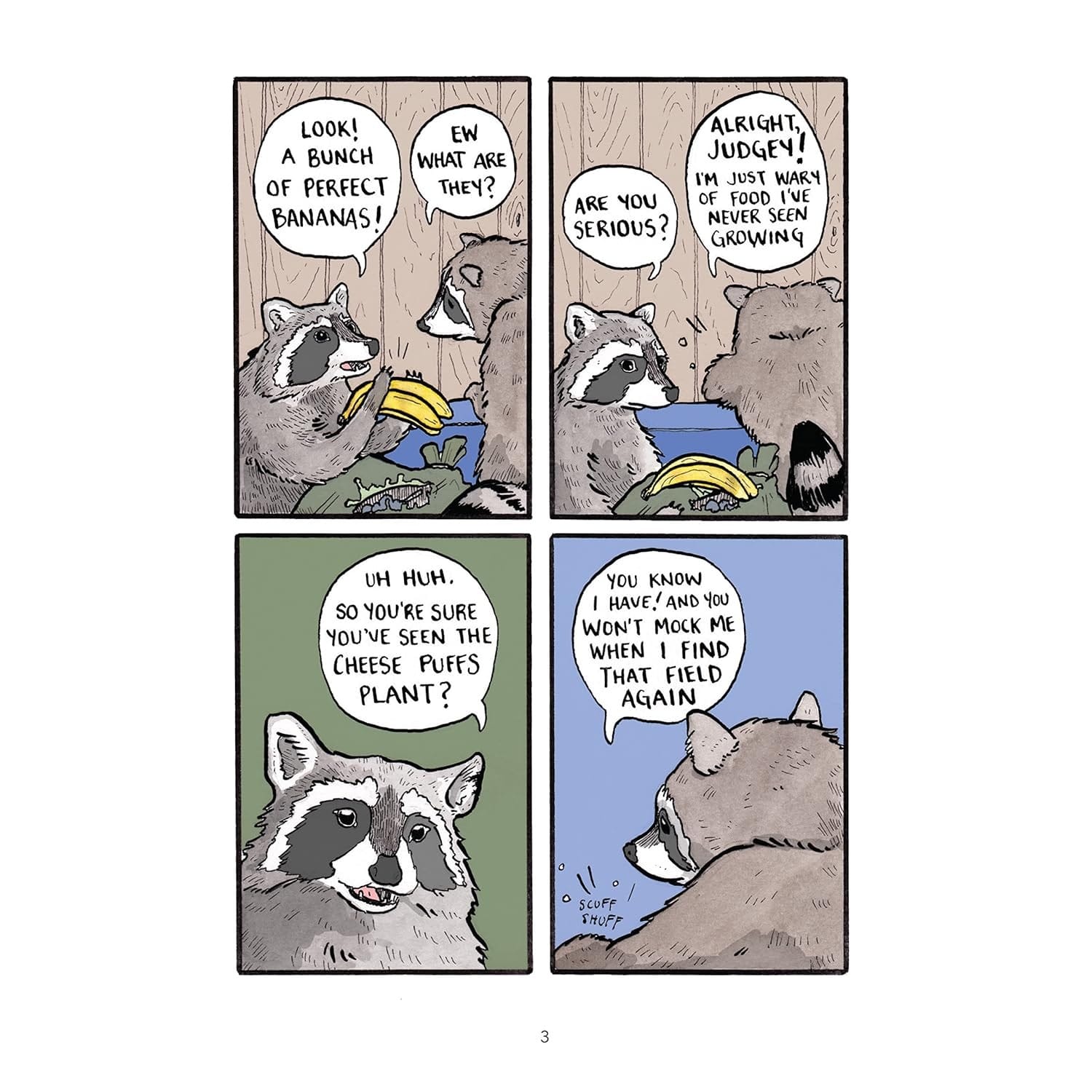
Furthermore, Barkman’s work subtly highlights the ecological wounds of urbanization. His characters often navigate a world cluttered with human debris—cigarette butts, fast-food wrappers, and endless concrete. Yet, they persist. This resilience serves as a reminder of nature's adaptability but also of our responsibility to share our space more ethically. When a comic strip makes you identify with a raccoon’s struggle to find a safe meal, you are less likely to view it as a nuisance and more likely to view it as a neighbour.
In an era of climate anxiety, the work churned out by False Knees offers a necessary reminder that we are not alone in our confusion or our survival. It invites us to pause and observe the "small" lives around us with greater respect, proving that vibrant, valuable, and complex life thrives even in the shadow of the skyscraper.
Explore the world of False Knees through the comic archive here, or find the book An Illustrated Guide to Animal Behavior here.