
Cecilia Fiona's textile and sculptural work in the group exhibition Iter Subterraneum at Bergen Kunsthall earlier this year built a bridge between fantasy and reality. The group exhibition, which ran from January 16 to April 15, 2026, displayed work by ten artists inspired by Ludvig Holberg's novel Niels Klim's Underground Travels (1741).
Fiona and other artists use their work to follow the, arguably, eco-existentialism that Holberg lays out in Niels Klim's Underground Travels. The book follows a protagonist who discovers a society of sentient trees after falling through a hole in the earth, a premise that prompts readers to think more deeply about plant life. By leaning into these themes, Fiona's work for Iter Subterraneum speaks to the United Nations Sustainable Development Goals of Life on Land and Sustainable Cities and Communities.
Niels Klim's Underground Travels, alternatively Niels Klim's journey under the ground, follows a philosophy student who, while investigating a cave, falls through the earth and into a new world of sentient talking trees, called Potu, and its people Potuans. Holberg then chronicles Niels Klim's discovery of a country of sentient monkeys, the land of Quama. The novel, originally published in Latin, considers morality, science, and even, arguably, humans interactions with their environments, through an absurd reality constructed from Holberg's imagination.
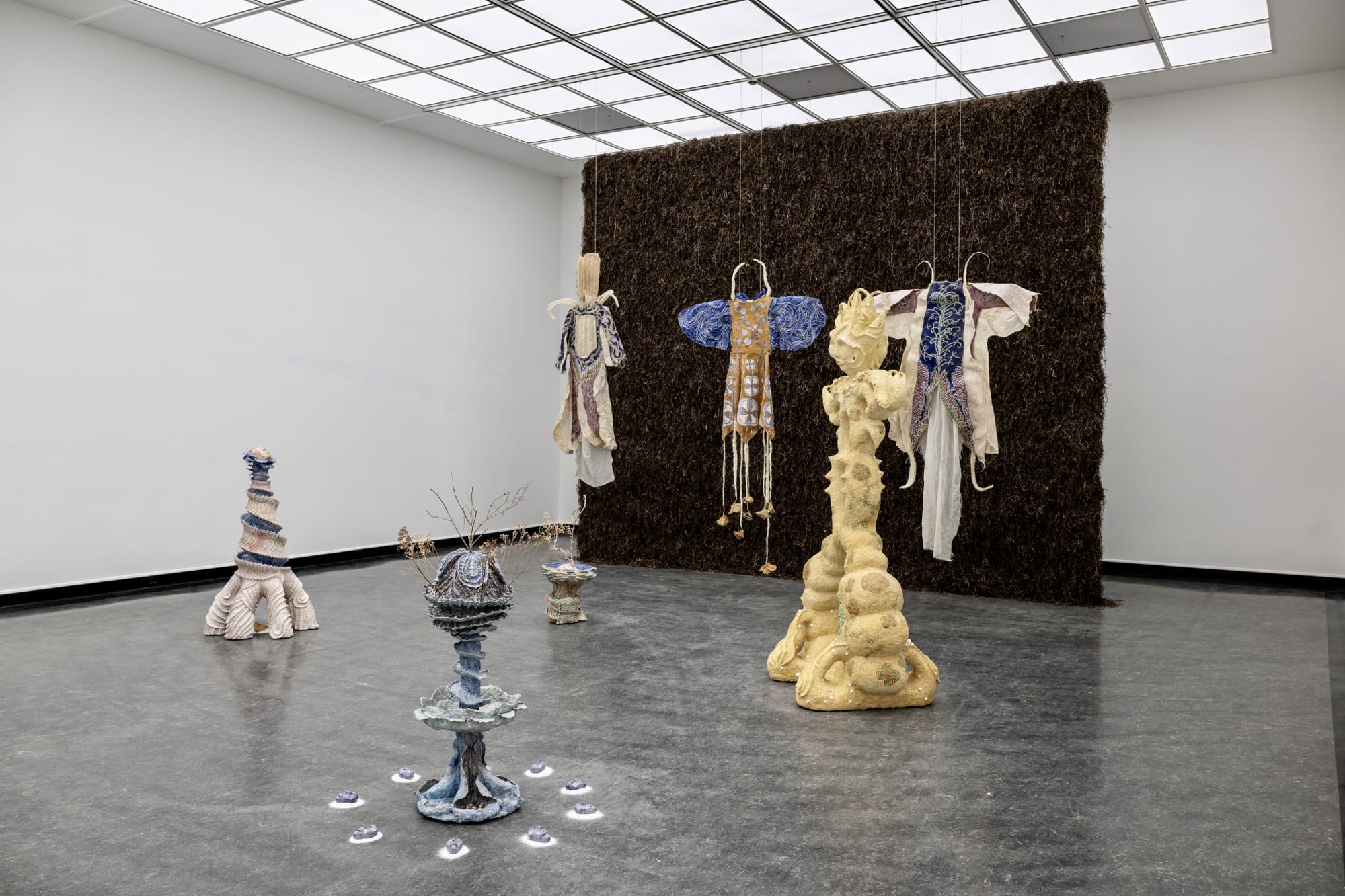
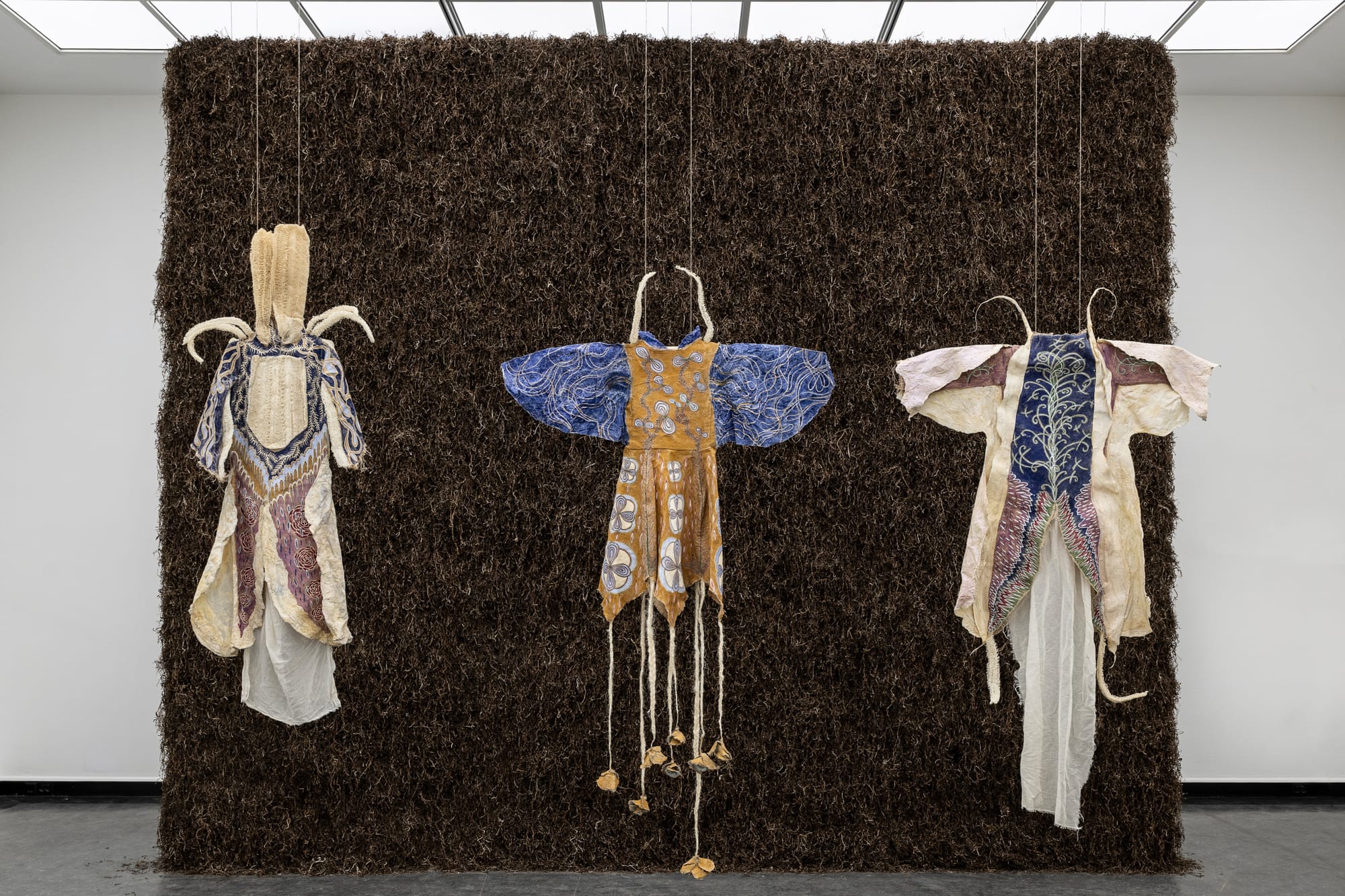
Fiona's work, while seeming to reference bugs and other plant life than trees and monkeys, is obviously inspired by Niels Klim's Underground Travels. The textile pieces, in particular, seem like new creatures themselves, accompanied with cloth antanaes, sleeves that look like wings, and fabric flowers hanging from their skirt.
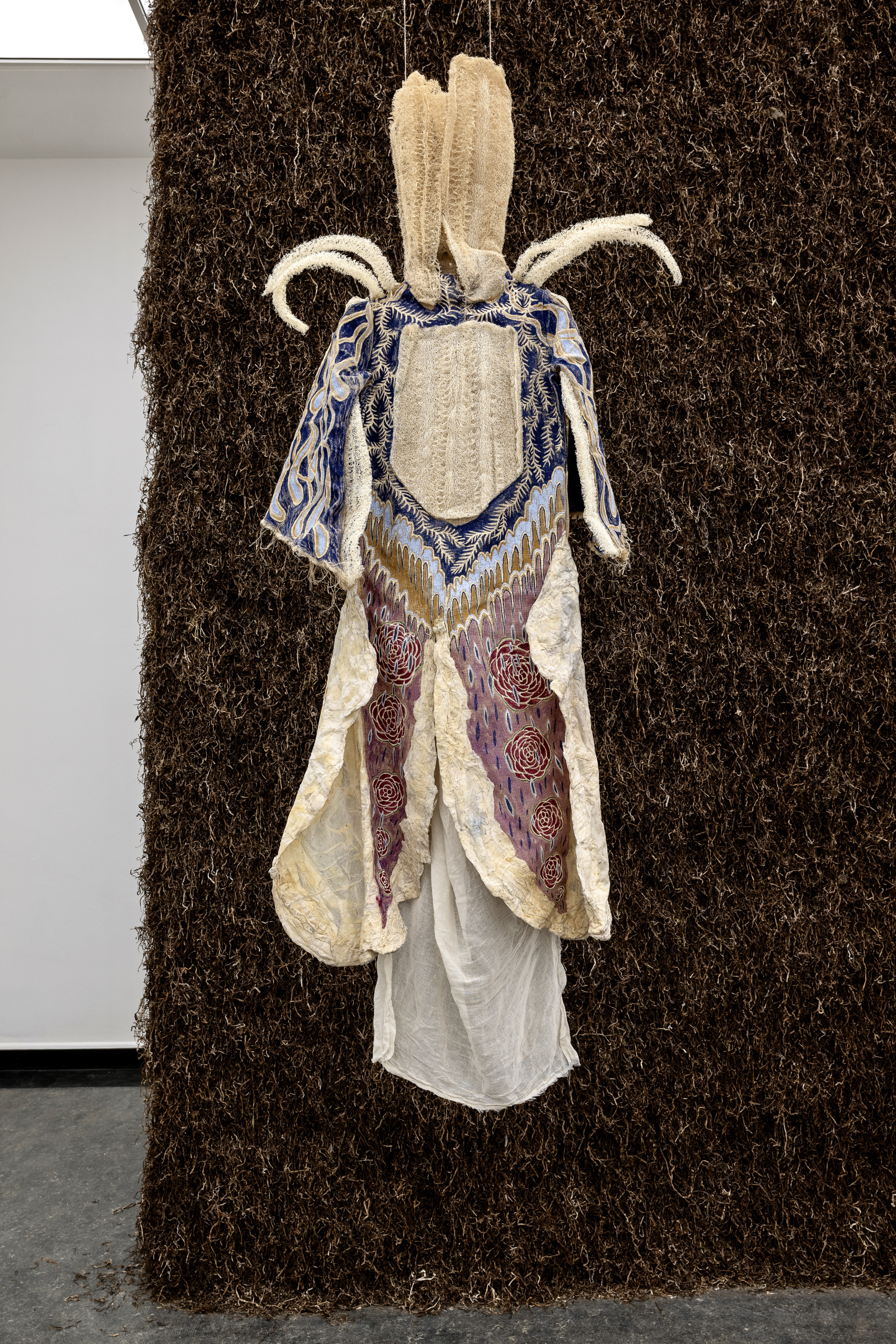
This work seamlessly blends human with non-human life: bug wings accompany skirts, and sleeves are adorned with vines, roots and leaves. Fiona takes us on a journey in her part of Iter Subterraneum where our end point is a consideration that humanity is deeply connected to the rest of the natural world.