
If it came out of a horse’s mouth, what would the horse say? In the age of proverbial language, double meanings, and references, Ida Lawrence’s Hoarse Horse offers an intricate study of our relationship with language, visual storytelling, and media literacy. Or does it? Ambiguity thrives in the language of narratives, specifically in Lawrence’s newest exhibition with ISA Art Gallery in Jakarta. Language has always been fluid and adaptive, even in the case of specific ‘global’ languages such as English. People from different cultures and societies often use double entendres in their own dialects, with proverbs and references that carry different meanings, even when parts of the world share the same languages. Lawrence encourages her audience to perceive a new narrative world within the arts that subverts the existing relationship between language, humans, and animals. From dogs, eagles, and foxes to the idea of an animal, Ida Lawrence’s Hoarse Horse creates a fascinating environment that combines animals as an ideological reference with reality and fictive storytelling. Lawrence’s exploration of the human as an animal and the animal as a linguistic method relates to the United Nations Sustainable Development Goal of Life on Land.
Currently based in Berlin, Ida Lawrence is an Indonesian-Australian artist who combines narrative storytelling with her conceptual artistic style. In a conversation with Arts Help, Lawrence reflects on how her multicultural background has informed her creative practice. Lawrence notes that stories from her time in Indonesia have inspired some of her paintings set there. An example is the Artist Statement (2025), which combines narrative elements drawn from her memories of living in Yogyakarta and from her encounter with Monika Proba. Lawrence also credits the Berlin graffiti scene and her experience going to art school in Australia for her exploration with materials and colours, specifically the difference between premixed colours in the Berlin graffiti scene and the educational colour theory-based palette mixing in traditional art schools. Traditional arts education often focuses on creating colours through colour theory, mixing primary colours using palettes rather than using premixed paints, like in the graffiti scene. Lawrence thrives on artistic exploration, and her solo exhibition Hoarse Horse combines this with her exploration of narrative prose.
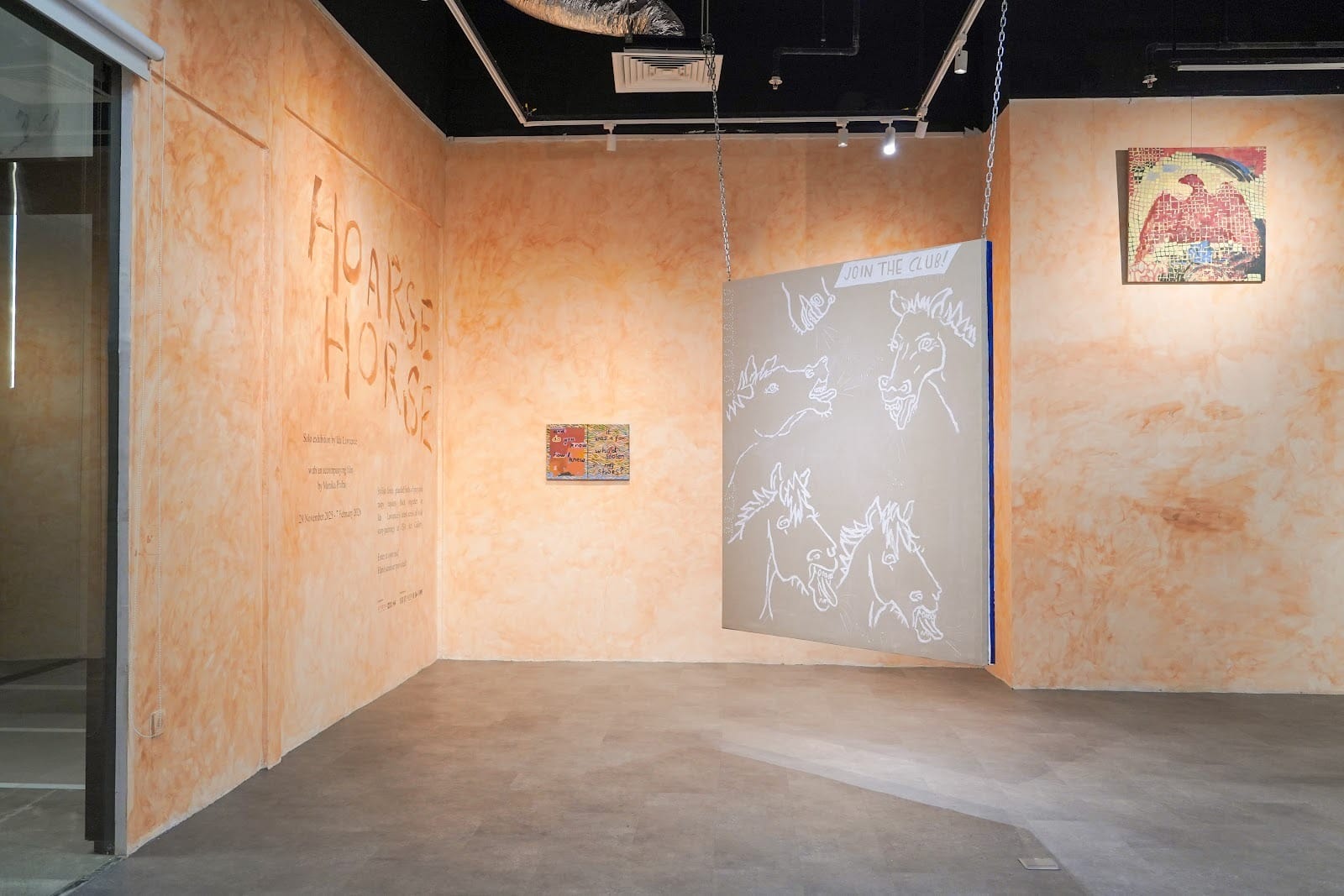
One notable difference that differentiates Ida Lawrence’s Hoarse Horse from other similar exhibitions is her exploration of the human as an animal in the exhibition space. Lawrence’s display features a human-scale bird swing and a cat scratcher, complete with a human-equivalent feather and a crisp Rp. 100.000 bill (equivalent to six U.S. dollars). Hoarse Horse showcases thirteen works referring to the language of narrative storytelling through animals, as well as an accompanying short film directed by Monika Proba. The audience is encouraged to reflect on their perspective of animals, language, and understanding of themselves and others while trying to decipher what is true, what is fiction, and how it relates to the fox who had stolen Karla’s shoes. Iconography within the arts has existed for centuries. Art, in itself, can facilitate identity construction, empowering individuals to reconcile with their personhood and guiding them through the harshness of reality. In Lawrence’s case, the artwork is playful, employing what Lawrence termed “deliberate misunderstanding” to reframe reality as a constructed narrative, often using animals as the story's iconography.
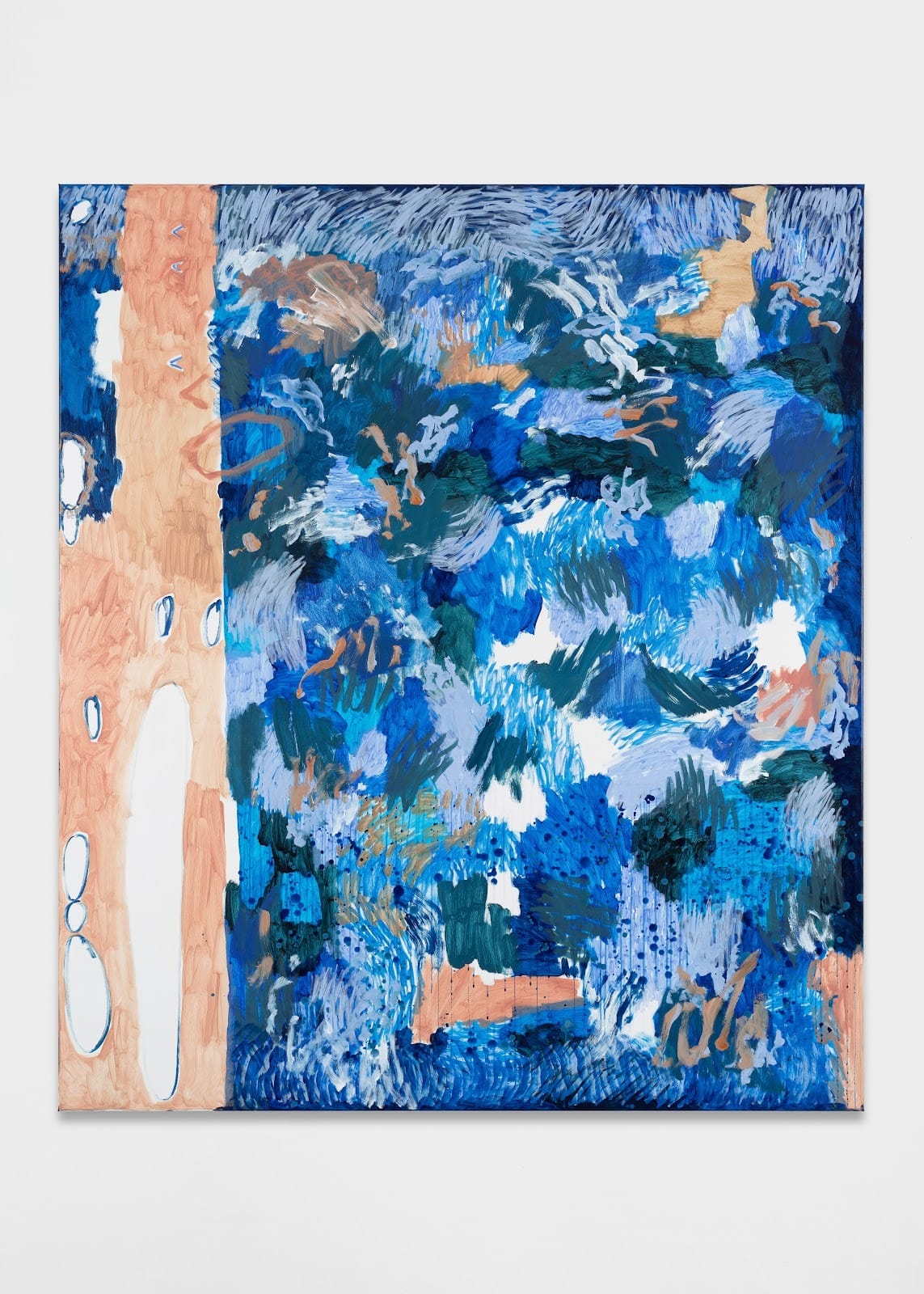
Iconography in language has existed for centuries. From hieroglyphs to sign language, humans have used pictography and iconography as a means of communication for centuries. The written word evolved from the human need for transactional documentation, with a focus on maintaining records for economic bookkeeping. The system is then systematically applied to the documentation of legends, artistic prose, and the distribution of information. As language systems adapt geographically, so do their writing systems, resulting in over 7,000 known spoken languages and 293 known writing systems today. The way one interacts with language often reflects how they interpret different modes of communication. Language is frequently interpretive and filled with double entendres, with certain tones and nuances that can alter the meaning of words altogether. In the age of digital communication, language’s dependency on its interpretative properties becomes ever-present, as tonality is deafened in the global landscape of digital communication.
Cultural landscapes shape how languages form and are understood. Intercultural communication has existed for centuries, but it is not as widespread as it is now. Hofstede's Cultural Dimensions Theory explains how cultural frameworks influence values and behaviours in societies, including communication styles, hierarchies, and gender roles. The way people interact through increasingly global communication networks has bridged gaps in intercultural communication, allowing people of different nationalities and backgrounds to coexist and intermingle in new ways. For instance, in the context of Airline English, languages are often standardized to reduce linguistic politeness and miscommunication and to ensure that proper airline safety measures are implemented.
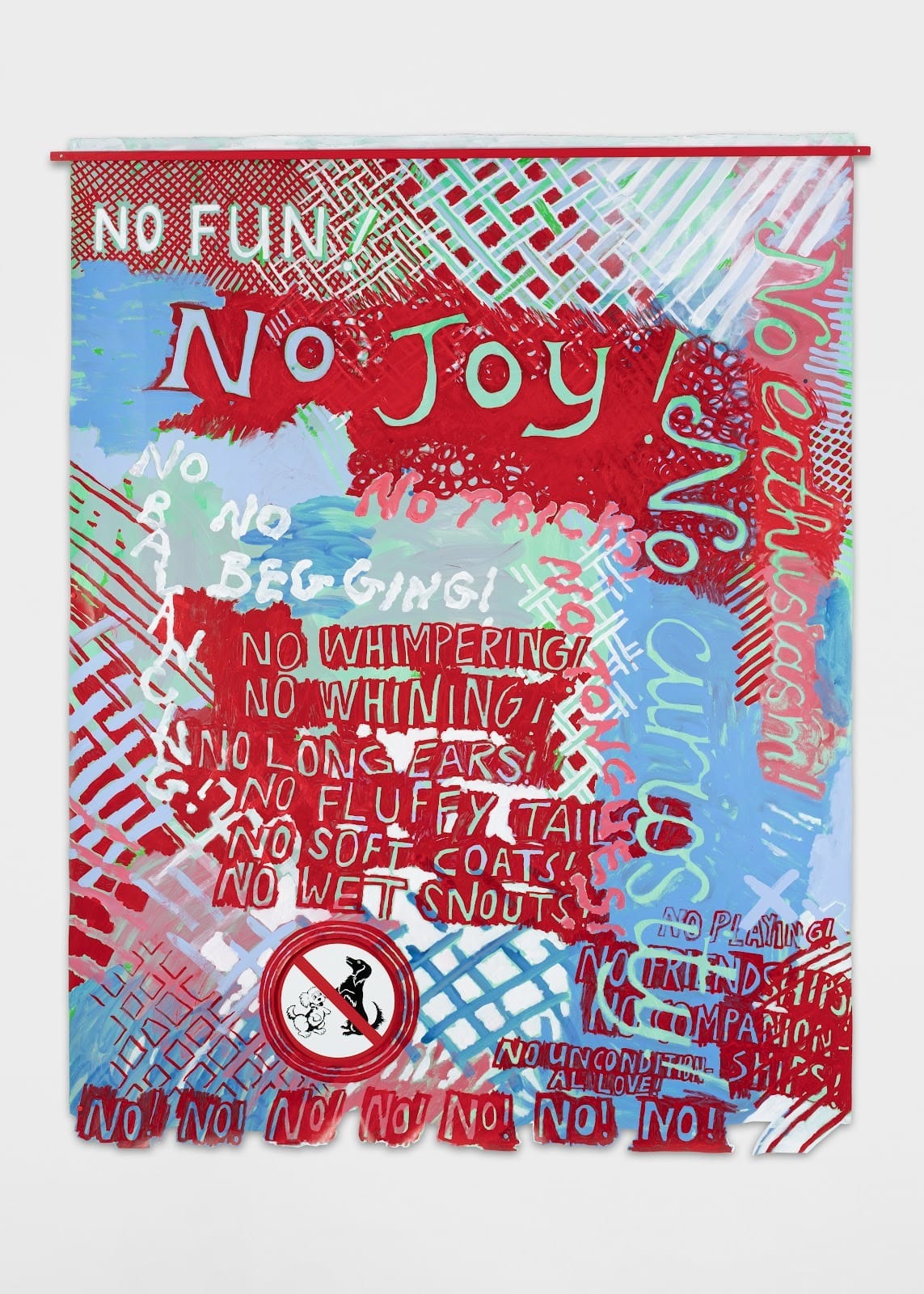
In the linguistic case of animals, an animal can mean different things across languages. For instance, the term ‘dog’ in English differs from its use in specific Asian languages, as its connotation can shift from positive to negative depending on cultural context. In a conversation with Arts Help, Lawrence reflects on the ideological connotations of animals within language, specifically in proverbs and metaphors. In NO FUN NO JOY (2025), Lawrence reflects upon the connotation of the ‘dog,’ based on a “No Dogs Allowed” sign she found in Berlin. The sign inspired her to think beyond its ‘true meaning,’ as a symbol often regarded as concrete and universal in its language, and to misinterpret it deliberately. “The dogs are quite cute, and they look like they’re friends,” Lawrence says. “So does it really mean ‘No Dogs’? Or no fun? No friendship?”
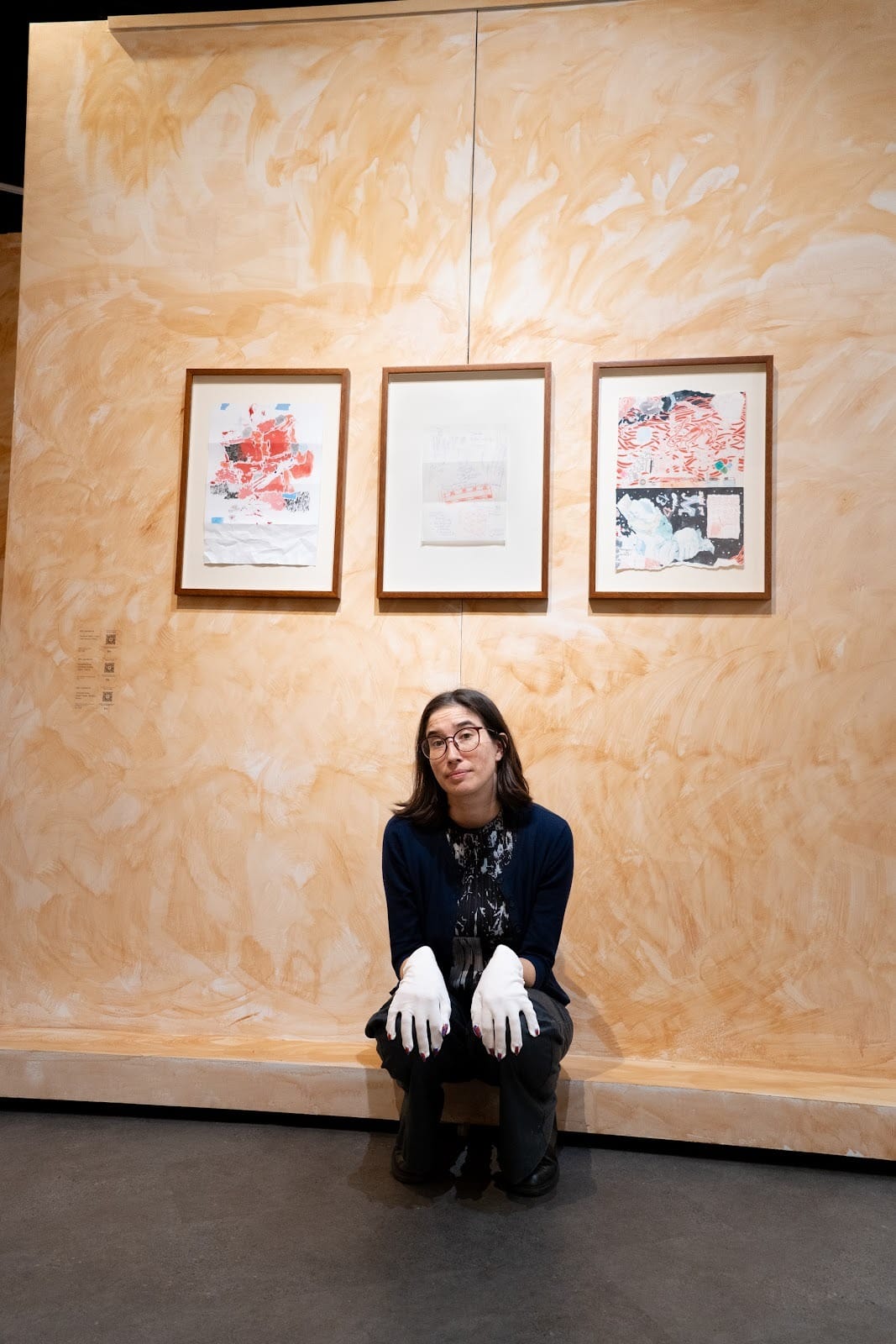
“I think I’m often like, I like listening and looking closely at the way language is being used and the kinds of bias that are in current use in the language, and then I like to kind of put a spotlight on the double meaning,” Lawrence says.
“We use references to them [animals] in language like proverbs or expressions, or we use them as national symbols, and we use them as sport mascots or on our currencies,” Lawrence reflects. It is often overlooked that most animals in linguistic symbolism are considered ‘strong animals,’ such as eagles, lions, and dragons.
“But what about the National Pigeon?” Lawrence questions. She ponders this idea through pieces like A Terrible Beast (2021-2025) and The Eagle in the Net (2025), where Lawrence uses the image of a dog (in the case of A Terrible Beast) and an eagle (in the case of The Eagle in the Net) to encourage her audience to question their personal biases, beliefs, and interpretations. Lawrence also explores the idea of truth through Hoarse Horse (2025), considering the proverb, “Straight out of the horse’s mouth,” which means something truthful and straight from a reliable source, and wondering what the connotation of the truth would be if the horse could not even speak. Language, in essence, allows connection through its connotations; stories contextualize the world around us and demonstrate how the truth can be fluid in the multitude of interpretations and meanings.
Ida Lawrence’s artistry and ideological explorations showcase remarkable dedication and passion for human curiosity. The reimagining of animals and the concept of the animal enables audiences to reflect on their personal and cultural connections to language. Lawrence’s encouragement to revisit one’s biases and ideologies, while rethinking the metaphorical and literal connotations of animals, invites the audience to examine their own cultures, beliefs, and values as they interpret her stories. So, if a Hoarse Horse really had the ability to speak, what profound wisdom do you think he would bestow upon you?
If you are interested in any of Ida Lawrence’s work, her solo exhibition, Hoarse Horse, will be on view at the ISA Art Gallery from November 29th, 2025, to February 7th, 2026, with an artist talk on January 17th, 2026. For more information, visit ISA Art and Design’s Website.