
A Hudson’s Bay Point blanket. A canoe. A snowy prairie field. These are some of the most recognizable symbols of Canadian identity, stitched into everything from postcards to coffee mugs. At the Ottawa Art Gallery, artist and scholar Leah Decter takes these symbols apart, thread by thread, and asks visitors to look at what they have always hidden.
becoming| un |becoming: deepening relations runs at the OAG from April 11 to August 23, 2026, and gathers more than 20 years of Decter’s work, from early video performance to woven textiles built from real HBC blankets.
This work speaks directly to the United Nations Sustainable Development Goal of Good Health and Well-Being. Instead of treating healing as something a person works through alone, Decter’s textiles and video pieces are built to be experienced in shared space. Sitting with a woven blanket-turned-artwork, or watching a river breathe on screen alongside strangers, becomes a small act of collective emotional repair rather than a private struggle.
The exhibition also connects to the United Nations Sustainable Development Goal of Reduced Inequalities. By bringing settler colonial history into a public, free-admission gallery space, the OAG opens up a conversation that too often stays confined to academic writing or closed-door institutional reviews. Visitors of any background can walk in, stand in front of spill, and start asking the same questions Decter has spent two decades sitting with.
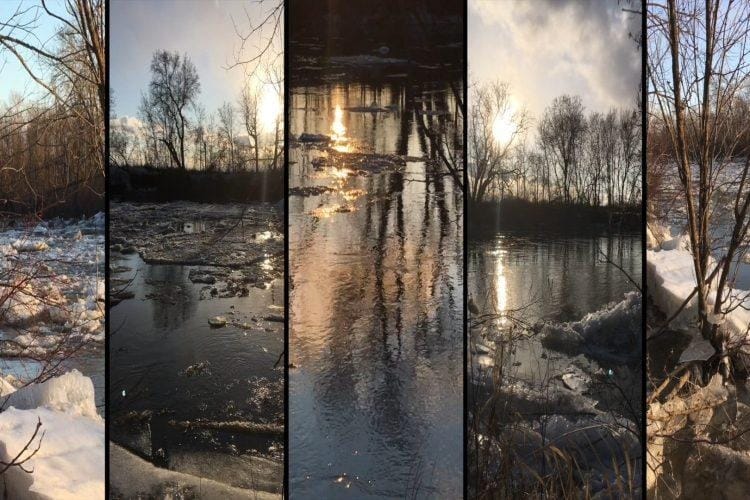
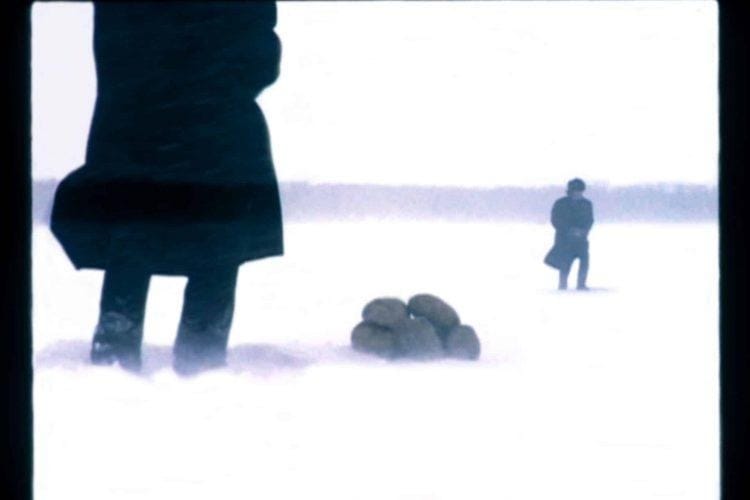
Decter, who is based in Winnipeg on Treaty 1 territory, describes herself as a white settler artist working to unlearn the stories Canada tells about itself. In spill (after Tom Thomson’s “The Canoe”), she reworks HBC blankets and burlap into a piece that unsettles one of the country’s most cherished wilderness paintings. In the video work l i s t e n, she turns her camera on a thawing river instead of herself, letting the land take the lead. And in Imprint, an early performance captured on video, she paces a snow-covered field for hours, piling stones in a gesture that echoes both a Jewish mourning custom and the surveying lines that carved up Indigenous territory into private property.
The through line across the exhibition is accountability. Decter does not present herself as separate from the history she examines. In a 2017 interview with The Queen’s Journal, she said her practice grew out of tracing her own grandfather’s immigration to Canada and recognizing how that arrival was tied to Indigenous dispossession. “It’s a matter of unlearning the ways I’ve been conditioned by colonial thinking,” she said.
That reckoning is also the heart of what Decter calls memoration, a method she outlines in a 2021 paper for the journal Performance Matters. Rather than treating memory as fixed, memoration invites people to notice what everyday Canadian symbols conveniently leave out and to sit with that discomfort instead of looking away.
According to the Ottawa Art Gallery co-curator Rachelle Dickenson, associate curator of Indigenous art at the National Gallery of Canada, Decter’s work follows an ethic of settler accountability and collaboration. It interrogates the structures of settler colonialism without side-stepping the way Decter herself is implicated in them.
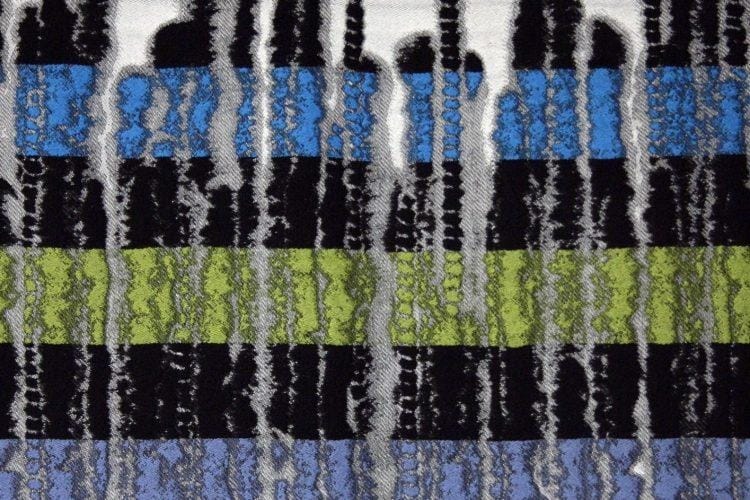
Elsewhere in the show, the seatoseastoseatosky translation series takes a quieter approach, a 2013 jacquard weaving worked in wool and thread.
The Ottawa Art Gallery frames the exhibition around a set of questions for visitors to carry with them: what is their relationship to the land they live on, and how has their own family history been shaped by settler colonialism? Decter’s art does not answer these questions for anyone. It simply makes them harder to avoid.
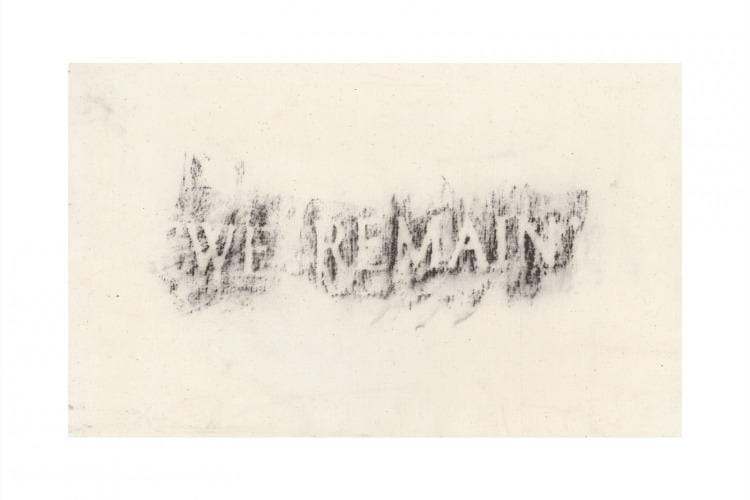
That refusal to offer easy comfort is, in many ways, the point. A Hudson’s Bay blanket can no longer be just a cozy household object once spill has been seen. A canoe on a postcard can no longer be just a symbol of adventure. becoming| un |becoming: deepening relations asks Ottawa to sit with its icons a little longer, and to notice what they were always quietly carrying.
becoming| un |becoming: deepening relations is on view at the Ottawa Art Gallery, 50 Mackenzie King Bridge, through August 23, 2026. Admission is free.