
Love and care are often shown through food. Cultures are shared and connected through food, and unique flavours often reflect the essence, history and identity of a cuisine. In the age of food scarcity, the importance of food in one’s life is ever-present. Food is life, food is joy, and food is wonder. Indonesian artist Mulyana reflects on his own relationship with food in his new solo exhibition at dia.lo.gue Artspace, which opened on the 31st of October 2025.
Mulyana's exhibition, titled Playful Bites: Food Monsters, reflects on his experience during the COVID-19 quarantine in South Korea, during which he created monsters from his quarantine meals. The experience inspired him to make the Food Monsters project, in which he would crochet various bento boxes, meals, and snacks, and combine them into sculptural works that playfully depict a ‘food monster’. By reframing food as a source of happiness rather than just sustenance, Mulyana’s playful exploration of food through the arts aligns with the United Nations’ Sustainable Development Goal of Zero Hunger.
Mulyana, also known as Mang Moel, is an Indonesian Artist currently based in Yogyakarta. Mulyana’s artistry focuses on creating unique sculptural fixtures using unconventional materials, such as leftover factory yarn and iron structures, thereby contributing to a positive environmental impact. Mulyana’s interest in creating Food Monsters stems from his interest in how ‘boring’ food can be while in quarantine in South Korea. Named Indonesia’s first Lego Playmaker, Mulyana creates playful, interactive works that showcase storytelling through sculptural and modular elements. Before Food Monsters, there was the Coral Reefs, showing how his intricate execution of crochet sculptures showcases interesting ideologies in very unique, 'crafty' ways.
Mulyana’s prior exhibition at USC Fischer, Modular Utopia, features an intricate underwater coral environment, crafted to occupy space while revealing vivid, unadulterated underwater worlds. The multidimensionality of his work showcases artistry in self-preservation of one’s personhood in an uncertain, post-pandemic world. Using vivid portrayals of his mythological creatures and monsters, Mulyana creates a fascinating, creative world that explores the vastness of the ocean while maintaining a cohesive, story-driven lore. The artist states that his challenge is not to represent an environment through crochet and sculpture, but to capture the story within an object. “I find that my imagination triggers unconsciously when I work with my hands, crocheting while chatting, watching films, or reading online news. I choose to create artwork installations as a storytelling medium, to give the public a different perspective."
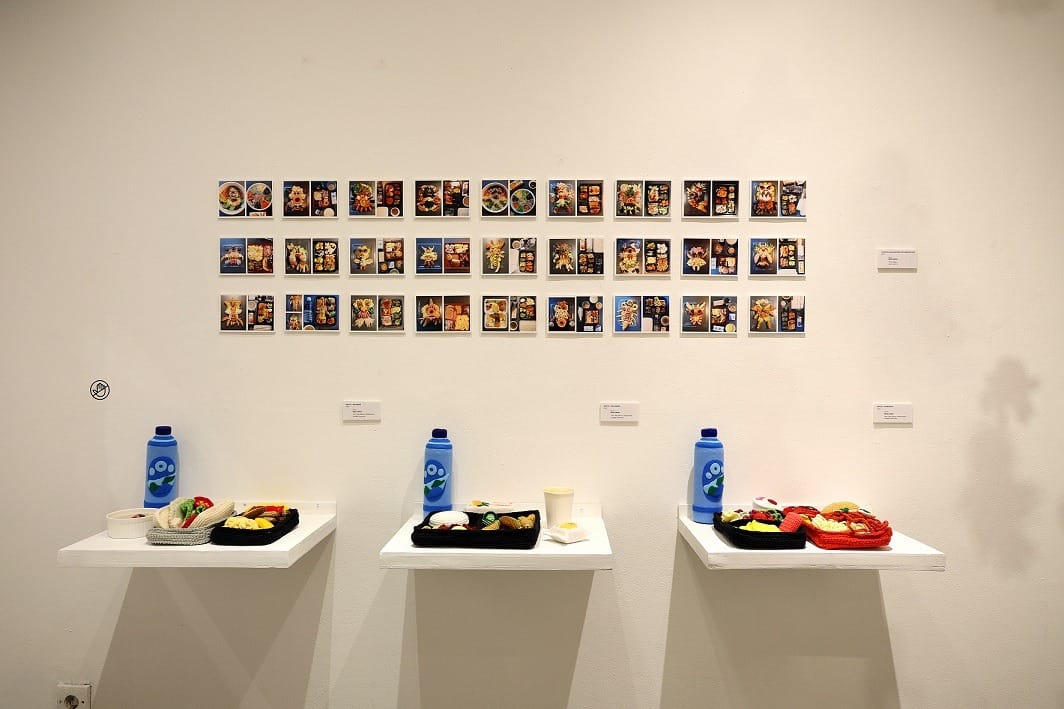
The central character of Mulyana's mythology, the Mogus or monster, represents his alter ego and is an acronym of Gurita or octopus and his clan name, Sigarantang. Playful Bites contributes to the Mulyana Mythological Universe through the Food Monster, inspired by the healthy, nutritious meals he enjoyed during quarantine in South Korea. As written by Curator Nala Nandana, in the exhibition, “food is positioned not merely as a biological necessity but as a social symbol that binds relationships between humans.”
In his Artist Talk with dia.lo.gue, Mulyana states that he found comfort in food during quarantine and that it can bring people of different cultures and nationalities together. He also reflects that, in previous showings, he encouraged his audience to create their own Food Monsters using various crochet ingredients. “The theme and modules are food. Previously, with LEGO, the modules were LEGO pieces. Now, the modules are food.” When asked why his works must be participatory and interactive, he states that he wants to share joy, fun, and happiness, and to show how art can be a medium for learning, expression and the development of creativity.
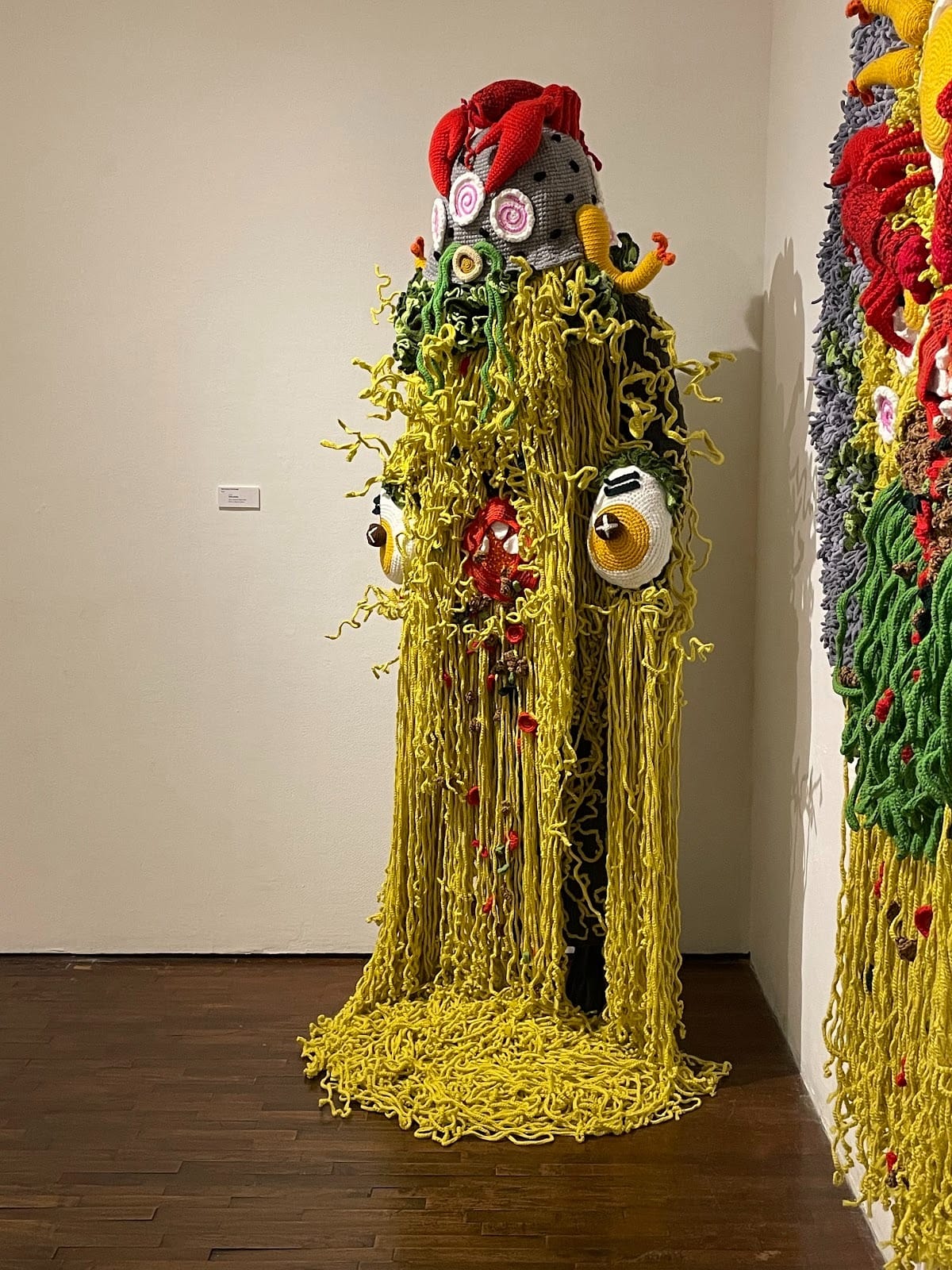
Mulyana’s Playful Bites: Food Monsters highlights the importance of food and its traditions across different cultures. In the exhibition, he combines various traditional Indonesian foods and snacks with Japanese and Korean-style Bento Boxes. In many cultures, food represents community and companionship. Food can also teach us values such as understanding, sharing and reciprocity. Communal eating is essential for alleviating isolation, and in a post-pandemic era, food as a symbol of community and cultural understanding is imperative to human survival.
In an era of economic hardship, food scarcity creates a rift between food as a means of sustenance and a means of addressing isolation. In cases like the famine in Gaza and Sudan, the millions of people affected suffer significant consequences from severe acute malnutrition. In Gaza alone, more than 12,000 children were identified as acutely malnourished, with one in four children suffering from severe acute malnutrition (SAM). In Sudan, an estimated 21.2 million people, around 45 per cent of the population, are facing high levels of acute food insecurity.
Food also has a significant connection to culture. In South Korea, for example, Koreans often eat Seaweed Soup, known locally as 미역국 (Miyeok-Guk), as a birthday tradition. This practice was initially associated with postpartum care known as 산후조리 (Sanhujori), in which families cook nutritious, warm, healthy meals to support the baby and the mother as she recovers from childbirth. Seaweed Soup serves as a reminder to thank one's mother for loving and caring for them since birth.
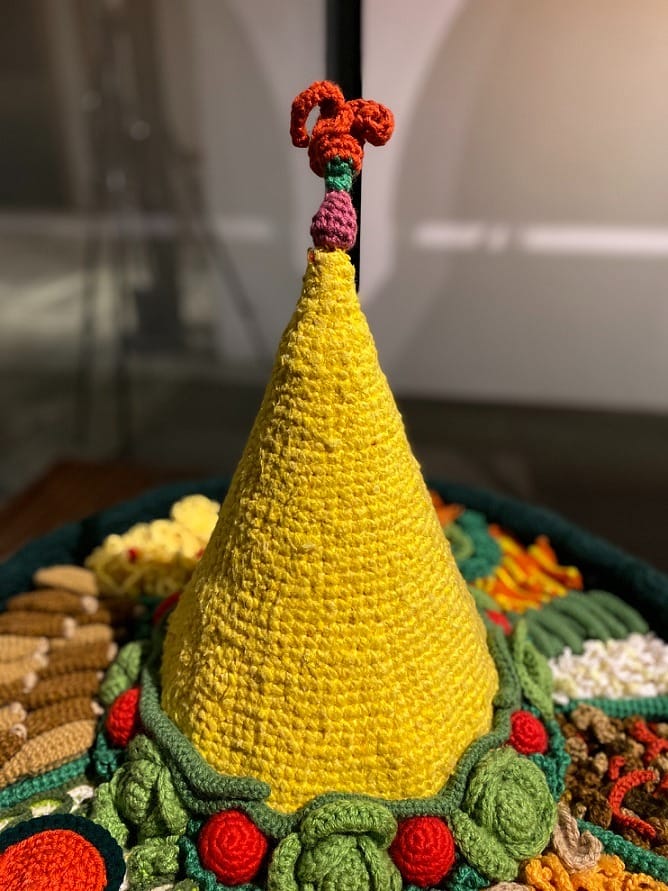
There are numerous examples of other cultural traditions that rely on food, such as the Indonesian tumpeng and its associated philosophies. The philosophy of Tumpeng originates in the mountains, where the side dishes represent the vast land, and the cone-shaped rice symbolizes the connection between the sky and heaven. The tumpeng, symbolizing divine knowledge, must be cut from the bottom layer, as the mountain peak’s divinity must not be destroyed.
Mulyana’s Playful Bites: Food Monsters showcases a never-ending feast of community exploration. His works implement ideological methodologies that connect sustainability and communal connection, creating an incredible creative environment for play and learning through food. Through his Food Monsters project, Mulyana urges his audiences to view food through a new lens and to consider how, in a post-pandemic society, food is the best way to create connection, community and companionship.