
Suspended in the hallowed, vaulted silence of a restored Belgian church, a seven-meter-tall narwhal hangs over a marble dinner table. This is the work of Piet Van, a multidisciplinary material philosopher whose latest installation, Narwhal in a Golden Bag, creates a visceral, unsettling confrontation between luxury lifestyle and biological extinction. In the piece, Van has wrapped the legendary unicorn of the sea in a resplendent golden shroud, as if he’s packaged the narwhal to offer a haunting metaphor for the commodification of nature. This is why the work reflects the United Nations Sustainable Development Goal of Life Below Water.
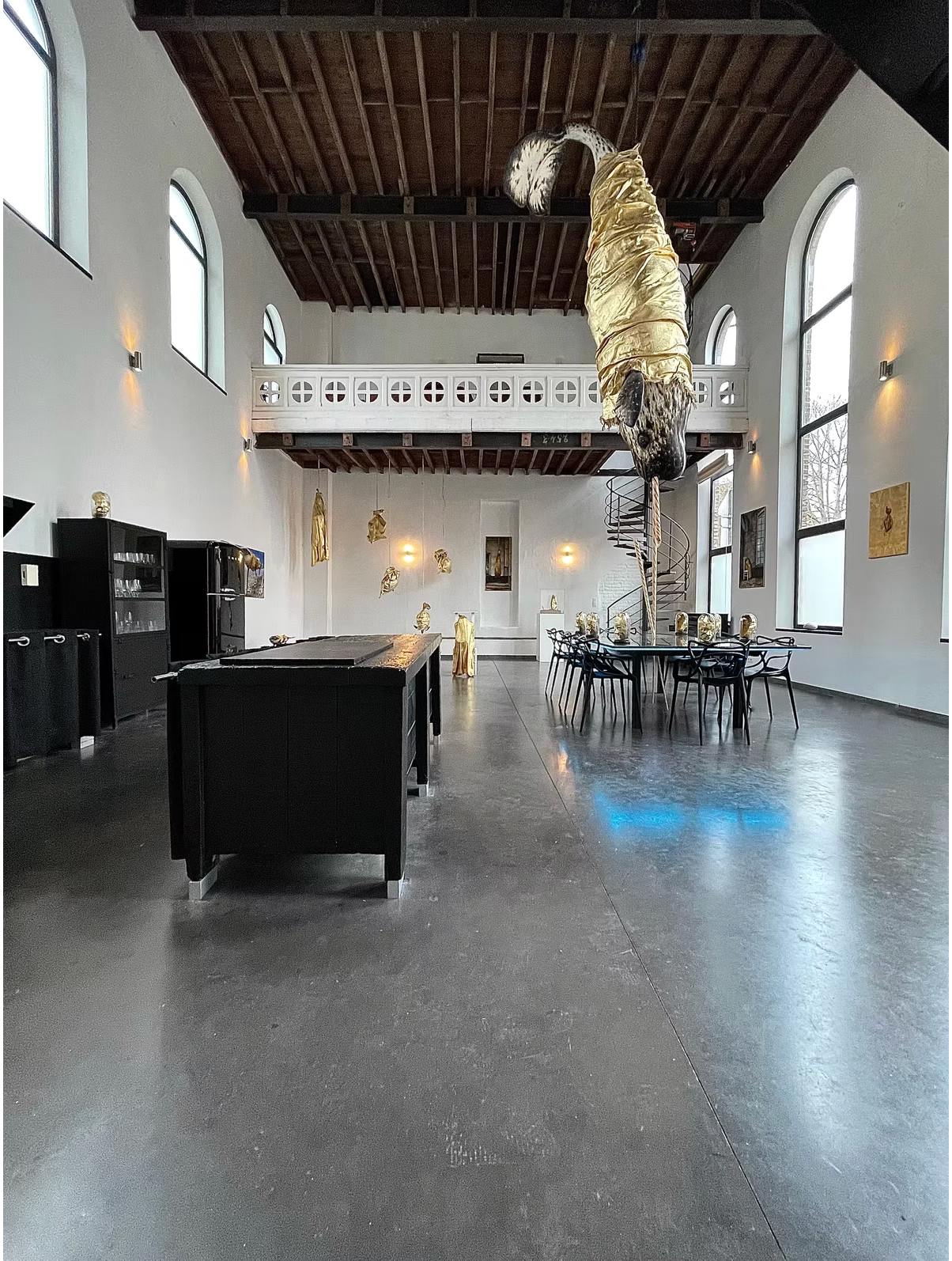
The narwhal (Monodon monoceros) has long been a victim of its own mythology. As noted by the International Fund for Animal Welfare (IFAW), medieval traders once sold narwhal tusks as unicorn horns, earning the whale a nickname that persists today. Van’s work then strips away the fairytale by wrapping it in a golden shroud. He does this in reference to the Icelandic roots of the species name—nar (corpse) and hvalr (whale)—which refer to the animal’s mottled, death-like skin. The golden bag he’s wrapped it in serves as a modern "body bag," suggesting that the world’s obsession with consumption, especially the luxury lifestyle that the “gold” colour of the shroud represents, is effectively suffocating the very creatures they romanticize.
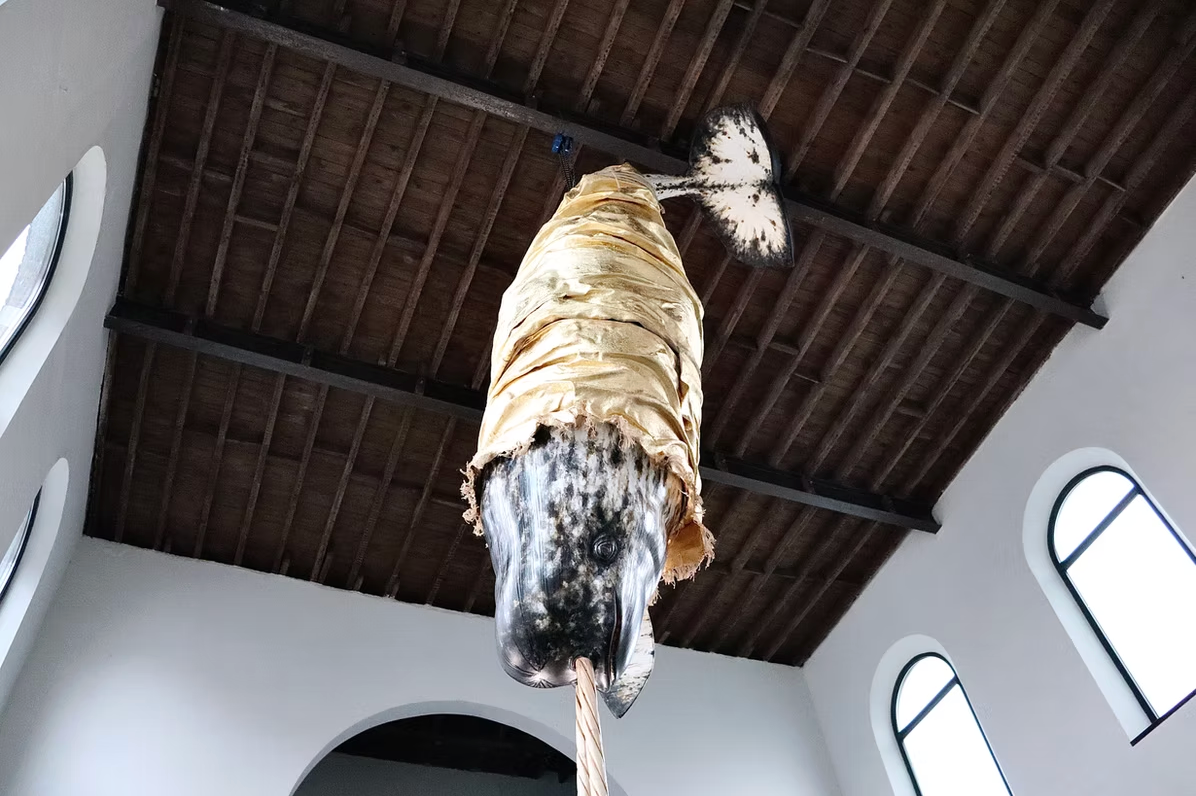
While the IUCN currently lists the narwhal as "Least Concern," this status masks a fragile reality. From 2008 to 2017, they were classified as "Near Threatened," and in Canada, they remain a species of "Special Concern." According to Endangered Narwhals, the species is a specialist of the ice; they rely on stable sea ice for feeding, migration, and refuge from predators. As climate change thins the Arctic ice at a rate far outstripping the narwhal’s ability to adapt, their shrinking habitat is functioning as its own golden shroud.
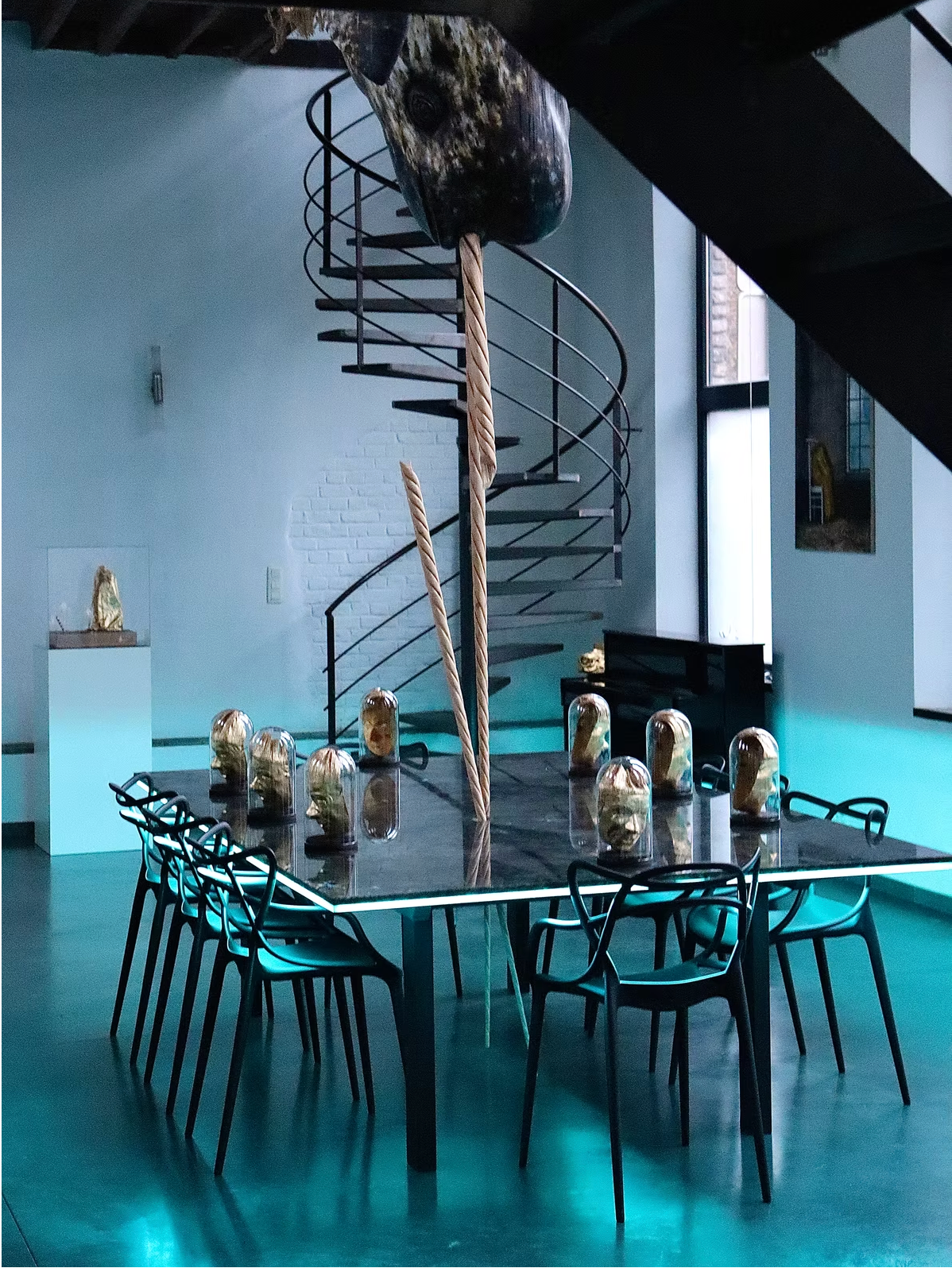
The threat they face is also an industrial one. As highlighted by Sustainable Business Magazine, the melting ice has opened Arctic corridors to increased shipping and oil and gas development. This introduces a lethal invisible pollutant: noise. Narwhals rely on sound to navigate and hunt at depths of up to 1,500 meters. Man-made noise acts like a bucket over their heads, cutting off the senses required for survival. Van’s choice to hang the narwhal over a dining table further forces viewers to consider how people’s appetite for industrial expansion and global trade "serves up" marine life for destruction.
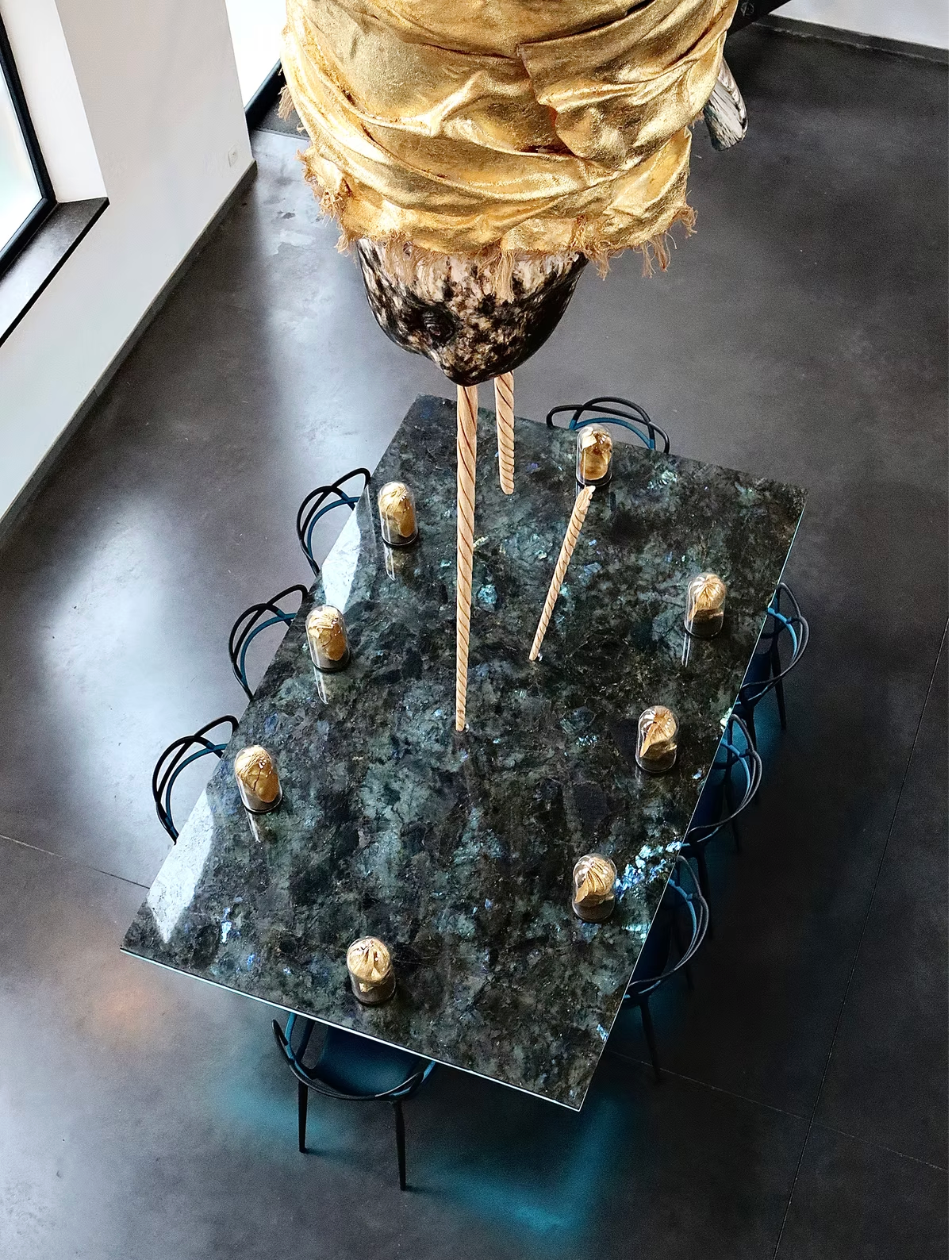
Piet Van’s material philosophy uses the church’s sacred atmosphere to elevate the narwhal into a relic of a vanishing world. The installation suggests that once we close the bag on our natural heritage—valuing the gold of profit over the flesh of the planet—the contents are lost forever. Narwhal in a Golden Bag is a silent, golden alarm, reminding its viewers that the beauty of the sea unicorn is not a commodity to be packaged but a life to be protected.
Explore the conceptual worlds of Piet Van at PietVan.com and learn more about narwhal conservation through IFAW.