
The new exhibition Qillaniq is now on display at the National Gallery of Canada in Ottawa, Ontario, and runs from June 12 to September 20, 2026. The exhibition is a massive display of
circumpolar Arctic art, showcasing over 80 works by more than 70 artists, making it the largest circumpolar exhibition ever held globally. It celebrates the work of Arctic Indigenous artists, particularly against the lasting impacts of colonization, and celebrates their cultural works, fitting the United Nations Sustainable Development Goal of Reduced Inequalities.
Qillaniq has a fluid structure, developed by an international all-Indigenous curatorial team. Their approach to developing the exhibition is described by the National Gallery as improvisational and multidisciplinary, “allowing visitors to experience an interconnected, fluid Arctic world where art transcends modern geopolitical borders—stretching seamlessly across Alaska, Inuit Nunaat (Inuit), Sápmi (Sámi), and Denendeh (Dene).
The artists involved in the collection represent a breadth of cultural experiences and perspectives from several Indigenous Nations such as the Gwich’in, Inuvialuit, and Sugpiat. Participating artists include Maureen Gruben (Inuvialuk), Billy Gauthier (Inuk), Viktor Iadne (Nenets), Jouni Laiti (Sámi), Bolatta Silis-Høegh (Greenlandic), Krystle Silverfox (Northern Tutchone), and Ningiukulu Teevee (Inuk).
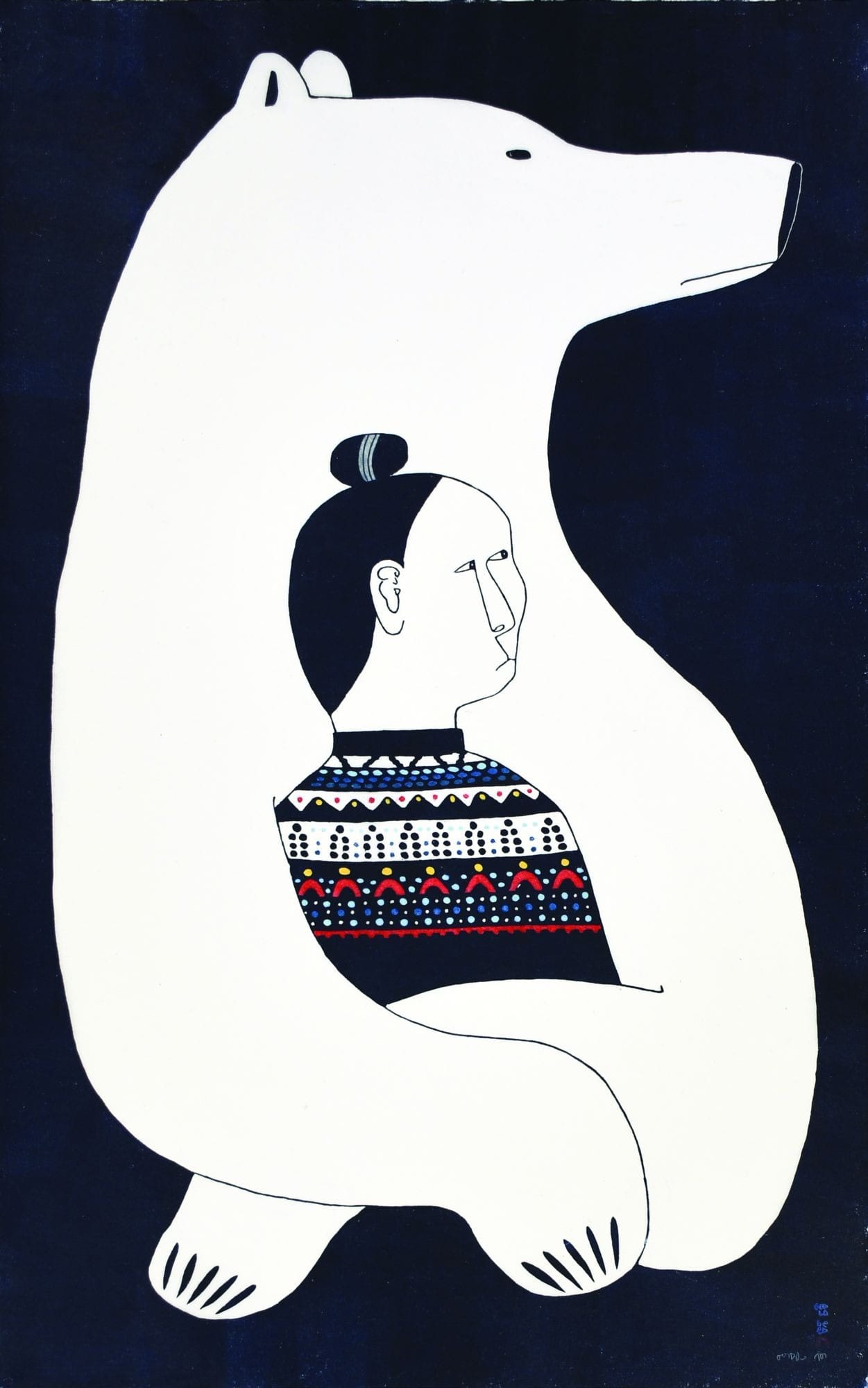
Strong Thoughts (2024) by Ningiukulu Teevee is one of the most prominent pieces on display, along with works like Bolatta Silis-Høegh’s Ukaliusat (2019), Máret Ánne Sara’s Pile o’Sápmi Supreme (2017), and Krystle Silverfox’s Raven <lite> (2024). Strong Thoughts stands out as particularly tender and bold. In the print, made in collaboration with stonecutter Tapaungai Niviaqsi and master printer Qavavau Manumie, we see a woman wearing a patterned sweater of a combination of shapes of blue and red being hugged or held from behind by a polar bear. Though it’s difficult to know the artist’s intention, the woman doesn’t look unnerved; instead, she appears to be looking into the distance with the bear, deep in concentrated thought. It comes across as bold, brave, and warm, while also being determined. It is a piece that emphasizes strength. Ningiukulu Teevee is very knowledgeable about Inuit legends, which makes its way into her work.
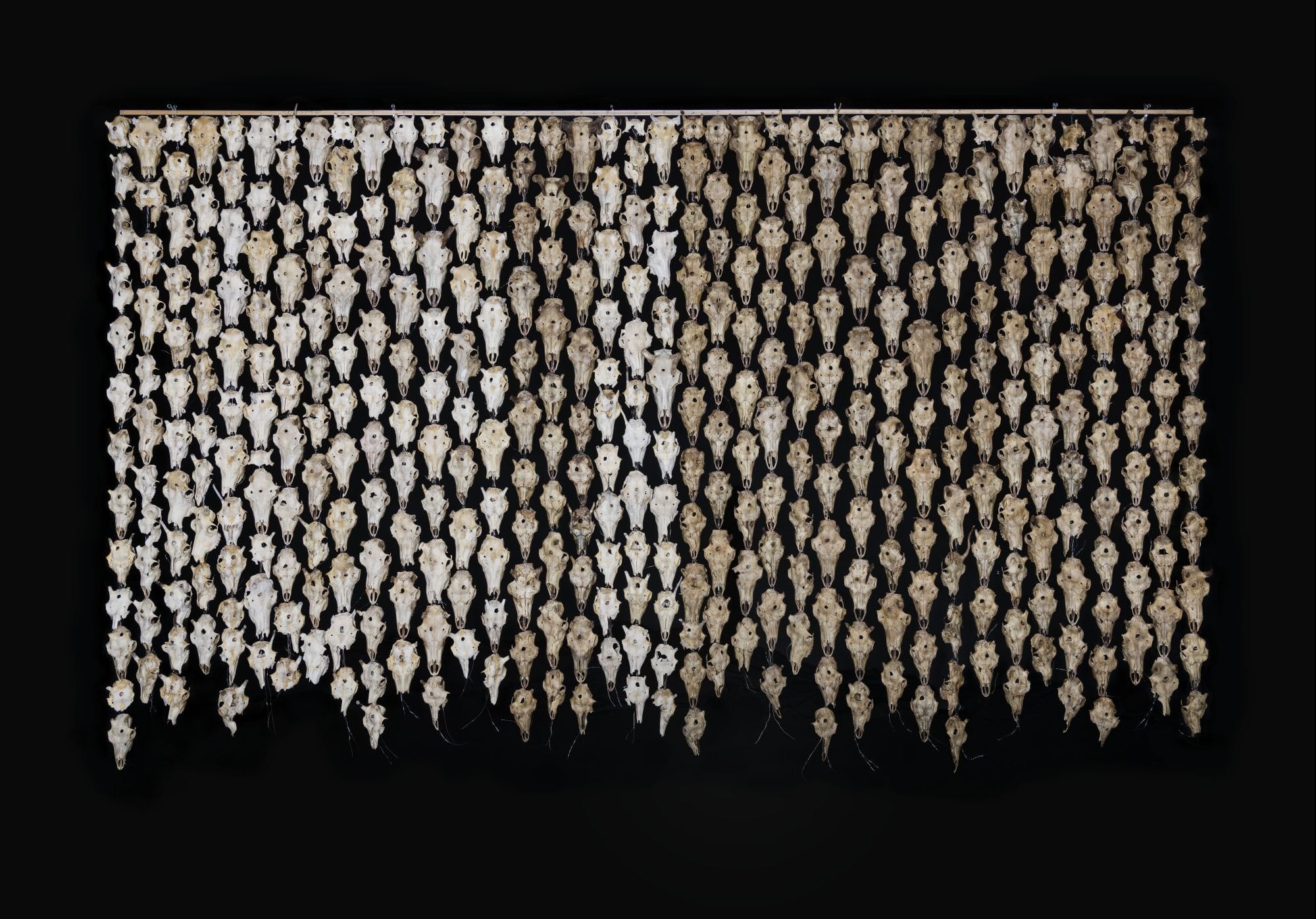
Máret Ánne Sara’s Pile o’ Sápmi Supreme is a particularly interesting work that stands out in the gallery. Composed of 400 boiled and polished reindeer skulls hanging from strings, they create a hanging tapestry, described by Sara in an Instagram post as an “enormous Sámi flag of reindeer heads and spirits,” that serves to raise awareness about the enforced culling of the reindeer population by the Norwegian government. This is in reference to the Norwegian government’s ordered cull of 40,000 reindeer in Northern Norway in 2012. She had originally created the work as an installation outside the Inner Finnmark Cultural District Court in February 2016, which was where her brother, Jovsset Ante Sara, brought a case against the Norwegian government, arguing for his right to practice his culture as a Sámi reindeer herder.
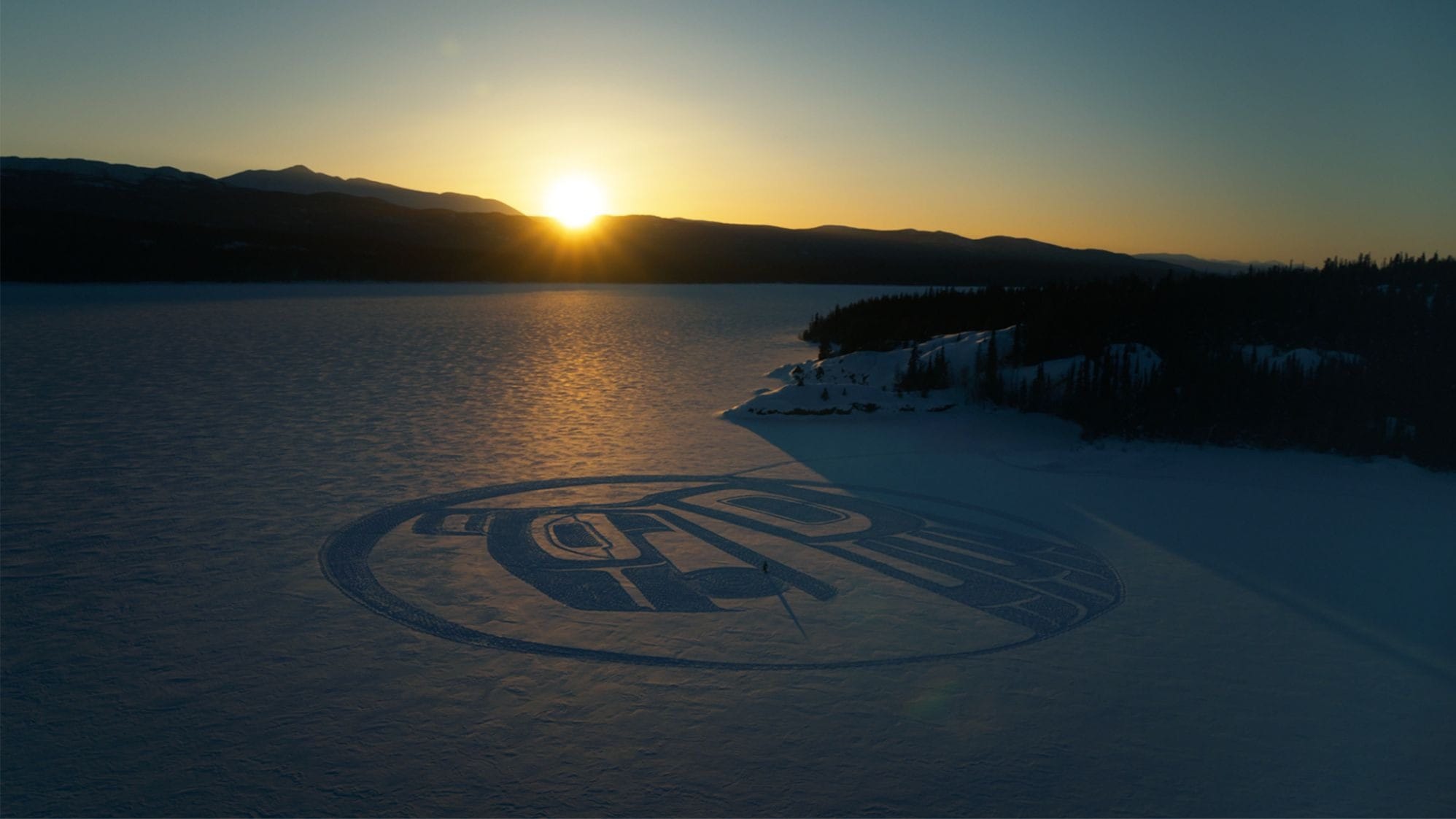
There are many incredible works on display in Qillaniq, from photography to installation work, sculpture, prints, and paintings, each one expressing the artist’s personal and cultural perspective. The works altogether create a mosaic of the different cultural backgrounds and approaches amongst Northern Indigenous peoples and artists. There are not only so many styles and stories because of each artist’s perspective but also because of the community and cultural mythos that precede them.