
The Rusty-patched Bumble Bee used to be a common sight in Ontario. Its last confirmed sighting in Canada was in 2009. That single, quiet fact sits inside BEES: A Story of Survival, the Royal Ontario Museum’s new exhibition running May 16 to October 18, 2026, and it does more to explain why the show exists than any statistic could.
The exhibition, making its North American debut at the ROM, was developed by National Museums Liverpool with British artist Wolfgang Buttress, working alongside bee communication expert Professor Martin Bencsik of Nottingham Trent University. It speaks directly to two United Nations Sustainable Development Goals: Life on Land and Climate Action.
Bees are, in Antonia Guidotti's words, "keystone species for terrestrial ecosystems, contributing to both environmental well-being and human survival," the Entomology Collections Technician at the ROM told ROM Magazine. That's not a statistic happening somewhere else. It's happening in your own backyard, and this exhibition wants you to feel that, not just read it off a wall.
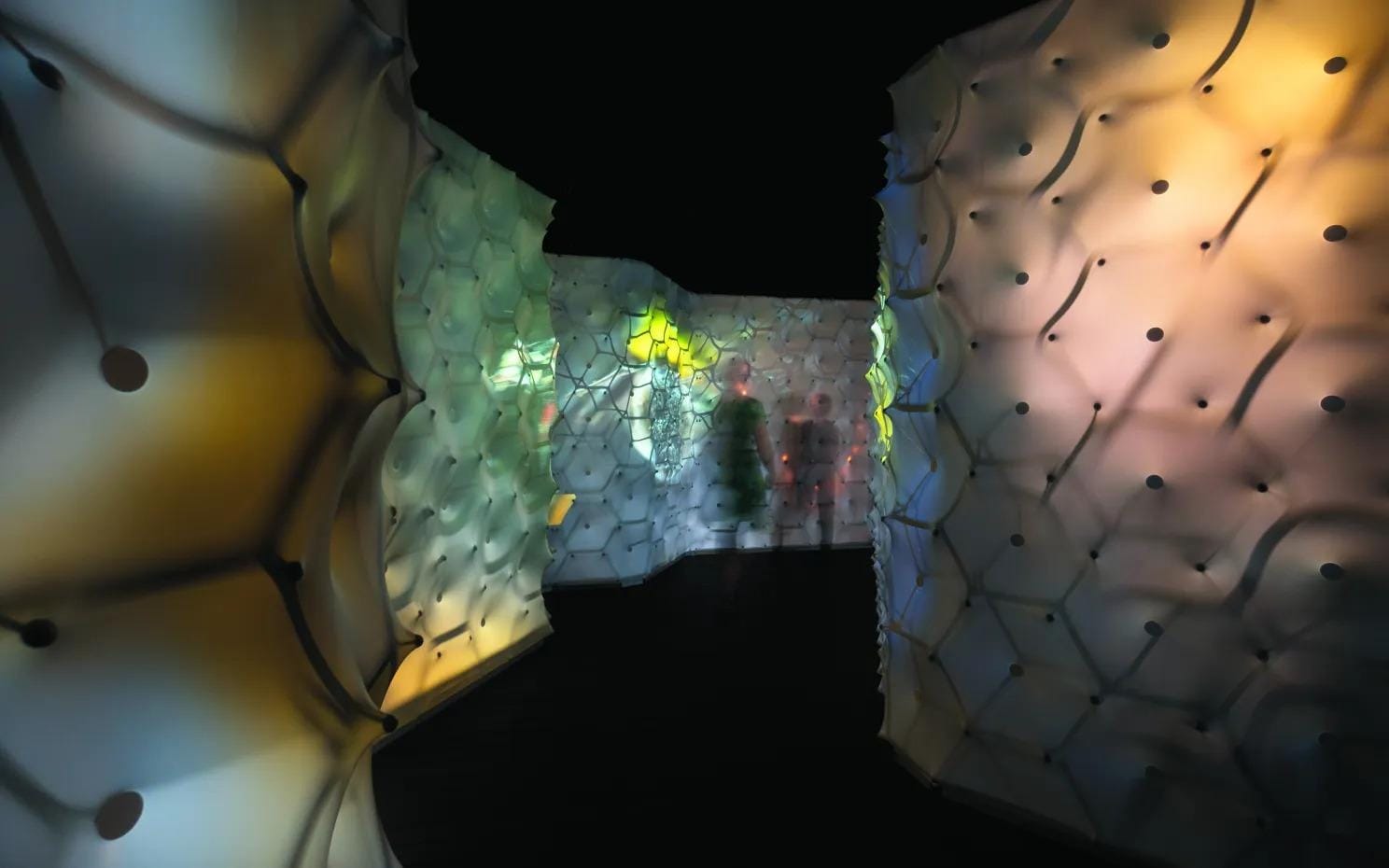
The exhibition itself is built around sensation rather than wall text. Visitors walk through a stylized honeycomb tunnel lit in warm amber tones, where bone-conduction devices let people feel sound the way a bee would, through vibration rather than sound waves through air, ROM Magazine reported ahead of the opening. Elsewhere, a trail of pollen-like light leads to a holographic plinth showing a 3D bee pollinating a flower. Overheard, the exhibition’s soundscape, composed by Buttress with musical ensemble Karman Line Collective, layers instruments over real audio recordings of more than 30,000 bees. That audio data simultaneously drives the shifting light patterns throughout the space. Nothing in the room is decorative; every light is a cue that, in some way, comes from an actual hive.
Winona McGregor, Interpretive Planner at the ROM, spoke to the goal in that same ROM Magazine feature: making an ecological argument land emotionally instead of academically. “Bees are all around us, and even small actions can have a meaningful impact,” she said.
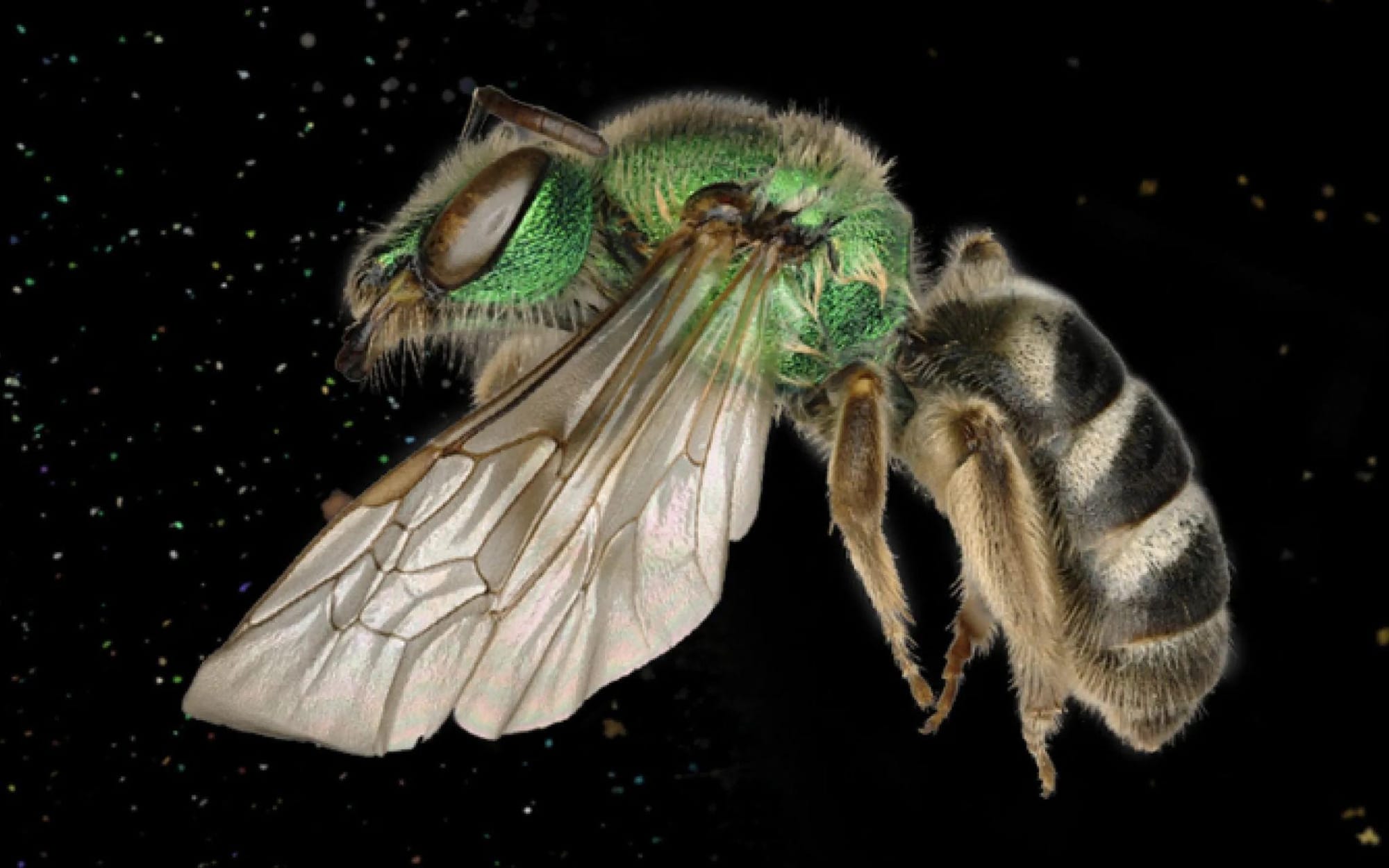
That local framing carries through the specimens on display. Among the eight native bee species featured is the Bicoloured Striped Sweat Bee, declared Toronto’s official bee by City Council in 2018, identifiable by its shining green head and thorax and black-and-yellow striped abdomen. In that same interview, Doug Currie, the ROM's senior curator of entomology, put that diversity in perspective: Canada is home to more than 800 species of bees, with over 350 living in the Greater Toronto Area alone.
The exhibition also holds a 15- to 30-million-year-old bee fossil from the ROM’s own paleontology collection, a reminder that this insect has been doing essential, unglamorous work for longer than most natural-world visitors will recognize.
None of that history has made bees safe. The exhibition names the threats plainly, as ROM entomologists have laid out: habitat loss, pesticide use, climate change, disease spillover from managed honeybee colonies, and competition from non-native species. The same coverage cites United Nations figures showing that about a third of global food production security is as much of an ecological one.
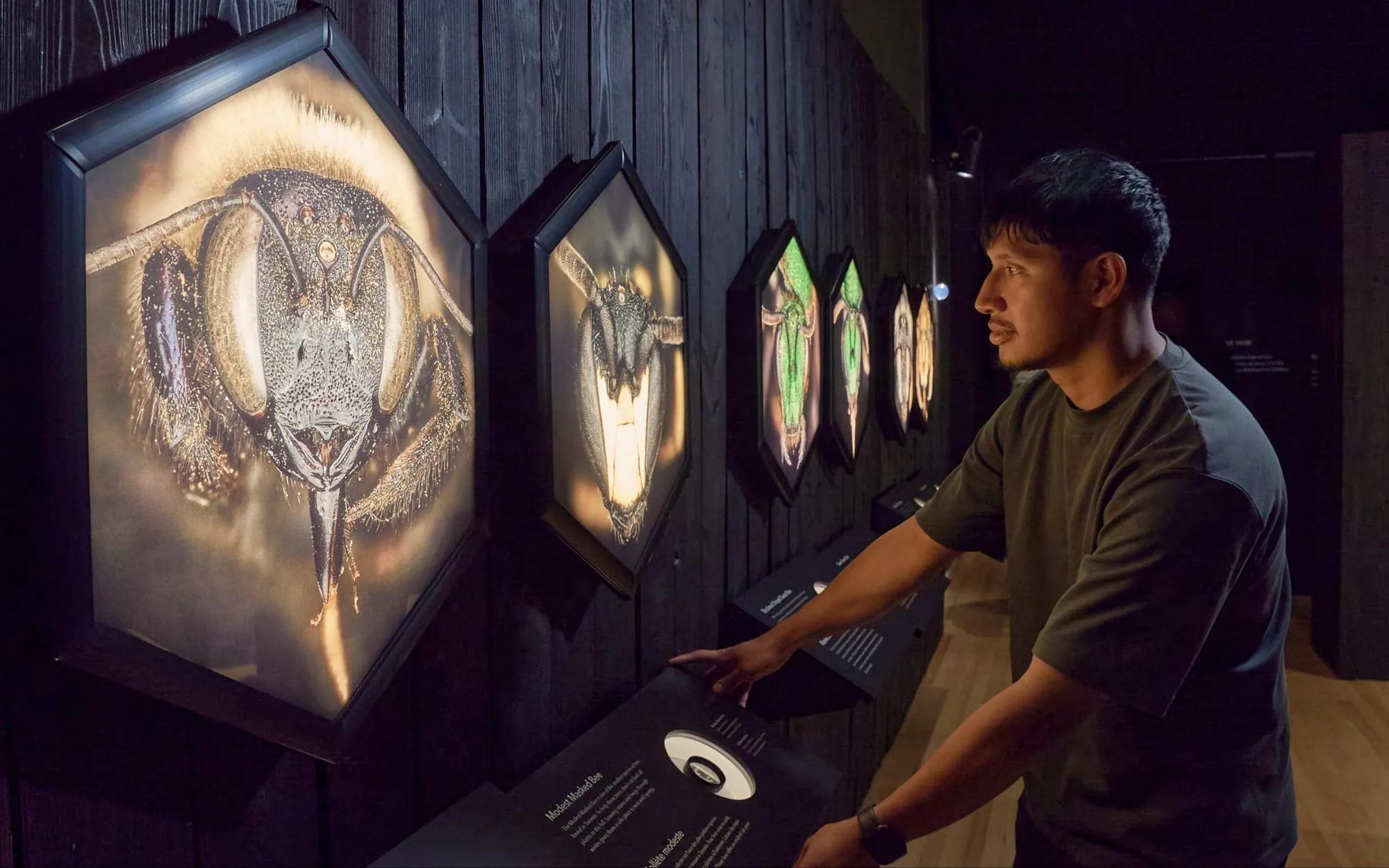
The show closes with something rare for a museum exhibition: a short list of things a visitor can act on before they leave the building. McGregor named a few in her interview: planting native flowers, skipping pesticides, and turning off bug-zapping lights on a balcony or in a backyard. She shared that these can all make a real difference for local bees, alongside citizen-science projects like Bumble Bee Watch. None of it requires a policy change or a grant. It just requires paying attention to something that has been humming past unnoticed the whole time.
BEES: A Story of Survival is on view in the Special Exhibition Gallery at the Royal Ontario Museum, 100 Queen’s Park, Toronto, through October 18, 2026.