
Negative space is rarely afforded the same reverence as the physical object it surrounds, often dismissed as a mere byproduct of creation, an empty backdrop waiting to be filled. However, in the highly anticipated group exhibition Volume Void, scheduled to run from April 4 to June 6, 2026, at Jakarta’s prominent Kotak Art Collective, this assumption is radically dismantled. The exhibition brings together a diverse lineup of pioneering Indonesian artists to fundamentally redefine contemporary sculpture by treating the void not as an absence, but as an active, structural, and emotional force.
As outlined in the official catalogue, the showcase challenges audiences to reconsider how emptiness shapes movement, breath, and tension within a physical space. Rather than allowing the viewer to passively consume discrete objects, the gallery itself is transformed into a highly attuned instrument of dialogue. Visitors are pushed to confront not just the tangible materials of wood, metal and resin, but the invisible societal tensions, historical inequities and cultural memories that remain suspended in the very air between the installations. This innovative approach aligns with broader contemporary art theories that explore the aesthetic and political dimensions of absence, echoing concepts of marginalized visibility discussed in academic works like Aestheticizing the Void. This is why the exhibition work is relevant to the United Nations Sustainable Development Goal of Reduced Inequalities.
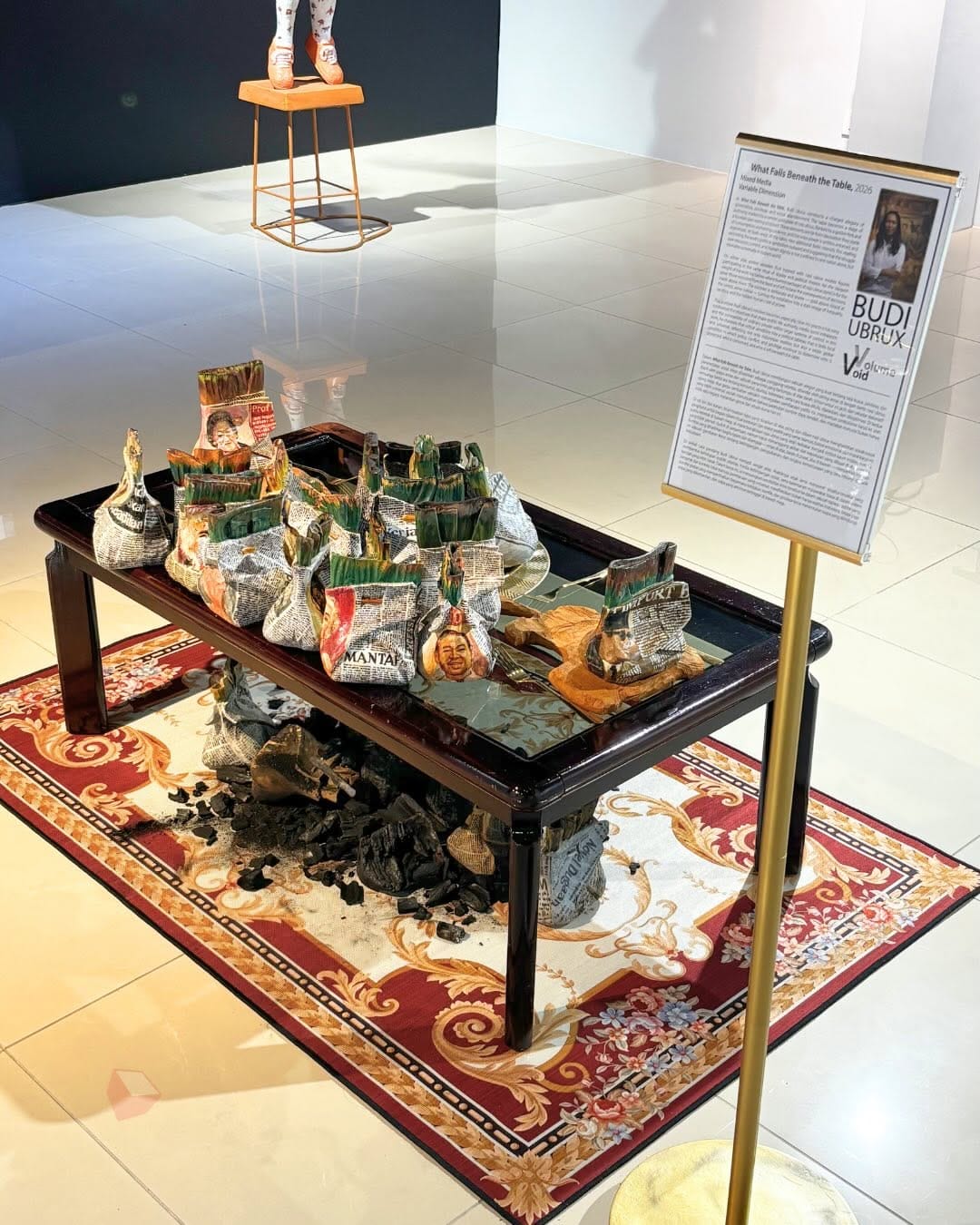
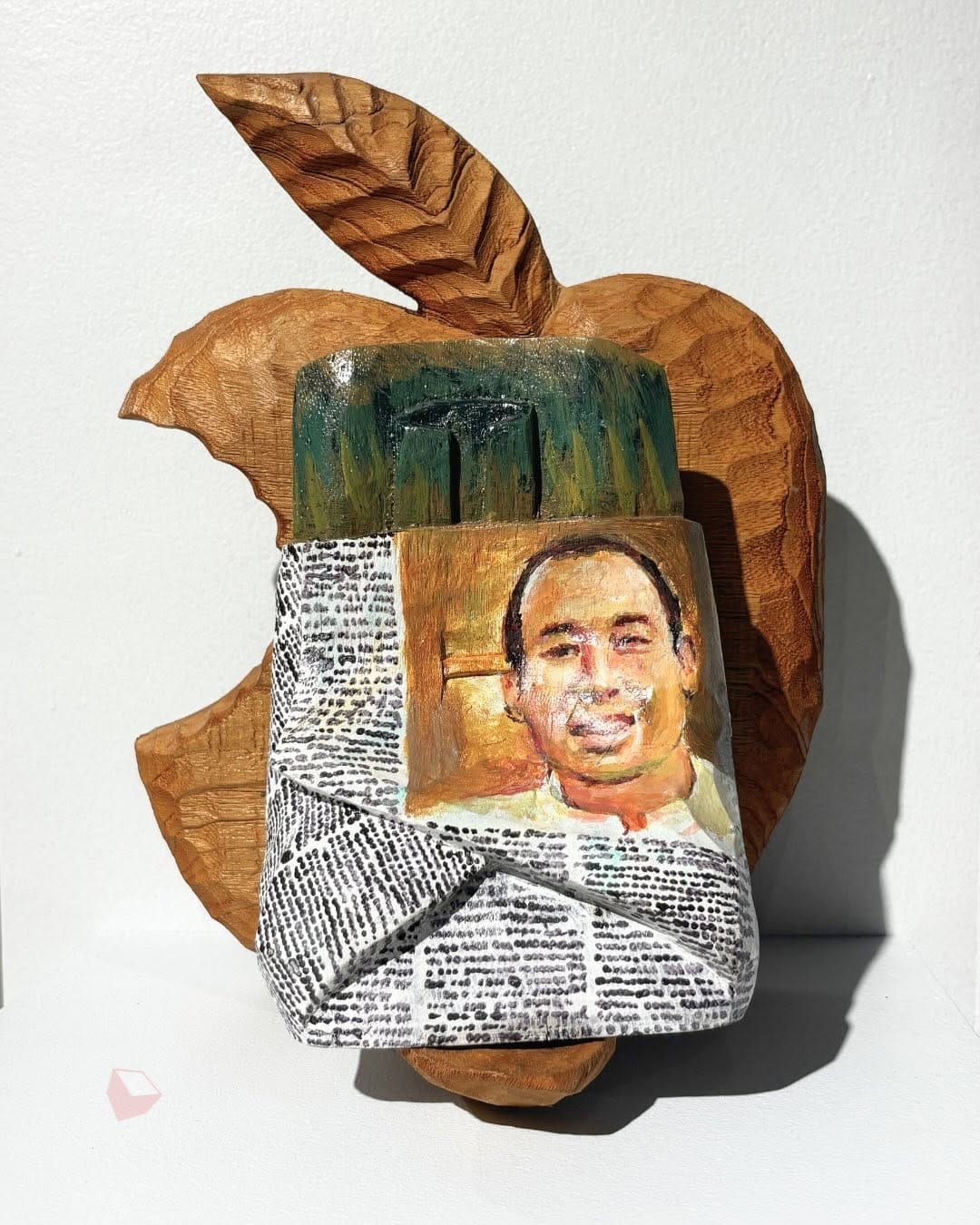
Budi Ubrux's What Falls Beneath the Table (2025) on display at Volume Void. Images courtesy of @kotak_art_collective
At the core of this exhibition is a fierce and uncompromising confrontation with Indonesia’s deep-seated societal disparities, directly championing reduced inequalities amongst its peoples. The curation deliberately weaponizes negative space to illustrate the chasms between different socio-economic classes. Nowhere is this more devastatingly articulated than in Budi Ubrux’s standout installation, What Falls Beneath the Table. Here, Ubrux masterfully constructs a striking visual allegory of governance, privilege, and social abandonment by using the structure of a dining table as a stage for absolute authority.
On its upper surface, the installation presents a glittering, golden spectacle—a central plate of nasi ubrux, accompanied by a golden fork and a fountain pen, which together signify unchecked consumption, elite authorship and the exclusive power of high-level decision-making. However, the true emotional gravity of the piece resides in the shadowy void beneath the table. Here lie the burned, discarded packages of nasi ubrux, representing the marginalized poor who are forever excluded from the feast above, yet are forced to bear the heavy, suffocating consequences of the elite's choices. By contrasting the golden excess above with the ashes below, Ubrux forces the viewer to physically kneel or peer into the dark, empty spaces of the gallery to witness the buried hardships of the lower classes, transforming a static sculpture into a stinging, interactive critique of political privilege.
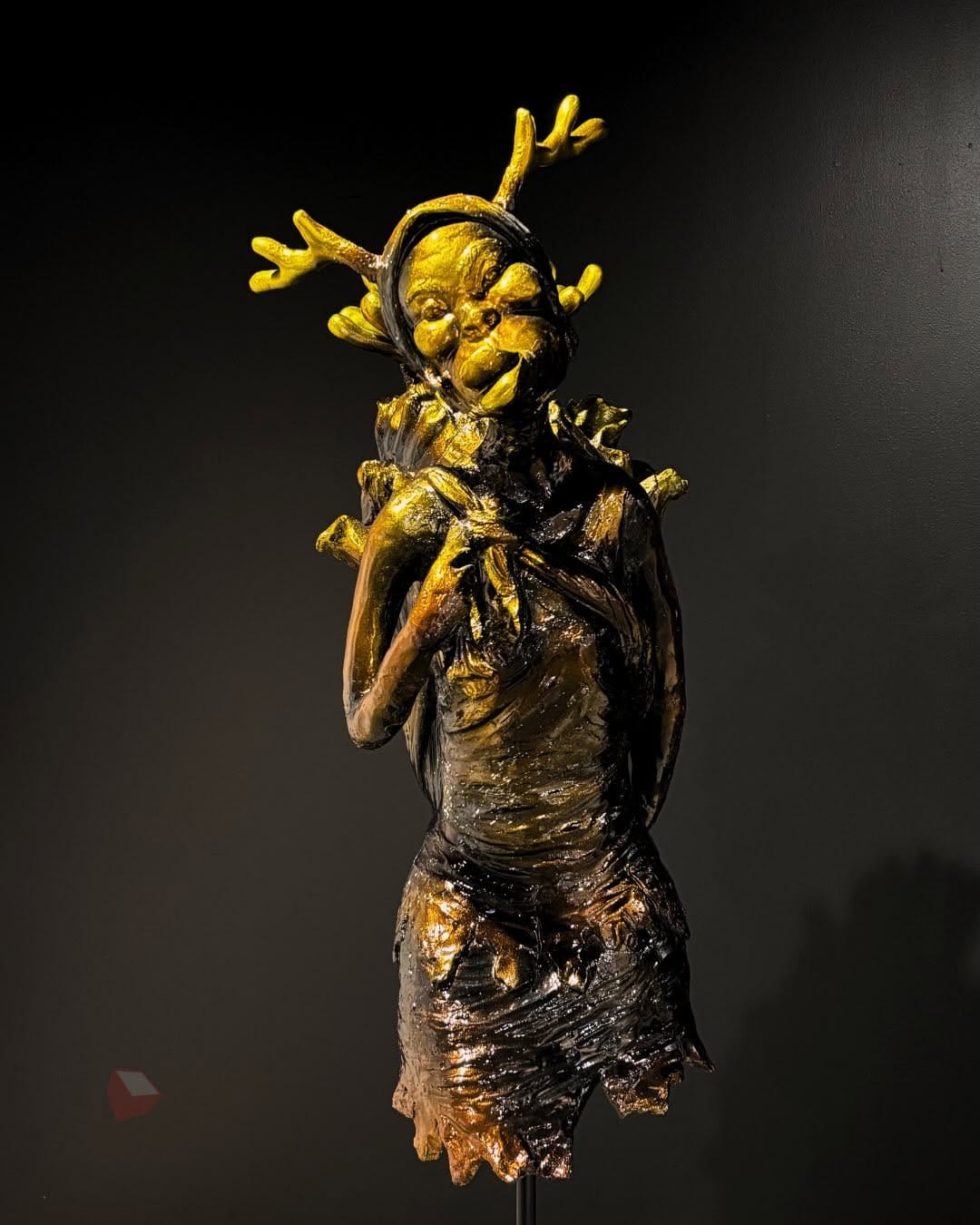
This urgent thematic focus on inequality and the working class is further amplified by the contributions of Luddy Astaghis, whose sculptures draw necessary attention to Indonesia's essential, yet perpetually overlooked, labouring communities. Through his striking works, Nelayan (fisherman) and Petani (farmer), Astaghis puts in the fora the human body marked entirely by burden, weather, and endurance.
He places these figures within the stark, modern emptiness of the gallery, demanding that the urban viewer acknowledge the physical toll of rural and coastal labour. The negative space surrounding these figures feels incredibly heavy, mimicking the invisible weight of systemic neglect that these communities endure daily. While they form the foundational backbone of the nation’s survival, sustaining the very urban centers where this art is consumed, their struggles are frequently rendered invisible in mainstream narratives. Astaghis's sculptures reclaim that visibility, using the room's silent volume to amplify the voices of the marginalized and insisting that the unequal burdens they carry be recognized as a central, unignorable component of contemporary Indonesian experience.
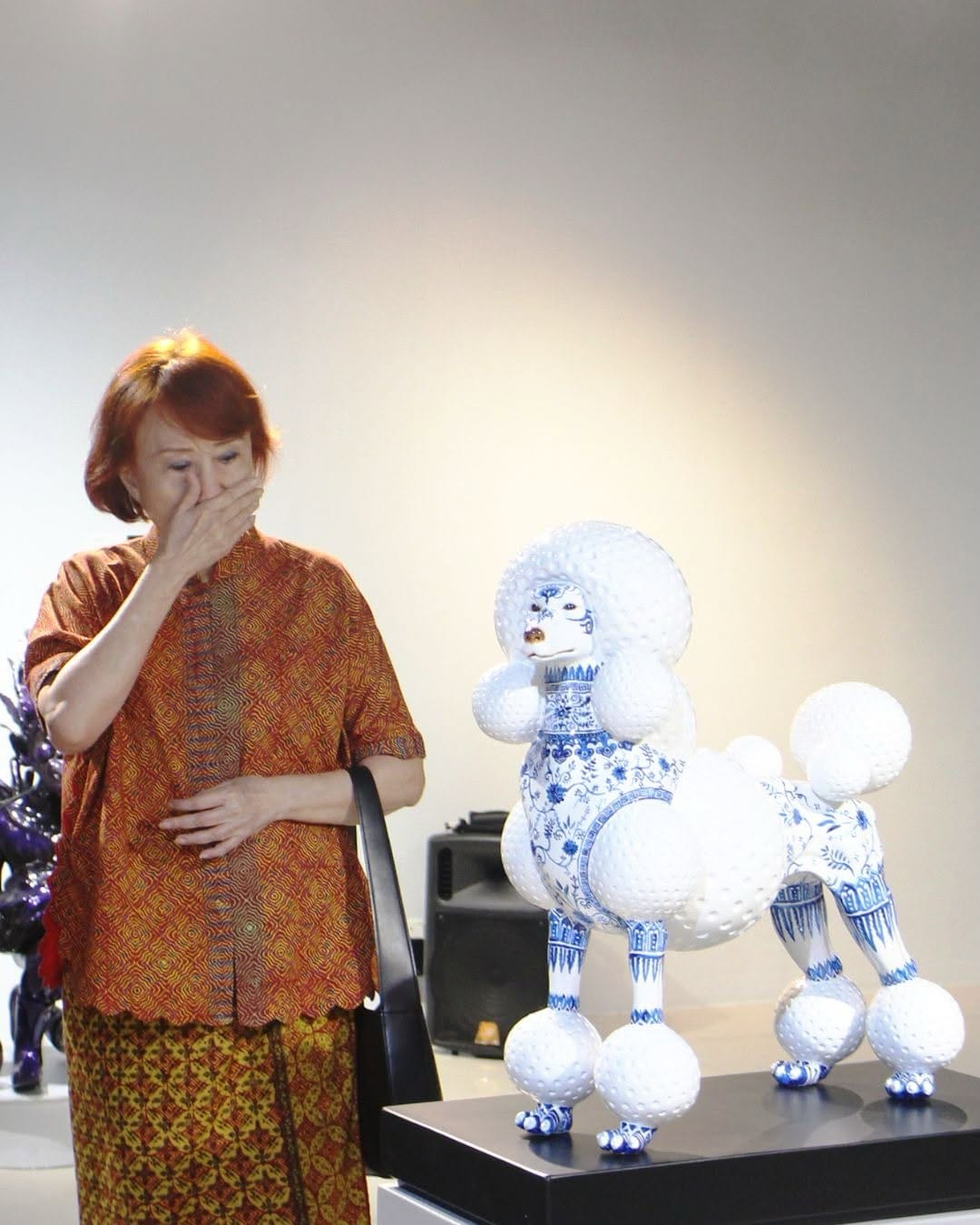
Beyond the immediate socio-economic critiques, Volume Void also utilizes the interplay of presence and absence to interrogate modern identity, cultural inheritance and the superficialities of contemporary life. Dadi Setiyadi’s fascinating piece, Golfy, offers a surreal and deeply ironic commentary on status, domestication and hyper-consumerism. The hybrid sculpture bizarrely merges the poised, groomed elegance of a poodle with the dimpled, textured surface of a golf ball. Rendered in an immaculate, glossy white finish and adorned with blue decorative motifs, the artwork mimics the visual language of luxury craft and high-end porcelain. Placed within the void of the gallery, Golfy questions the empty nature of display culture and the absurd lengths to which society will go to project wealth and exclusivity.
In stark contrast to this commentary on modern artificiality, Agung Tato provides a visceral, corporeal reimagining of sacred ancient symbols in his works Lingga and Lingga 2. The lingga, historically revered as a symbol of Lord Shiva and absolute masculine power, is stripped of its distant, untouchable divinity. Tato renders its elongated silhouette with a raw, vulnerable, flesh-like surface, transforming a monumental emblem into a deeply embodied presence. By placing this highly charged object in an open void, Tato invites viewers to renegotiate their relationship with religious and cultural inheritance, bridging the gap between the divine and the fragile human condition.
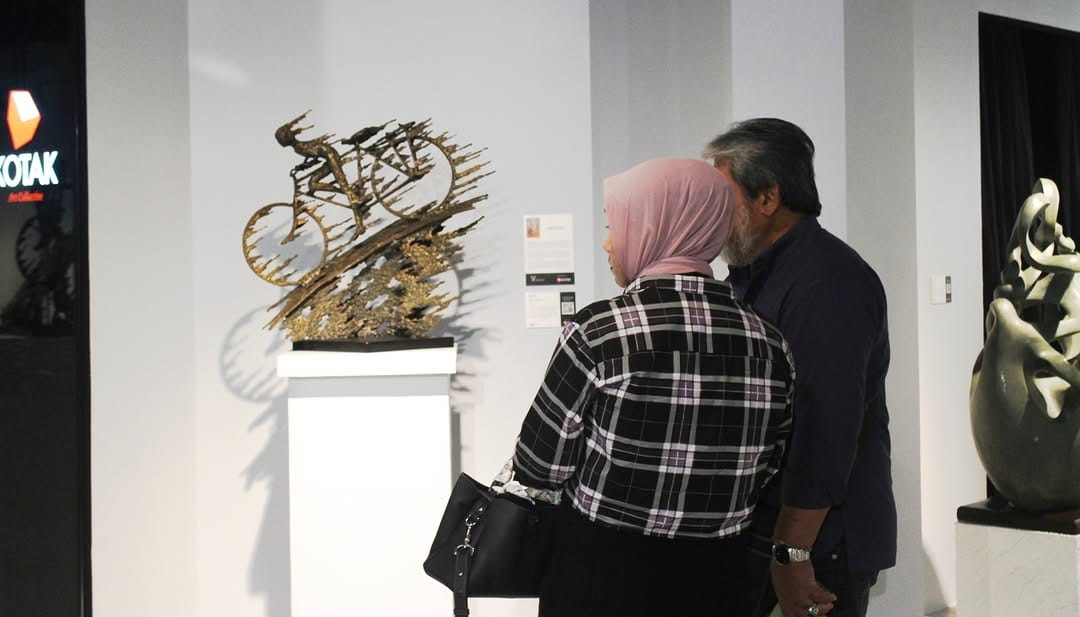
The success of Volume Void is also inextricably linked to the visionary philosophy of its host institution. As detailed in the exhibition catalogue, Kotak Art Collective actively reclaims the often-clichéd phrase "thinking outside the box," arguing instead that the "box" itself must become a space of curiosity, growth and boundless possibility. By hosting such provocative, spatially complex dialogues, the gallery serves as a vital cultural institution in the heart of Jakarta. It provides an indispensable platform for critical spatial encounters, safeguards Indonesia's evolving cultural heritage and fosters highly inclusive public engagement within the urban art ecosystem.
The collective operates as a robust support system and mentorship hub that guides artists toward sustainable careers while encouraging collectors to view art as a meaningful societal connection rather than a mere financial investment. Ultimately, Volume Void proves that emptiness in art is never an absence of meaning, but an architecture of tension that brings Indonesia's most pressing cultural and socio-political realities into sharp, undeniable focus.
Find out more about Volume Void and the artists involved by visiting their Instagram @kotak_art_collective.