
In the cultural imagination of the 21st century, the future is often rendered as a cold, sterile grid of data and steel. However, for Gen-Z art prodigy Yanran Chen, the future is not so clean-cut—it is gritty, emotionally messy, yet surprisingly tender. Her landmark solo exhibition, Neon Dreamland, in Beijing, has firmly established Chen as a visionary architect of this new epoch, one where the boundaries between biology and technology, waste and treasure, dissolve into a glitchy harmony.
Her multidisciplinary practice spans across manga-inspired illustration, surrealist sculpture, and designer toys, offering a blueprint for the imaginative innovation that is driven by human sentimentalities as much as engineering and marketing. This is why her work is aligned with the United Nations Sustainable Development Goals of Responsible Consumption and Production and Industry, Innovation, and Infrastructure.
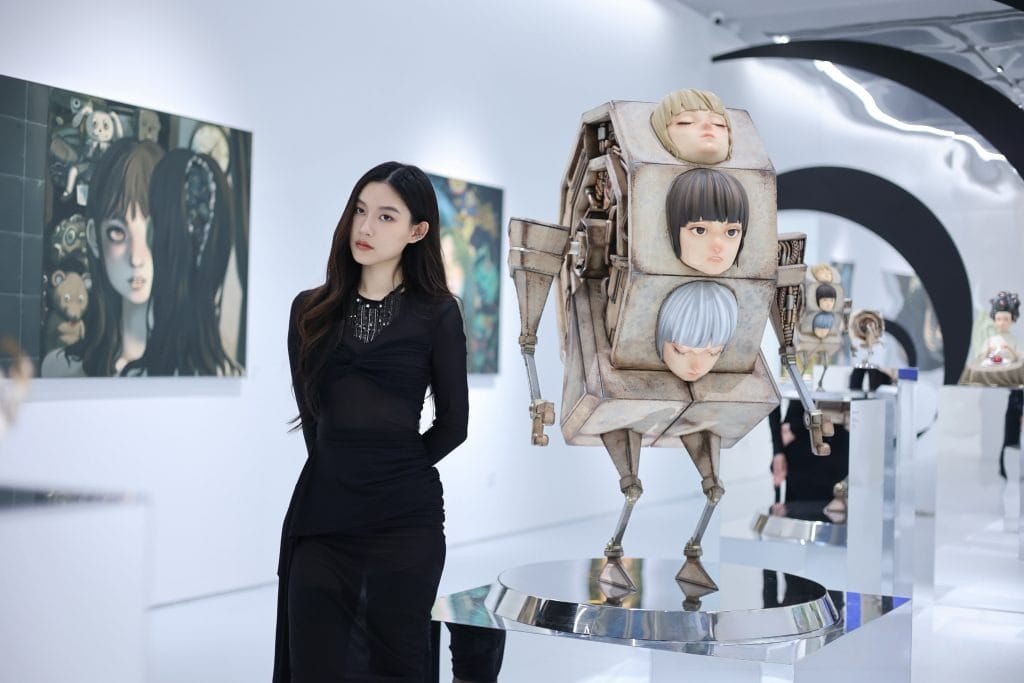
Chen’s aesthetic is often described as "lucid dreaming"—a state where control and chaos coexist. Her signature cybernetic girls are metaphors for identity in an increasingly virtual world. These figures, often depicted with wires spilling from porcelain-like skin and merging with mechanical apparatuses, challenge the rigid industrial dichotomy of man vs. machine. Instead, they propose a symbiotic future where technology extends, rather than erases, human emotion.
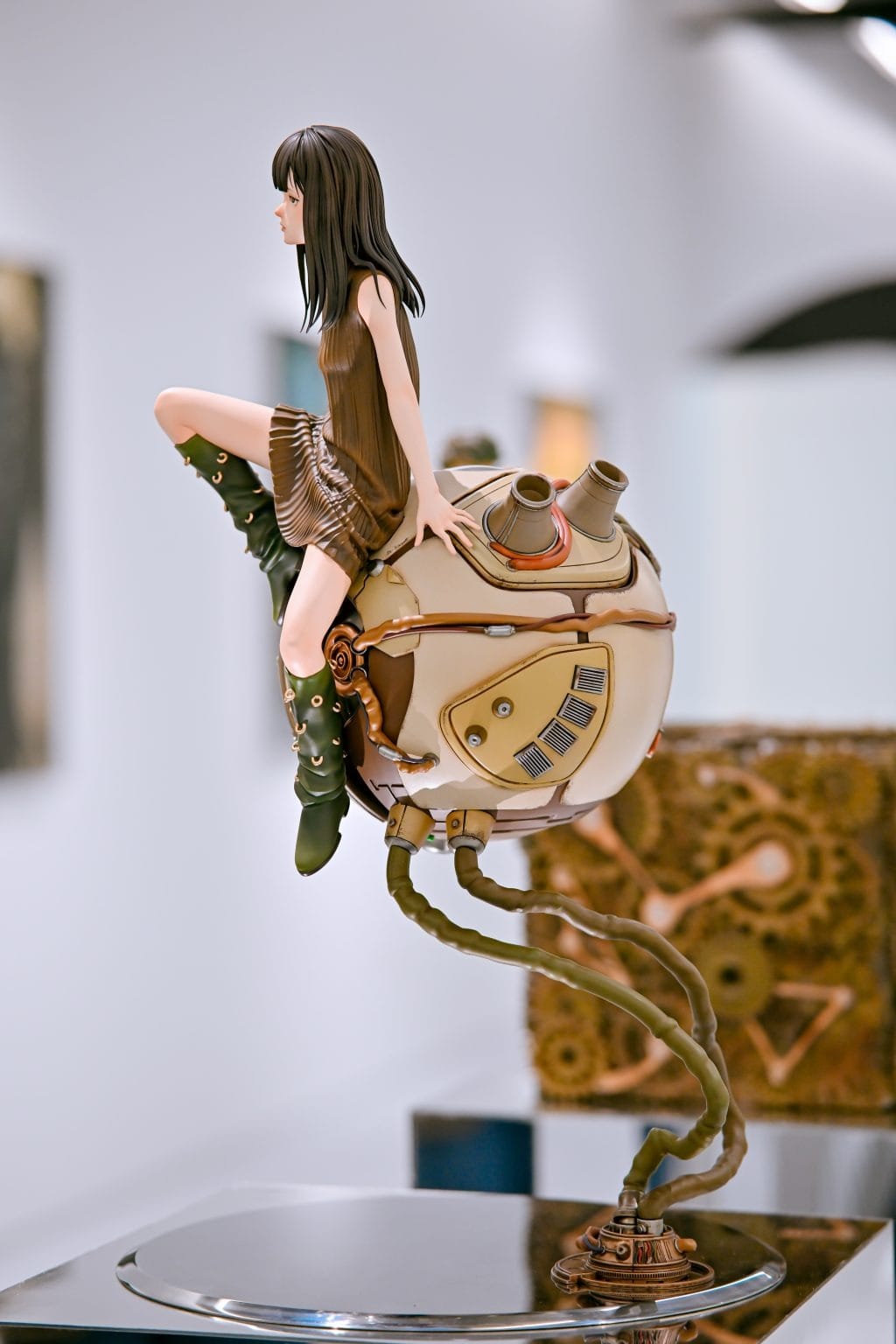
This philosophical stance takes physical form in her WaarWorld: Players Series, a collection inspired by Liu Cixin’s novel The Supernova Era, where children in a post-apocalyptic narrative inherit a world devoid of adults, and they are tasked with rebuilding human civilization. Chen interprets this by creating characters that utilize the debris and e-waste of our current age, transforming them into futuristic technology. These characters are recycling electronics, circuit boards, and iridescent resins as the archaeological building blocks of a new society, forcing her viewers to think about today’s e-waste and the physical and emotional propensity that they can attribute to them.
This transformation not only suggests how what is considered the waste of the 20th century has the potential to become the raw material of a 21st-century aesthetic but also alludes to the very real grit and grime that goes into the production of today’s technologies.
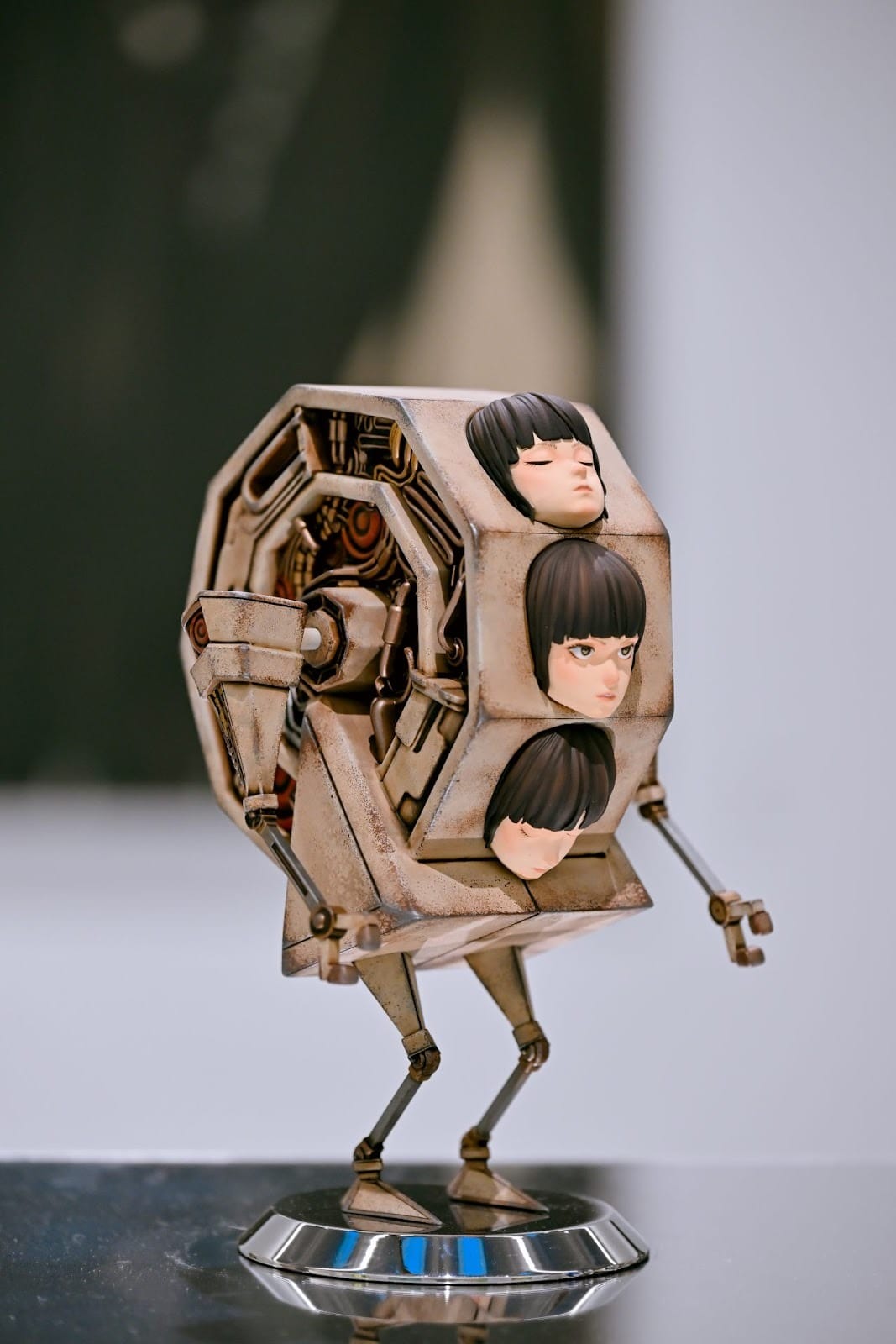
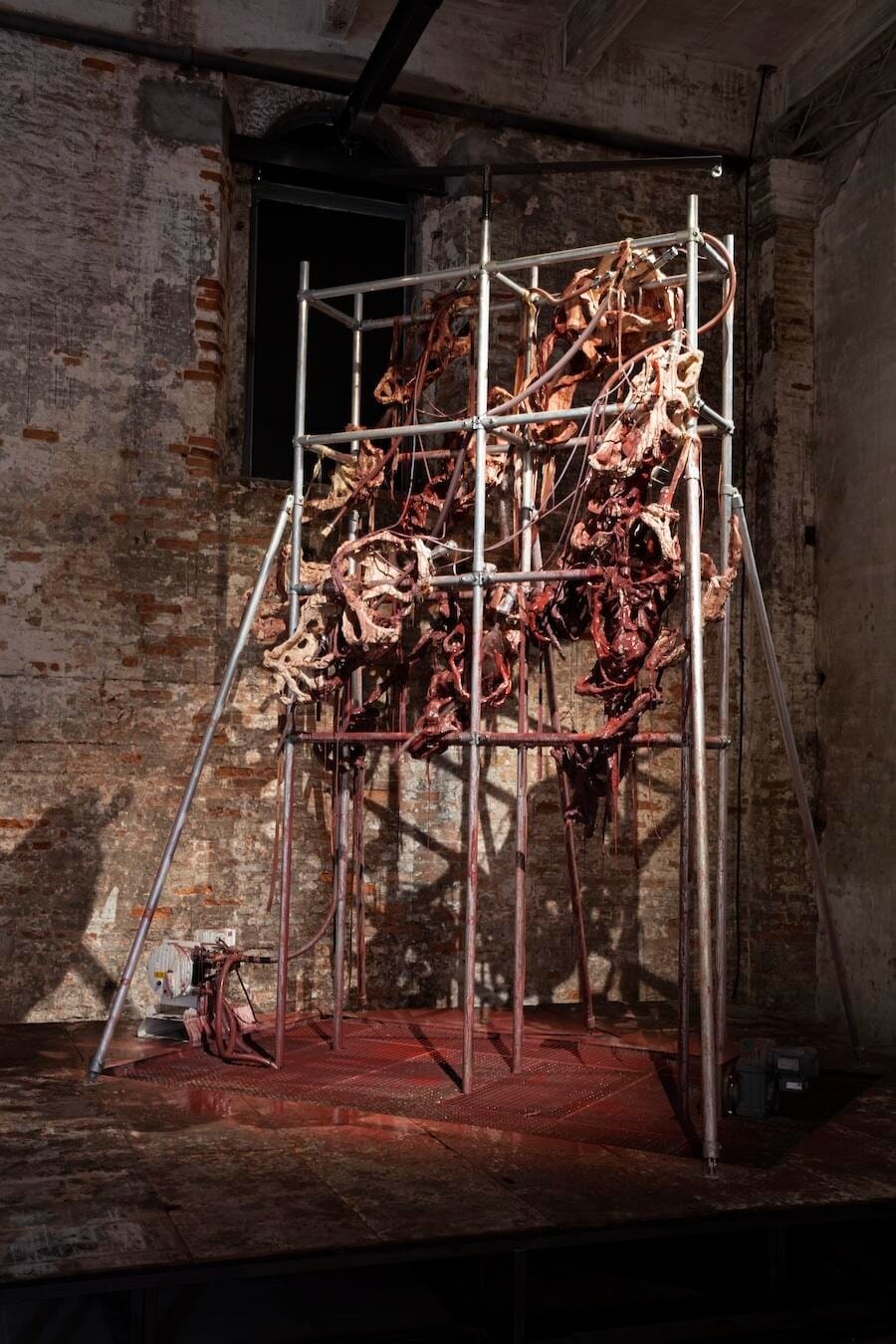
One may argue that what Chen is employing here mirrors Julia Kristeva’s theory of abjection, where showcasing the dirty, the taboo, and downright horrifying visual elements helps people to think deeply and critically, in this case about the state of global technological advancements and the waste they generate. It lends to the same discourse of Mire Lee's work, yet another young art prodigy of East Asian background who has quickly risen through the ranks and had her work exhibited at the Venice Biennale and the Tate Modern. Her works, such as Endless House: Holes and Drips, see the creation of machines that writhe, bleed, and breathe. The installation requires its viewers to think about the very real blood, sweat, and tears that go into the life cycle of today’s gadgets, from quarry to factory to storefront, into the comfort of their homes, and eventually to Southern Hemisphere landfills.
In her practice, Chen blends traditional handmade craftsmanship with digital fabrication techniques such as 3D printing and resin casting to create her image of the future. She is demonstrating that innovation does not require the constant extraction of new resources but rather a creative re-engineering of what already exists. She is also asking people to be more mindful in their interactions with technology. Chen invites us to study it further, to understand how things are made and that technology's impacts stretch not only to people but also to the planet. Her Neon Dreamland, therefore, is a prototype for resilient infrastructure, where the digital and the physical support one another.
Ultimately, Yanran Chen’s works of art are an act of optimistic rebellion. In a world paralyzed by climate anxiety and technological fear, she dares to dream of a future that is playful and sustainable, able to rise through the grime of it all. She reminds us that the "machine" is not an enemy to be feared but a tool to be tamed and humanized. Her cybernetic avatars invite us to wake up within the dream and start building a world where technology and tenderness can coexist.
Explore the surreal universe of Yanran Chen and her latest projects through her website, www.chenyanran.com, or Instagram, @yanran_chen_.