
Sustainability and upcycling are often seen as greenwashing buzzwords, particularly in the current fashion landscape. With over 92 million tonnes of waste generated annually, the fashion industry’s constant chase for emerging micro-trends has come at the expense of the Earth. Indonesian artist Annetta Dewi Wijaya’s textile works combine embroidery, quilting and fantastical storytelling to create intricate pieces that blend sustainability and fabric crafts in her artistic practice. Debuting two pieces at Art Jakarta 2025 with Ruci Art Space, Annetta Dewi Wijaya pushes the boundaries of traditional quilting and embroidery while rethinking truly sustainable fibre artworks. By implementing storytelling and whimsical artistic visualization, her approach to quilted portraits engages her audience in sustainability practices by showcasing the endless possibilities one can create with leftover fabric. Wijaya’s approach to sustainability in fibre arts aligns with the United Nations Sustainable Development Goal of Responsible Consumption and Production.
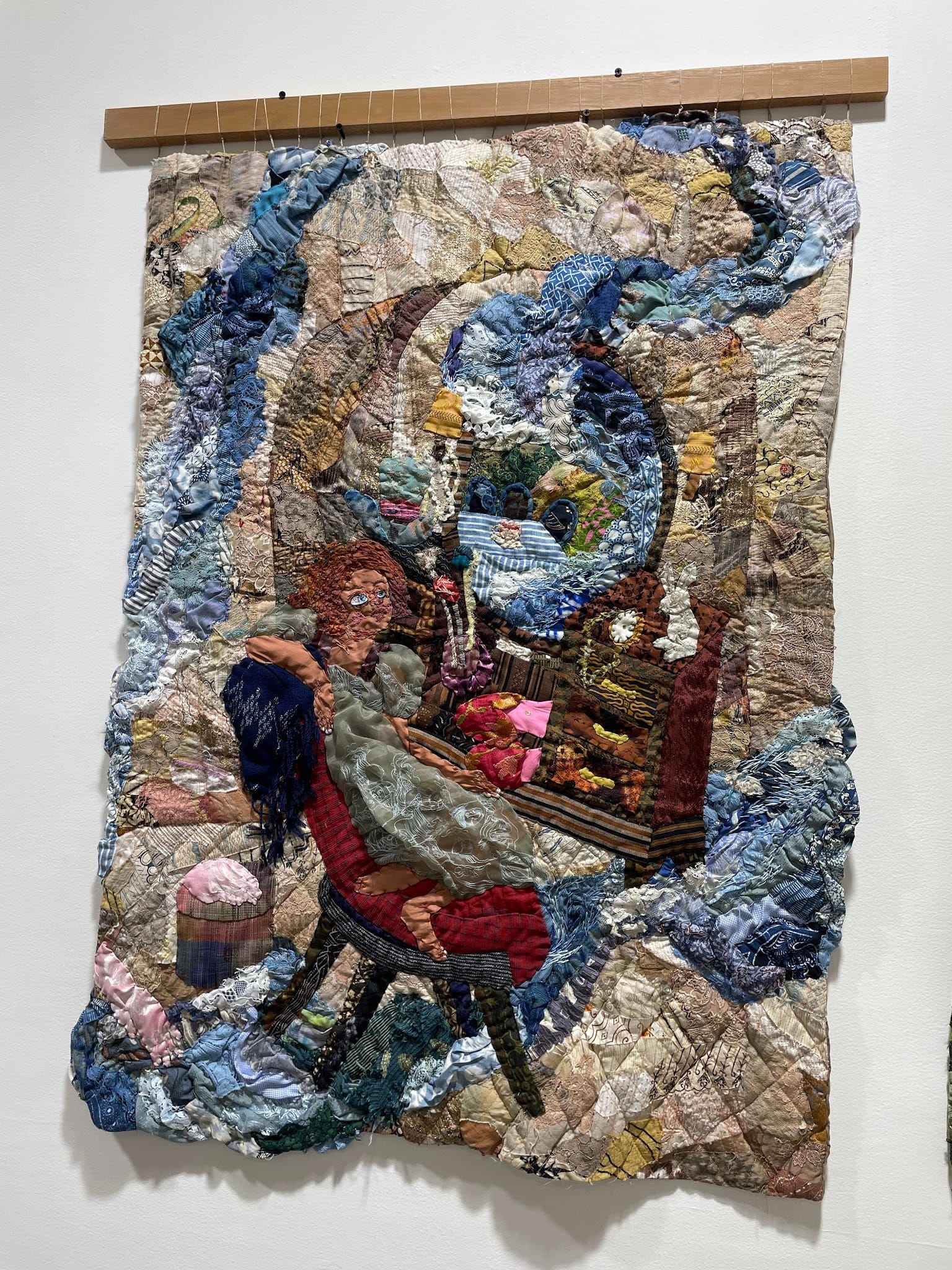
It is no secret that the fashion industry as a whole generates a lot of waste. The United Nations Environment Programme reports that the industry as a whole generates 92 million tonnes of textile waste annually. This accounts for different sectors of global waste, with 11% of plastic waste coming from the fabric and clothing sector, while only 8% of textile fibres are made from recycled sources, making the industry one of the most wasteful industries in the world. The rise of environmental consciousness among the younger generation has made sustainability trends a unique selling point for many brands across the fashion industry. McKinsey reports that younger generations’ brand loyalty relies on the company’s sustainability practices and that circular business models within the fashion industry are becoming a key growth area in the modern fashion industry as a whole. The rise of sustainability in the fashion industry shows that one of the world's most wasteful industries has the potential to change for the better.
However, the true sustainability of consumer behaviour must be questioned. Regardless of the sustainable practices of both consumers and producers in the fashion industry, the rise of microtrends and the rising cost of living will always contribute to increased textile waste worldwide. Despite their more sustainable beliefs, impulse buying driven by the need for instant gratification points to how quickly Generation Z and millennials tend to cycle through trends. This behaviour becomes even more pronounced when under financial strain. Gen Z and Millennials’ microtrend appreciation mirrors the phenomenon first observed by Estée Lauder's chairman, Leonard Lauder, who noted a spike in lipstick sales during the 2001 recession. Coined the “Lipstick Effect,” Lauder notes that people often prioritize small luxuries, like lipstick, during periods of great economic hardship. When viewing unsustainable microtrends as a reflection of the Lipstick Effect, it’s not difficult to understand how younger generations can hold more sustainable ideologies while still engaging in microtrend overconsumption.
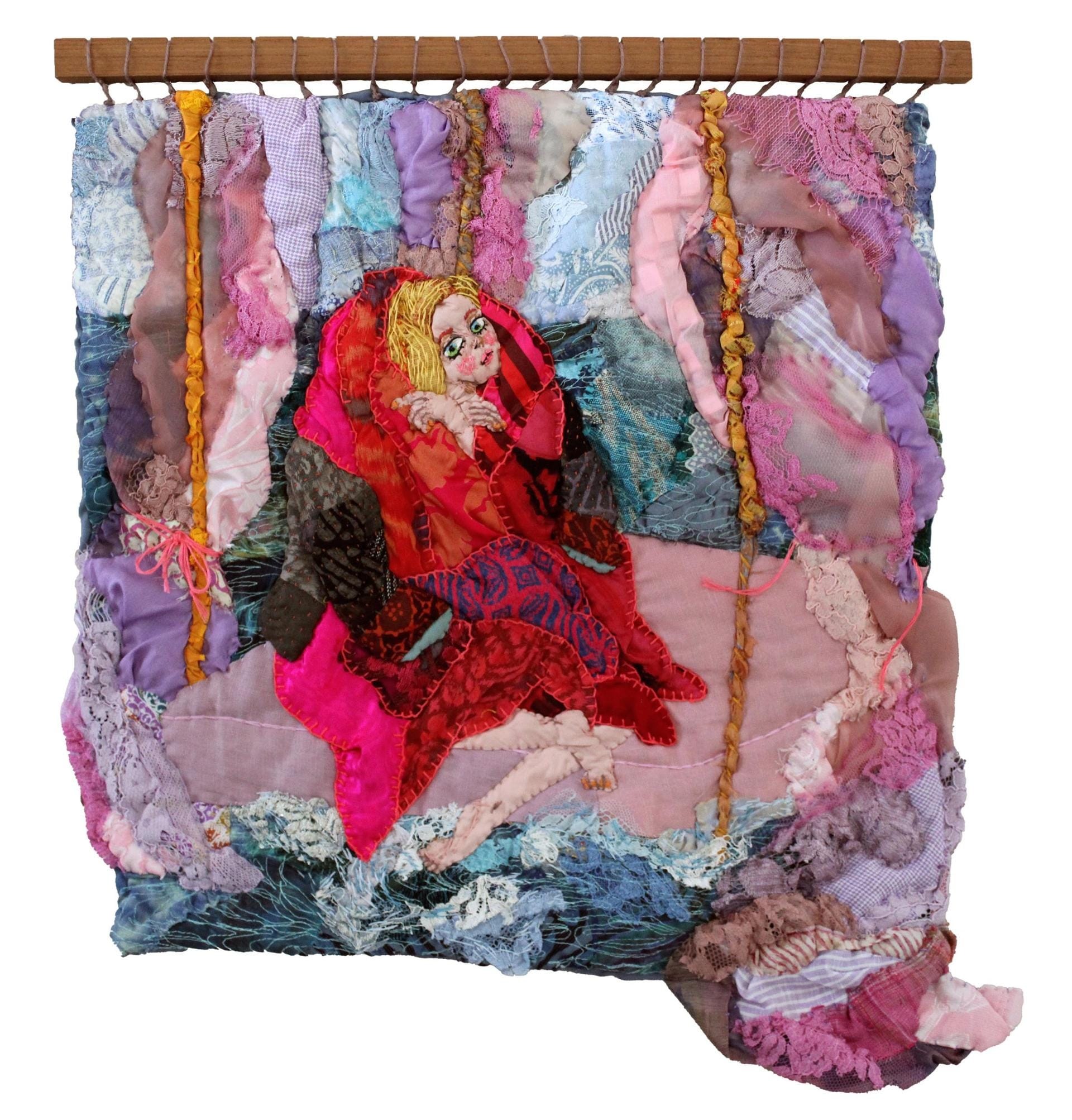
Annetta Dewi Wijaya’s works are unique in that they combine aspects of slow fashion through fiber arts with contemporary artistic storytelling. Wijaya began her artistic journey through illustration, exploring the arts with watercolour portraits and, most recently, fibre art and quilting. Arts Help had the privilege of speaking with Wijaya about her artistry and, specifically, her inspiration for fibre arts.
Wijaya fell in love with fabric arts as she began to explore the world of creative storytelling, stating that her fabric works evolved from noticing fabric scraps from her aunt’s boutique production and realizing how much of a shame it was to discard all the beautiful fabrics. Wijaya was inspired to create beautiful works from scraps. Wijaya’s initial intention was to create beauty from something one might see as scraps, rather than to take a deliberate stance against overconsumption in the fashion industry.
The idea of using fiber arts to tackle overconsumption began as a trend among younger generations. Younger people have started learning crochet, knitting, and quilting as an alternative to buying clothes. The unique part of Wijaya’s work is how it references young people’s love for slow fashion and underconsumption by reinventing what the industry may consider 'scraps.' In a conversation with Arts Help, when asked about the phenomenon of younger generations turning to fibre arts and crafts to combat overconsumption and her work’s part in the sustainability in fashion movement, Wijaya reflects on how, even if she is part of the movement as an artist and designer with her clothing brand Dansa Rona, she still participates in fashion but more selectively. “I typically prefer to wear my own creation rather than what I buy, so I’m pickier about buying things and wait for something really special,” she clarified.
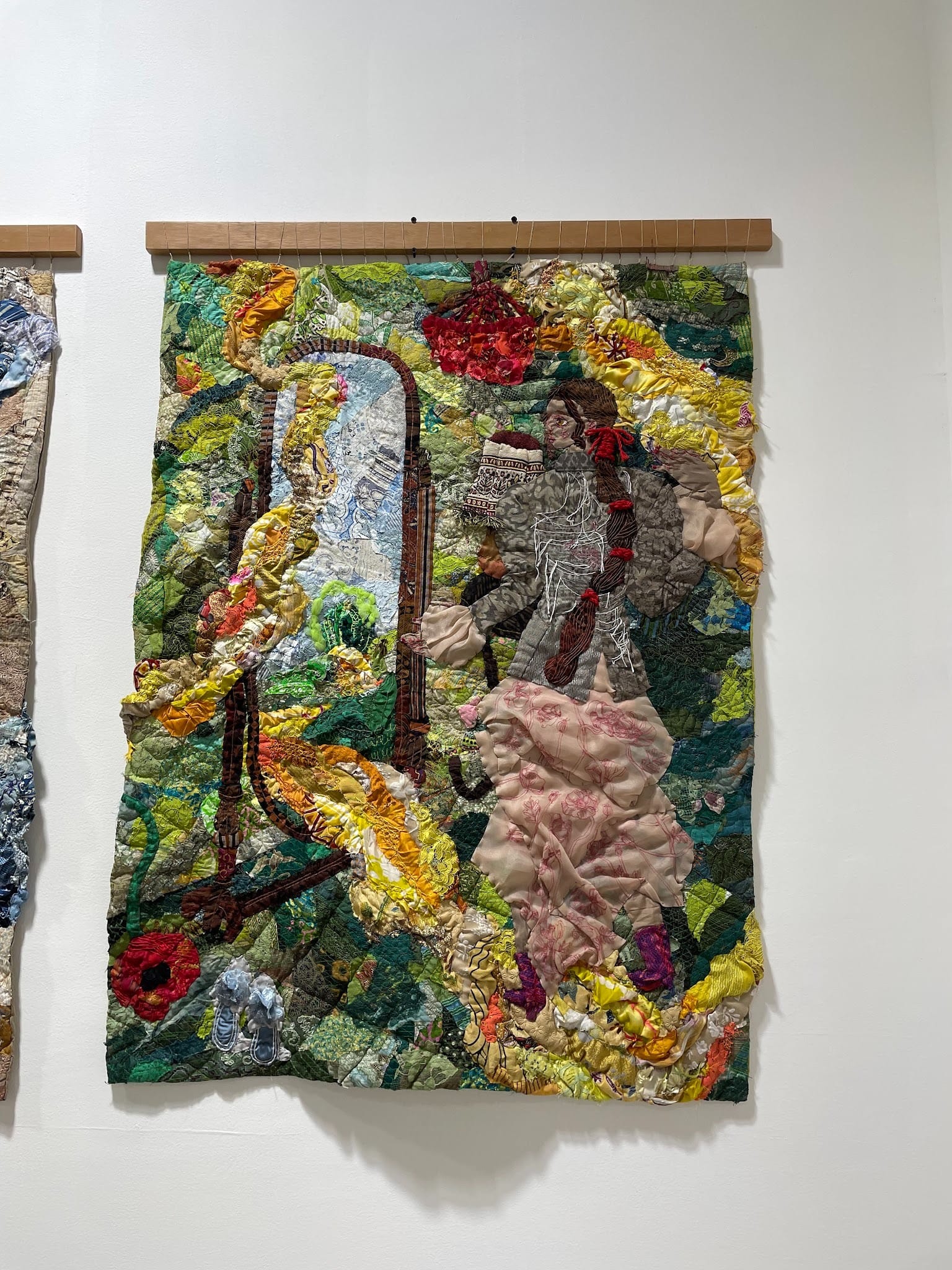
Furthermore, Wijaya’s eye for storytelling and creativity was evident in her debut work with Ruci Art Space at Art Jakarta 2025. Her two works, Through the Looking Glass (2025) and Emerald City (2025), serve as both a reflection of the adventures within stories like Alice in Wonderland and The Wizard of Oz, but also how, like the protagonists of the story, they are going into a new world, similar to Wijaya’s journey in her Art Jakarta debut. Both works reflect her journey into the art world, which seemed fantastical yet grounded in the reality of adventure. When reflecting on her debut works, Wijaya recalls how surreal it was to debut at one of Southeast Asia’s most prominent art fairs and how grateful she was to have met many artists she admired and to have received their positive responses to her work. Wijaya herself has grown significantly since her debut at Art Jakarta, with works featured in exhibitions with Art Sohyang in Seoul and Singapore, as well as in Tatler’s Tatler Studio 300 exhibition at 25Hours The Oddbird Hotel in Jakarta.
Wijaya’s work relies on storytelling through her pieces, from exploring fairytales to the concept of girlhood; the reflections of fantastical ideologies, mixed with grounded narratives, create a unique approach to artistic storytelling. Storytelling and conceptualization are of great importance not only in the fine art world but also in fashion, as artistic storytelling separates the fashion aesthetics of microtrends and timeless style. Storytelling as a core brand identity has been adopted by global luxury fashion for years, using heritage and history as social constructs to resonate with their intended audiences. Audiences resonate more with the story of Christian Dior’s appreciation for women, which influenced his unique design aesthetic, as he stated, “After women, flowers are the most divine creations.” Thus, through storytelling, audiences conclude that Dior’s vision aligns with true expressions of femininity, upholding the brand's association with the fashion house's story and heritage alone. Compare that to fast-fashion brands like H&M and SHEIN, where a heavy association with affordability creates a lack of resonance with their target market. People shop at H&M for clothes, while people shop at Dior to experience the true essence of femininity in high fashion.
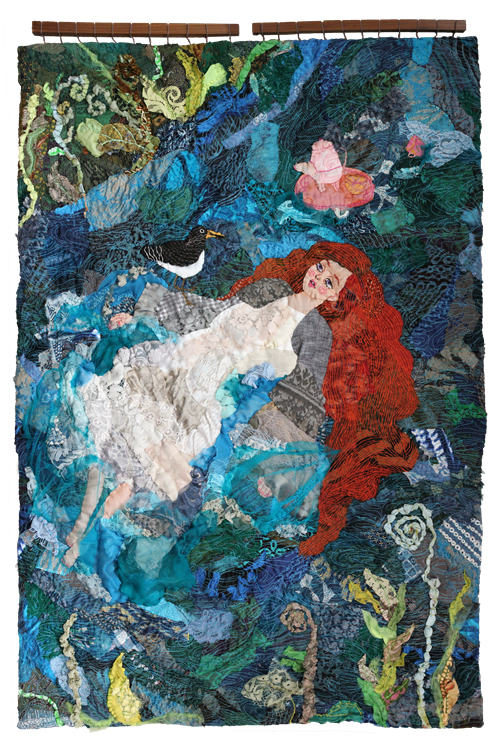
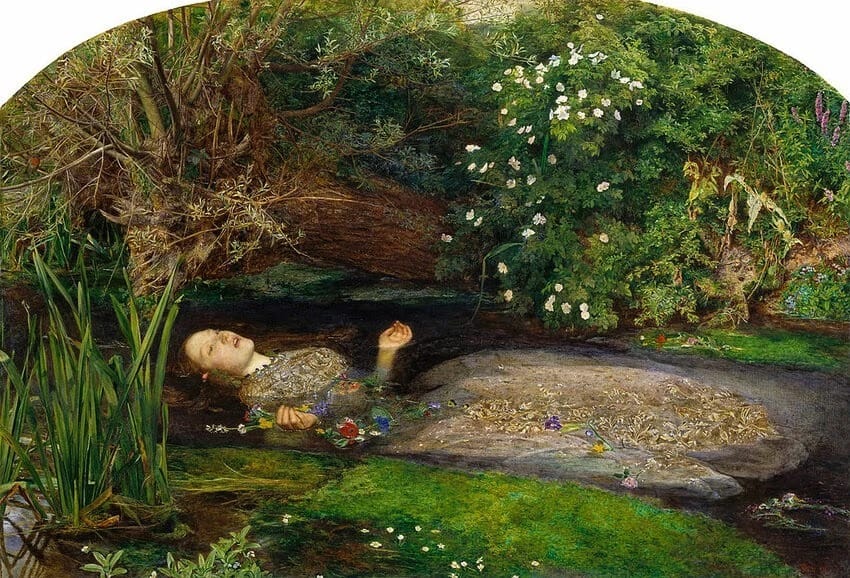
When asked about her works and how she wants her audience to respond to them, she states that she wants them to notice the works' textures and dimensionality, both conceptually and physically. As storytelling is imperative to experiencing Wijaya’s works, it’s important to note the impeccable details that enrich the story as a whole. The evolution of Wijaya’s storytelling in her work is evident in the details, as well as in the shift from directly referencing the fantastical works that inspire her to explore traditionally feminine ideologies within grounded narratives of girlhood experiences. Eagle-eyed audiences might notice some references within her works exploring girlhood, such as Solitude in Water’s (2026) reference to Sir John Everett Millais’s Ophelia (1851–52) and its exploration of love and sacrifice. The same can be observed in Solitude in the Clouds’ (2025) reference to the story of Rapunzel while reflecting on isolation, as well as Solitude in the Forest’s (2026) non-implicit reference to the tea party in Alice in Wonderland. These references, however, are less concrete than those in Through the Looking Glass (2025) and Emerald City (2025), where gestures to existing works serve as the narrative, showcasing her exploration of new beginnings. Her newer works demonstrate an evolution in how Wijaya approaches storytelling by combining her interests in fantastical narratives with experiences of femininity and girlhood.
As a young artist in Indonesia, Annetta Dewi Wijaya explores fantastical storytelling and sustainability, blending two unique worlds while celebrating the essence of creativity. The central importance of Annetta’s work lies in how storytelling resonates with audiences while pushing the boundaries of traditional fiber arts, reinventing the concept of sustainability by focusing on the artistry of upcycling. Annetta’s inspiring practice of creating wearable stories through her clothing brand reflects the younger generation’s continued passion for sustainability. Wijaya’s work and artistry showcase the importance of connecting with audiences in order to promote sustainability within the arts, as even though it is not her initial intention to advocate for sustainability, her practice and artistry promote the idea that beauty can come from sources one does not see as beautiful. Like the proverb “One Man’s Trash is Another Man’s Treasure,” Wijaya’s work shows that beauty can be derived from inexplicable sources, demonstrating the endless possibilities that arise from artistic reinvention as a means of sustainability.