
The word psychedelic was coined in Canada by psychiatrist Dr. Humphry Osmond in 1956, and that little-known medical history anchors Psychedelics: Art. Culture. Science. Currently on view at the Royal Ontario Museum (ROM) in Toronto’s Roloff Beny Gallery through January 3, 2027, this transdisciplinary exhibition examines substances associated with altered states of consciousness through ancient ceremonial items, 1960s counterculture poster art, and cutting-edge mental health research.
Co-curated by Dr. Justin Jennings, Senior Curator of Archaeology of the Americas, and Colin Fleming, Executive Writer and Creative Communications Strategist, the exhibition incorporates nearly 90 historical and contemporary objects alongside input from more than 30 scientific and cultural advisors. According to the ROM’s exhibition prospectus, visitors journey through three thematic phases: Core Information, Knowledge Expansion, and Reflection, which are designed to mirror the trajectory of a psychedelic experience.
The exhibition aligns closely with the United Nations Sustainable Development Goals: Good Health and Well-Being and Life on Land. Addressing health literacy, the Centre for Addiction and Mental Health (CAMH), a primary advisory partner, contributed research frameworks to deliver evidence-based public education surrounding emerging psychiatric treatments. On ecological preservation, botanical displays highlight specimens such as fly agaric mushrooms, peyote, and ergot, while bringing attention to how commercial overharvesting driven by global demand has left wild peyote populations endangered.
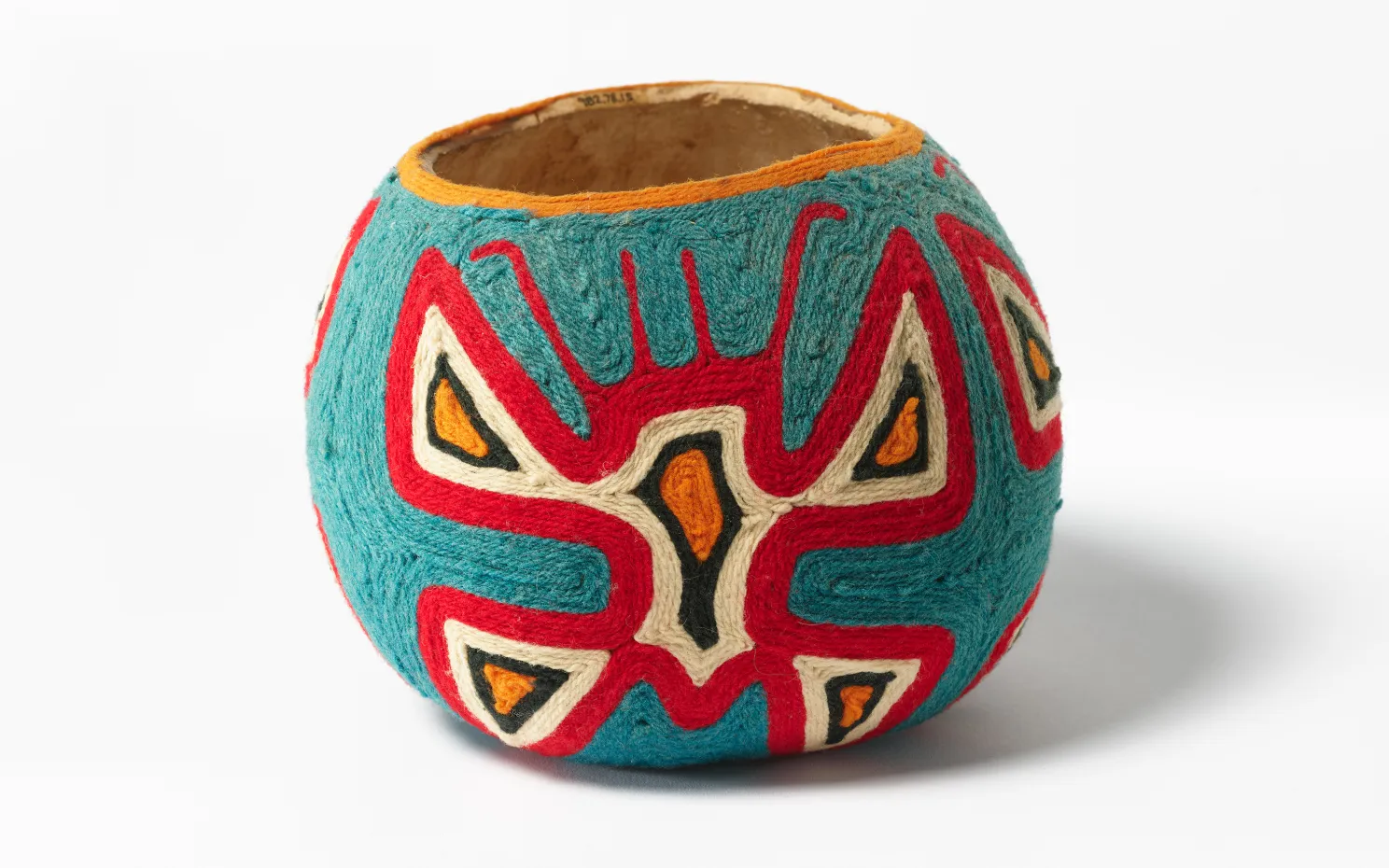
Ancient cultural practices form the foundation of the opening gallery. Objects depicting traditional ceremonies include a 1966 Cuiva snuffing tube from Colombia, a Maya ceramic vessel showing a seated lord (600-800 CE), and a Tiwanaku stone figure holding snuff trays (500-1000 CE, Bolivia). A traditional offering gourd crafted from wool yarn, wax, and gourd by an unrecorded Huichol artist in Mexico further underscores Indigenous plant stewardship.
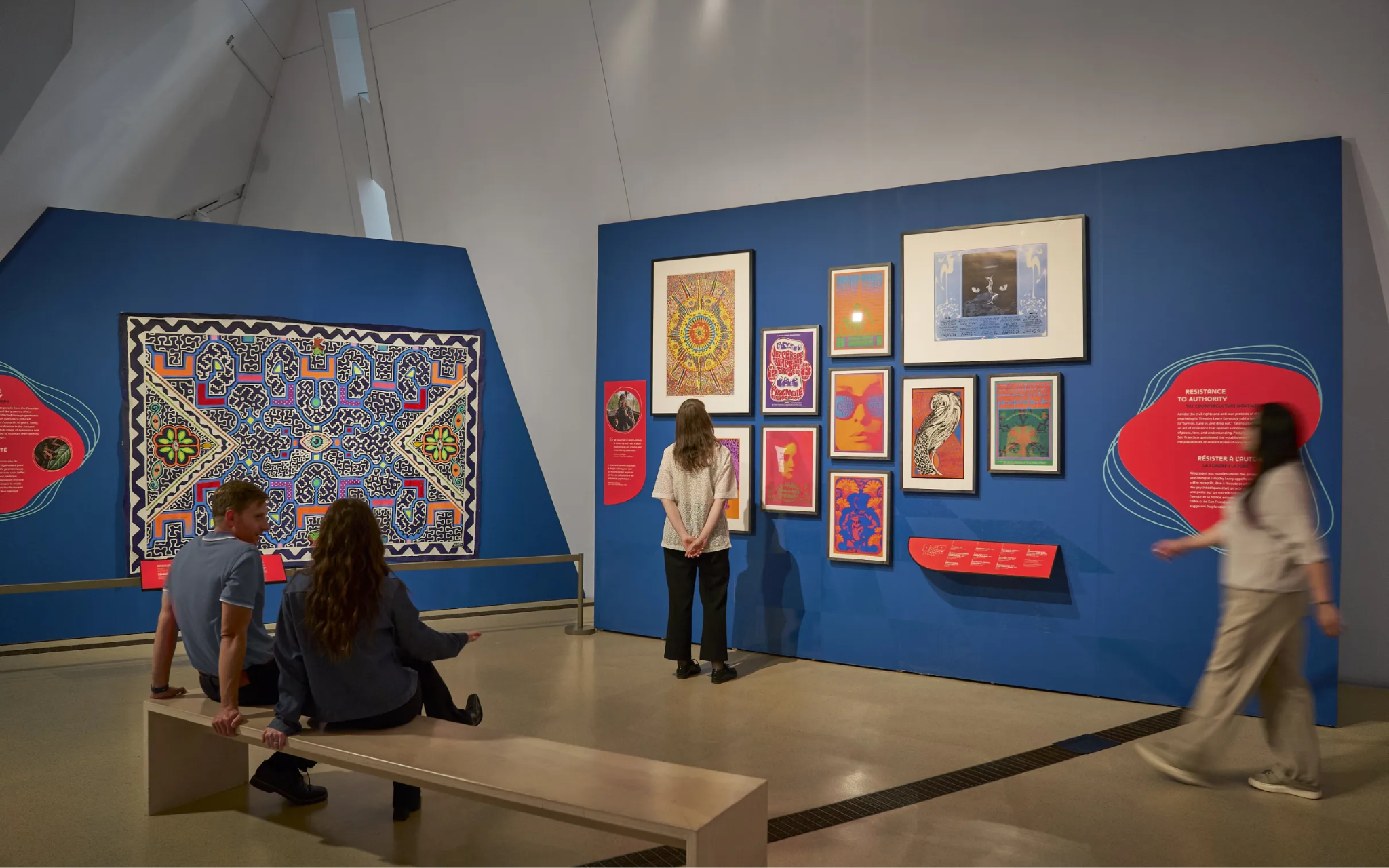
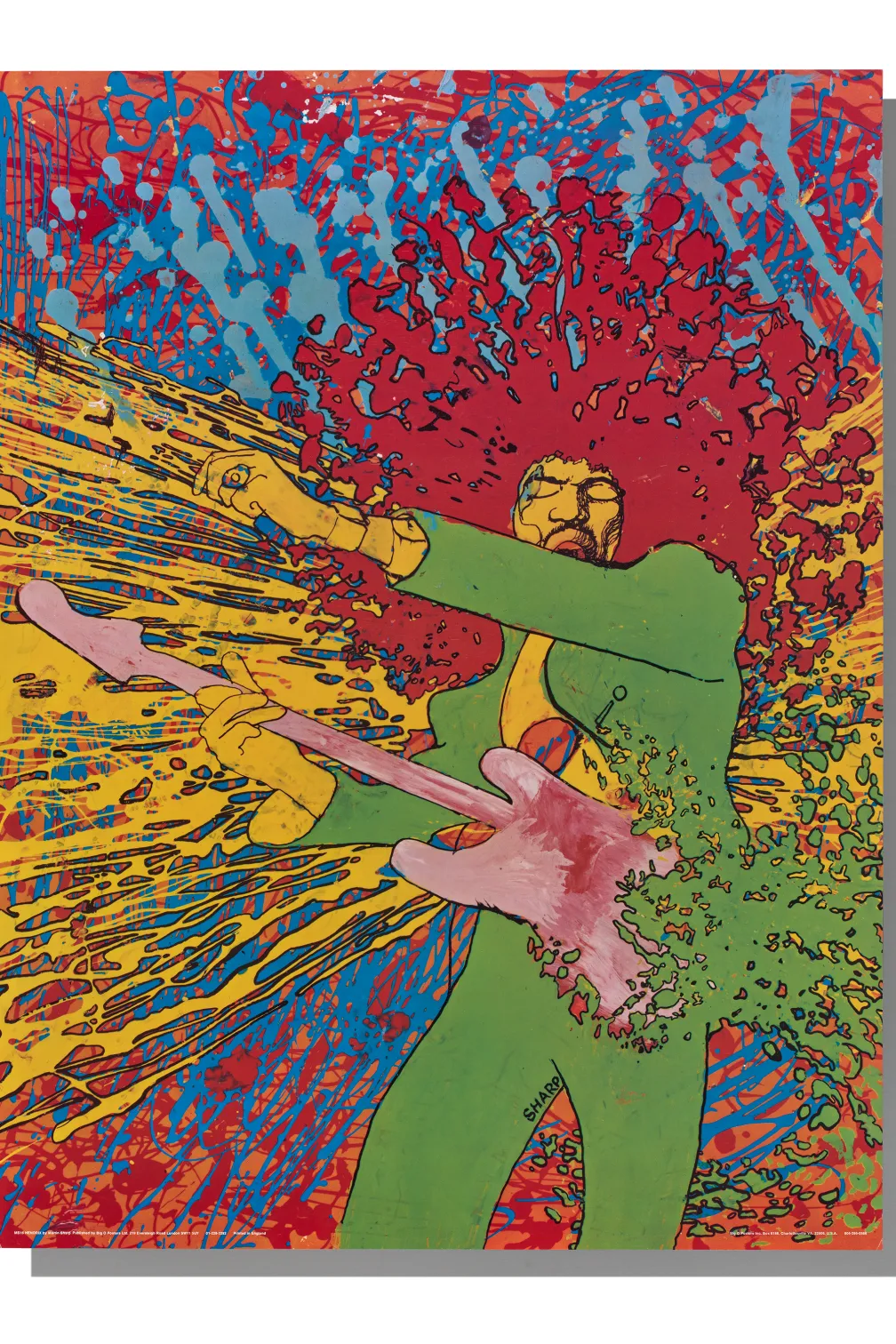
The 1960s section turns to poster art. Joseph W. McHugh’s The White Rabbit (Keep Your Head) (1967) is a colour offset lithograph poster from San Francisco, and Martin Sharp’s Explosion, Jimi Hendrix comes from London, both listed by the ROM. The prospectus describes the era’s visual language as bright colours, swirling patterns, distorted typography and surreal imagery. Sharp also designed the cover of Cream’s Disraeli Gears, ABC News reported when he died in 2013, an album the prospectus lists among the show’s 1960s material.
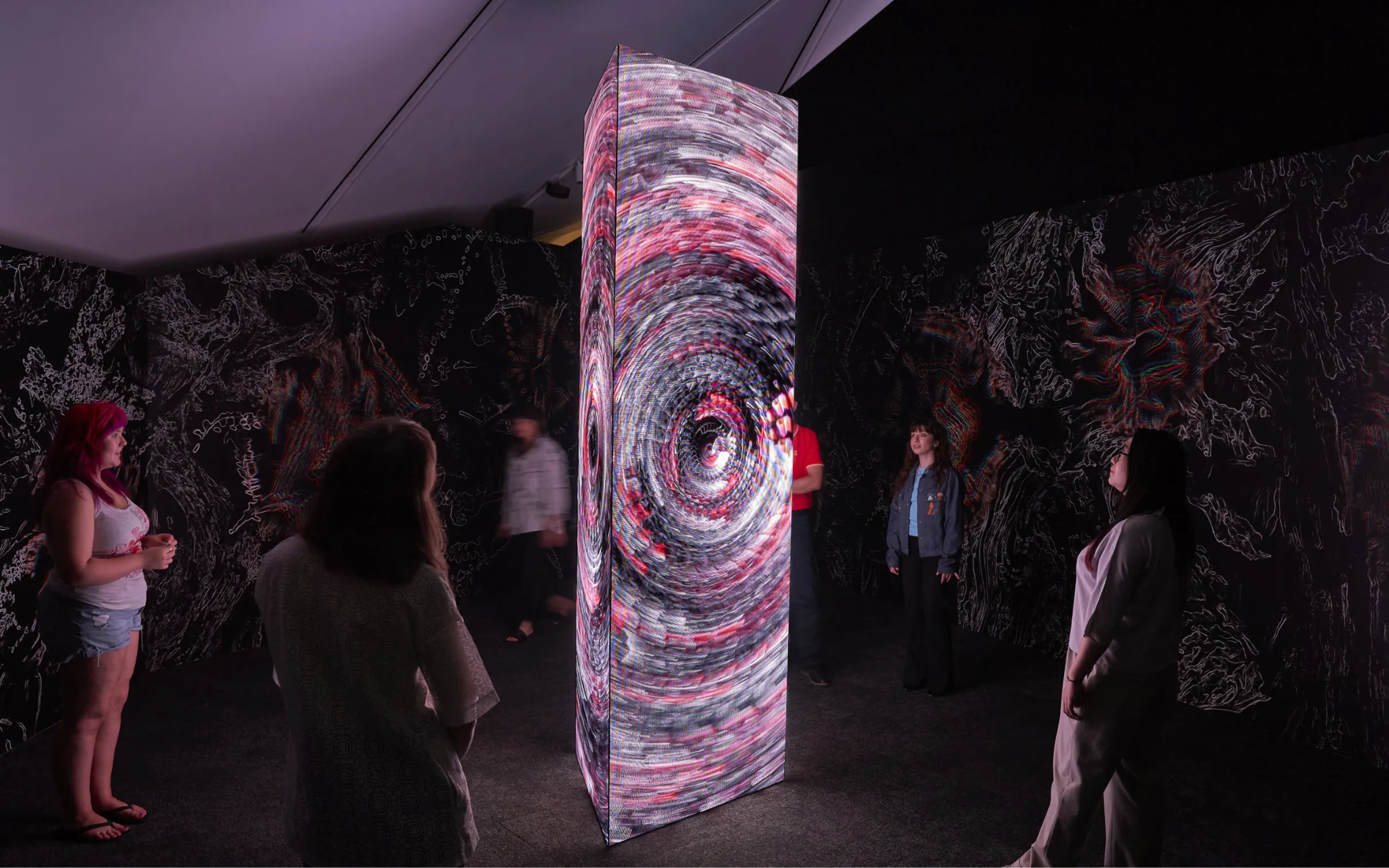
Contemporary artistic works bridge physical form and altered perception. Annie MacDonell’s lenticular panel Ego Death Trip (2023) reconfigures historical portraiture into a visual study of ego dissolution, the psychological sensation of personal boundaries fading into broader ecological connection. Nearby, an immersive audiovisual room utilizes sound design and subtle light distortions to simulate shared perceptual characteristics of altered states.
Despite its sensory elements, the exhibition maintains a rigorous scientific boundary. The ROM states in its press release that it does not recommend, encourage, or provide instructions for substance use. In a CAMH interview, senior scientist and psychiatrist Dr. Ishrat Husain emphasized the necessity of controlled clinical rigour.
“It is simply too soon to tell because they are still an experimental treatment,” Dr. Husain noted, highlighting that CAMH’s ongoing clinical trials take place under strict therapeutic oversight and psychological support.
Jennings framed the aim plainly. "This exhibition aims to expand understanding, inspire critical reflection, and prompt discussion," he said in the CAMH story. The prospectus adds that laws governing access to psychedelics are slowly loosening in North America while cultural groups work to safeguard their practices, a question the final phase leaves visitors to weigh.
Psychedelics: Art. Culture. Science. is on view in the Roloff Beny Gallery (Level 4) at the Royal Ontario Museum, Toronto, through January 3, 2027. The exhibition requires a $9 surcharge on general admission and is free for ROM Members.