
Douglas Watt’s exhibit Mayor of the Village is now on display at Vancouver’s Contemporary Art Gallery, running from April 17 to September 13, 2026. Watt is an artist based in Vancouver’s Davie Village. His solo exhibitions have previously appeared at Unit 17, Vancouver (2019), Tara Downs, New York (2021), and Pumice Raft, Toronto (2024).
Mayor of the Village considers the queer history of Vancouver in places, with thoughtful recreations of seven spaces in miniature models. This is why Watt’s work relates to the United Nations Sustainable Development Goal of Sustainable Cities and Communities.
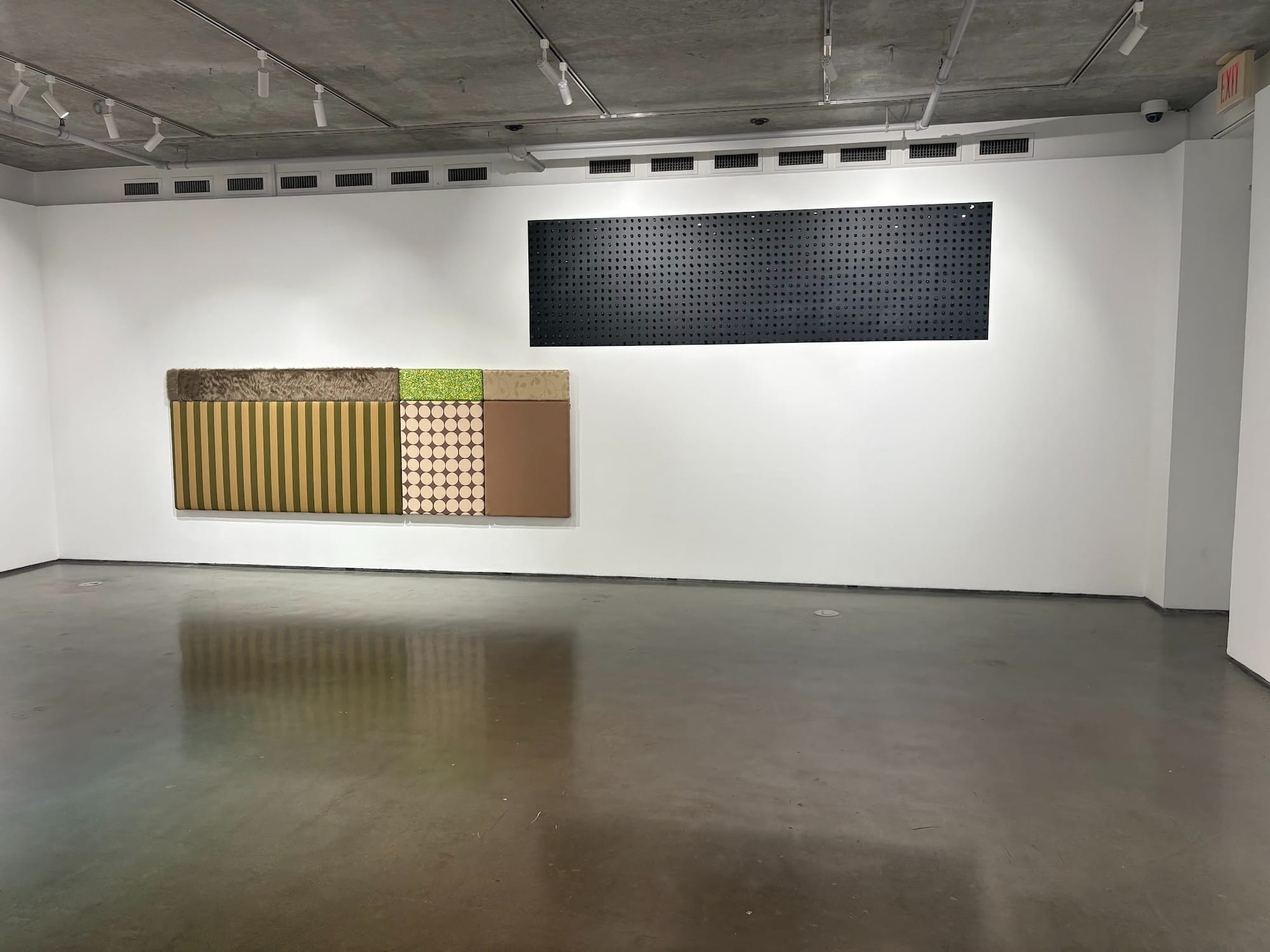
Displayed on the main floor of the Contemporary Art Gallery, Mayor of the Village fills the space with bits of spatial memory, from a patchwork of booth backrests to lighting fixtures to the interpretation on the back wall of large, suspended coffee cups.
Among the locations on display in Watt’s mini models are a laundromat, a bathhouse, Little Sisters bookstore specializing in LGBTQIA+ literature, two bars, and a health clinic. Many of these venues are or were originally on Davie Street, known as the “heart of Vancouver’s gay community,” according to the Vancouver Heritage Foundation.
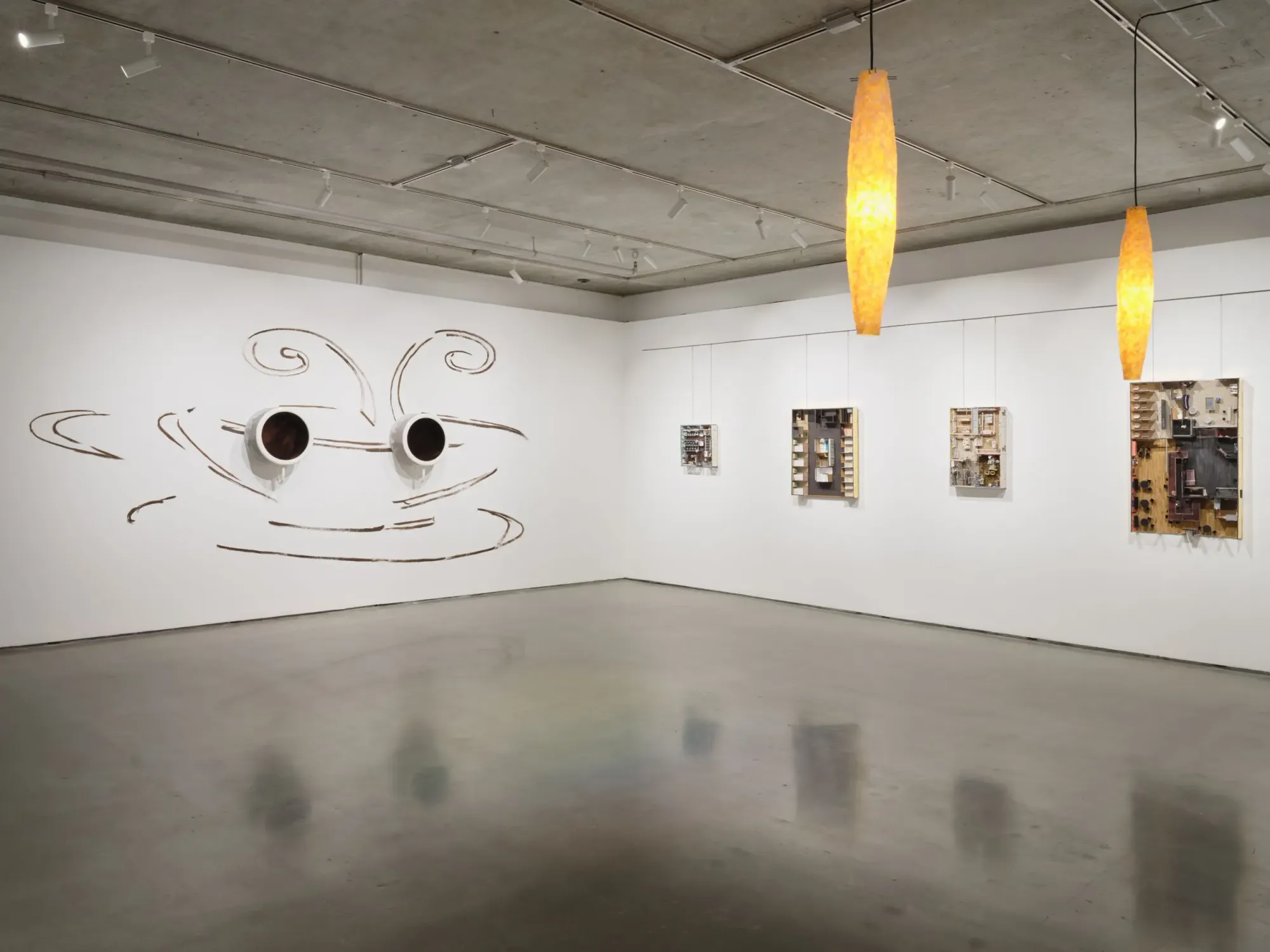
The coffee cup mural on the back wall and the accompanying mug sculptures installed on top of the mural are described by Watt as "imageless art works." The miniatures on the wall to the right of the gallery entrance are described in the Contemporary Art Gallery's audio guide as a "show within a show," displaying the work that Watt has become most known for in the past couple of years. The models are all suspended from string. Each one provides a comprehensive view of the interiors of several well-known queer spaces in the city, including a back-of-house view.
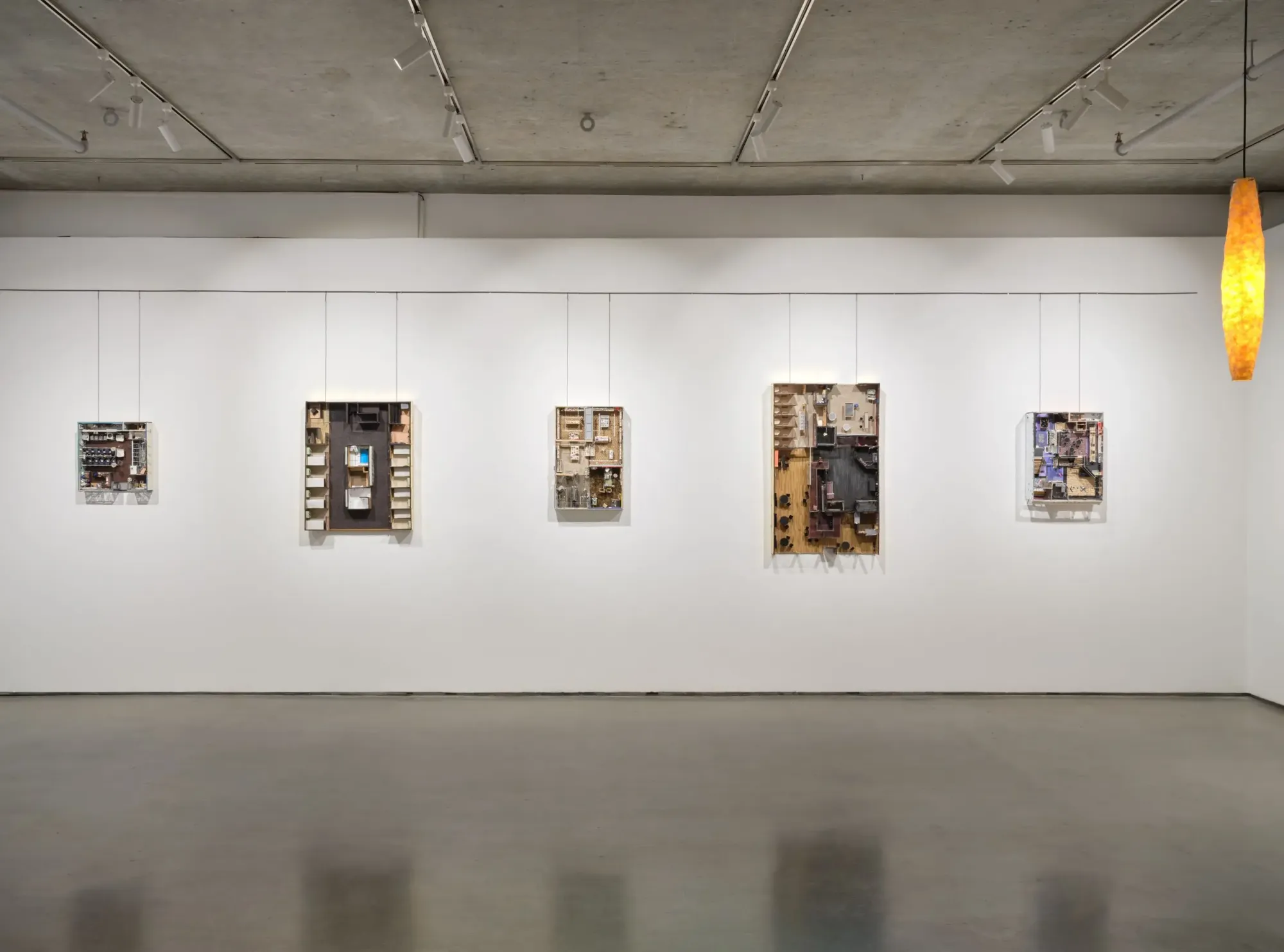
The coffee cup mural on the back wall and the accompanying mug sculptures installed on top of the mural are described by Watt as "imageless artworks." The miniatures on the wall to the right of the gallery entrance are described in the Contemporary Art Gallery's audio guide as a "show within a show," displaying the work that Watt has become most known for in the past couple of years. The models are all suspended from string. Each one provides a comprehensive view of the interiors of several well-known queer spaces in the city, including a back-of-house view.
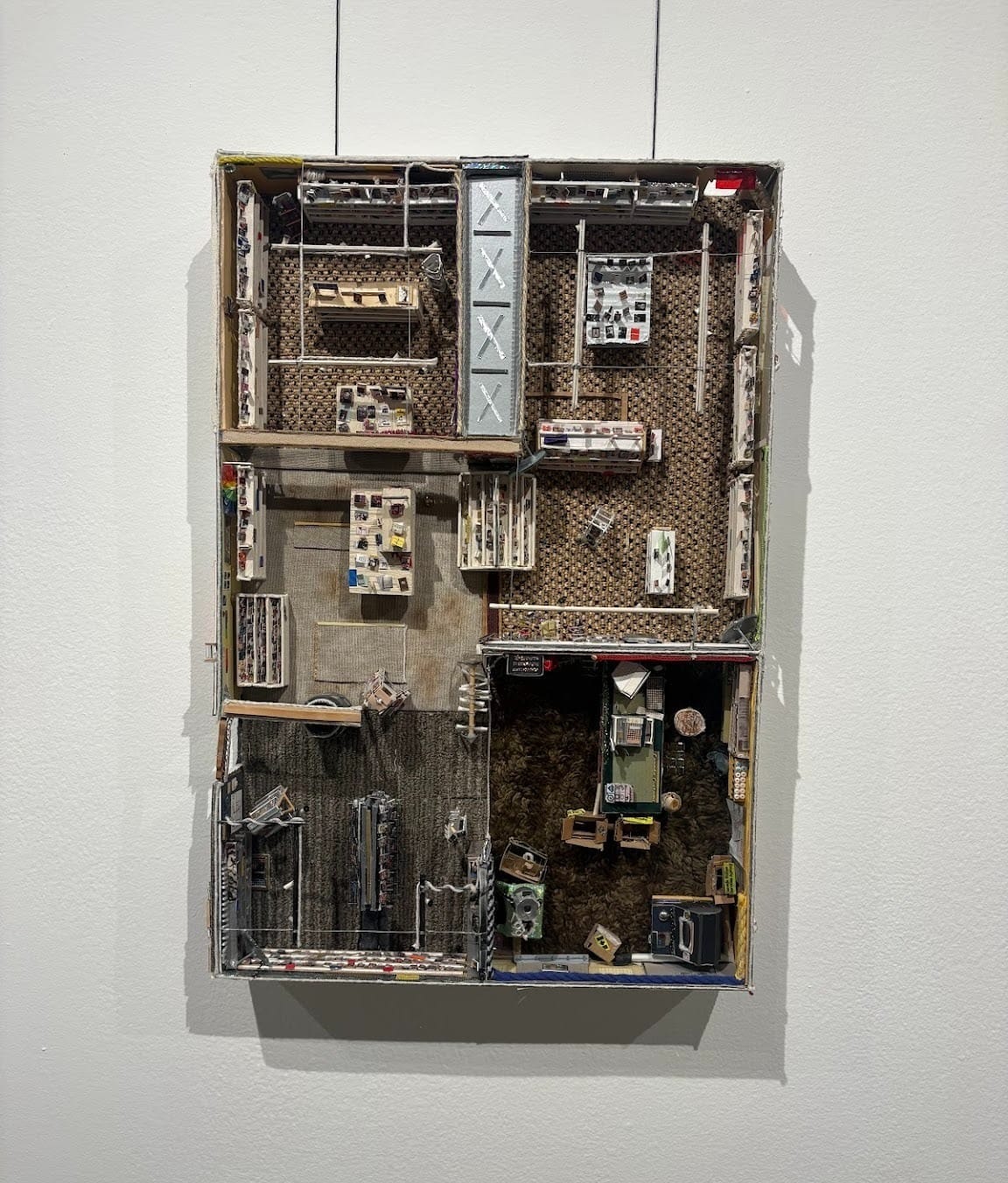
One of the standout models captures the bookstore Little Sister’s. While the store is currently located on Davie Street, the model commemorates its original home at 1221 Thurlow. Watt recreates the space based on images from Aerlyn Weissman’s 2002 documentary Little Sister’s vs Big Brother. The history of Little Sister’s Book and Art Emporium is inseparable from the history of censorship of queer content in Canada. For approximately twenty years, the store was embroiled in a legal battle against Canada Customs over their censorship of gay and lesbian publications, including gay erotic magazines and publications without explicitly sexual content. According to the Canadian Encyclopedia, nearly 75 per cent of the books and magazines shipped to Little Sister’s were regularly seized. The store’s case culminated in a Supreme Court ruling on March 16, 2000, that upheld the Customs Act as constitutional but stated in the ruling that Canada Customs had harassed Little Sister’s. The miniature books in the display created by Watt come from speculation, archival work, and internet searches.
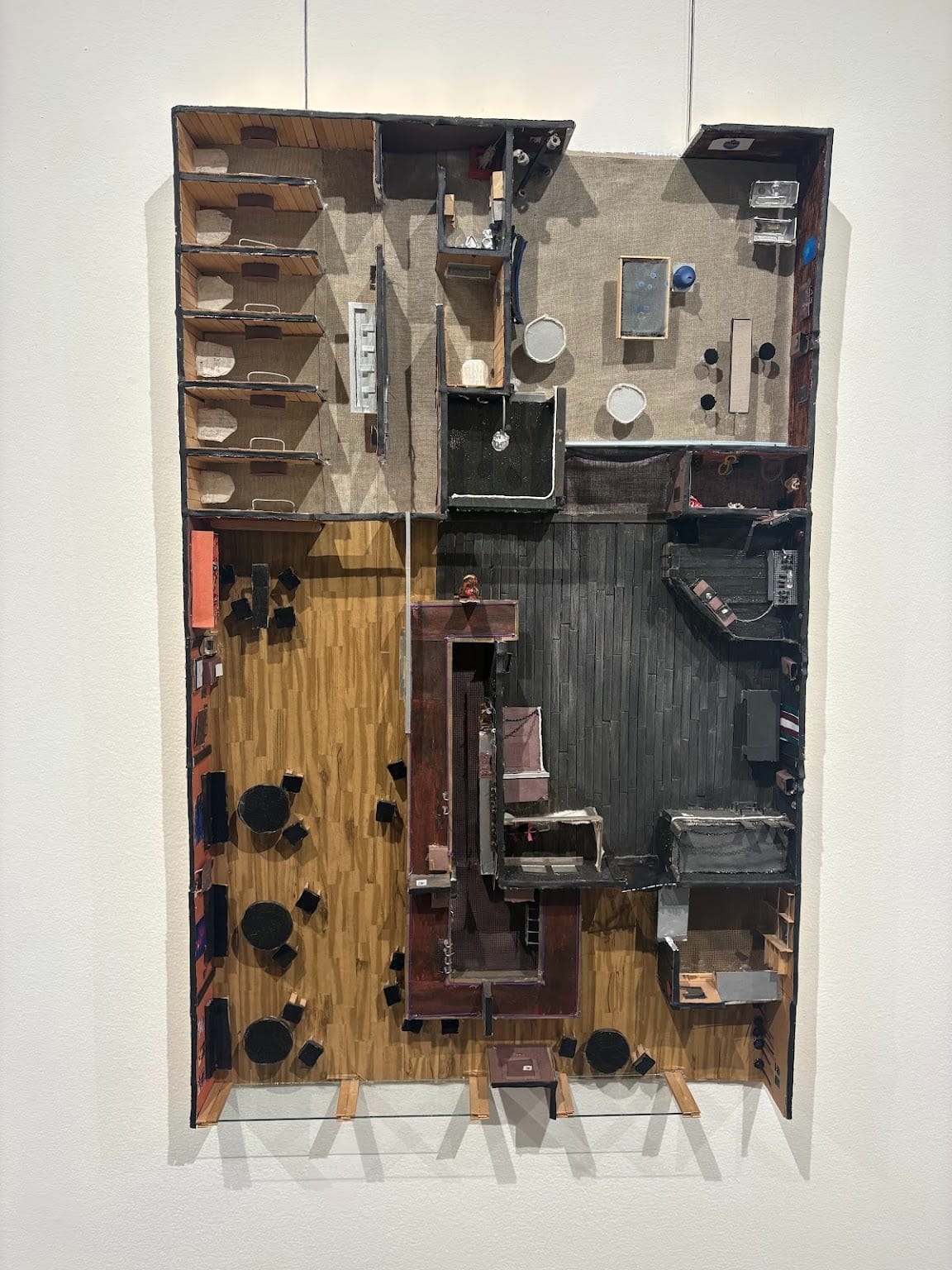
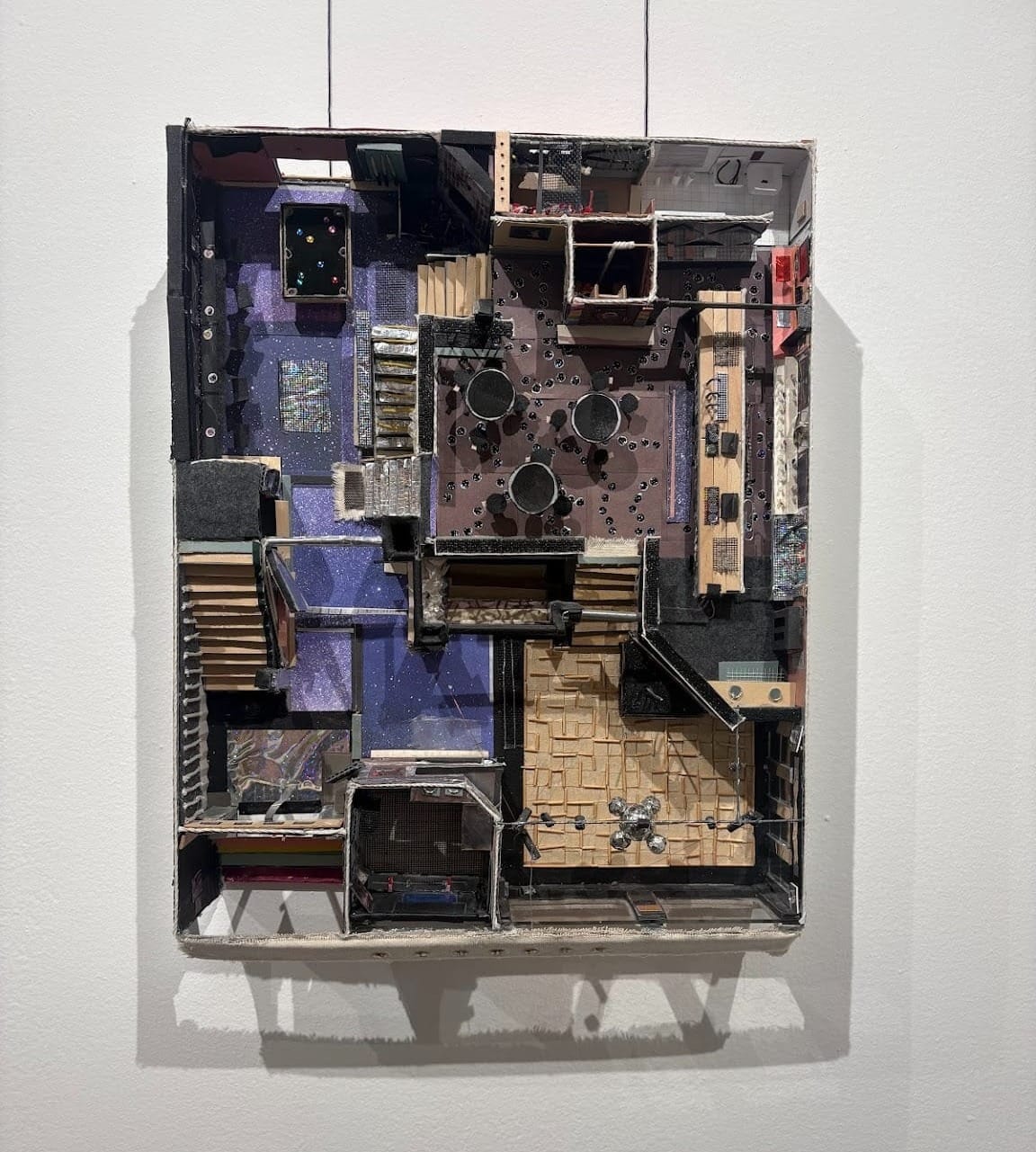
Douglas Watt’s Numbers, 2022 (left), and PumpJack, 2019 (right), on display at the Contemporary Art Gallery in Vancouver, British Columbia. Image courtesy of Meg Collins for Arts Help.w
Other models include two bars on Davie Street: The PumpJack Pub and Numbers Cabaret. The PumpJack was the first of Watt’s models created from intentional documentation. Numbers Cabaret was produced three years after that, during COVID-19 lockdowns, and was created using a combination of his memory and the information he gathered from a private tour. These models, while laying out a space without people, capture the life of PumpJack and Numbers, as Watt handcrafts the details that define these locations: their distinct layouts, a trans flag on the wall by the bar, a floor dotted with sparkles, and a concentration of disco balls on the far end of the dance floor.
Mayor of the Village is a love story to place as embodying Vancouver’s queer scene. But this love story stretches beyond Vancouver, beyond British Columbia and even beyond Canada. It is a story of the impact of venues meant for and made by 2SLGBTQIA+ people and how the relationship between people and place can create the soul of a city.
To discover more of Douglas Watt's work, you can follow him on Instagram @welcometodougworld.