
Multi-disciplinary artist and activist Ser Serpas’ new exhibit Rent visualizes deteriorating bodies in contemporary cities and asks the question: what shape do we leave behind, and how does AI contort it? The exhibition’s focus on the process of creation reflects the United Nations Sustainable Development Goal of Responsible Consumption and Production.
The exhibit is running from April 17 to September 13, 2026, at the Contemporary Art Gallery in Vancouver, British Columbia, Canada, at 555 Nelson Street, open Tuesday to Sunday, from 12 pm to 6 pm.
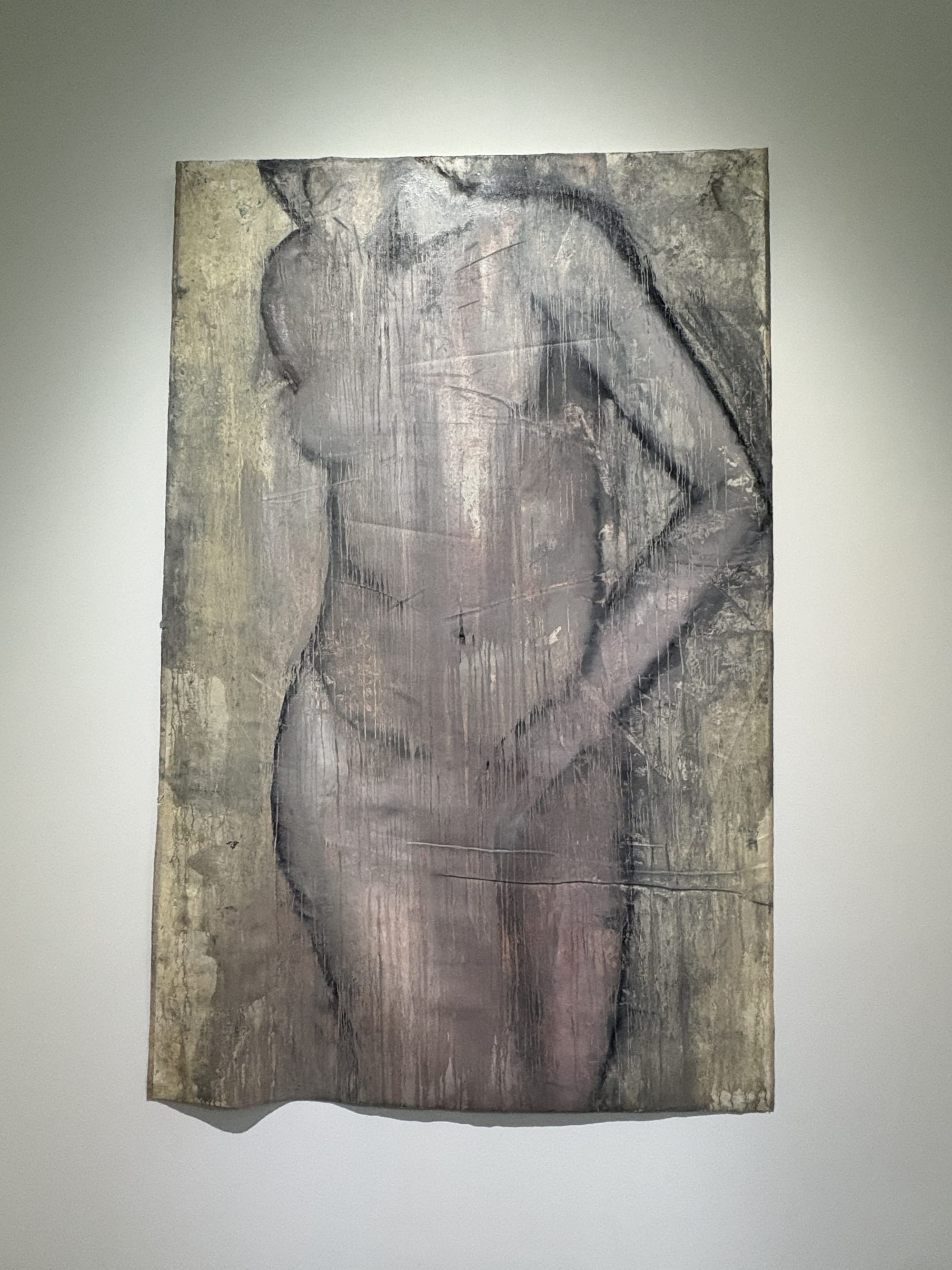
In the process of making these works, Serpas is described as making two canvases “kiss” while still wet, according to a description on the Contemporary Art Gallery’s website. Before working with the canvases, she uses a free AI tool to generate images in an attempt to get the AI tool to create nude figures. Ultimately, she was left with awkward poses and shapes that loosely resemble nude bodies, though smeared and unfocused.
The exhibit itself is constructed like a maze of abstracted bodies facing each other. Six long walls cut across the space, making the space for visitors and the space between paintings feel tight.
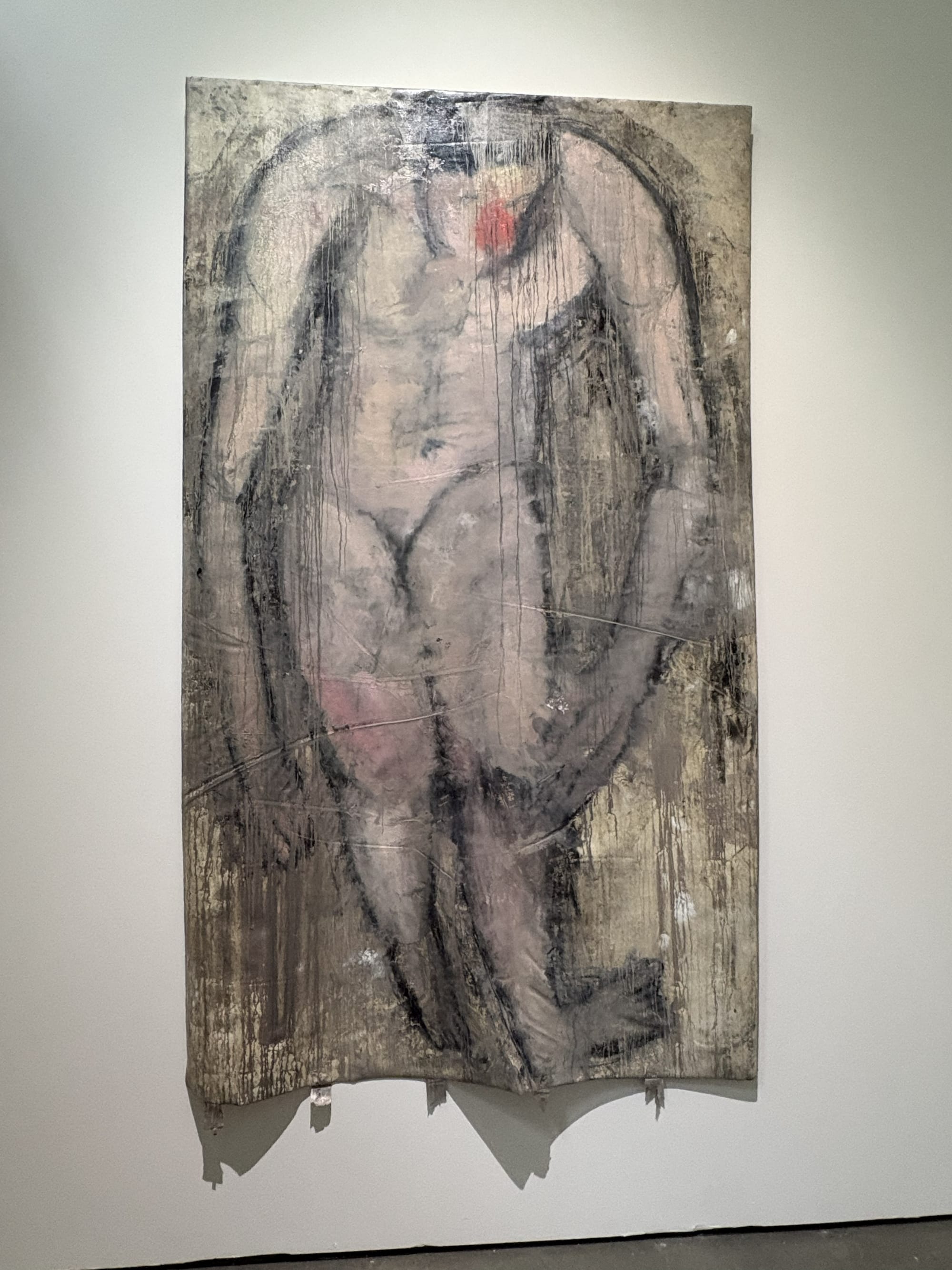
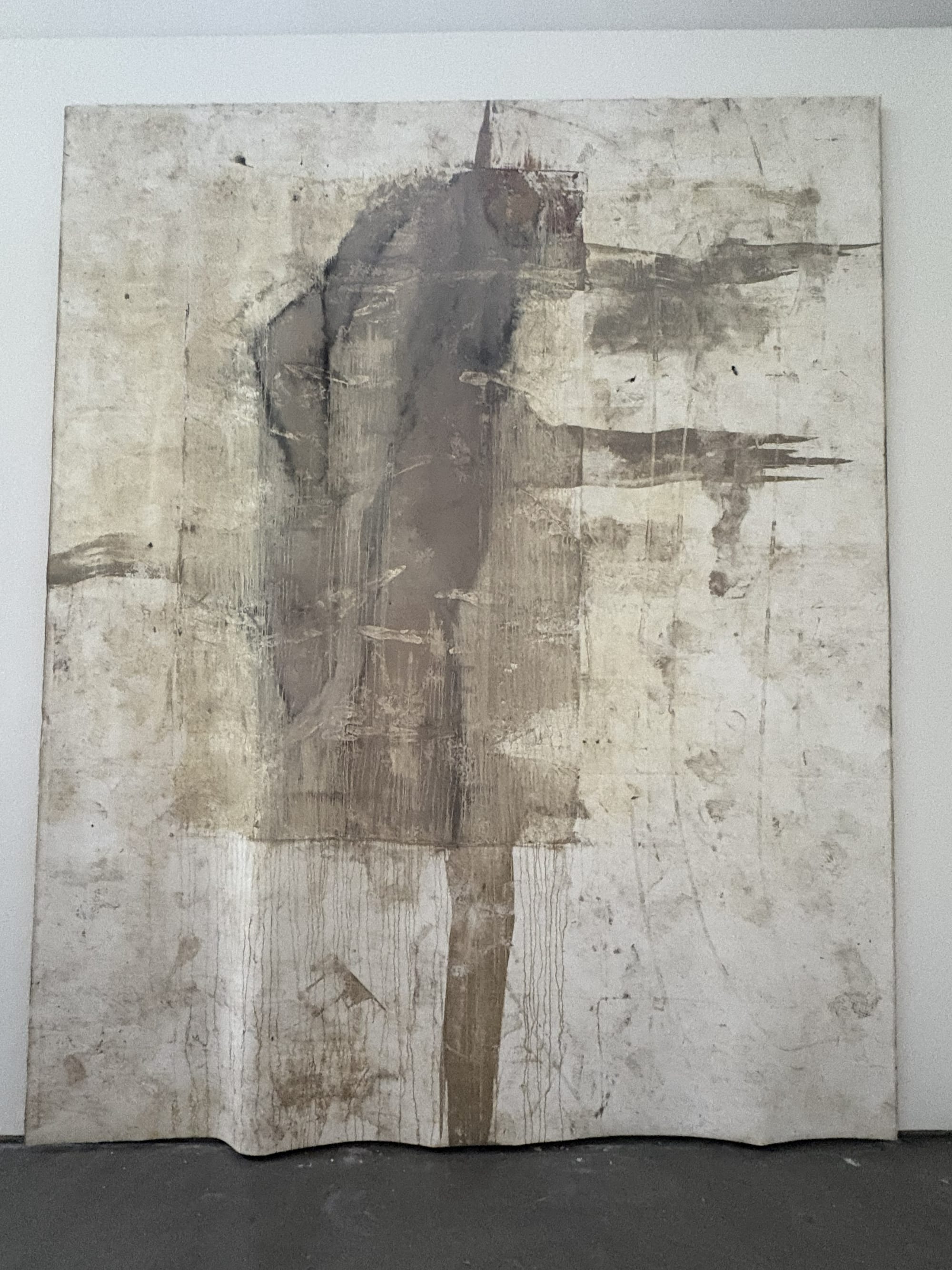
Each painting looks increasingly abstracted, with each body’s outline becoming more and more frayed. By the end of the exhibit, any shape that resembled an arm or leg looked cut off, blurred out, and faded. The last piece appears more like a paint smear that has been rained on than a singular person.
According to J. Cabelle Ahn’s profile piece in The Art Newspaper on Serpas, “Ser Serpas: ‘I’m hoping I can add a bit of what I think is a healthy dose of unease’”, she is known for her pieces created from found and discarded material. This work, particularly in her previous exhibition Of my Life, is described by Ahn as “a contemporary reworking of Marcel Duchamp’s readymades attuned to the conditions of late-stage capitalism.”
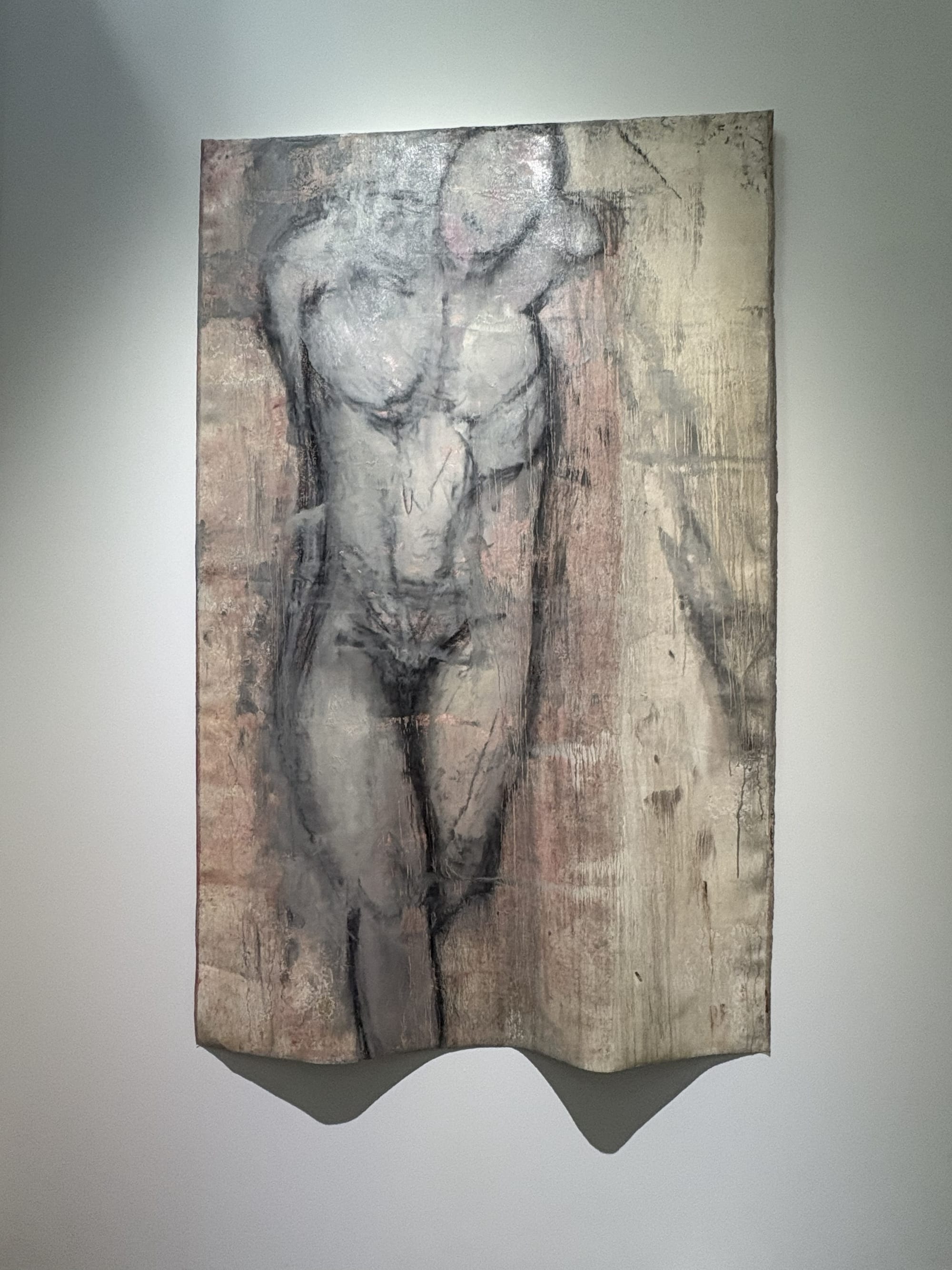
Both the structure of the exhibition and the slow recorded degradation of this nude body in each painting in Rent reflect generative AI’s creative limitations. Serpas, noted in Rent’s exhibition guide, even has to “trick” her AI tool into creating a nude body. But even the figures in Rent’s first pieces, where it is clearest that we are looking at a nude form, have limited detail. They appear to have no genitals, and any chests or breasts are largely blurred.
On March 18, 2026, Artsy, an online platform for purchasing and learning about art, published its findings from a survey of galleries’ engagement with AI art. Using responses from over 300 gallery workers, the survey found that the use of AI as a tool in art production is contested and that “the vast majority of artists working with galleries are not using AI in their practice.” According to the survey, only 9% of gallery professionals view AI-generated art as a “legitimate new medium.”
While it is unclear whether Serpas intended her exhibition to be critical of AI-generated work or to embrace it, what results from Rent is a tone of existential dread about artificial intelligence's impact on creativity. Taken in the context of many negative views on AI-generated work amongst artists and gallery workers, Serpas’ paintings read like a contemplation of how bodies, or people, are cut out of the process of creation when we let AI take the reins. Further, when people are cut out, the significance of a work of art gets blurrier and blurrier, until it’s entirely gone.
You can find more of Ser Serpas' work on her Instagram, @ser_sera.