
In 1910, a woman named Faith Fyles arrived at Ottawa’s Central Experimental Farm to test seed samples for weed contamination, work the Department of Agriculture openly described as “women’s work” because it was considered too tedious for men, according to Beechwood Cemetery, which maintains her biography. By the time she retired two decades later, Fyles had become Canada’s first woman botanist and the first artist ever appointed to the Farm’s Horticulture Division. The Ottawa Art Gallery (OAG) is now telling that story in Faith Fyles: In Full Bloom, on view from March 7 to September 27, 2026, in partnership with Ingenium, Canada’s Museums of Science and Innovation.
The exhibition speaks directly to two United Nations Sustainable Development Goals: Gender Equality and Life on Land. Fyles broke into a federal science career that was, by design, almost entirely closed to women, and she did it using watercolour and pencil as scientific instruments, not just artistic ones. That combination is exactly why the show pairs her historical work with contemporary female artists still using art to document and protect Canadian plant life today.
In August 1911, per Beachwood’s record, Fyles was promoted to assistant botanist, a shift the Ottawa Art Gallery says made her the first woman in Canada’s Civil Service to hold a scientific position. She conducted fieldwork alone across the country at a time when such work was considered improper for a woman, collecting hundreds of plant specimens for the National Herbarium and identifying a previously undocumented fungal species along the Rideau River. Educated at McGill University under trailblazing botanist Carrie Derick and having studied art in Paris and London, Fyles brought scientific precision and formal artistic training to the same page.
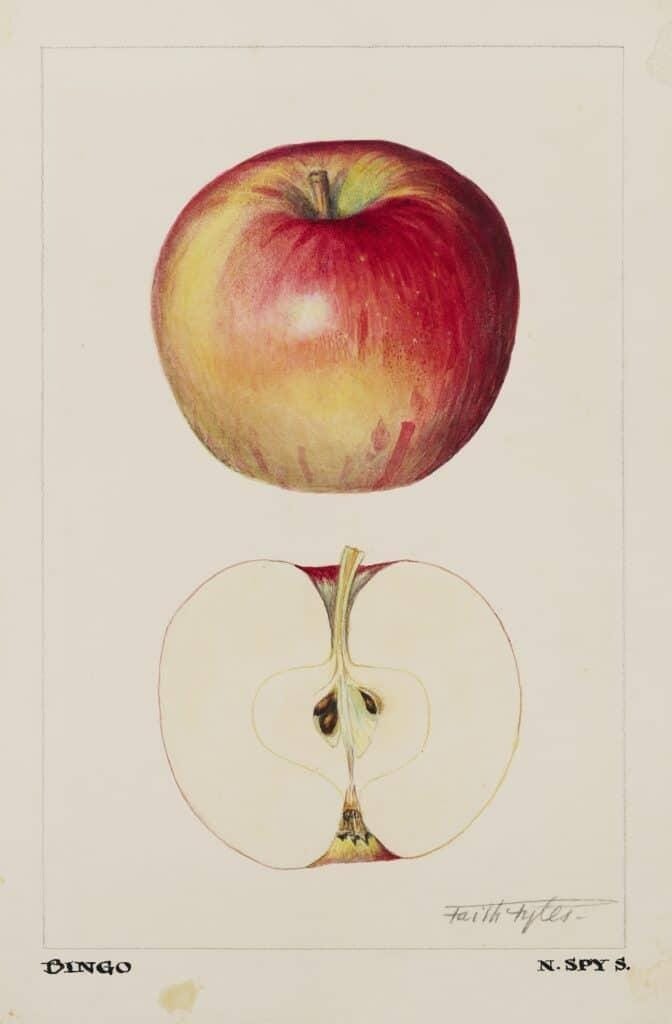
That precision is easiest to see in Bingo, a 1921 watercolour of an apple variety developed at the farm, now held in Ingenium’s collection. Fyles painted hundreds of pieces like it, recording colour, form, and internal structure closely enough that new fruit and berry varieties could be studied and promoted to growers nationwide, the OAG notes. Her earlier illustrated booklet, Principal Poisonous Plants of Canada, shows the same instinct for exact, usable detail: she described the leaves of cursed crowfoot as “rounded or heart-shaped, three-lobed and toothed,” precise enough that a farmer could identify the plant in a field and keep it away from livestock. A 1928 article in the Winnipeg Tribune called her “Canada’s leading artist-botanist,” a title that undersells how unusual it was for a woman to hold either half of it, let alone both.
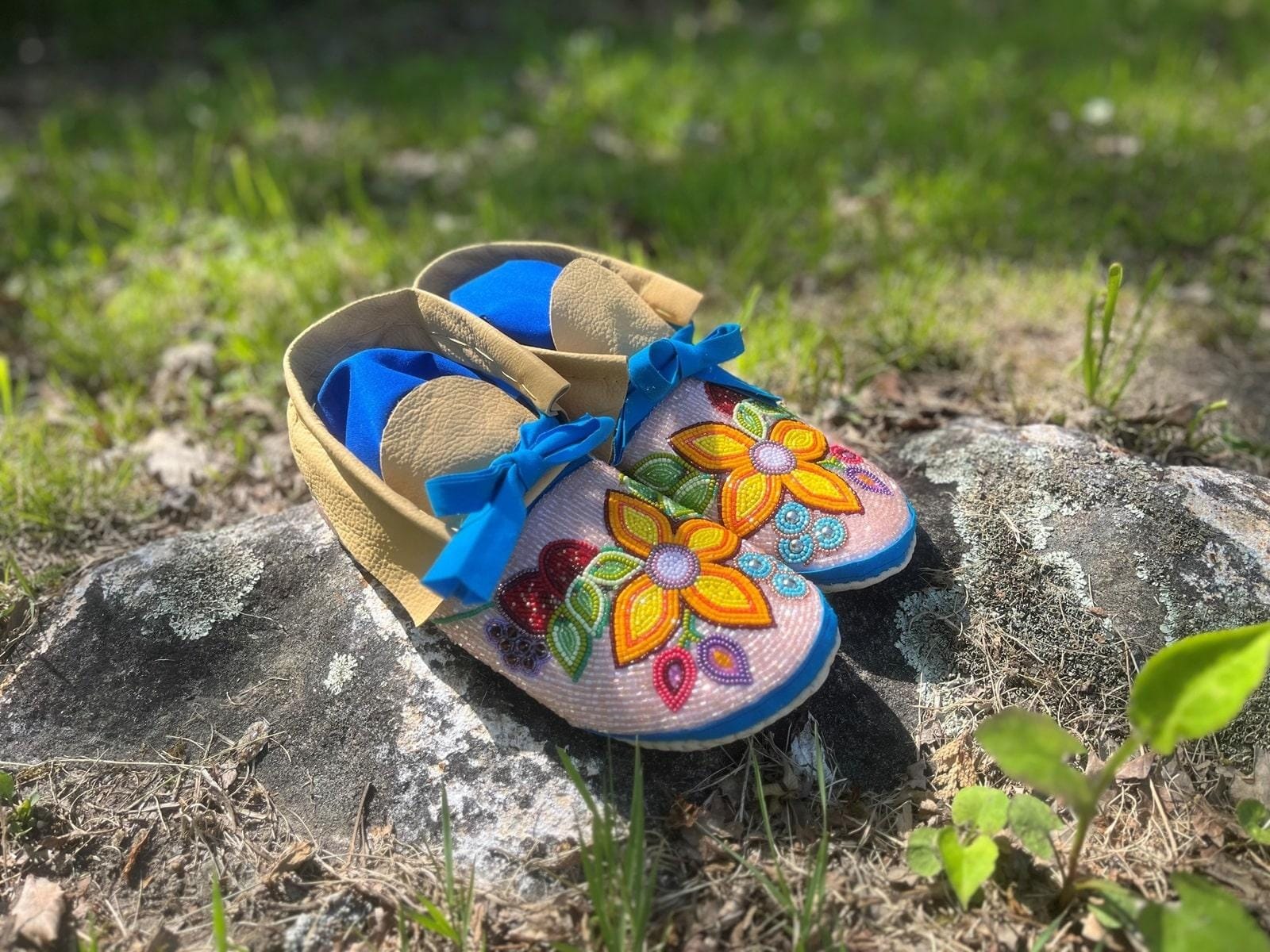
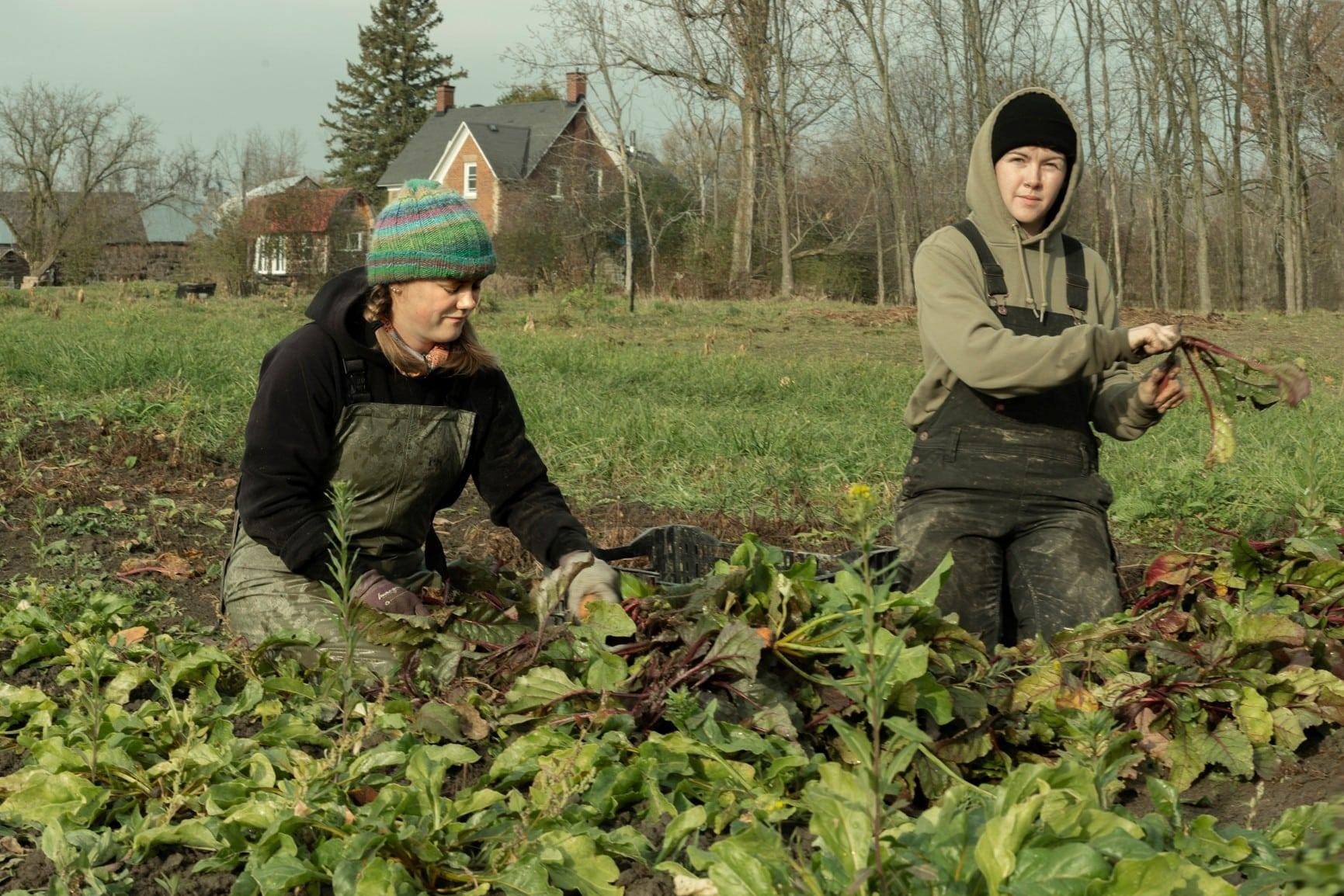
The contemporary side of the exhibition picks up that thread of women documenting and defending the land in different mediums entirely. Algonquin artist Stephanie Tenasco’s beadwork reflects the ongoing Algonquin presence and practices such as wild berry picking on unceded territory. Barbara Brown’s photo series Sowing the Future documents women and gender-diverse farmers across the Ottawa and Outaouais regions doing the seeding, weeding, and harvesting work that keeps regenerative agriculture running. Marie-Jeanne Musiol uses Kirlian photography, exposing plants to an electromagnetic charge, to capture what the OAG calls a plant’s “energy imprint,” proposing an entirely new kind of herbarium a century after Fyles built her own.
Deborah Margo came into the project without knowing who Fyles was. “I didn’t know anything about Faith Fyles, so I was curious why,” she said in a video interview posted by the OAG, describing being invited into Ingenium’s vaults to see Fyles’ original apple drawings in storage. The research turned into the sumac-dyed textiles now hanging in the show, made using colour pulled “instead of coming from paint, coming from actual plants,” Margo said, dyed onto silk grown or foraged from her own garden, alongside collages built directly from Fyles’ own botanical drawings.
None of these artists needed Fyles’ permission to do this work. But walking through a gallery that puts her watercolours in the same room as theirs makes a case Fyles never got to make about herself in her own lifetime: that documenting the natural world closely, patiently, and by hand has always counted as both art and science, regardless of who was allowed to call themselves either.
Faith Fyles: In Full Bloom is on view at the Ottawa Art Gallery, 50 Mackenzie King Bridge, through September 27, 2026. Admission is free.