
One of the biggest cultural phenomena of the current age of men and monsters is Mary Shelley’s Frankenstein. As a body of work, Shelley’s novel has been adapted across multiple media, from television to cinema; the iconic Dr Victor Frankenstein has remained a cultural icon for decades after its initial publication. One adaptation in particular by Director Guillermo del Toro explores the ideology of creationism, exploring life and the responsibilities of its creator through Shelley’s man and monster, Dr Victor Frankenstein and the Creature. His unique approach to telling the story of Victor and the Creature creates an interesting thought experiment, not about what it means to be a father of a brilliant invention, but about what it means to be a mother who brings life to her children. When focusing on the women and mothers of the story, mainly Baroness Claire Frankenstein, Elizabeth Harlander, and, by virtue of birthing the creature, Victor Frankenstein, an interesting perspective of the anxiety of motherhood emerges through the story. Frankenstein’s exploration of the burden of creation and motherhood relates to the United Nations Sustainable Development Goals of Gender Equality and Good Health and Well-being.
It may be difficult to picture a man of science such as Victor Frankenstein as a ‘mother’. However, when breaking down the concept of the mother as the vessel for creation and nurture, one can argue that he fits the definition regardless of his gender. By examining the role of motherhood, the burden of creation and the responsibility that follows, one can understand how one can evolve from being the mother of a miracle to the mother of a monster. As Ellen Moore writes in her review of Shelley’s novel, Shelley reimagines birth through the twist of Gothic myth, from the eyes of a mad scientist’s horror as he creates a monster in search of reinventing human life. Moore argues that the novel’s real power lies less in the exploration of creationism in itself than in what follows creation: the guilt, revulsion and abandonment that unfold as punishment for failing to care for what has been born; the trauma that follows the afterbirth. Shelley, thus, reproduces the traditional opposition of masculine and feminine societal roles of parenthood by adopting the voice of a man who writes about the horrors of becoming a mother to a monster.
By examining the evolution of the mothers in the story, from Claire to Elizabeth and culminating in Victor, one can broaden one’s understanding of the sociological construct of the mother’s role. The connections between these three characters might feel unnatural and elusive now, but by the end of the article, the reader will be able to connect them in their individual roles as the ‘mother’. Despite the individualistic aspect of the experience of motherhood, del Toro’s Frankenstein shows how one’s approach to creation and nurture is shaped by the creator’s mothers of before. The trauma of motherhood is inherited through the cycle of a mother’s nature and nurture of her next generation of mothers.
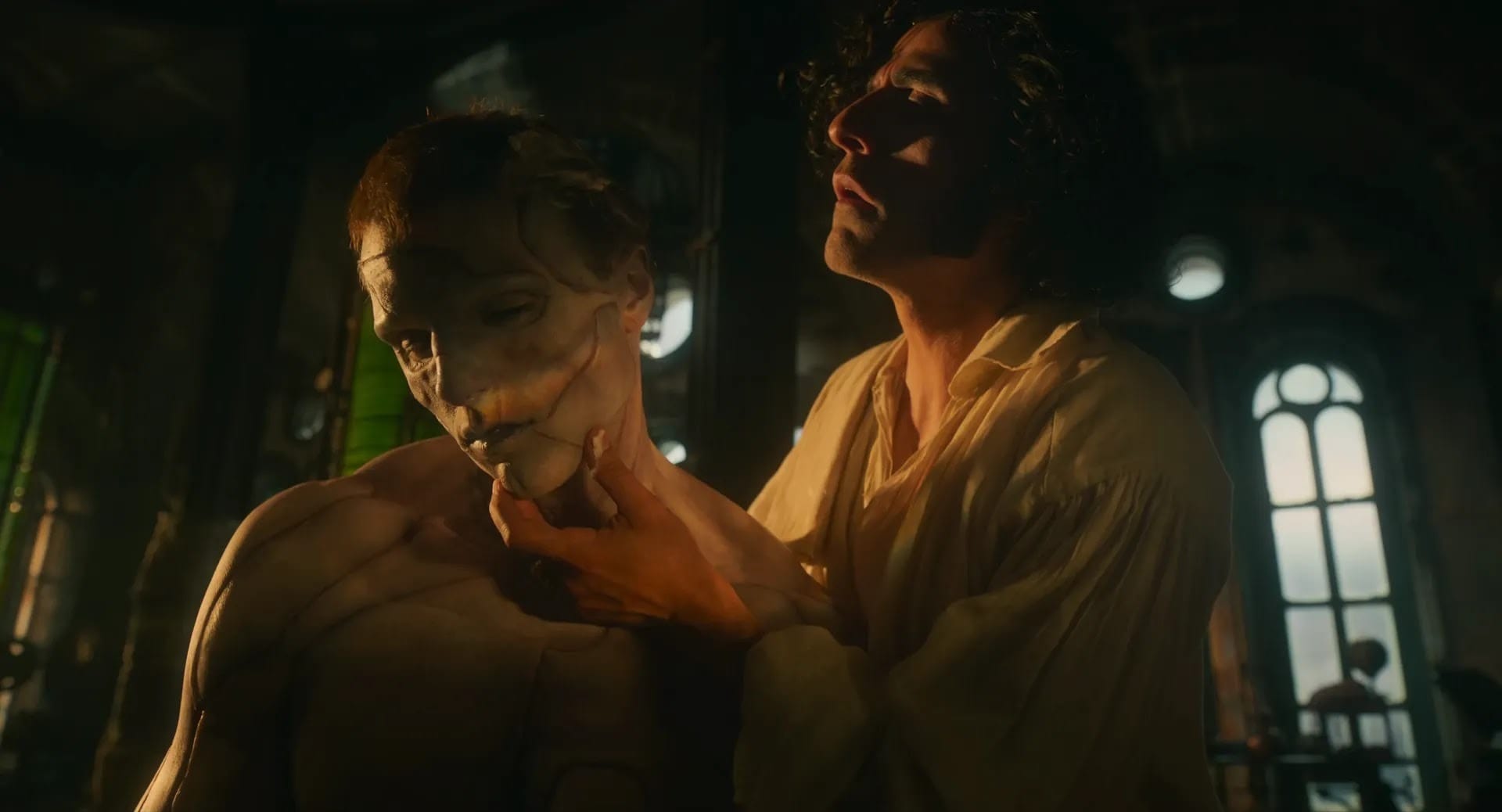
Nature, nurture and care. The mothers of Frankenstein embody each concept in unique ways. As Devon Hodges writes, “Shelley challenges the place of women plotted by the traditional novel by disrupting narrative sequence. Her characters do not escape traditional female destinies to be mother, wife, dead, or some combination of the three, but the novel subverts the form of female destiny by defamiliarizing narrative sequence.” Claire represents the Nature of motherhood: the mother's role remains one’s sole responsibility till death. Elizabeth represents the aspect of Nurture, how the emotional aspect of human growth is nurtured through the kindness and patience of their mother. Victor represents the idea of Care: how the absence of motherly care can become the catalyst of a child’s evolution from human to monster. The Creature, despite his adult body, is in fact a child and, much like Victor at the beginning of the film, has a timid curiosity that evolves into violence due to Victor’s neglectful parenting. But why see Victor as the mother rather than the father? To see Victor as the father, one must understand the gendered roles present in parenthood as a whole, while at the same time removing the Female and Male gender aspects of the role.
The subordination of women, as argued by Sheila Jeffreys, exists in a sex class system where the rule of women by men is based upon men’s ownership and control of women’s reproductive abilities. In a patriarchal society, the role of a woman will forever be linked to her role as a mother, where she performs her duties of bearing and caring for her children. Paula J. Caplan writes that motherhood is the most populated category of high-responsibility work without compensation. Mothers are expected to teach their children “sex-appropriate” roles and additionally show their daughters how to maintain work, family and their “femininity” and to show their sons the way to become sensitive yet achievement-oriented. Caplan notes that any form of inadequacy in the offspring’s performance of their respective societal roles is often blamed on the mother for not being nurturing or caring enough. “In an important sense, mother-blame is like air pollution,” Caplan writes, “it is so much a part of North American culture that one tends not to notice it until one moves to a location where it is absent.”
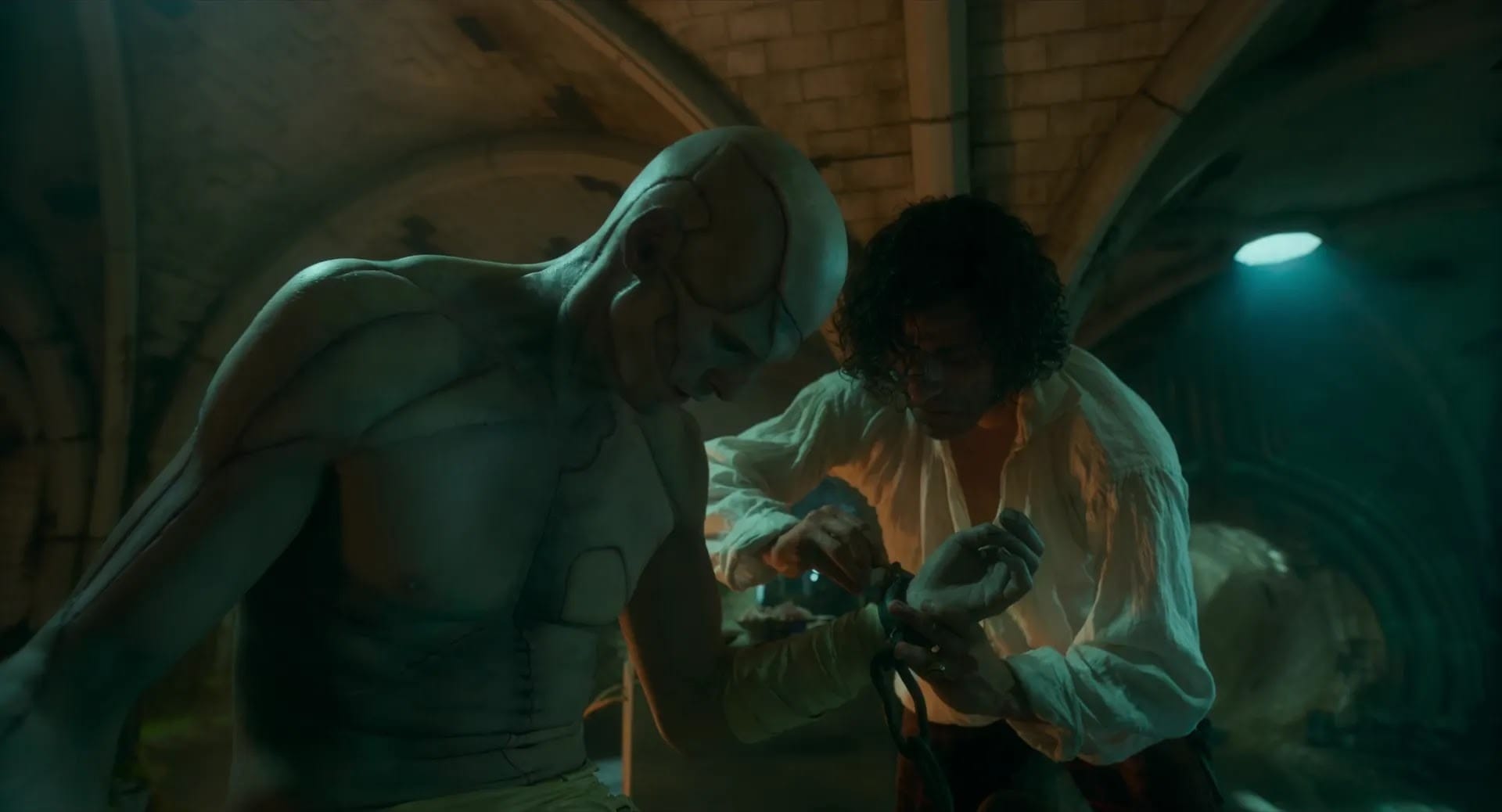
Del Toro’s Frankenstein carries this same weight of sex-associated parental roles, serving as his dedication to stay true to the film’s source material. Mary Shelley’s original novel, Frankenstein; or, the Modern Prometheus, itself explores the violence of motherhood, and how performing the role of the mother felt to Shelley. Marjean D. Purinton notes that Frankenstein responds to the 19th-century anxieties of womanhood through cross-gender characterization, where male characters represent some form of aspects of contemporary femininity. The male characters of Frankenstein serve to destabilize the notions of gender, creating commentary on the horrifying roles and expectations of a mother through the lens of a male character. The artist, Victor Frankenstein, in a sense regrets ‘birthing’ his creation, but cannot bear to kill his ‘son’. Much like how mothers suffering from postpartum depression end up despising their children, but still have the maternal instinct to provide them the basic form of nurture. Motherhood is plagued by its unsympathetic norms, ideals and expectations. Mothers are often expected to perform even after traumatic experiences like childbirth; studies show that societal expectations of the glamorous aspects of motherhood create damaging effects on the experience of new mothers, which consequently leads to said mothers experiencing postnatal depression. These mothers are often hesitant to disclose their true feelings about the reality of motherhood, fearing the stigma of being seen as unfit as a mother.
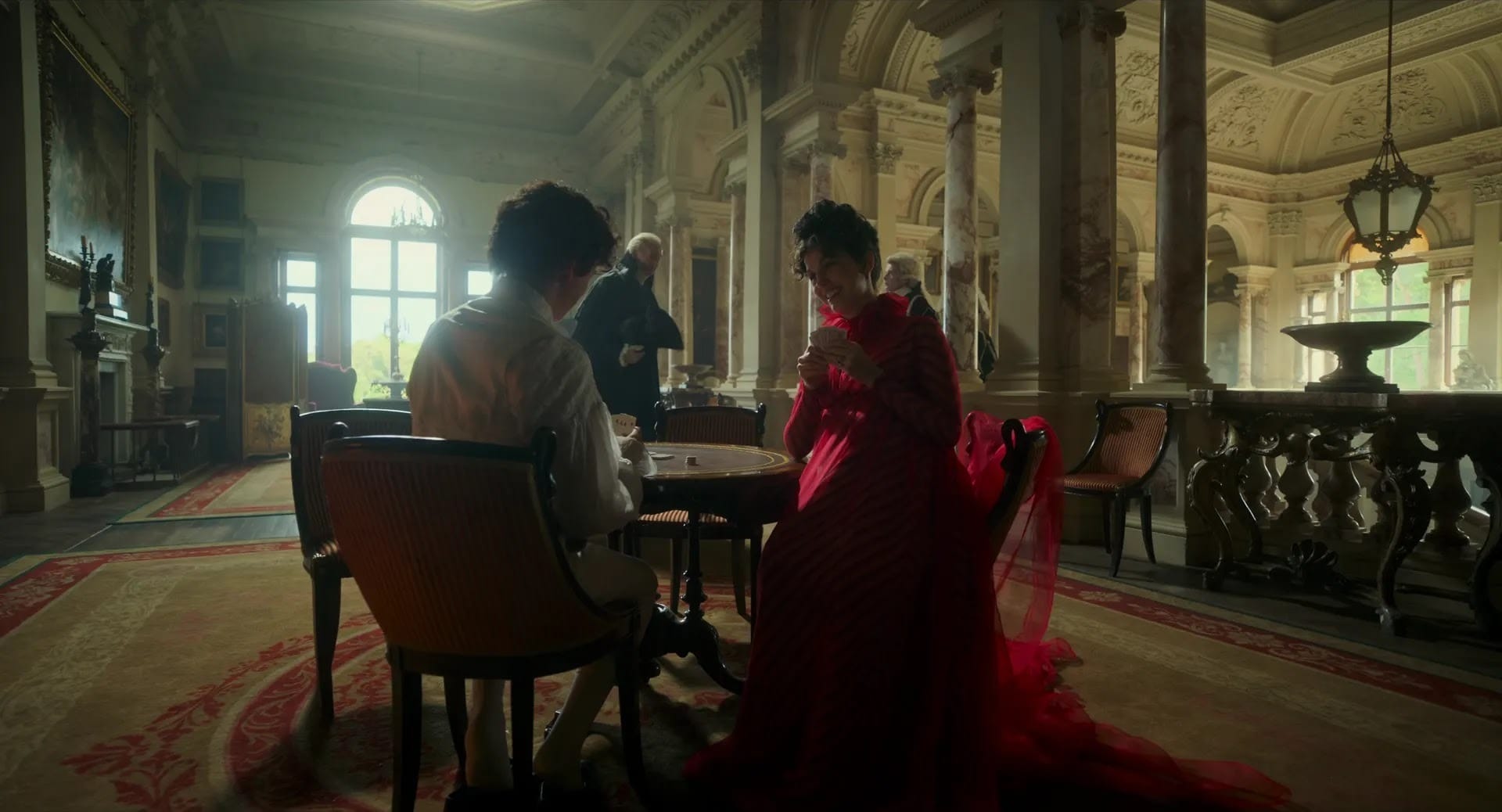
The stigmatization of true motherhood is evident in del Toro’s Frankenstein in the life cycle and roles of the mothers of Frankenstein, beginning with Claire. Claire’s role as Victor’s mother becomes the catalyst for Victor’s own stumble into the rabbit hole of creationism. Claire’s life cycle from nurturer to her death from performing her motherhood role as childbearer becomes Victor’s catalyst for his obsession with overcoming death by creating life. Much like how a daughter’s experience with her mother can become a catalyst to her obsession of becoming the opposite of her mother, Victor wants to create life and survive because his mother died creating life. His obsession with defeating death through creation mirrors a daughter’s desire to become better than her mother, without considering the true costs of motherhood. The cycle of motherhood becoming something to be outdone rather than honoured functions as propaganda for patriarchal gender roles, which Shelley, and in turn del Toro, explores through the character of Victor Frankenstein; that glamour of motherhood is a propagated fantasy by patriarchal society’s obsession with sex-based societal roles.
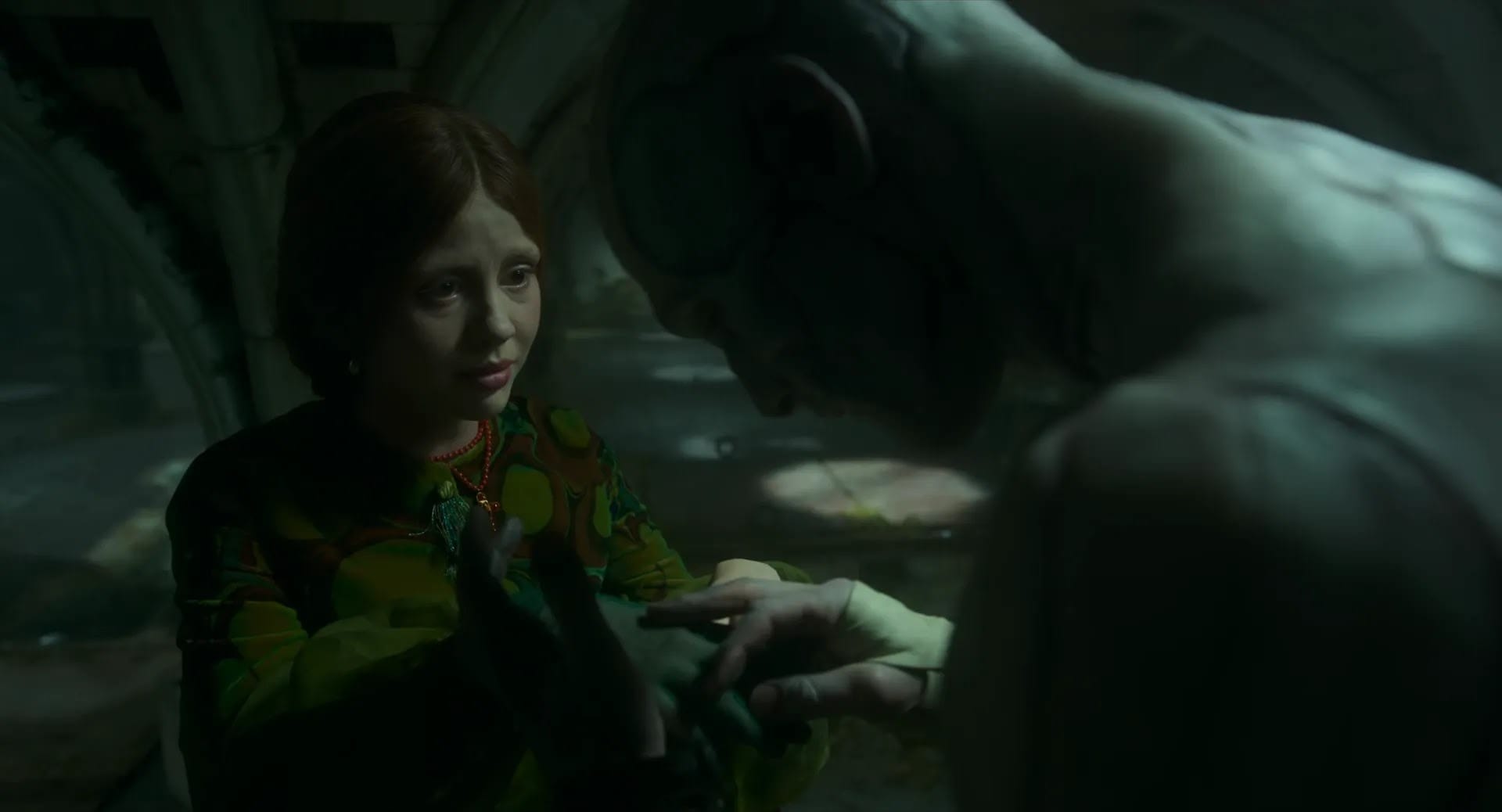
While Victor serves as the Monster’s ‘biological’ mother, Elizabeth serves as the Monster’s ‘emotional’ mother. As the realities of motherhood begin to settle for Victor, Elizabeth begins to fill the role of nurturer to the Creature while Victor’s hatred becomes the reasoning for his neglect. Victor, like mothers suffering from postpartum depression, begins to face the realities of becoming a mother: how defeating death through his experimentation with life has created a monster and that he’s fully responsible for the ‘monster’ that he has created. The Creature’s attitude, behaviours and perceived idiocy directly reflect on his creator’s incompetence in nurturing him, similarly to how a child’s perceived incompetence reflects poorly upon his mother. Elizabeth, however, places herself directly into the cycle of motherhood by immediately filling the role as a nurturer to the Creature. Much like how young girls are encouraged to play the role of a nurturer both in play and in her social life, Elizabeth cares for and teaches the Creature how to shift himself from a ‘Monster’ to a man, without much help from his creator. In a society where sex-based roles are encouraged, people often slot themselves into their societal roles in spite of their individualistic interests. Claire’s brilliance is overshadowed by her role as an expectant vessel for birth, Elizabeth’s passion is overshadowed by her role as the Creature’s nurturer, and Victor’s brilliance as a scientist is overshadowed by the madness he develops from ignoring his postpartum depression.
The anatomy of the Monster’s Mother proves to be an interesting exploration of motherhood without womanhood. By picturing Victor Frankenstein as the mother of the monster, one comes to understand the horrors of society’s glamorization of motherhood as the default role for women. The expectation that a woman must perform motherhood flawlessly, to become a virtuoso in her role as a caregiver, rather than have a relationship to be lived, creates an unhealthy bond between mother and child. The mother’s worth becomes contingent on her performance rather than her presence, creating the cycle of performance that ends with the creation of a monster: the Creature. Analysis of the anatomy of the Monster’s Mother reveals that Victor’s failure as a mother, his failure to love, nurture and do best for the Creature, shows how a mother’s failure is not the fault of her own, but the fault of society.