
Eight Korean artists are showing work this summer that never touched a tube of paint. At the Korean Cultural Centre Canada (KCCC), the exhibition Hanji and Minhwa: An Encounter runs from June 25 to August 12, 2026. Every piece in it starts from the same two ingredients: hanji, a handmade paper pressed from the inner bark of the mulberry tree, and minhwa, Korea’s centuries-old tradition of folk painting. The artists use these two mediums to ask a plain question: what happens when art returns to nature’s own toolkit?
That question lands squarely on two United Nations Sustainable Development Goals: Responsible Consumption and Production and Sustainable Cities and Communities. Hanji is made without synthetic chemicals, and several artists in the show pair it with plant-based dyes, mineral pigments and natural clay instead of mass-produced paint. That choice of materials, paper and pigment pulled straight from plants and earth rather than a factory is a working example of low-waste, biodegradable material use, the kind of responsible production Goal 12 calls for.
The paper’s durability is part of the story, as hanji made using traditional methods has been used to line the floors, walls, and doorways of straw-thatched Korean homes for temperature and moisture control. It is also used to record legal documents and histories that are still preserved in Korea more than 800 years later, proof that a natural material can outlast the synthetic ones now filling most art supply shelves. Bringing that same material into a free public gallery on Elgin Street, in the middle of downtown Ottawa, is what makes Goal 11, Sustainable Cities and Communities, relevant. A city space sharing sustainable heritage craft with anyone who walks in builds exactly the kind of inclusive, culturally rich urban life the goal describes.
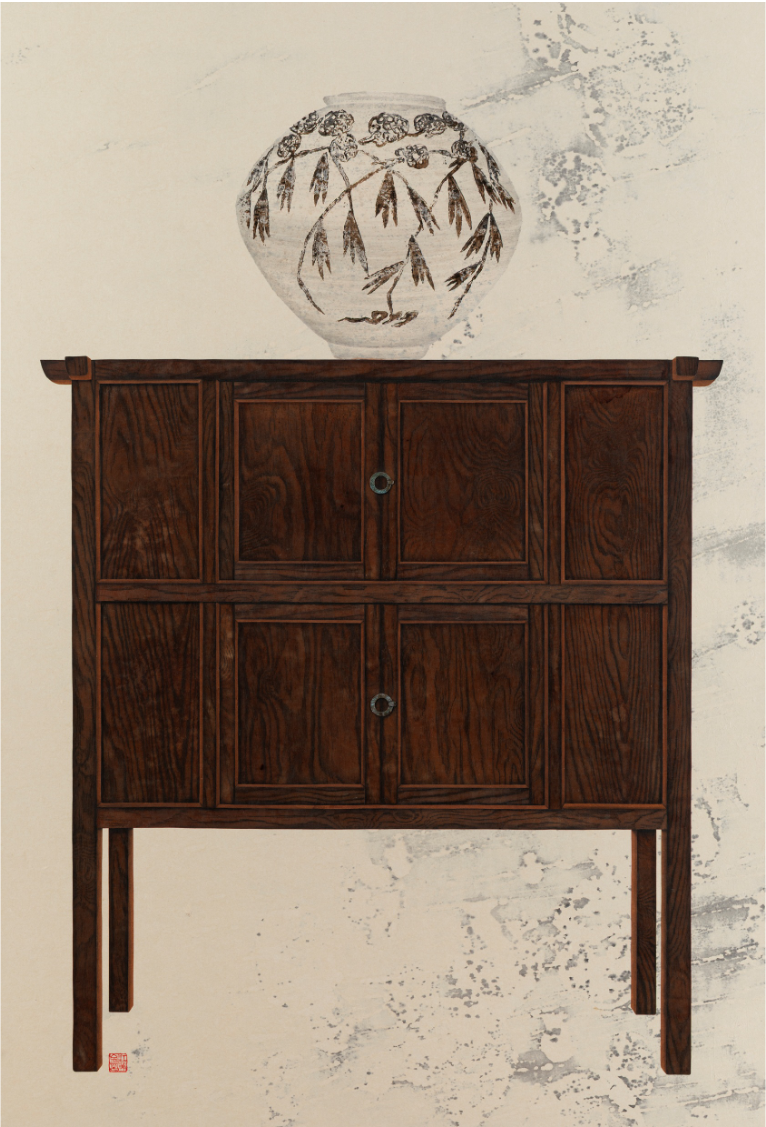
The exhibition is curated by Lee Seung-Chul, a hanji artist and professor of art at Dongduk Women’s University in Seoul who has spent more than three decades researching the material and its natural dyeing techniques. Culture only means something if people actually use it, he has argued. “Culture holds special meaning when it’s enjoyed, shared, and respected by people,” he said in a 2023 interview with the Korea Times. “If culture is left to stay in the museum, it loses its meaning.”
In the same interview, Lee described how hanji functioned inside a genuine circular economy during Korea’s Joseon era: mulberry bark was harvested and pressed into paper, the paper was used for documents, umbrellas and woven goods, and once it wore out, it was burned, its ash returned to the soil to grow the next generation of mulberry trees.
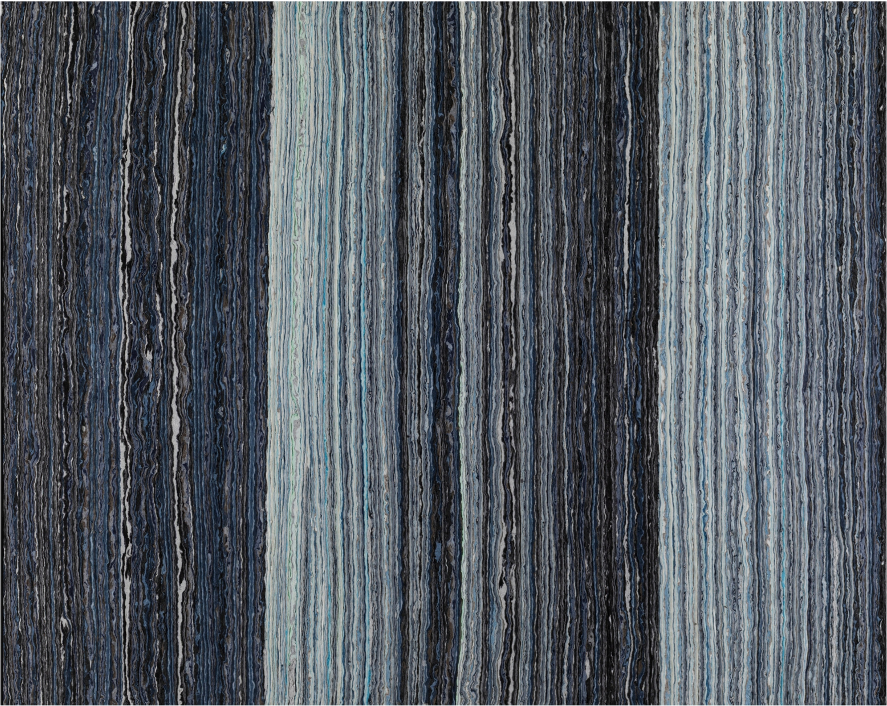
The paper carries real weight in the exhibition itself. Kim Su-mi’s Forest of Momo layers pigment directly onto hanji and lets indigo dye bleed and pool across its surface rather than controlling it into hard edges. The stains and soft diffusion are not accidents to be corrected. Kim treats them as the point, a visual stand-in for the way life itself grows, dissolves, and grows again. Im Jin-sung’s Waterfall pushes the material further still, building a piece over five feet tall entirely out of handmade hanji, using the paper’s own texture and layered construction to suggest falling water without a single brushstroke of blue.
Other artists in the show extend this idea of growth and change in different directions. Kim Kang-mi builds her mixed-media series. A Walk Through Time and Space using persimmon dye and clay on jangi paper, reworking the traditional chaekgeori genre of scholar’s bookshelf paintings. Kim Sun-hee moves the same sensibility onto ceramics, inscribing folk-painting flowers into hand-built clay vessels she describes as “a quiet universe shaped through the language of earth and fire.” Nam Jung-eun and Yun Su-kyoung work in mixed media on wood and hemp cloth, while Lee Hee-jin reworks classical minhwa iconography into scenes of ordinary, present-day life.
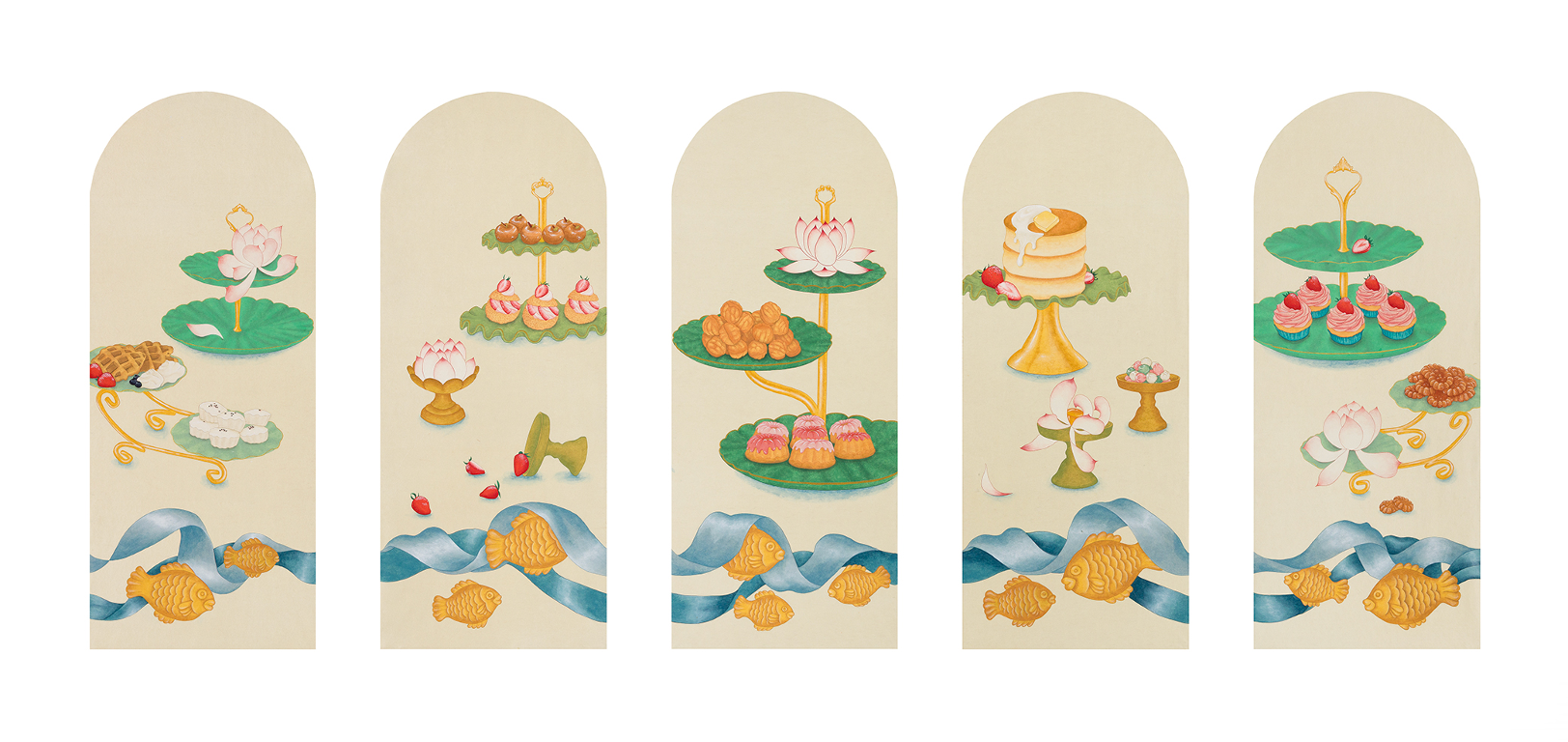
"I do not seek to reproduce tradition," Lee writes in his own artist statement for the show. Instead, he explains, he's trying to carry an old way of working through himself and into the present moment. That's a fair way to describe what's on the walls at the KCCC this summer: paper and pigment made the way they were made a few hundred years ago, still holding up on their own terms.
Hanji and Minhwa: An Encounter is on view at the Korean Cultural Centre Canada, 150 Elgin Street, Unit 101, Ottawa, through August 12, 2026. Admission is free.