
Vancouver-based environmental artist Nicole Dextras’ vision lives at the intersection of sustainable fashion, performance art, and social engagement. Her eco-art collection Urban Foragers [house of eco-drifters] consists of three dresses, built one at a time between 2011 and 2013.
Dextras plays with time by inviting us into an imagined future where sustainability is the necessary way of life. In this universe, we have reached the predicted human destiny of having used up all our resources. As a result, regular patterns and structures of consumption (and fashion, by extension) have disassembled. What arises in their place is wearable art that is both functional and a testament to the elite class’s addiction to status and beauty, despite the effective downfall of society as we know it. These pieces are prototypical, imagining what mobility, community, and consumption may look like in this reimagined society.
This series is an ethereal, innovative, yet direct addition to a decades-long global conversation that artists, activists, and policymakers have been trying to have about the future of our world. This is why this work is relevant to the United Nations Sustainable Development Goals of Responsible Production and Consumption, Sustainable Cities and Communities, and Industry, Innovation, and Infrastructure.
Of these, the Mobile Garden Dress was the first to be created. It consists of a dome-shaped hoop skirt built to carry potted greens, vegetables, and herbs that can be used to make a salad. It also boasts a linen-canvas apron. The urban forager wearing this dress is able to slip out of it and use the dome structure as a tent for shelter when the day is done.
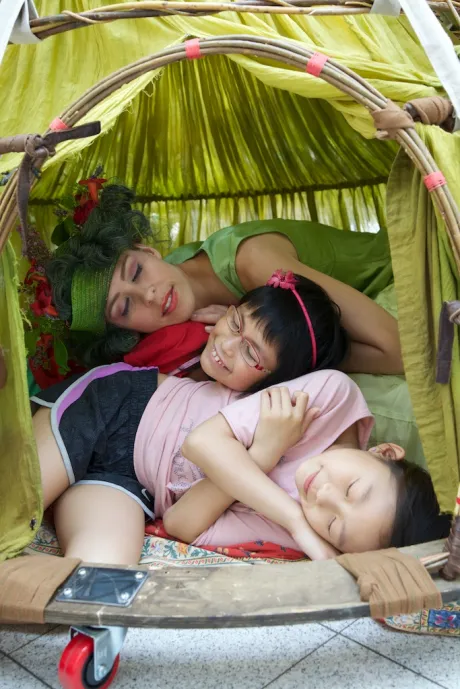
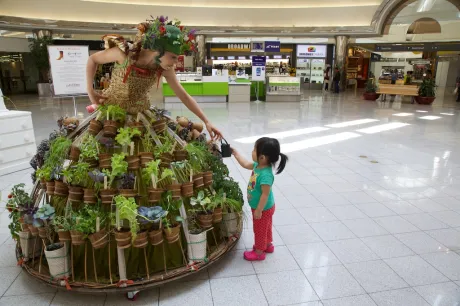
Left: "Big and small help water the dress' garden" 2013. Right: "the salad has been made and eaten and so Madame Jardin invite some of her new friends into her skirt/tent to tell stories and take a nap" 2013. Both images and captions courtesy of nicoledextras.com.
The Nomadik Harvest Dress is the second installment in the series, featuring external pockets for holding and foraging local vegetables, indigenous herbs, and medicinal plants that can be used to make soup. The dress doubles as a yurt for shelter, with ample space for the wearer to rest or set up camp, in true nomadic fashion.
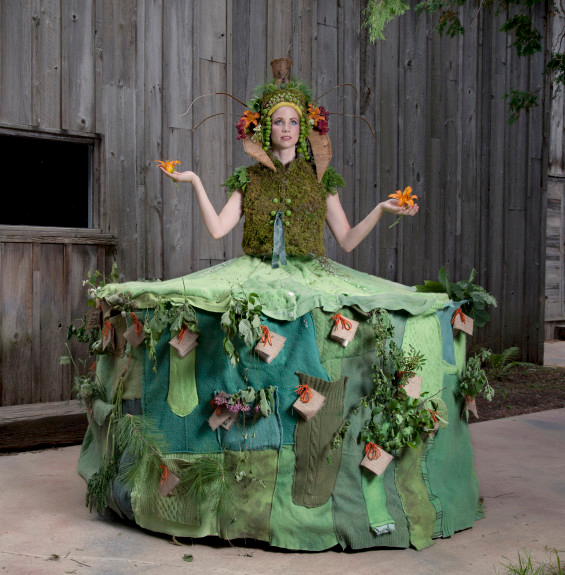
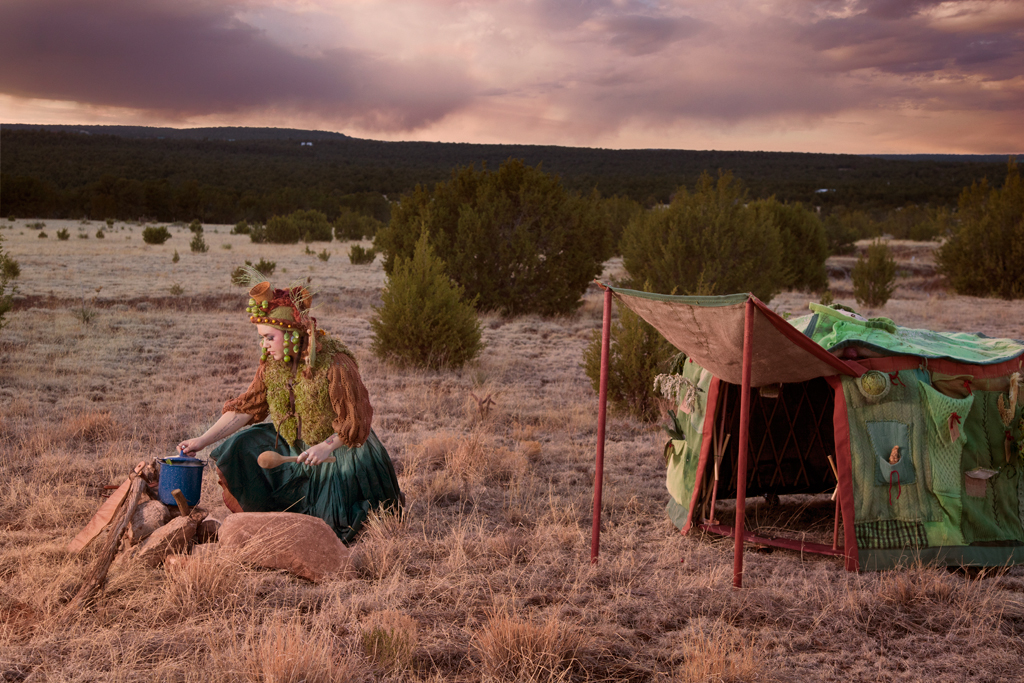
Left image: Nomadik Harvest Dress by Nicole Dextras, 2013, on display at 516 ARTS. Image courtesy of Eva Avenue, on www.pyragraph.com. Right image: Nomadik Harvest Dress camping and foraging for local native plants in the New Mexico desert, 2013. Image courtesy of nicoledextras.com.
The third and final limb of the series is the Traveling SeedBomb dress, developed at California State University during Dextras’ art residency in 2013. The shape of this dress was inspired by her love for pinecones and how they circulate seeds. It has cone-shaped pockets for seed-bombs, which are small balls made of seeds, earth, and clay to make them easy to carry and plant. These can be reached for and scattered by the wearer of the dress to propagate native plant species when they move from place to place. The dress is held together with hinged cedar pieces that, when extended, turn it into a teepee.
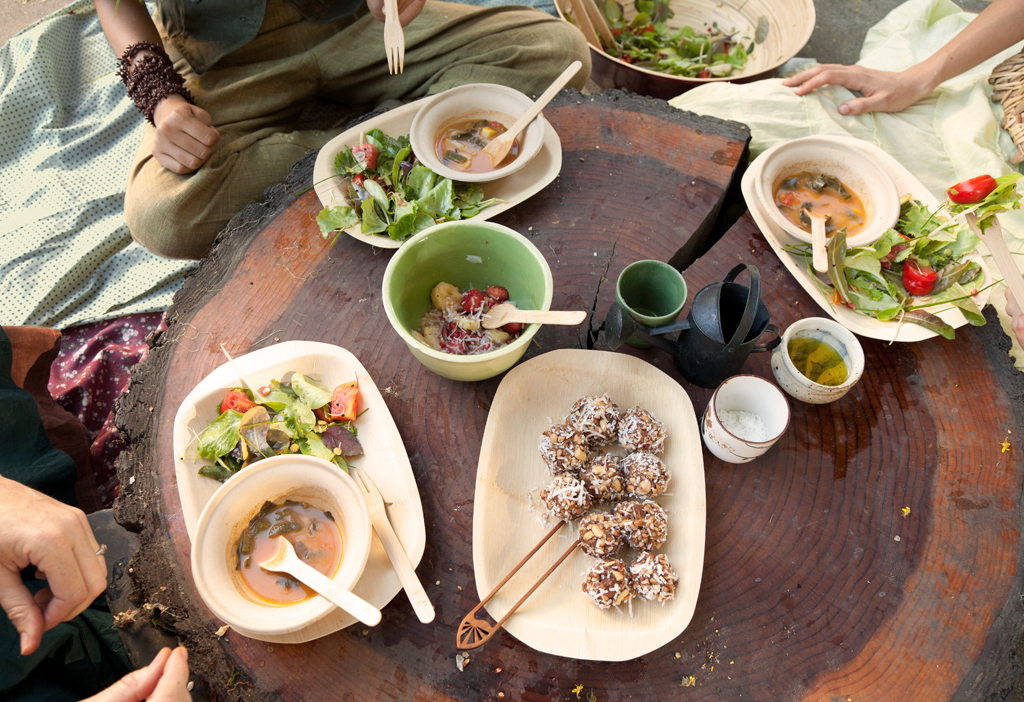
This dress also has a designated space for growing sprouts. When combined with the foraged seeds, they can be prepared into healthy snacks for consumption. This process takes place towards the end of the live exhibit, when all three performers come together to prepare a nutritious communal meal using the vegetables, seeds, herbs, and other resources they are carrying.
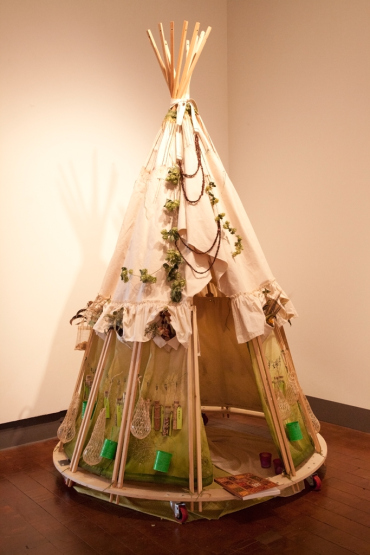
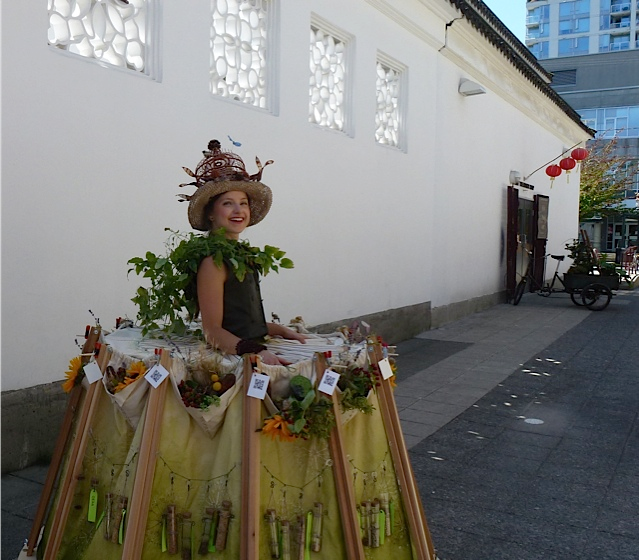
Left image: SeedBomb Teepee by Nicole Dextras, 2013. Image courtesy of nicoledextras.com. Right image: Traveling SeedBomb Dress at Vancouver's' Chinatown Festival. Image courtesy of artislandnetwork.com
The three pieces transcend the idea of a dress to become an ecosystem: garment, garden, and shelter. The wearer experiences a complete sense of self-sufficiency. But this sufficiency is made stronger because of the collective quality of the series. As a performance, the piece reaches its pinnacle when the foragers come together to camp and cook a meal that feeds not only them but also the community. In previous iterations, the performers invited the audience into the experience by sharing shelter and freshly made food with them.
In an article titled “the culture of materials: botanical wearables”, Dextras talks about how this collection is set in a world where the “slow erosion of natural resources plus the crippling effect of economic breakdowns have caused the [fashion] industry to collapse beneath the weight of its own greed.” However, her interpretation of “sustainability” is multifaceted and moves beyond consumption. It urges us to investigate the sustainability of our way of life altogether.
The series asks if our part in creation and consumption today can be treated as sustainable if it leads us to a future where resources are scarce. Dextras does this by using elements that contrast with daily living today. These include shelter designs from collectivist cultures like the yurt from Central Asia and the teepee native to Indigenous peoples of the Great Plains. She also incorporates the ritual of communal eating, which is mostly missing from our daily routines, especially in North America.
In a video commissioned for the Ego Eco exhibition at the Begovich Gallery in Fullerton, California, Dextras describes a more sustainable way of life as “one that allows us to grow but also encourages us to take our time and create meaningful connections.” While a sustainable life is not a singular or uncomplicated thing, Urban Foragers asks us to look at existing structures of life and the future we’re heading for. Even thirteen years after this collection was created, the question remains alarmingly relevant.
Dextras’ vision is at its most evocative when she expresses the fleeting nature of time, a thought that lies at the heart of this collection. We’re nudged to think about how we spend our time, who we spend it with, and to take care of one another through food and community. While these acts of care may not be a complete answer to the question of sustainability, they definitely have the seeds for the beginning of one.