
Goodoh—the artistic moniker of Balinese creator I Made Arya Wiguna—uses digital collage to build bridges between the island’s sacred mythology, ancient folklore, and contemporary indie subcultures. Through his distinct visual language, Goodoh marries traditional Hindu icons and folk beast lore with surrealist pop elements, modern skateboard graphics, and local indie rock. This synthesis keeps centuries-old cultural narratives alive and resonating with today's audiences, demonstrating how classic forms naturally evolve alongside modern life. This is why his works are aligned with the United Nations Sustainable Development Goal of Reduced Inequalities.
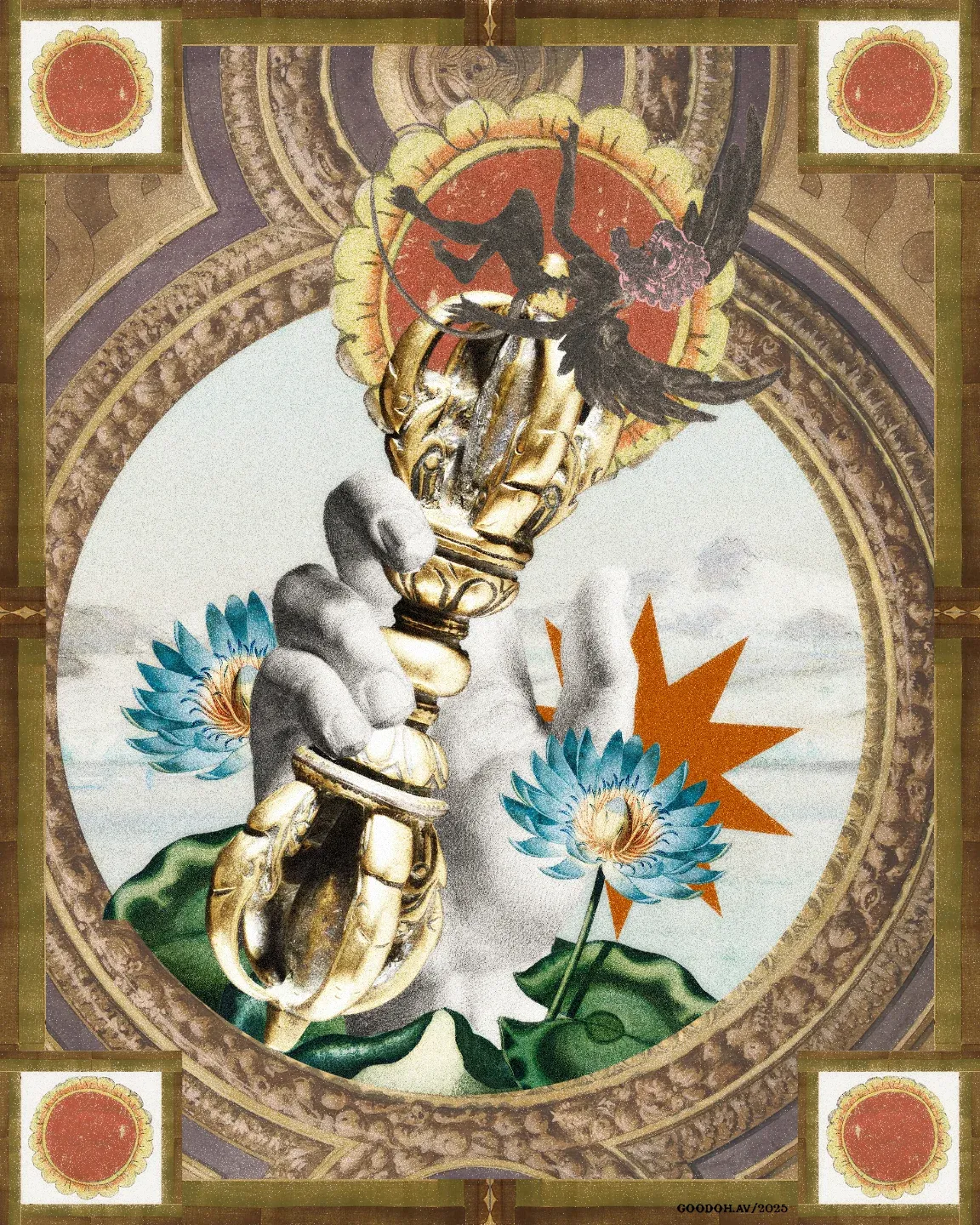
To fully appreciate Goodoh's digital medium, it is essential to trace the history of collage itself as a tool for artistic reinterpretation. Collage is a relatively recent invention, barely a century old, and is widely credited to cubist Georges Braque, who created the first papier collé (glued paper) in 1912 by pasting wood-grain paper onto large charcoal sketches. The technique was also championed as a playful creative process by surrealist painters in 1938 via the exquisite corpse game, where artists composed a picture collaboratively without seeing what others had added. Following Pablo Picasso’s early experiments with everyday materials like rope and newspapers, collage became a staple of Pop Art in the second half of the 20th century. Artists like Robert Rauschenberg incorporated discarded objects found on the streets of New York, blending mass culture directly with fine art. Today, the technique lives on vigorously in the digital realm, allowing contemporary creators to seamlessly blend retro images, geometric art, and surreal landscapes with hypnotic new meanings.
Goodoh’s digital collages are deeply contextualized within Bali’s long, recorded tradition of artistic adaptation. Historically, Balinese art was heavily devotional, created for the gods and rooted in temple sculpture. However, during the 1920s and 1930s, European artist-patrons like Rudolf Bonnet and Walter Spies helped shift local focus from purely religious themes to everyday subjects, illustrating that Balinese art constantly adapts to remain relevant to modern life. Balinese artists often tap into a unique concept called taksu—a charismatic spirit energy—that empowers them to transcend classical dictates and explore highly abstract or conceptual forms. Goodoh channels this exact energy, using a modern medium to ensure local art is viewed as a dynamic discourse on identity rather than purely tourist-centric pastiche.
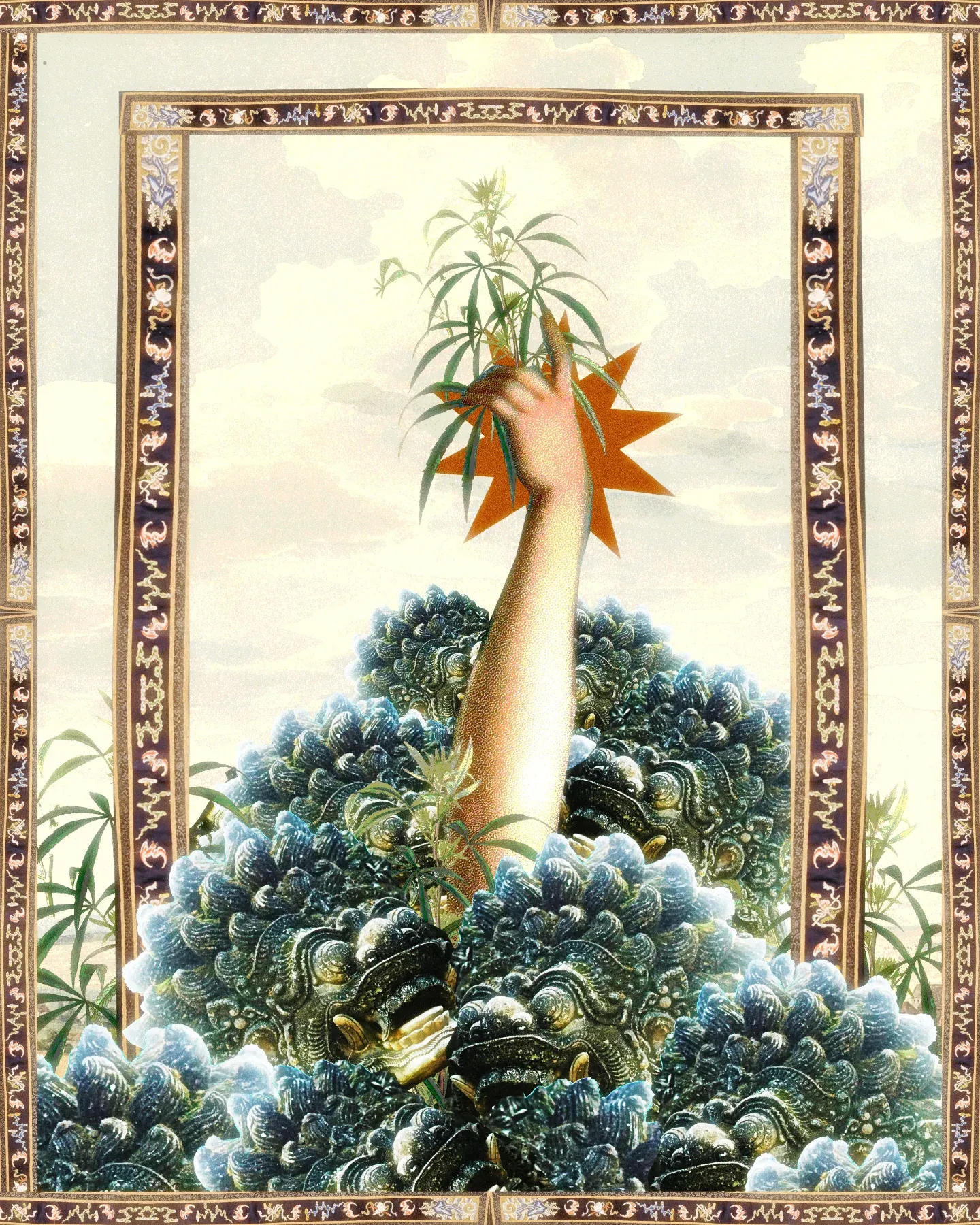
Goodoh explores complex mythological concepts by blending them with the energetic aesthetics of contemporary indie rock and skate culture. In one notable digital collage from November 2025, Goodoh explores the holiday narrative of Galungan by depicting the defeat of Mayadenawa—a representation of adharma (evil)—by Dewa Indra, who represents dharma (good). Another piece, created in October 2025, illustrates the myth of Garunga and Lelinga, half-siblings born to a snake and bird father, who are united by their mother but are destined never to get along. This work is directly paired with the song "Nothing Grand, Nothing Fun" by the local music act Leipzig.
Further cementing his ties to modern music subcultures, Goodoh released a printed digital collage in January 2026 inspired by the track "Rock Stoned," the closing song from Iron Head's album FUNDAMENTAL. His unique aesthetics can be closely observed through his featured archive works, including his Galungan Visual Series and Mythological Folk Collages, which incorporate surrealist pop integrations with intricate visual layers.
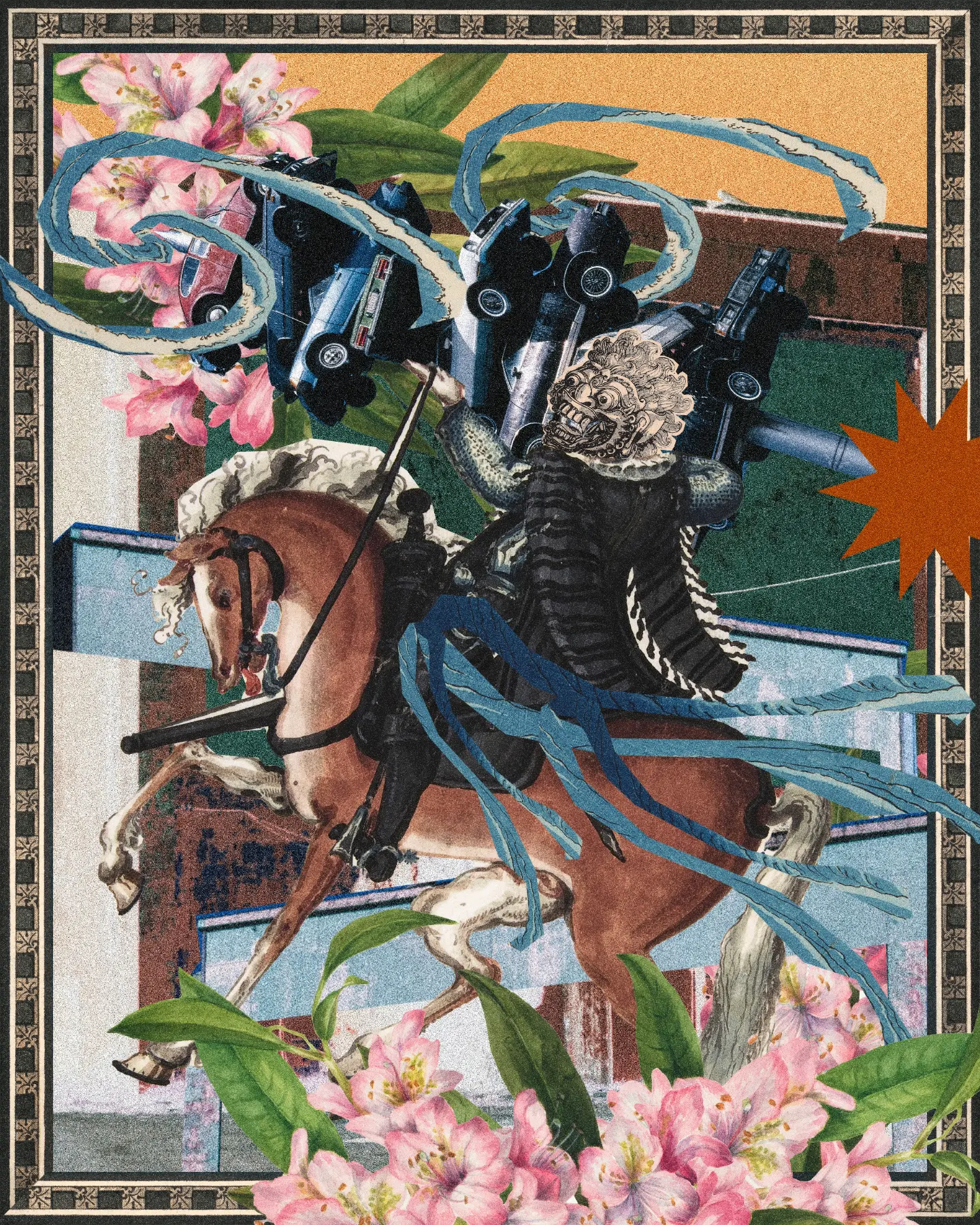
Goodoh's innovative approach to digital collage actively addresses global sustainability targets by keeping heritage relevant and supporting local creative economies. By contextualizing ancient stories like the defeat of Mayadenawa and intricate folk beast lore within modern visual frameworks, Goodoh safeguards Bali's rich traditions for future generations. Furthermore, through his extensive commercial portfolio—which includes custom digital artworks, printed materials, skateboard decks for Santai Skate Shop and music video assets for acts like Poker Mustache and White Swan—Goodoh actively drives local creative art economies.