
Anaïs Mitchell’s Hadestown: The Musical lived many lives before the original cast got together to record its most recent film-capture, released in July 2026.
The show had humble beginnings as a community theatre project in Vermont in 2006, and then eventually a concept album in 2010. Today, it’s one of the most well-loved and successful Broadway productions in the world, having won eight Tony awards in 2019, including Best Musical. The film-capture is a wonderful, democratic format for audiences that can’t make it to the live Broadway shows. It preserves the original on-stage essence of the show without compromising on quality.
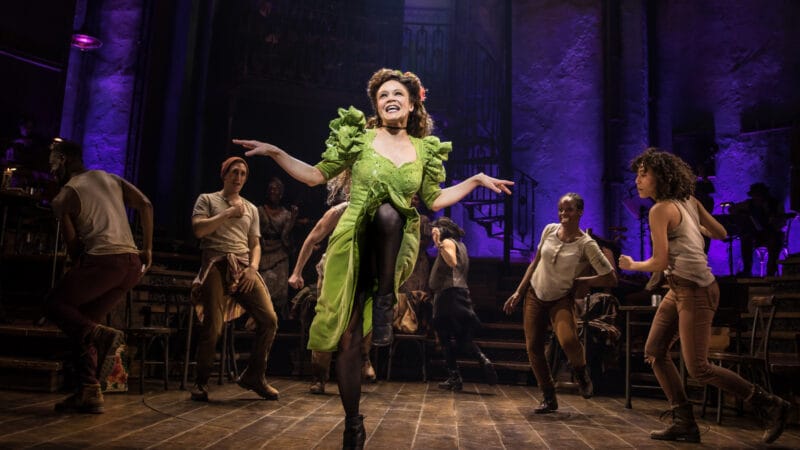
Hadestown is a rich and inventive retelling of the Greek myth of Orpheus and Eurydice. It’s set against the backdrop of a 1920s New Orleans-inspired mansion, interspersed with the alternative factory-workhouse of Hadestown, the realm of Hades, a shorthand for hell. At its core, it is a story led by fate-defying love. But it also exemplarily uses the conditions of this fictional town and the tendencies of the gods (specifically Hades and Persephone) to comment on the larger systems that govern us. These themes include the gap between the rich and poor, our ecological reality, as well as the mental and physical prison of late-stage capitalism that entrap us. For these reasons, the show is relevant to the United Nations Sustainable Development Goals of Reduced Inequalities, Climate Action, and Life on Land.
Naive, sensitive, sweet Orpheus, son of a Muse and a struggling songwriter and artist, meets world-worn Eurydice, hardened by struggle and nearly impervious to love. Their chance encounter blossoms into a romance. But how does anything, especially something as fragile as romance, survive in a world that’s dying?
Narrated by the god Hermes, their story runs parallelly to the strained romantic dynamic between Perspehone and Hades. To bring spring, light, warmth, and joy to the world, Persephone spends six months away from Hades, on earth and above ground. Hades, who runs a dark, tight ship down in Hadestown, feels anxious in his distance from his beloved. He arrives earlier than planned to bring her back from earth, and in the process disrupts the cycle of the seasons.
As a result, the world is in chaos. The winters are colder than they ever have been, the sweltering summers are unbearable. Poverty abounds, everyone scrambles for scraps to eat. Persephone questions the imbalance, but Hades, mistaking power for love, continues to industrialise his realm despite the consequences. In the song “Chant” (the eerie refrain of the song being “Keep your head, keep your head low”), he even reframes his callous efforts as something he’s doing for her benefit, because he was lonesome and grieving her absence.
Orpheus, having won Eurydice’s heart and trust, commits himself to the work of finishing a song he believes will bring spring back. While he is distracted, Eurydice, hungry, and afraid of the future, gets manipulated and taken to the underworld by a conniving and jilted Hades, who promises her food, shelter, and warmth. When Orpheus finds out Eurydice is in Hadestown, he embarks on the dangerous quest to bring her back. And so follows the tragic story.
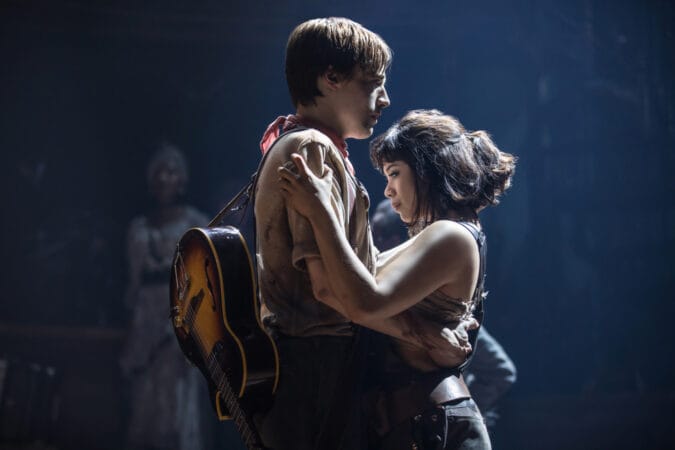
The tension and affection between the two main characters is palpable. Orpheus, played by a charming Reeve Carney, represents light, idealism, and the hope of a better tomorrow. Eva Noblezada’s formidable and industrious Eurydice, on the other hand, embodies the harsh reality of the world; the scarcity, the hunger, the endless injustice. While Eurydice knew the world as it was, “Orpheus,” André De Shields sings as Hermes, “had a gift to give/He could make you see how the world could be.”
The American-folk-first and New Orleans jazz inspired soundtrack has been applauded for its catchy music, its addictive sing-along quality, and timeless fusion. What shines the most, however, is its tight narrative cohesion. Despite the patchwork quality of the play, and several themes running together, we never lose sight of the story. In fact, it all comes around like a circle. The refrain of “It’s an old song, it’s a sad song, and we’re going to sing it again” brings together this cyclical imagery. Orpheus and Eurydice are meant to meet, they’re meant to lose each other, and one is meant to quest for the other. This pattern of orbiting-back also shows up in the cycle of the seasons, and Hades and Persephone’s estrangement and finding love for each other again. The set also features a revolving stage, mirroring the cyclic motions of love, loss, power, climate, and quest.
Outside of the climate crisis, the musical most notably comments on capitalism, and urges the audience to think about their own enslavement to the system. Anyone who enters Hadestown is promised comforts of the flesh. In exchange, they give up their bodies and who they are. The song “Why We Build the Wall” sung by Patrick Page as Hades, is jarringly honest in its lyricism, making plain the idea that we’re all in the business of building walls to keep our “enemy” poverty away, but we’re eventually only serving overlords who benefit from our labour.
Anyone familiar with the story of Orpheus and Eurydice knows how the musical will end, and the narrative makes no secret of the pin-drop moment when the inevitable happens. But it is the journey to hell and back that makes Hadestown such a rich emotional experience. Above all, the musical illustrates that love can make you question things, and that everything we do—the art we create, the relationships we enter into, the community we build—is never independent of the larger systems in place. One informs the other, and despite the darkness, there is always value and dignity in our fight for a better future.