
Every downtown skyline tells a story about who a city thinks it is. In Ottawa this week, that story is getting rewritten after dark. From September 24 to 27, Kitigan Zibi Anishinaabeg artist and writer Jay Odjick transforms two of downtown's most prominent buildings into an open-air canvas: the Ottawa Art Gallery's Cube façade for Odāwā Yesterday: Odāwā Chìnàgo, and the National Arts Centre's Kipnes Lantern for its companion piece, Odāwā Tomorrow: Odāwā Wàbang. Together, the two projections carry Ottawa's bicentennial back further than 200 years, and forward past it too.
The pairing speaks directly to two United Nations Sustainable Development Goals: Sustainable Cities and Communities and Reduced Inequalities. Both projections are free and visible from the street, turning civic architecture people usually just walk past into open-air gallery space, which is what the first goal asks of urban public space. Moreover, placing an Algonquin artist's account of "since time immemorial" presence directly onto the city's own bicentennial programming, rather than beside it, pushes Indigenous history into the centre of a civic narrative that could easily have started the clock at 1826, addressing the second goal's call to elevate underrepresented voices in mainstream institutional storytelling.

Odjick, who is also known for illustrating two books by Robert Munsch, producing the Kagagi television series, and publishing his 2026 graphic novel Kaboom! Volume 1: Blast Off with Scholastic, said in a statement shared with Arts Help that the commission means something personal to him. “Ottawa’s greatest strength and resource is its PEOPLE,” he said, adding that he hopes people “from every nationality, religion, every walk of life coming together” will carry the city through its next 200 years.
The two projects were built to be read together. Odāwā Yesterday, according to the Ottawa Art Gallery, begins with Turtle Island and follows waterways as pathways of movement, trade, and connection, tracing how people travelled to and through the region long before it had a municipal name. Odāwā Tomorrow picks up where that history leaves off. According to the National Arts Centre, that piece uses seeds, reciprocity and the responsibility of caring for land and for each other. Both draw on the Woodland school of art and the visual rhythm of comic books, making Odjick’s artistic background explicit.
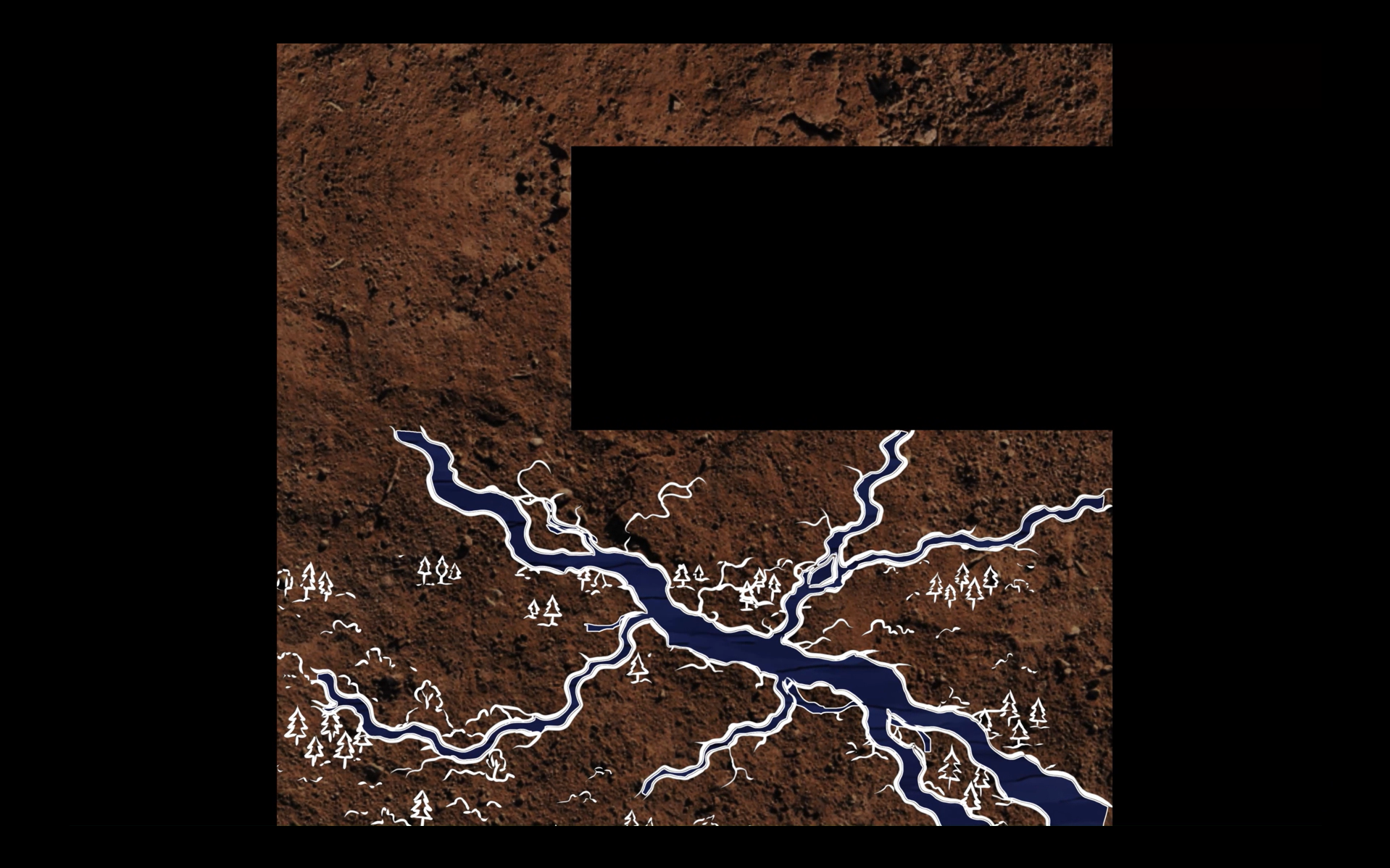
By translating traditional Anishinaabeg motifs into dynamic digital animation, Odjick bridges ancestral storytelling with high-tech urban design. High-powered digital projectors beam vivid, fluid linework onto raw concrete and glass facades, turning cold architectural landmarks into living, breathing canvases.
The animation for Odāwā Yesterday is custom-mapped directly to the architecture of the OAG Cube, formatted around the building’s distinct geometry and window cut-outs so the artwork flows seamlessly across the structure each evening. The resulting spectacle offers evening commuters, pedestrians, and gallery visitors an unscripted moment of reflection. Placing these giant visual narratives along major downtown transit routes ensures that the city’s complex, layered heritage is experienced organically during ordinary daily routines.
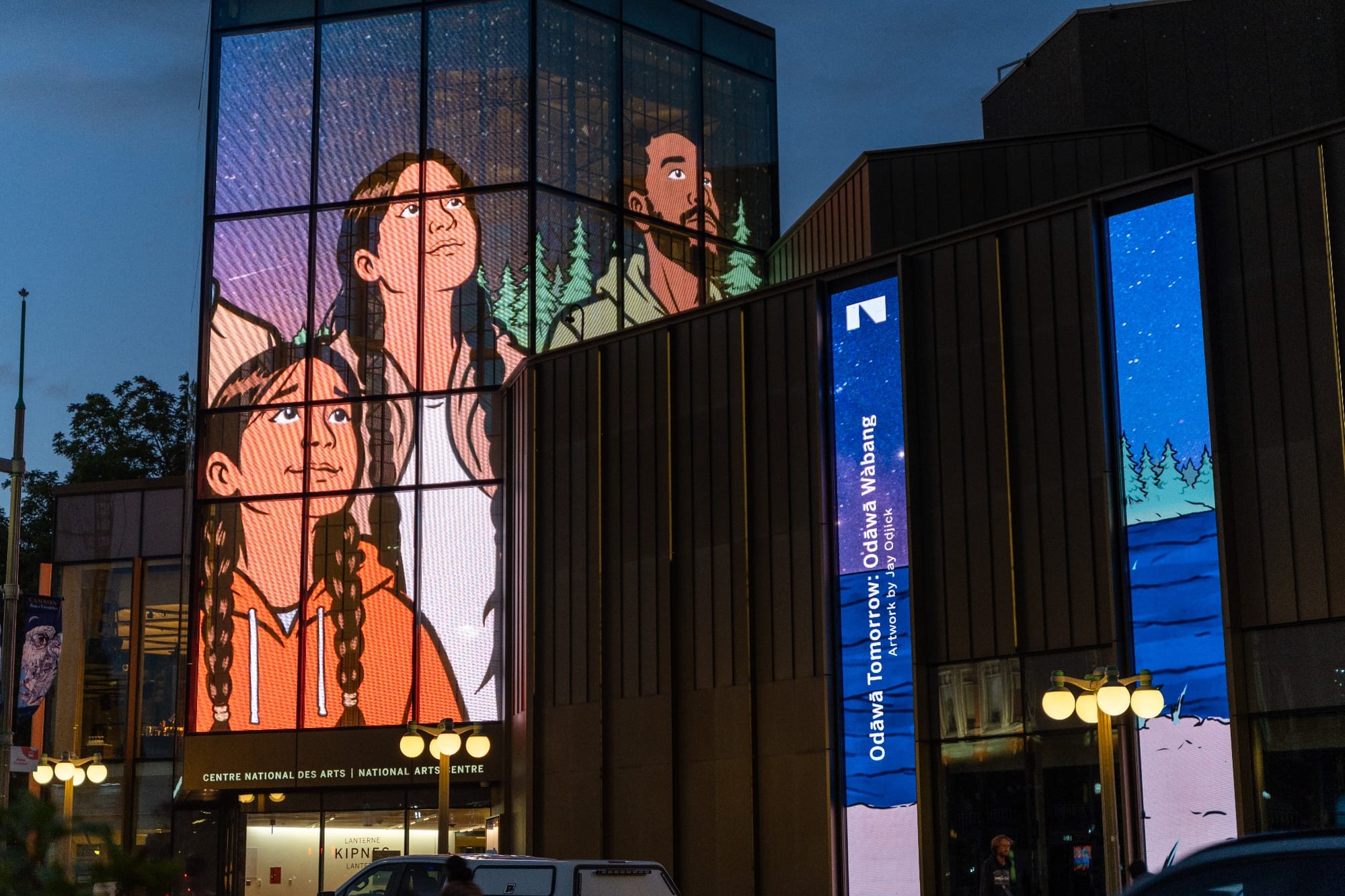
OAG Director and CEO Alexandra Badzak said the placement of the work is the point as much as the work itself. “The story of this place extends far beyond 200 years,” she said in a joint news release from the NAC and OAG, framing the commission as an invitation to consider how the city moves forward from here.
That invitation is not a new position for Odjick. In a 2018 interview with ARTSFILE, when the City of Ottawa was actively seeking more Indigenous work for its public art collection, he pushed back on the idea that Indigenous artists were hard to find. “We’re still out here; we’re dynamic; we’re vibrant,” he said, adding that recognition gives Indigenous creators a chance to share a culture that predates the city itself. Eight years later, that same argument is now projected forty feet high onto two of Ottawa’s most visible cultural institutions.
Anyone downtown after dark this week can see both works without a ticket, a program, or planning, just by looking up.
Odāwā Yesterday: Odāwā Chìnàgo is presented on the Ottawa Art Gallery's cube façade, and Odāwā Tomorrow: Odāwā Wàbang on the National Arts Centre's Kipnes Lantern, both visible after sunset from September 24 to 27, 2026. Both are free.