
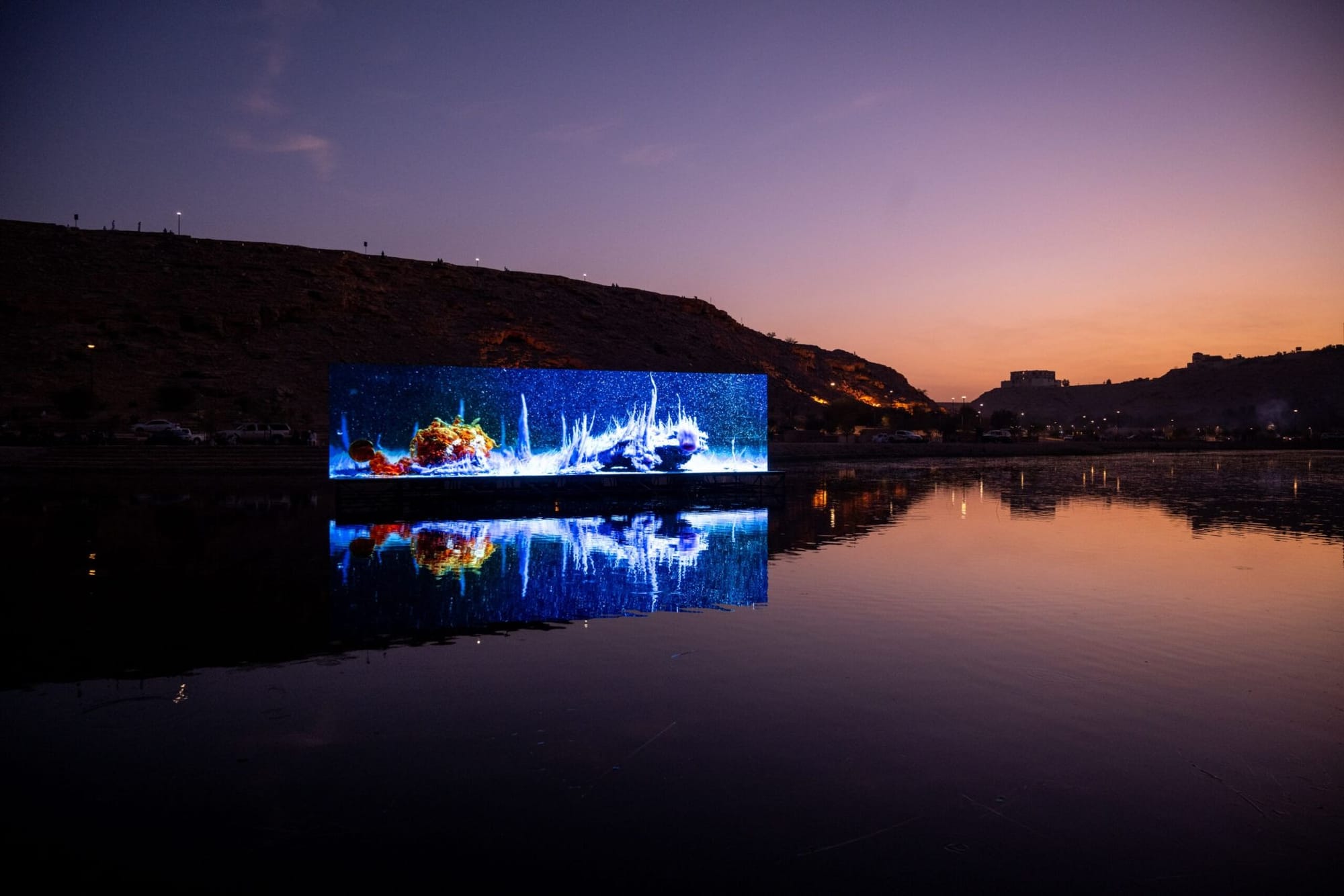
"And as a single leaf turns not yellow but with the silent knowledge of the whole tree," writes Khalil Gibran, in his poetic work The Prophet.
Looking at the world around us, everything is secretly talking to everything else. A single raindrop changes the temperature of a stone, a breath of wind carries a seed across an entire city, and a small chemical reaction can look like a microscopic universe being born. We love to put things into separate boxes. We call one thing "science," another thing "art," and another "nature." But deep down, we know these boundaries are mostly imaginary. Real life is a continuous, beautiful tangle of cause and effect, where nothing exists entirely on its own.
It is common to want to control everything and plan out every detail of our lives. But we miss out on true wonder when we do this. We open our eyes to what is right in front of us by accepting some unpredictability. Listening to these quiet moments shows us that poetry and beauty exist in unexpected places, from a simple test tube to a wild weed growing through concrete. Hicham Berrada steps into this fluid space with the curiosity of a researcher and the heart of a storyteller. Artworks become temporary events rather than permanent possessions under his unique philosophy. Wisdom lies in remembering the story of how a piece forms rather than hoarding the physical object, an attitude that honours the natural cycles demonstrated by the United Nations’ Sustainable Development Goal of Life on Land. We are privileged to welcome him to showcase his brilliant artwork.
Amr: Many profiles introduce you by balancing the words 'artist' and 'alchemist.' If we stripped away all institutional labels, how do you define your role when you walk into your workspace every morning?
Hicham: Immersion. Surprise. Science is what helps us be aware of what's happening in certain spaces. I mainly use science as a behavior or attitude. I don't like to rely on big machines or systems.
Amr: Was there a specific moment in your youth in Casablanca, like a specific rock formation, a wave, or a storm, where you realized nature wasn’t just a background but a living canvas?
Hicham: Casablanca is a city that is growing extremely quick, and there are no real rules in terms of architecture of how it is developed. If you see the city as a living thing, then as a child, I made peace with plants that I often found. Casablanca's memories of me as a child had the most impactful inspiration on me.
Amr: Your practice requires an incredible amount of intellectual humility. How did you develop the confidence required to let go of the creator’s ego so completely?
Hicham: I like to have minerals or plants in my workplace, but not my artwork. The artwork is just something that I can cherish, but it doesn't have to be around me. Not the process itself is important to me.
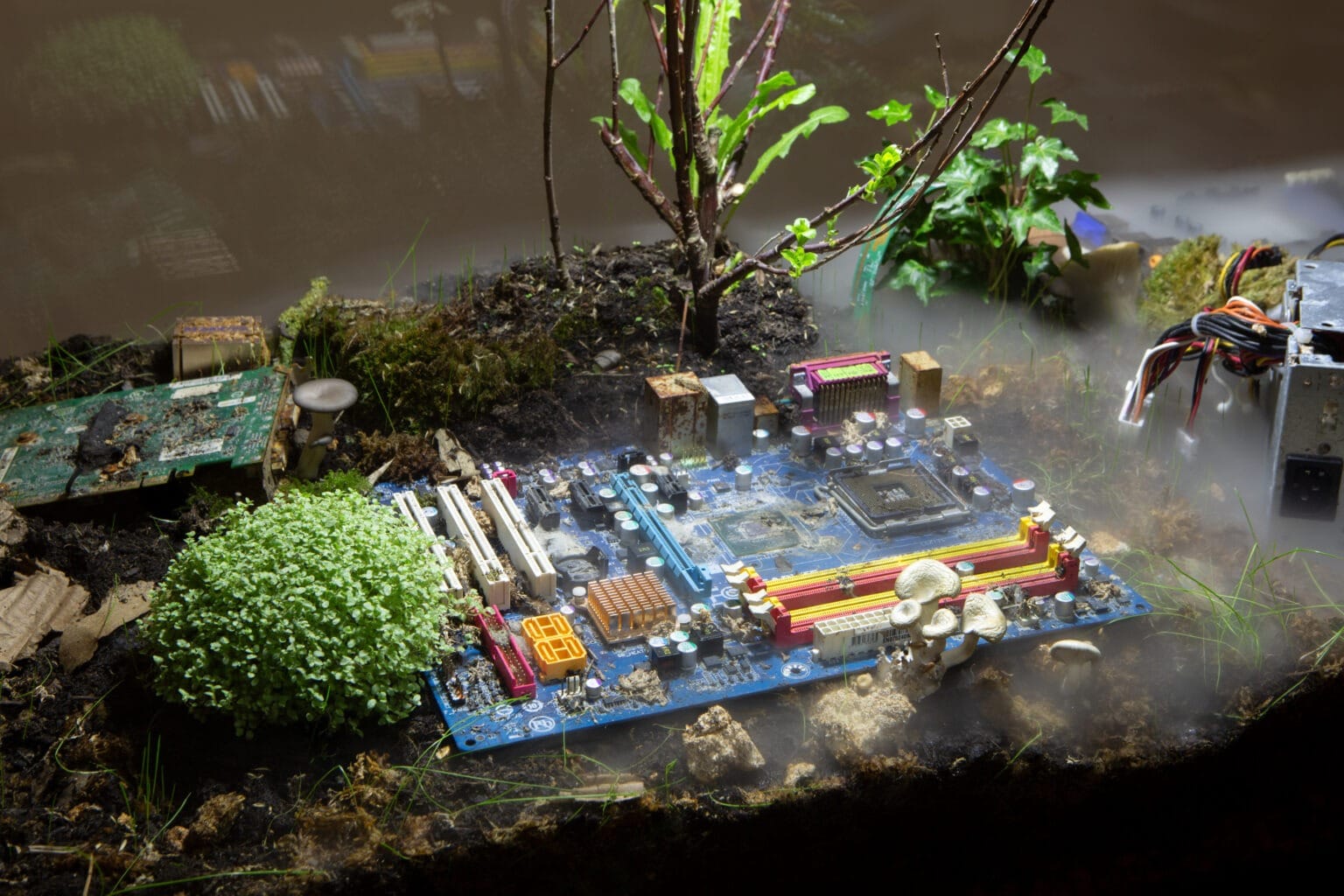
Amr: Was it difficult for you to hand over your work to a machine, like in Le Jardin des Mutations?
Hicham: It was my first time working with AI. Training AI is the most fascinating part for me. Since I began doing images on my computer, it has evolved much since back then. Training AI was the most important part for me in this project. I treat AI as a plant that needs water or potassium. I have my own system.
Amr: If someone walks into your studio blindfolded, what is the exact sensory landscape that tells them they are in your space?
Hicham: For me it is part of the process, and I find that the pieces themselves can take different forms, so it may not be always easy to detect it, but what links them is the kind of protocol.
Amr: What is your relationship with morphogenesis, and how has it influenced your work?
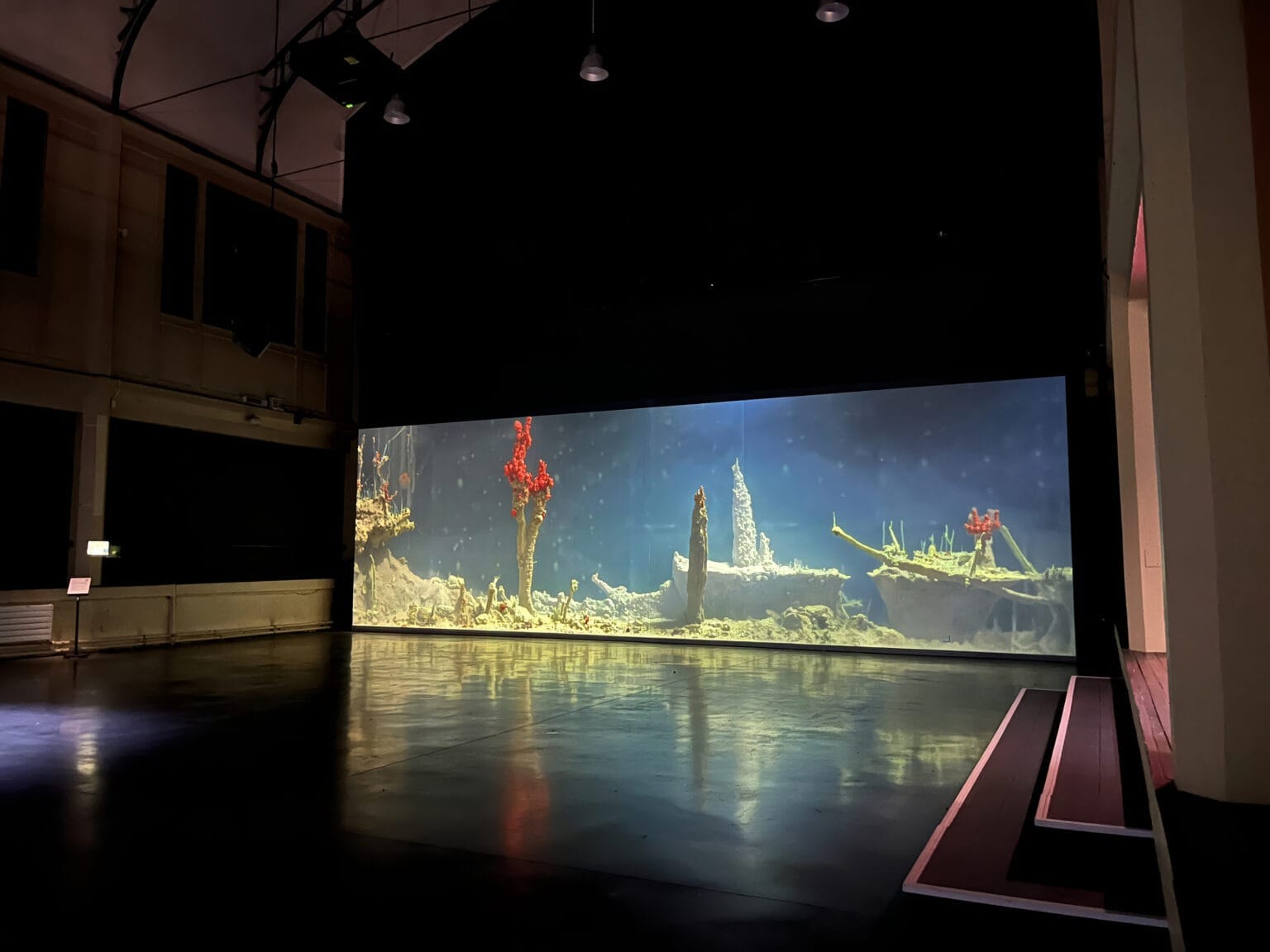
Hicham: It's a very high level of mathematics, and I am not a mathematician. But I like to have a similar behavior and try to understand it. I was inspired by my conversations with Sylvain Courrech du Pont, who studied this deeply. That influence feeds into works like Mesk Ellil and my exploration of plant behaviors.
Amr: When you repeat rigid scientific protocols in your studio, does it ever feel like something else rather than an experiment?
Hicham: My work is inspired by different types of rituals by other humans. I wouldn't call it a ritual, but it is scientific-driven. It is highly experimental. Something we don't understand may seem like dark magic; it may be very cold. I like to have a balance between knowledge and strange or unfamiliar things and intuition.
Amr: Traditional painters physically touch their canvas. You are usually separated from yours by a layer of glass or a screen. Do you ever feel a deep, physical longing to actually touch the chemical reactions you create?
Hicham: I don't feel longing because I remember the story of how it's done. I don't have any obsession with it being around me. In Japan, there is lots of similar thinking; if you know how to make it again, you don't have to keep it.
Amr: You have been compared to an alchemist. Alchemists wanted to turn lead into gold; what is the ultimate, impossible transformation you are trying to achieve?
Hicham's Answer: I don't think I'd call myself an alchemist, but I like how they called me that. Trying to extract poetry from matter is what I aspire to achieve and what I find interesting. Having a piece of copper and being able to take poetry from it and extract it is more compelling to me.
Amr's Question: If a viewer leaves your exhibition feeling deeply unsettled rather than mesmerized, do you consider that a successful reaction?
Hicham's Answer: I like to leave the imaginative part entirely to them. The moment the process finishes and the artwork is done, it is no longer mine. I step back, and I leave the expression, the feeling, and the meaning completely in their hands.
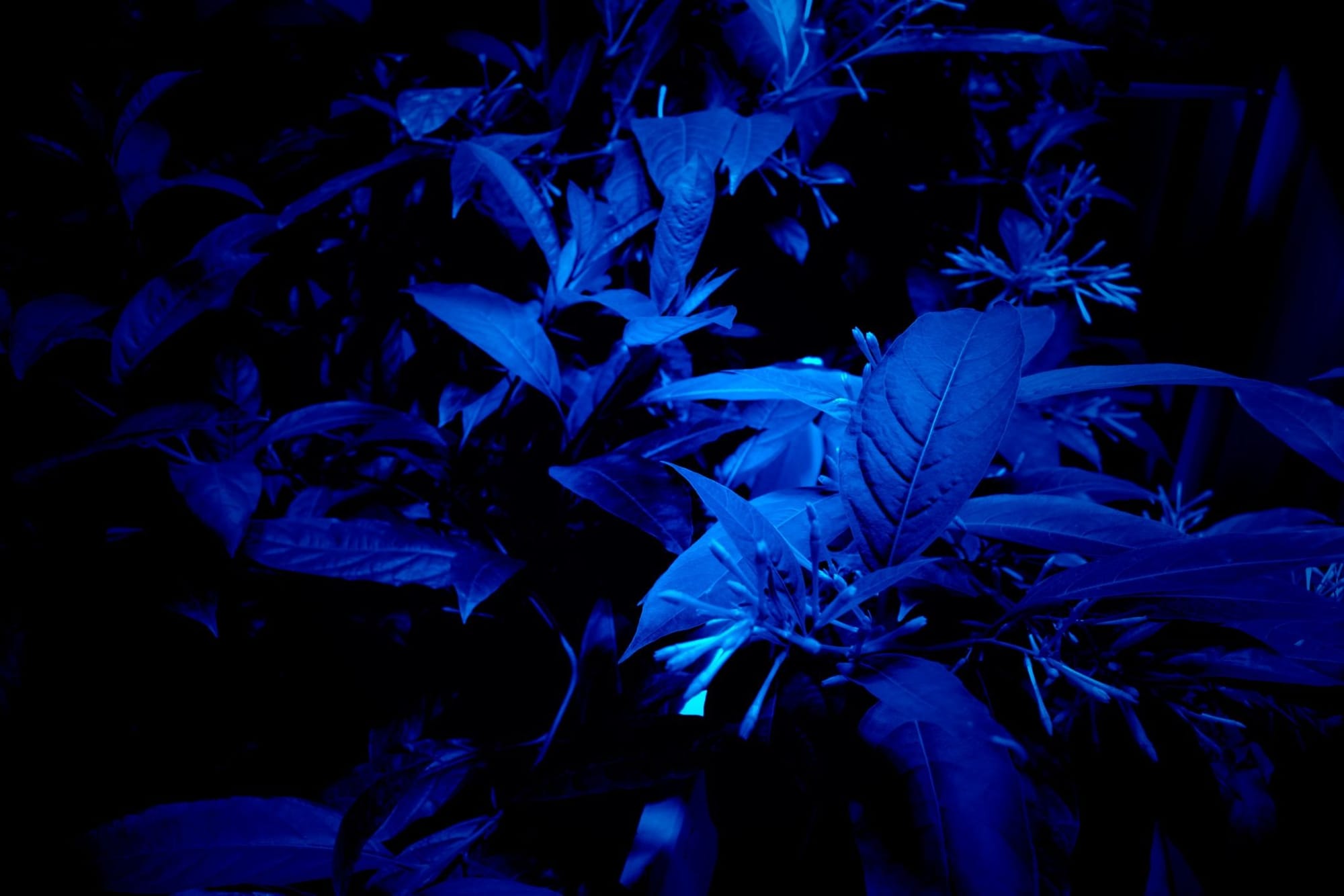
A brief look outside the safety of a traditional museum mindset allows us to see our environment for what it truly is: a shared, breathing playground where human control is merely a temporary illusion. Copper sheets and volatile mixtures do not need our permission to form gorgeous things, just as complex code does not have to remain a cold, unfeeling tool. Once we let go of our stubborn desire to own and trap every piece of beauty we cross, we achieve a completely fresh way of coexisting with the planet.
Generosity defines how Hicham Berrada opens a doorway for the person standing right in front of the glass. Art ceases to be a rigid lecture from a distant master, turning instead into an intimate, evolving conversation where your discomfort, your awe, and your confusion are entirely welcome. Every landscape he sets in motion reminds us that meaning is not something to be manufactured or bought, but rather something discovered together in the quiet spaces between knowledge and pure intuition.
A quiet stroll away from these living landscapes might leave you looking at the ordinary world a little bit differently. Perhaps you will notice the stubborn weeds cracking through the city pavement with a newfound sense of respect or view your digital devices as things to be nurtured rather than just used. True poetry is already hiding inside the raw matter all around us, simply waiting for us to slow down, release our grip, and let it bloom.