
In Woman Getting Tattooed, an 1888 woodblock print by Tsukioka Yoshitoshi now on display at the exhibition, a woman bites down on a towel as a needle marks her skin. Elsewhere in the show’s collection of the 18th- and 19th-century woodblock prints, a young boy clings to his mother’s bare back while she combs her hair, as a Globe and Mail review of the exhibition describes it. Neither print can be touched by a museum visitor, and yet both are built entirely to make a viewer feel as if something physical is happening on the page. Shokkan: Material Encounters in Japanese Art is built around that same principle and runs at the Royal Ontario Museum (ROM) in Toronto from April 4 through September 7, 2026.
There’s no clean English word for shokkan. Dr. Akiko Takesue, the ROM’s Bishop White Committee Associate Curator of Japanese Art & Culture, describes it as something bigger than the physical feeling of a hand on cloth or clay, the impression that touch leaves behind in the mind afterward, tangled up with what you’re seeing, hearing, and remembering at the same time. A woven kimono can trigger it. So can a rough-glazed tea bowl. So, oddly enough, can a printed image of someone else’s skin under a tattoo needle.
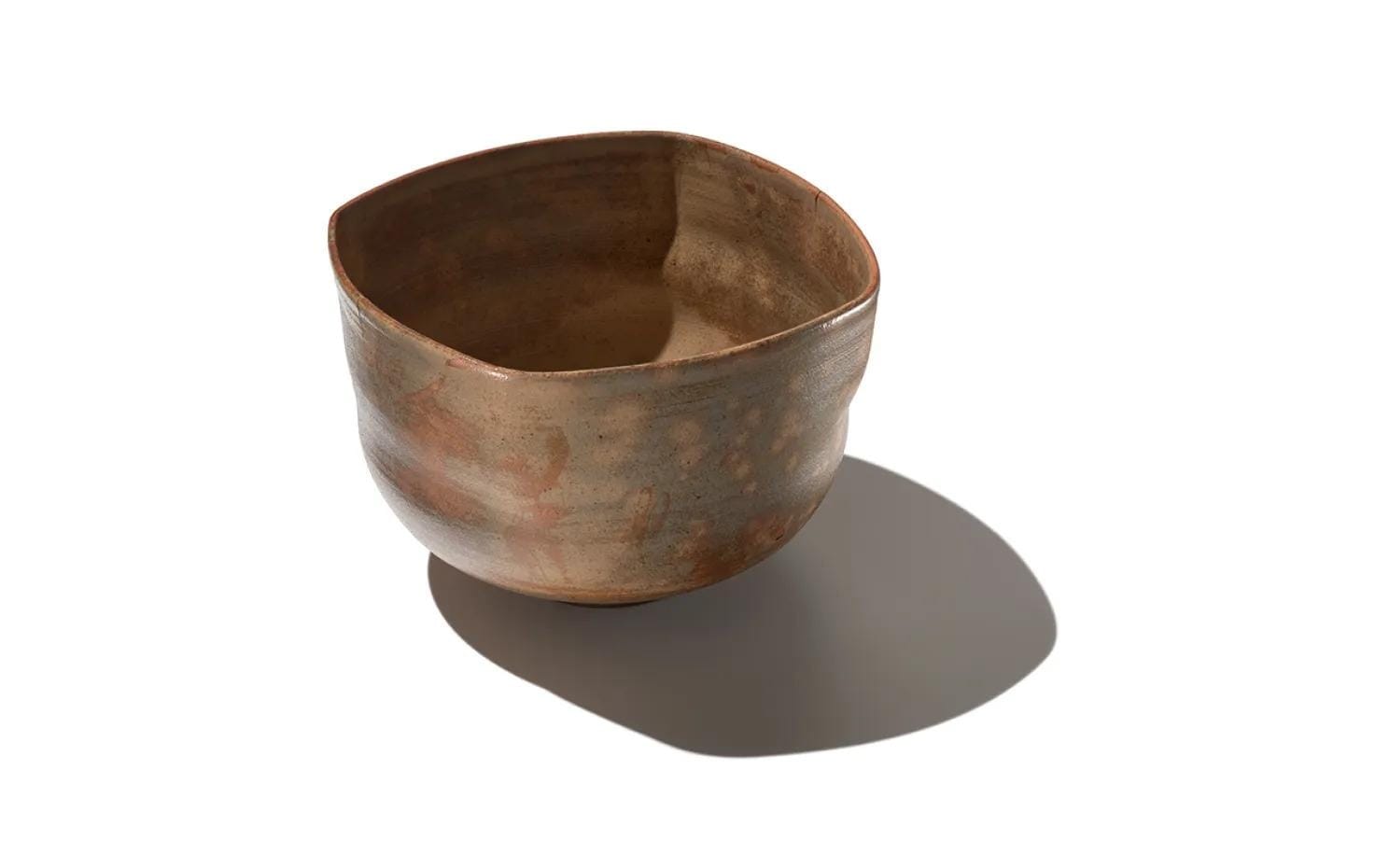
That framing speaks directly to two United Nations Sustainable Development Goals: Responsible Consumption and Production and Good Health and Well-being. The more than 80 objects on display, spanning textiles, lacquerware, ceramics, armour, and contemporary craft, were mostly built by hand, using slow, deliberate processing of natural materials rather than mass production, a working counterpoint to disposable consumer goods and the kind of durable, resource-conscious making the first goal points toward. And by asking visitors to slow down and actually notice texture, grain, and weight instead of moving past a display case, the exhibition builds a moment of sensory attention into an ordinary museum visit, the kind of grounding experience the second goal has in mind for fast-paced urban life.
Unusually for a museum show, visitors are not permitted to touch things, but they’re asked to. Six interactive stations built into the gallery let people wrap a furoshiki cloth by hand, feel the layered texture of a samurai sword handle, and run their fingers over woven kimono silk, trace the tiny carved details of a handheld netsuke sculpture, unroll a painted hand scroll, and touch the grainy surface of contemporary Shigaraki pottery. Pop-up activations throughout the run go further still, letting visitors try on an actual kimono or hold a matcha tea bowl themselves.
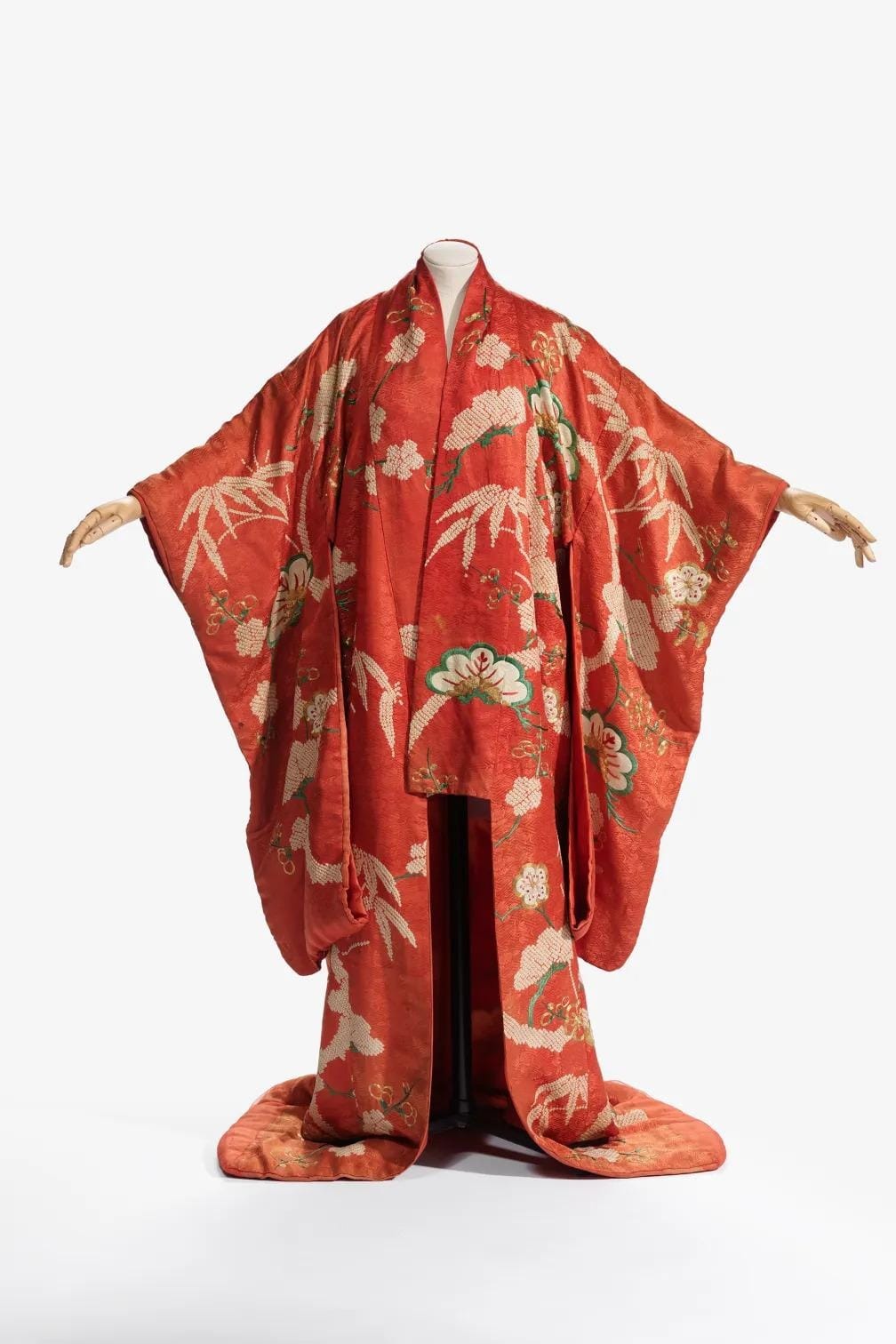
The exhibition also leans into comparisons across centuries to make its point about durability and craft. An 18th-century red silk kimono is displayed alongside a contemporary pleated dress by designer Issey Miyake. A 400-year-old gilded folding screen sits near a contemporary screen painting. A delicately potted 17th-century tea bowl by master potter Nonomura Ninsei is placed next to a rougher, boldly textured 20th-century vessel by Omine Jissei. None of these pairings argues that older is better or newer is worse. They argue that thoughtful, tactile craftsmanship has always coexisted across eras and that mass-produced disposability is the real historical outlier.
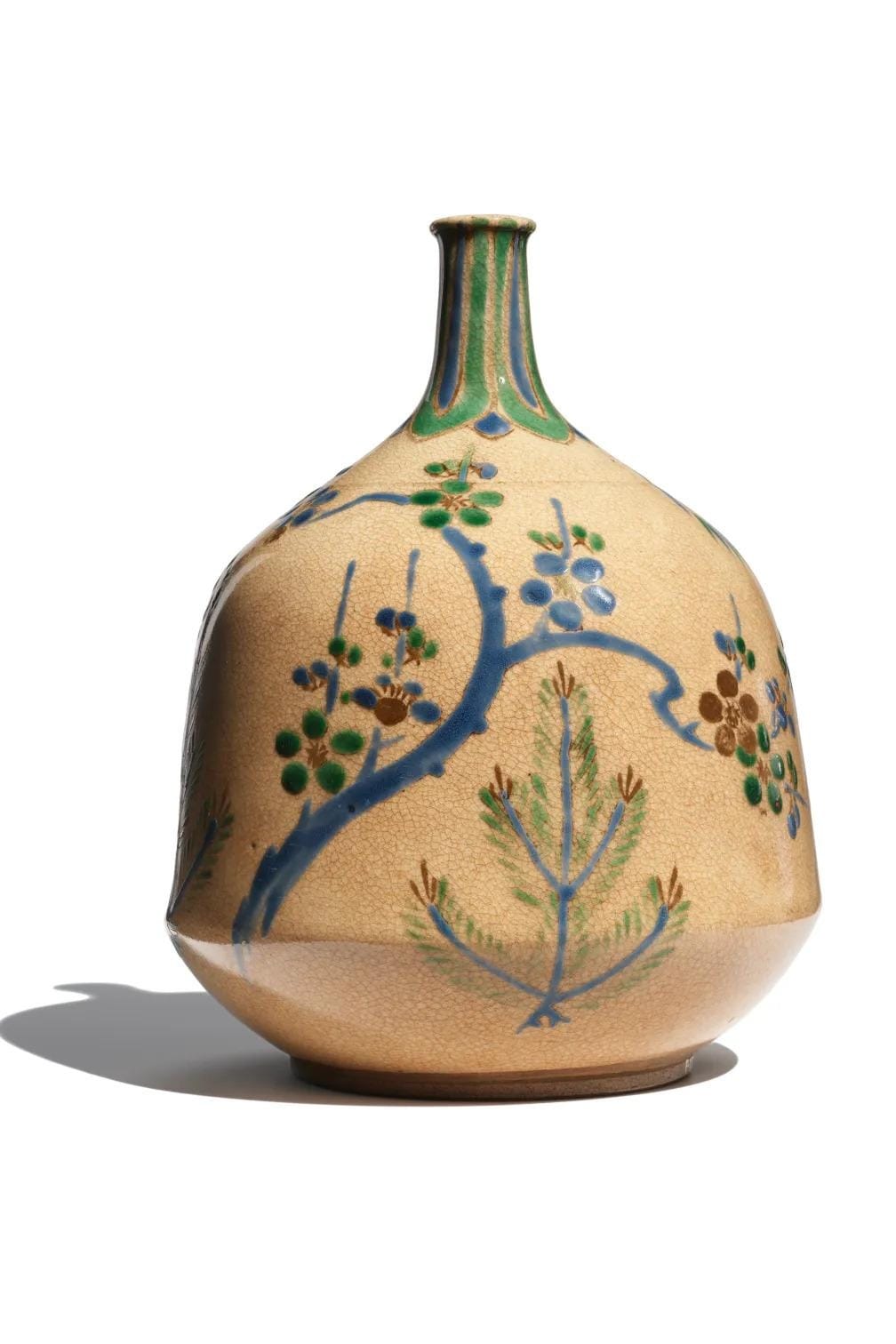
Jennifer Wild, the ROM’s Interim Co-Director and CEO, said the show fits naturally into the museum’s broader mandate. “Traversing eras and mediums, Shokkan’s multidisciplinary approach makes it right at home at ROM,” she said in the museum’s official announcement.
Most museums train visitors to keep their hands at their sides. Shokkan deliberately breaks that habit, at least for a few rooms. Somewhere in your own home sits an object that was made to be felt as carefully as it was made to be seen. You've probably stopped noticing it years ago.
Shokkan: Material Encounters in Japanese Art is on view at the Royal Ontario Museum, 100 Queen’s Park, Toronto, through September 7, 2026, and is included with general admission.