
Denver-based Korean-American artist Sammy Seung-min Lee explores materials as a framework for navigating the "in-between" spaces that the diaspora population inhabits. Born and raised in Seoul before immigrating to the United States at the age of sixteen, Lee’s multidisciplinary practice serves as an evocative bridge between cultural memory and assimilation. Her highly anticipated 2026 solo exhibition, Becoming Motherland, at the Museum of Contemporary Art Denver, Lee’s art captures the psychological tensions of a bicultural identity.
This upcoming showcase intentionally dismantles the "invisible versus hypervisible" dichotomy often forced upon Asian Americans. By translating the emotional trials of the immigrant condition into visceral, tangible objects, her work challenges the flattening "model minority" stereotype and documents the intricate traumas and triumphs of establishing a home in a foreign landscape. This is why they are aligned with the United Nations Sustainable Development Goal of Reduced Inequalities.
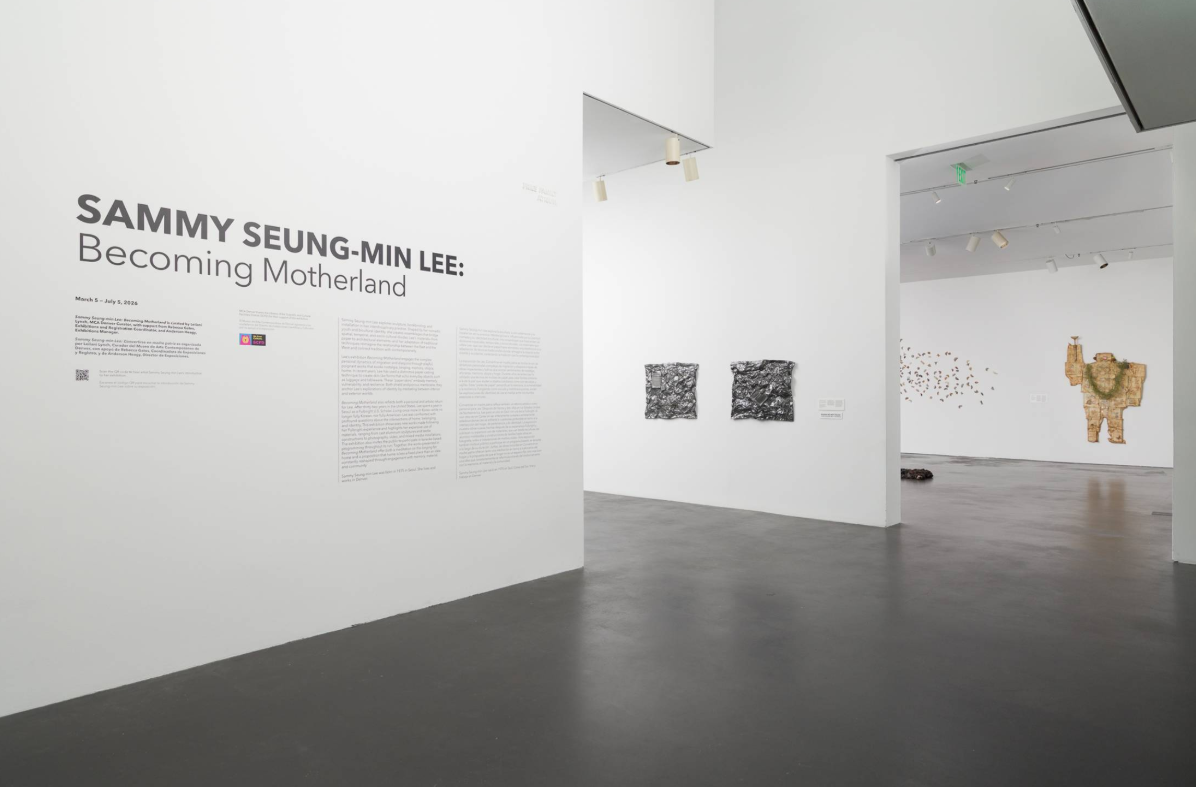
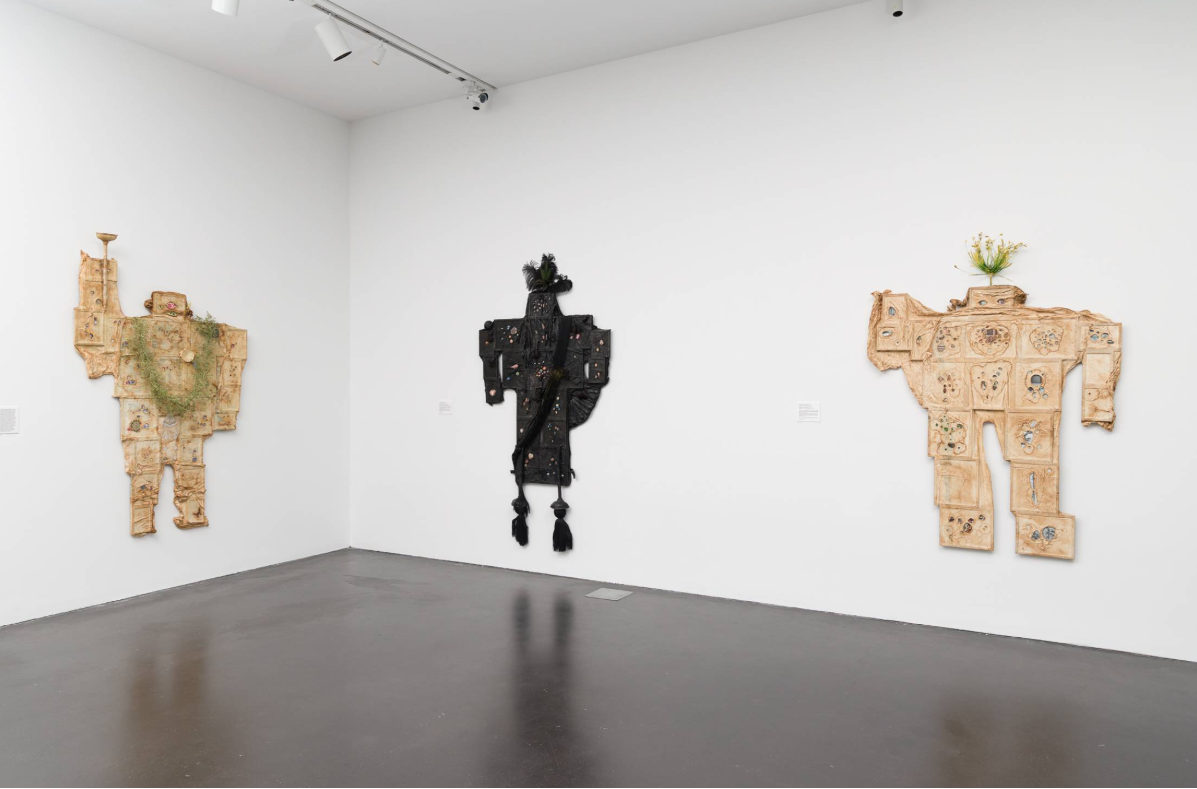
The physical anchor of Lee’s artistic narrative lies in her mastery of a highly rigorous, "hard craft" process using hanji, a traditional Korean paper made from the inner bark of mulberry trees. This preservation of ancestral techniques emphasizes the safeguarding of intangible cultural heritage within contemporary urban settings. Unlike traditional Western papermaking, the harvesting of mulberry bark involves a non-invasive pruning process that requires over one hundred steps of manual labor.
Lee adapts this tradition through a grueling felting process—soaking, agitating, and layering the sheets—to transform the paper into a thick, tactile substrate she calls "paper-skin." Possessing a dry, animal-hide texture, this medium embodies a profound material paradox: it appears delicate and paper-thin, yet is incredibly resilient and tough. As detailed by the Joan Mitchell Foundation, Lee casts this skin over everyday, intimate objects like suitcases, tableware and family photographs, permanently freezing the contours and shapes of memories within a resilient armor that can actively withstand, yet elegantly chronicle, the passage of time.
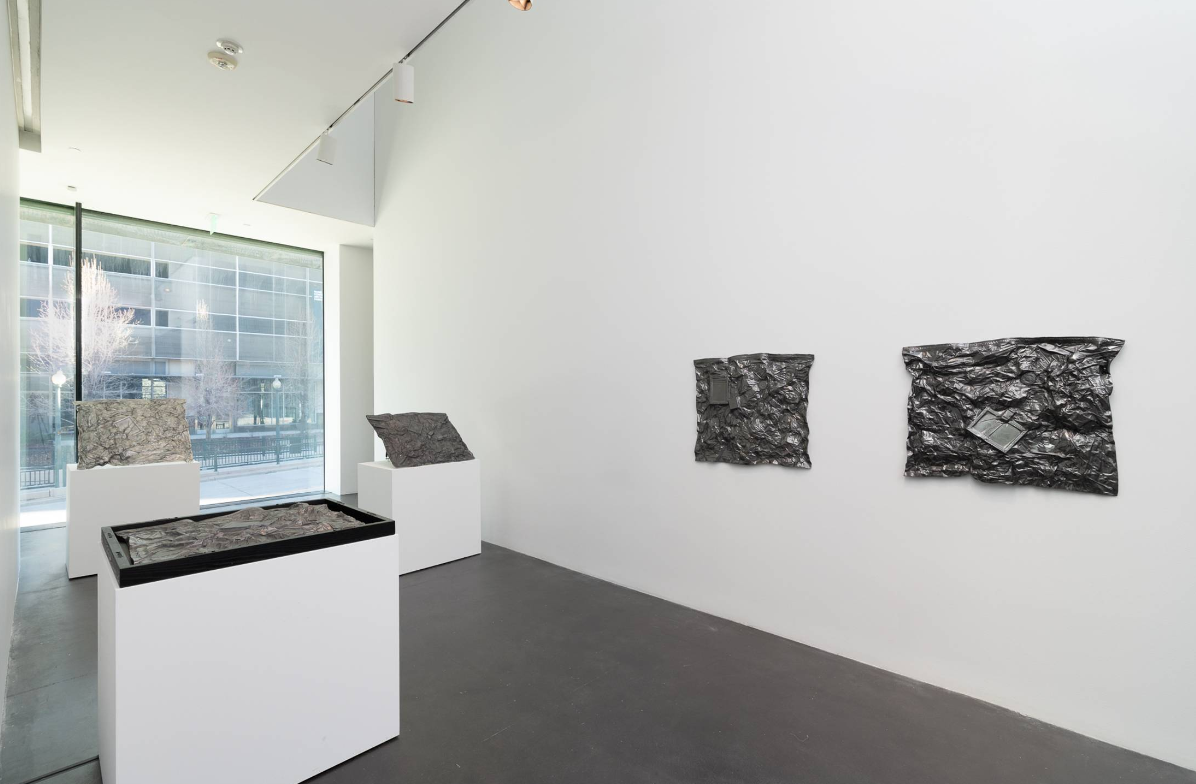
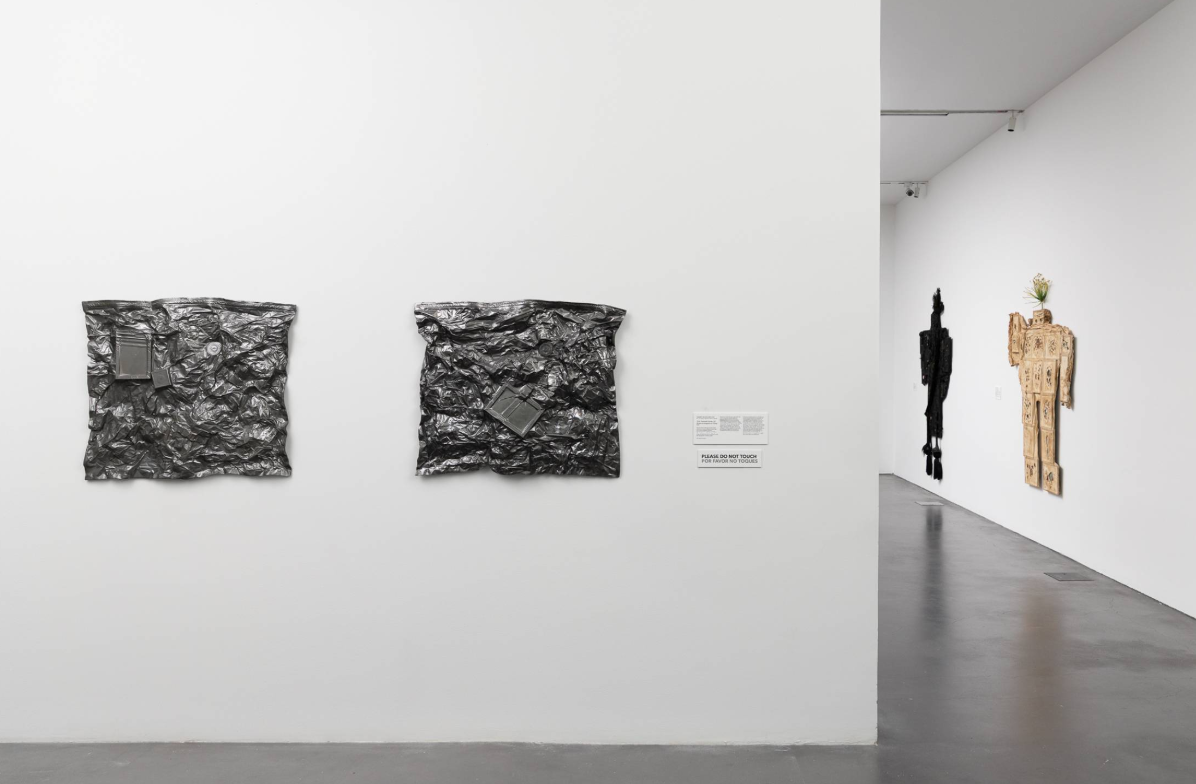
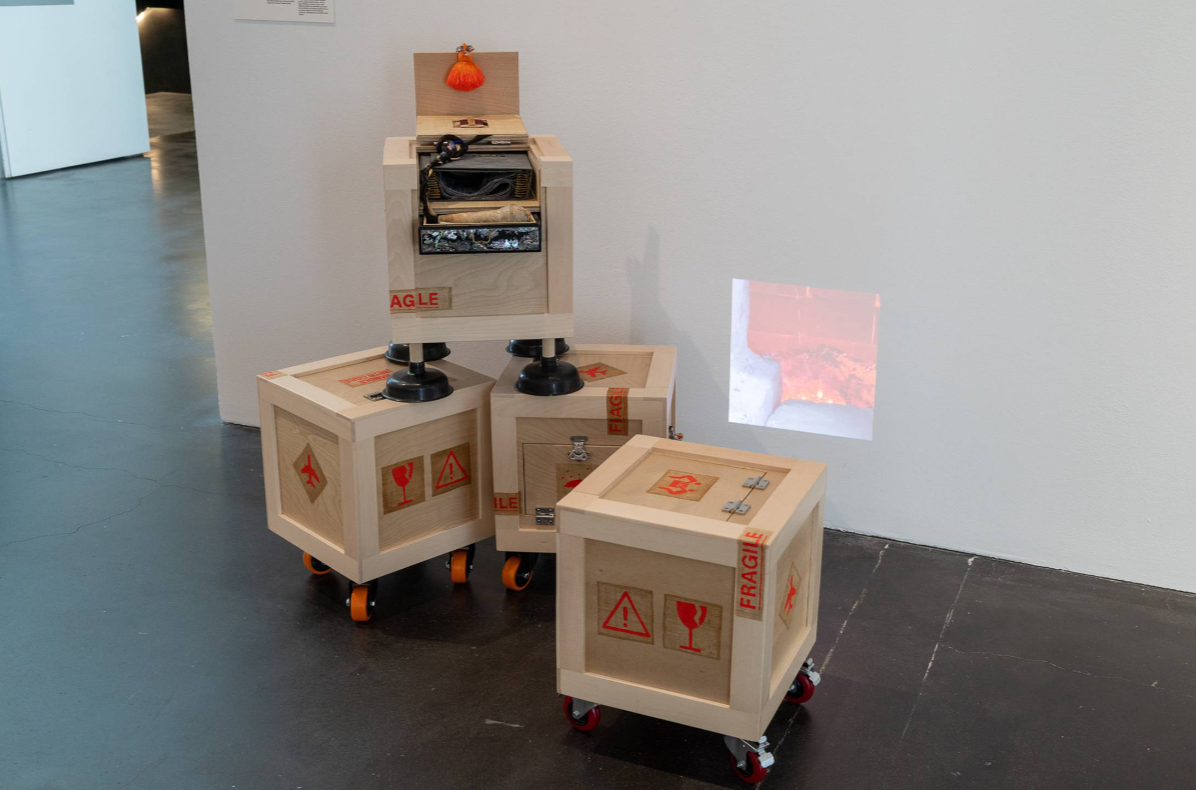
The conceptual depth of Becoming Motherland was shaped by Lee’s recent year spent back in Seoul as a Fulbright U.S. Scholar. Returning to her birthplace after over three decades in America confronted her with a unique alienation—she found herself no longer fully Korean, yet never entirely American. This complicated spatial and temporal drift inspired some of her most striking new works, including her 70lbs Topography Models (2025). To create these pieces, Lee vacuum-sealed the precise contents of her international luggage—including clothes, shoes, and personal ephemera—and cast the resulting compressed shapes into heavy aluminum sculptures. According to MCA Denver, as the air was sucked out of the bags, the tightly packed garments flattened into rigid ridges that mirror geological landmasses. These metallic models effectively transform the literal baggage of transit into permanent geographic terrains, perfectly capturing the heavy, structural weight of structural displacement.
Beyond personal reflections, Lee’s work fearlessly employs humor and playful cultural critique to dissect the complexities of minority integration. A centerpiece of her exhibition is an immersive, satirical "karaoke-room" installation centered around her video Moonlight in Colorado (2024). The installation features an airline seat functioning as a karaoke booth playing a 1930s American folk song that had become an idealized anthem for postwar generations in Korea. By pairing dual screens of drives through Colorado and Seoul with intentionally mismatched, mistranslated subtitles, Lee leaves viewers feeling disoriented and lost—an experience she identifies as the ultimate metaphor for the immigrant condition.
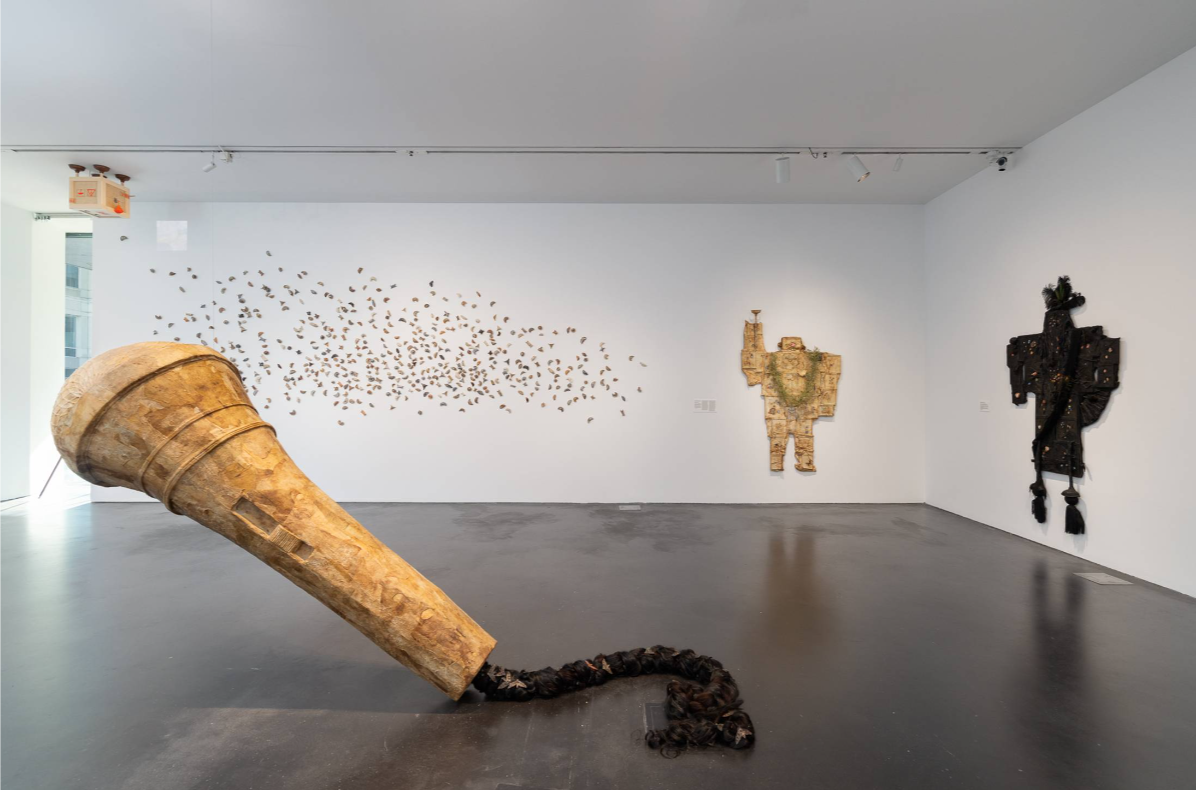
In tandem with these conceptual installations, Lee also fosters community equity and institutional representation, through her self-founded contemporary art space, Collective SML | k, she actively hosts residencies, curatorial projects, and informal dumpling parties designed to elevate other Asian American voices. As noted by Southwest Contemporary, Lee’s dual devotion to hard labor and community organizing ensures her art functions as both a mirror and a whisper, offering crucial visibility to narratives historically excluded from the mainstream Western canon.
If you're interested in learning more about the exhibit or Sammy Seung-min Lee, you can find information at the Museum of Contemporary Art Denver's website.