
When we talk about sustainability in the fashion industry, slow fashion is presented as a trendy exception. The Bindi Project, however, treats it as the norm.
Based out of Bangalore, India, The Bindi Project is part of a new wave of South Asian brands that understand the devastating impact of fast fashion and overconsumption. They’re committed to countering these effects by delivering creative, high-quality products that operate on the bedrock of sustainability and social responsibility. With that in mind, the Bindi Project’s practices successfully incorporate the United Nations Sustainable Development Goals of Responsible Consumption and Production and Industry, Innovation, and Infrastructure.
The bindi, a colourful (and sometimes bejewelled) dot worn between the eyebrows, is an accessory that has been sported by South Asian women for centuries. It serves a myriad of symbolic functions: some believe it represents the third eye, and others wear it as a marker of marriage and fidelity. Today, it’s treated as an accessory that represents celebration and feminine beauty and adds an elegant flourish to festive and ritualistic dressing.
Traditional iterations of the bindi were marks made of water and pigment and were essentially zero-waste. Modern bindis, however, are products of fast fashion. They’re bought as sticker sheets made of synthetic, non-biodegradable materials. Each bindi falters after a handful of uses and is thrown away once it loses its adhesive quality. These discarded bindis break down into microplastics that take centuries to decompose.
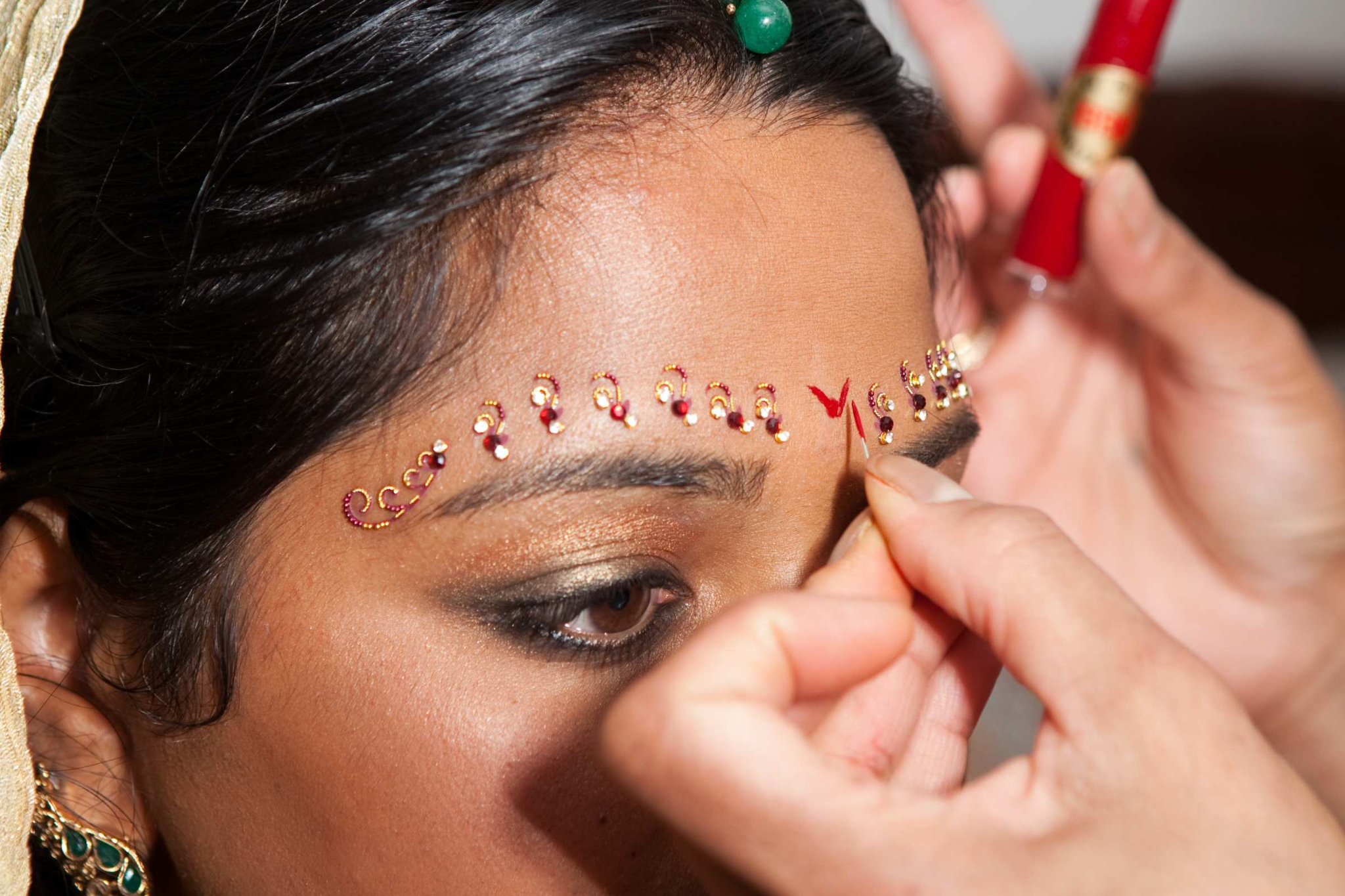
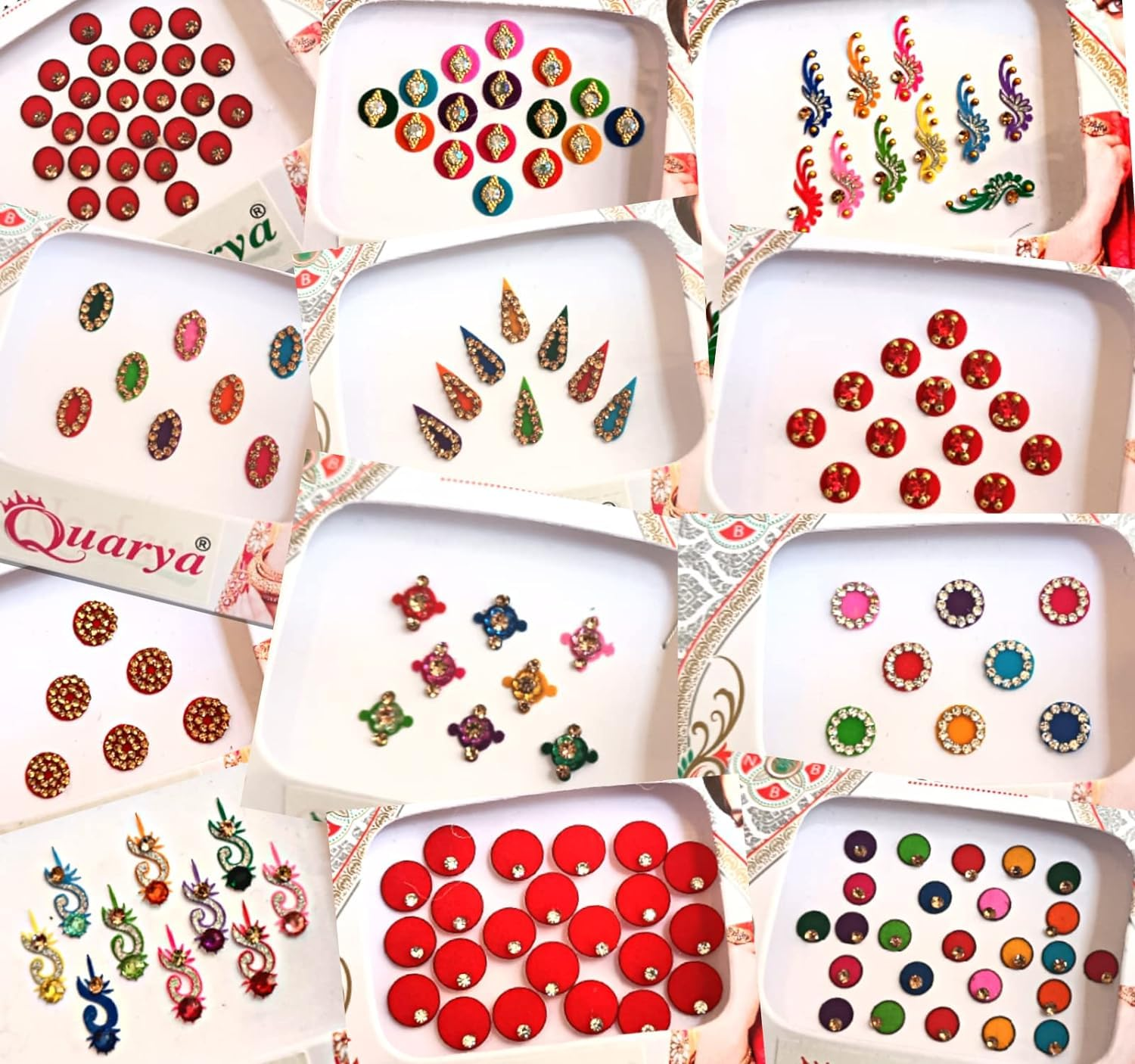
Left: Understanding Asia: Bindis. Traditionally hand-painted pigment bindi. Image courtesy of secret-retreats.com. Right: Mass-produced bindi packets. Image courtesy of Amazon.
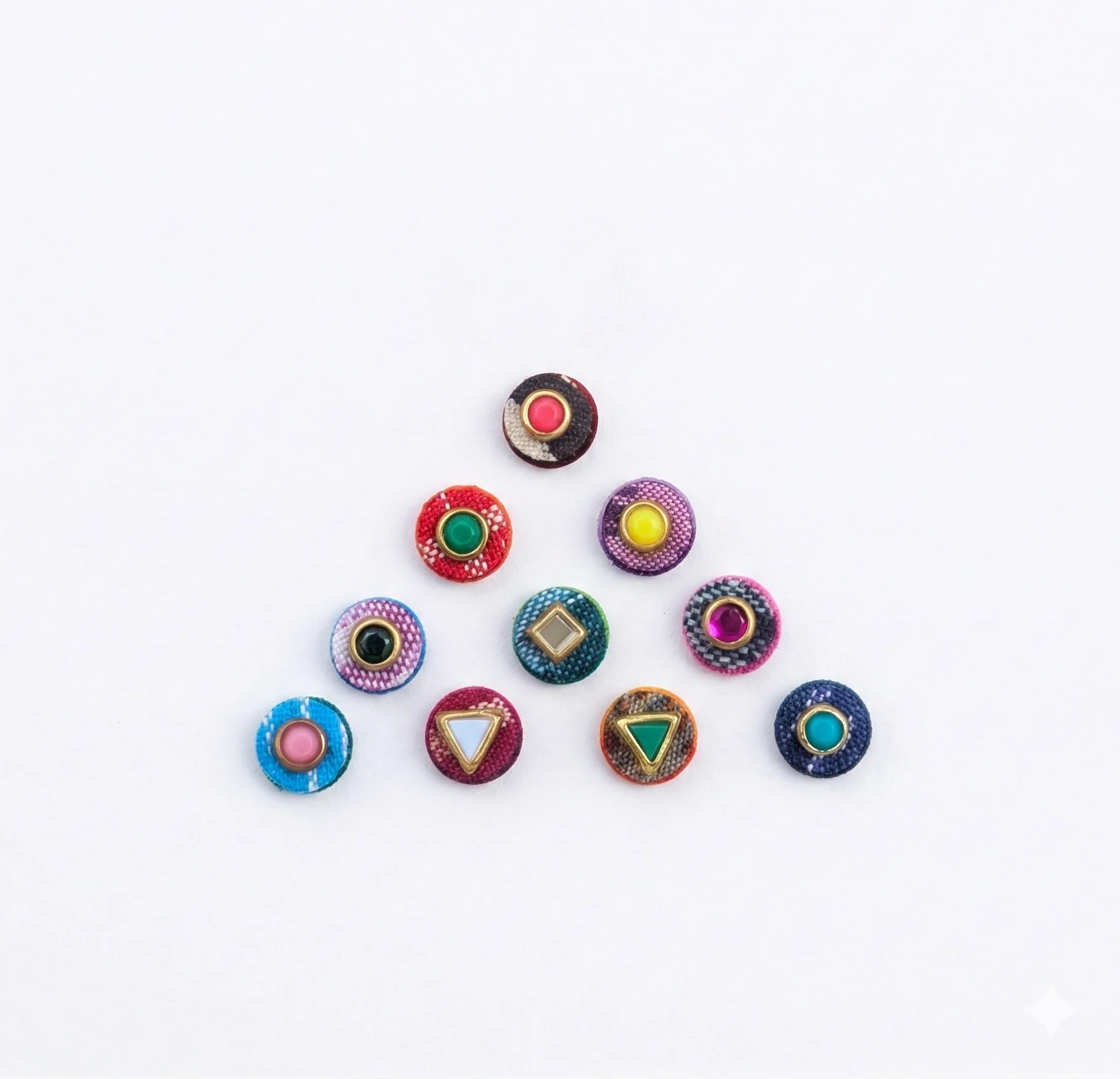
The Bindi Project challenges popular practices by using leftover material from luxury leather and textile operations to create small-batch products. Bindis are small in size, so creating designs that are built-to-last using high-quality scrap as raw material is an inventive solution. This process incorporates active upcycling to replace the more flimsy mass-produced versions of the product that are frequently discarded after a few uses.
These bindis also use brass elements that make each piece more structurally sound, water-resistant, and last up to years. Bindis and wearable sticker-jewellery of any kind usually require petroleum-based glue to retain their stickiness. These glues are derived from non-renewable petrochemicals. The brand adopts a do-no-harm approach by using non-toxic, skin-safe glue for its products. They also package this glue as a bonus item with every order.
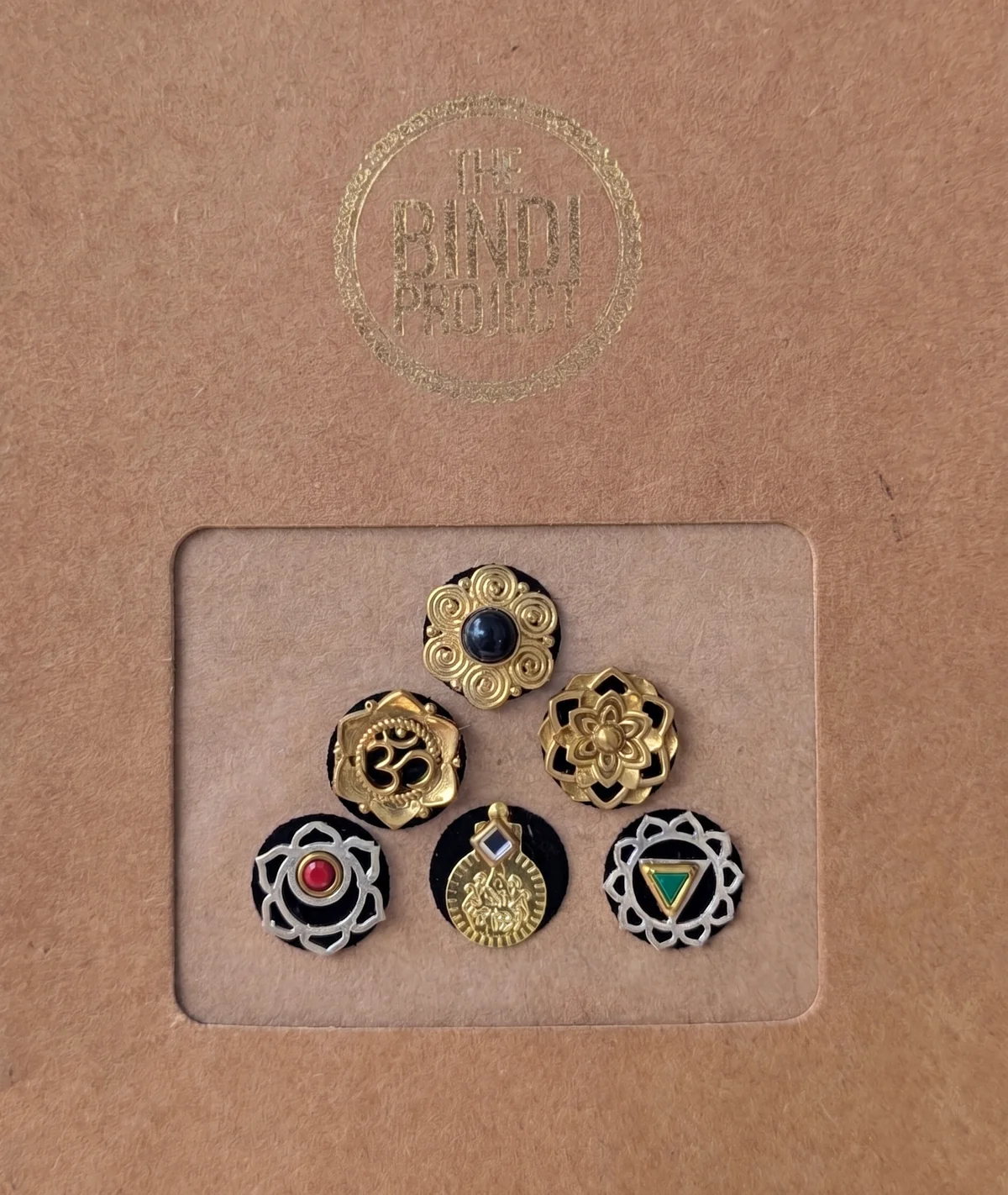
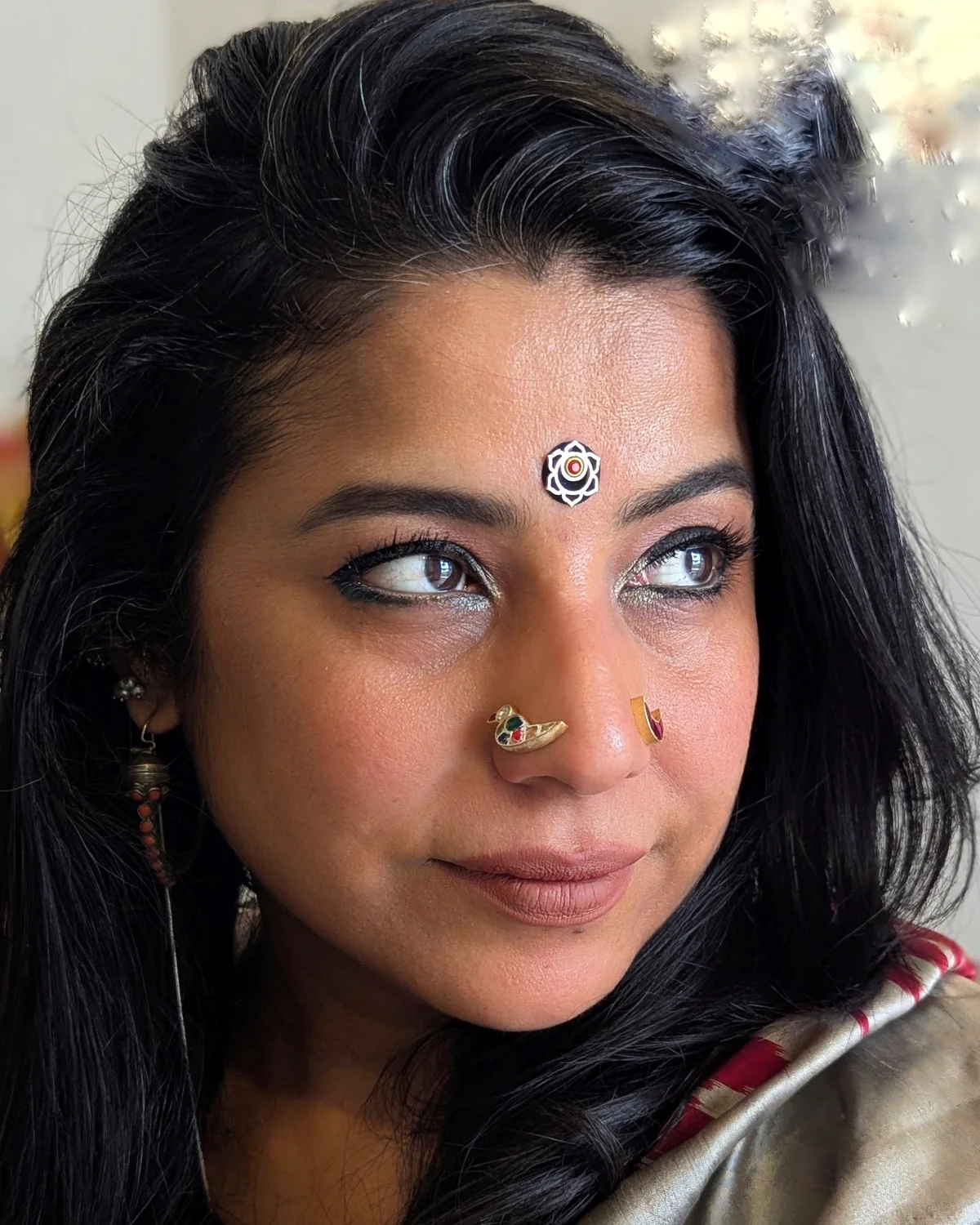
Parvati - The Sacred Geometry Series. Image courtesy of thebindiproject.in.
For a brand to truly be sustainable, conscious consideration must be baked into every sphere. The Bindi Project achieves this by employing female artisans, some of whom are single mothers from low-income backgrounds. Their hand-cut brass designs keep handmade skills and traditions alive and put human craftsmanship front and centre. They also use recyclable packaging, maintaining a thoughtful approach at every stage of the process.
Moreover, their designs are a timeless blend of tradition, play, and fusion, keeping them relevant for occasions like weddings and Diwali but also formal office wear. Inclusive designs that can be worn even with non-traditional clothing mean their bindis are more likely to stay in the wardrobe rotation for longer and reduce consumption.
Despite sustainability being a dire necessity in the wake of global ecological collapse, it is significantly more difficult to create, operate, and maintain brands that cause less harm. Producing more at scale allows for lower costs and higher profit margins, even if it is at the expense of quality and the creation of waste. With time and consumption demands, this impact is only getting worse. According to researchers at Earth.org, as of 2023, the fast-fashion industry is producing twice the amount of clothes as it did in 2000.
Slow fashion promises quality, sustainability, and fair practices. It makes the news, but not many business operating procedures. Whether it’s employing local craftsmanship, organic materials, or human-centred labour in industries like looming and weaving, South Asian fashion, by default, has traditionally operated on tenets of sustainability. In times like these, it's necessary to look at pre-industrialization fashion trends so we can borrow from those practices to reduce our impact.
“The goal [for the brand],” founder Meghna Khanna said during her appearance on Shark Tank India, "is to bring the bindi to the world.” With it, she’s also bringing back attention to the culture of sustainable fashion, marrying innovation and creativity, and emphasizing environmental consciousness in our aesthetic consumption.