
Yared Nigussu’s gallery, located in the middle of Vancouver, British Columbia’s Chinatown, bursts with colour, constructing subjects in a collage-like painting style, not just in the textures and colours he utilizes in his backgrounds, but in the Black people expressed in his brushstrokes. In each piece, as he explains to Arts Help in conversation, they aren’t meant to be one person, but a combination. Their bodies and faces look as though they are collisions of different angles and facial features, as if they are pasted together. His work’s focus on humanism and psychological well-being evokes the United Nations Sustainable Development Goal of Good Health and Well-Being.
Nigussu’s work clearly evokes a sense of humanism, a term he claims for himself. Throughout his most prominent works on display in his gallery, we see faces staring through and across their respective pieces. We see the presence of Black women lounging, looking, and posing.
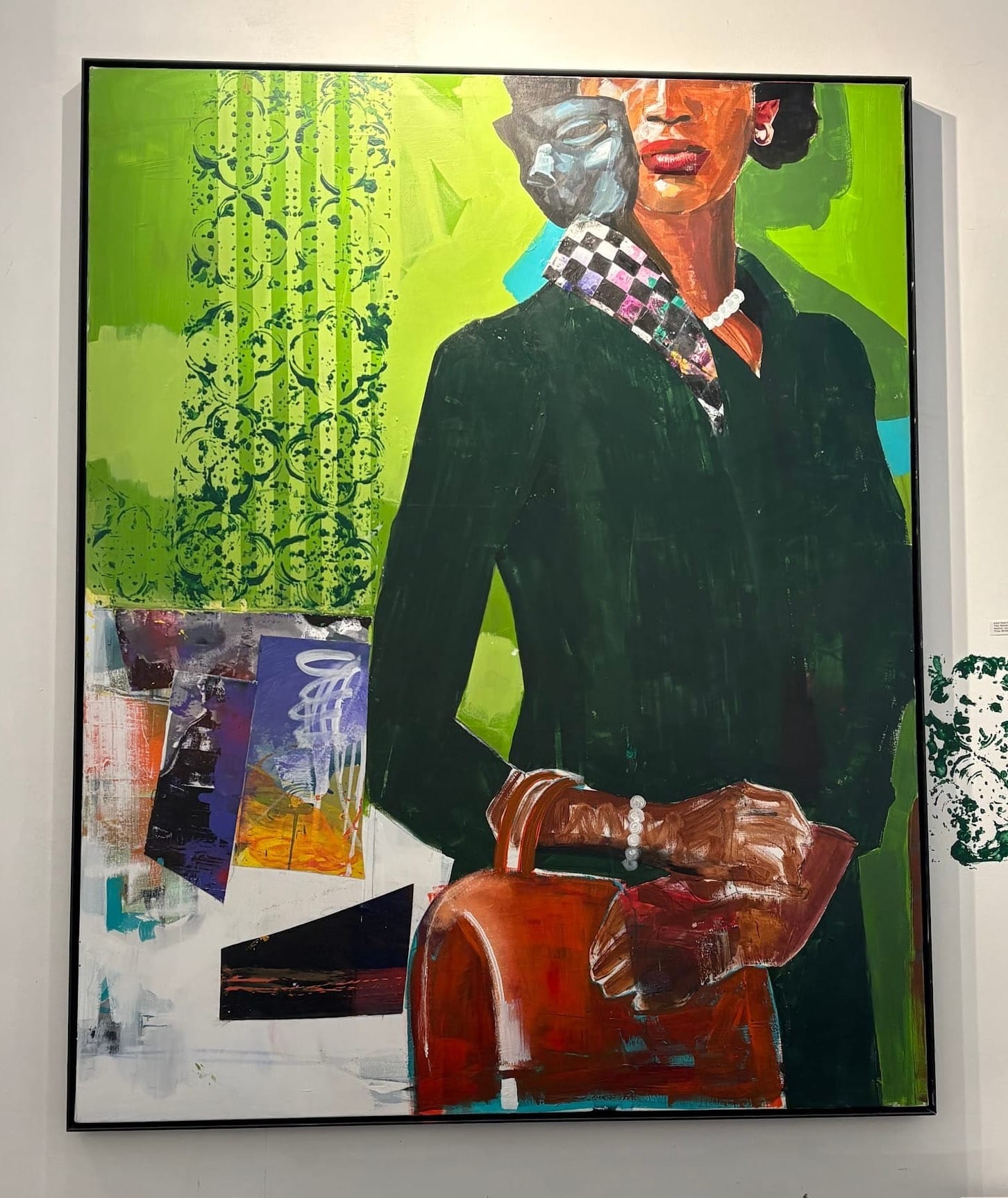
While concrete and complete bodies are not certainties across his paintings, fully formed Black faces are. Works like woman in green as well as other untitled works in his collection, make background and body surrounding noise, drawing viewers' eyes largely to the faces.
One of his first inspirations was Picasso. Not the Spanish painter, but a childhood neighbour who earned this as a nickname, though the interaction led him to discover Picasso's art. Nigussu found his neighbour's artistry and unconventional "artistic lifestyle" compelling, and, at age eight, felt an unmistakable calling. “He was a bit different from other people, in the way he carried himself, in the way he lived his life. The way he thinks is not like others. In a way, that gives me a window to discover artists and artwork.”
It was both this early exposure to an artist and the lifestyle that he inhabited, as well as his upbringing in the church in Ethiopia had a major influence on his artistic and personal life. The Ethiopian Orthodox Tewahedo Church is a part of the Oriental Orthodox family of churches and is a prominent Christian denomination based in Ethiopia; in fact, forty-three per cent of Ethiopians are Orthodox. Nigussu notes that it was the first place he saw art, and still a major part of his life.
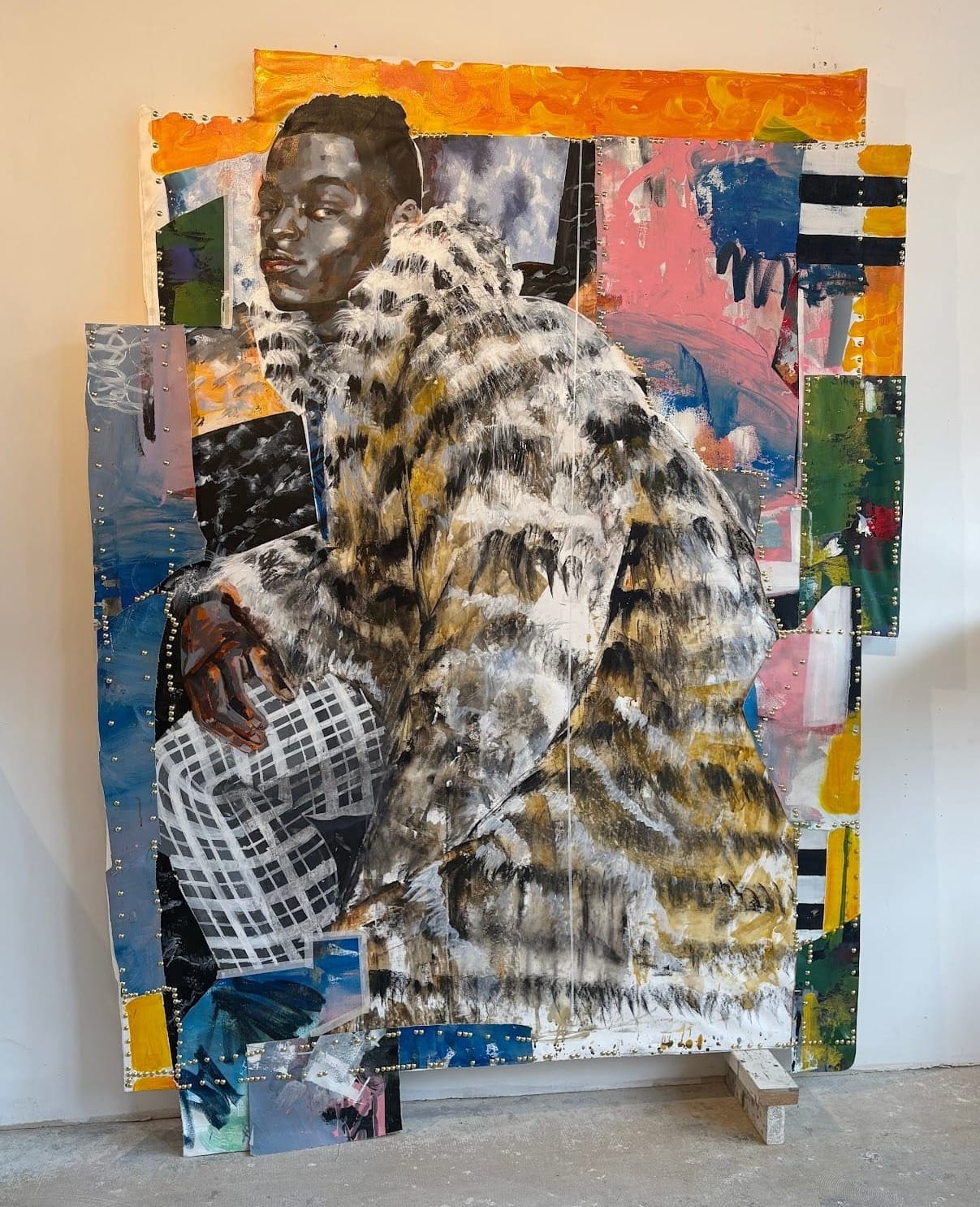
His paintings play with depth and form, appearing to borrow from cubism and neo-expressionism, though his style, as he would admit, is evolving constantly. The pieces that hold the most visual weight in his gallery are full-body portraits, like acrylic Standing tall, a painting that does just that, at over seven feet tall. The painting depicts a Black man crouched on a kneeling knee, clad in a striped fur coat and patterned pants. While his clothes and skin are subdued in colour, the rest of the work pieces together swishes and blocks of colour, adding a new meaning to the layering process of painting. The painting extends beyond the boundaries of even a conventional large frame, darting out in several spots that appear to be additions to the canvas. It leaves the viewer with the impression that his subject is larger than life.
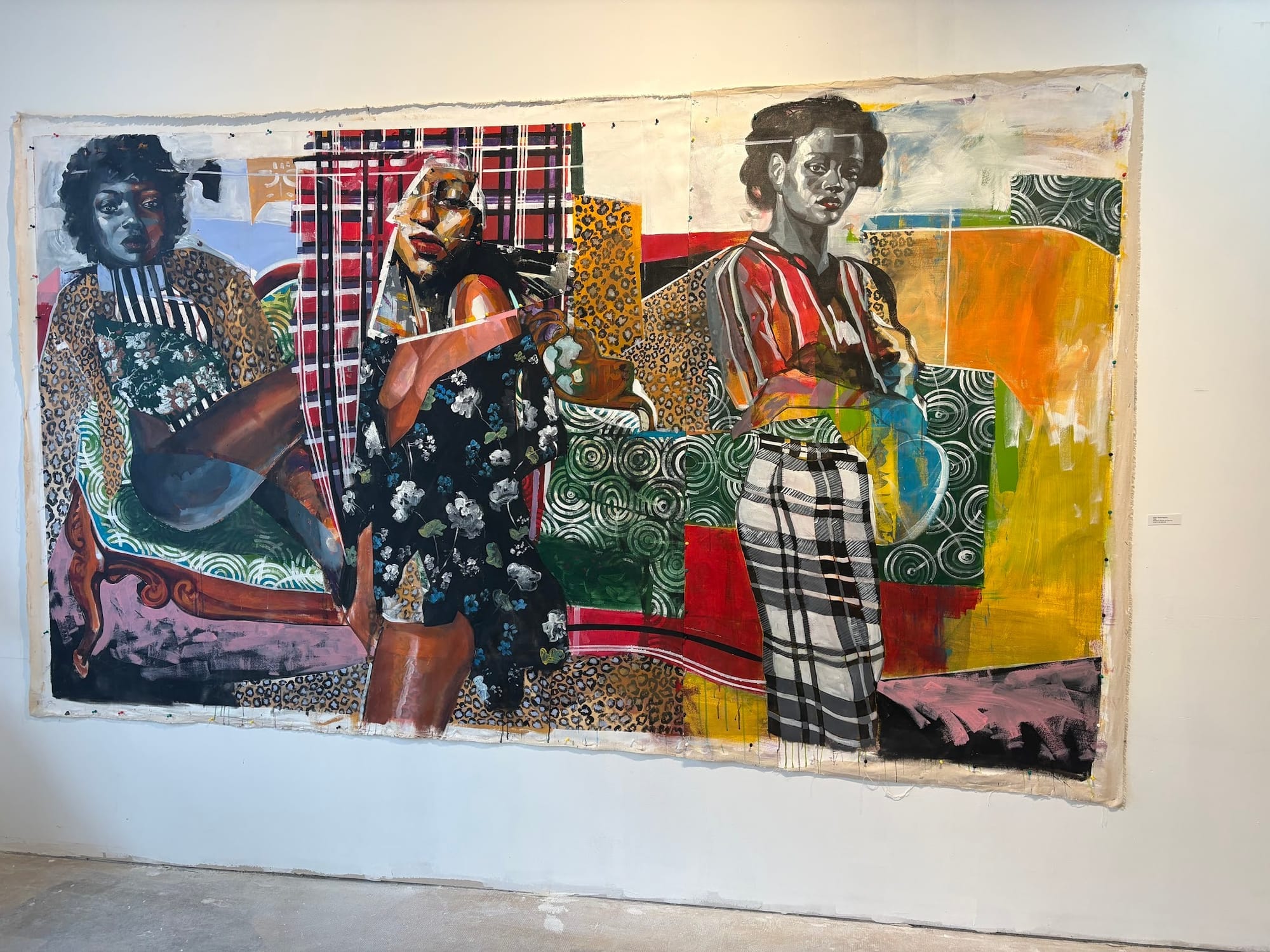
Nagussu’s work is uncompromising in its portrayal of its Black subjects as beautiful and worthy of being front and centre. Towards the end of Arts Help’s conversation with Yared, he opens up about the subjects he constructs,
“With these black faces, you know, there is gentleness. Every time when I'm just painting them, I think I just put a lot of care and love on it.”
He continues with the fact that he leans away from a physical replication and towards a psychological interpretation of people, in describing a more abstract piece that incorporates flowers, “I just wanted to do the sophistication of the human. This is for me, it's a portrait of a person.” Each one of Yared’s paintings is tied up in his love of people, a love that will surely continue to take him across and beyond the canvas.
You can find more of Yared Nigussu’s work on his Instagram @yarednigussu