
Disclaimer: The following article contains spoilers for the film 'Evil Dead Burn.'
In Evil Dead Burn, the latest installment in the iconic horror franchise, French director and co-writer Sébastien Vaniček pivots away from the slapstick humor of earlier entries to deliver a relentless assault of bodily horror. Co-written with Florent Bernard, the film centres around protagonist Alice, played by Souheila Yacoub, who is mourning the sudden loss of her husband, William, after a gruesome car crash. During a tense post-funeral gathering at a dilapidated home passed down to William's brother, Joseph, Alice must navigate the hostility of her abusive in-laws. The narrative utilizes this suffocating domestic backdrop to transform demonic possession into a literal manifestation of psychological abuse, domestic violence, and patriarchal coercion. This aligns with the United Nations Sustainable Development Goals of Gender Equality and Good Health and Well-Being.
The film's tone marks a stark departure from the "splat-stick" comedy popularized by series creator Sam Raimi. As noted by Hollywood in Toto, Vaniček draws heavy inspiration from the New French Extremity movement of the early 2000s, submitting characters to brutal, relentless flinch tests that recall films like High Tension and Irreversible. Unlike the cartoonish abstraction of past Evil Dead films, where victims were often reduced to laughing, pain-inflicting gremlins, the Deadites in Evil Dead Burn are distinctively mission-focused and strategic. This shift imbues the monsters with differently malevolent personalities, making them feel less chaotic and much more calculated in their cruelty. The visceral horror often provides the only pop of colour against a sea of mud-puddle greyness, though We Live Entertainment notes that the visual aesthetic eventually shifts to a fiery, painterly palette in the grand finale.
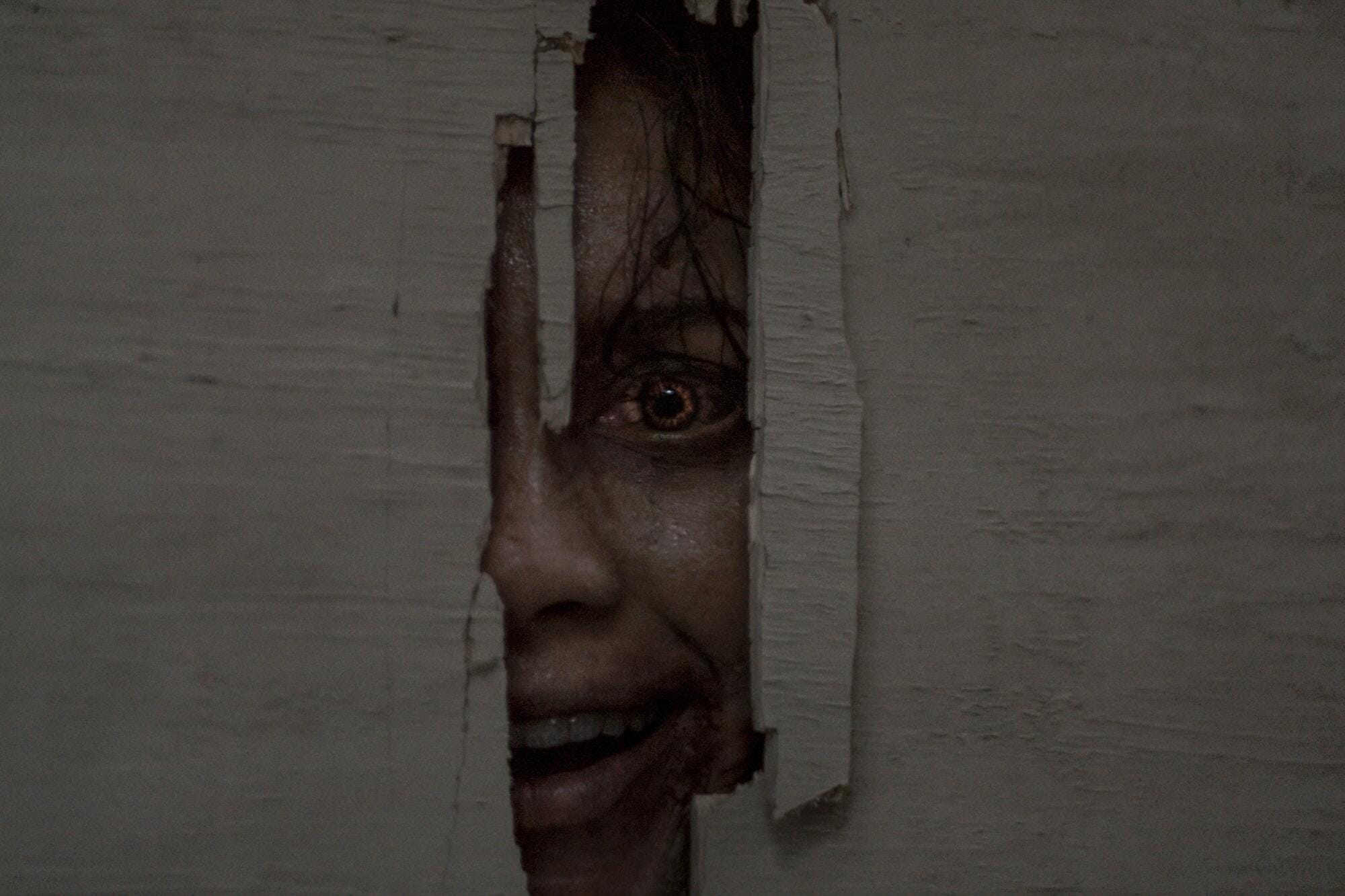
This tactical deadliness serves a deeper thematic purpose, turning the film's extreme violence into a metaphor for deep-seated familial codependency and generational abuse. Before the supernatural elements even fully activate, the Price family's toxic dynamics are laid bare. JustWatch highlights that William's controlling behaviour toward Alice is revealed to be a learned trait inherited from his father, Edgar, who exhibits severe physical and mental abuse. Alice’s brother-in-law, Joseph, and his girlfriend, Thya, are somewhat sympathetic to her plight, standing in stark contrast to the forbidding nature of parents-in-law Susan and Edgar. The household is further poisoned by a grandmother whose racist behaviour toward Thya is exacerbated by dementia, adding another layer of hostility to the environment. When the Deadite infection spreads, passing from William's corpse into Edgar, the ensuing bloodshed acts as a physical manifestation of this underlying domestic terror rather than purely entertaining gore.
By framing its horror around such heavy subject matter, Evil Dead Burn operates as a remarkably effective family drama. The seething tension of the unwanted family reunion has drawn comparisons to the awkward, suffocating atmosphere of Trey Edward Shults’ Krisha, while its bleak portrayal of marital and familial despair echoes the intimate dramas of Ingmar Bergman. For audiences who have struggled with toxic family structures or unhappy marriages, the film provides a dark sense of catharsis, utilizing the horror genre as an outlet for processing genuine relationship distress and mental health trauma. Despite its bleakness, the film retains a sicko humour, drawing laughs from a mortuary worker who enjoys his job slightly too much or the guttural construction noises that interrupt a eulogy.
Ultimately, Evil Dead Burn pushes the franchise's boundaries by daring to be mechanically cruel rather than gleefully chaotic. While some critics have noted that the characters are largely unlikable, the narrative insists that breaking free from these abusive cycles often requires burning everything down to escape. Vaniček's clever camerawork, which utilizes unbroken shots to observe knock-down, drag-out fights from a limited location, emphasizes the inescapable scope of the mayhem. By contrasting its gruelling psychological themes with hyper-violent practical effects, the film guarantees that its message about surviving abuse is as memorable and visceral as the gore itself.