
Judith Butler writes, "If gender is instituted through acts which are internally discontinuous, then the appearance of substance is precisely that, a constructed identity, a performative accomplishment which the mundane social audience, including the actors themselves, come to believe and to perform in the mode of belief.” According to Butler’s theory, gender is a performative enactment of social constructs. Humans serve as ‘method actors’ in the theatrical stage of ‘society’, where our ‘performance’ is measured through the lens of social ideology. We are rewarded for conformity and ostracized for divergence. Many works of art address gender performance in their criticism of patriarchal systems as a whole. Korean Artist Lee Jiyoung subverts traditional explorations of human performance through their body of work, creating portraits that showcase people engaged in seemingly mundane activities. Lee’s caricatures showcase the intersection of individualist desires and the loss of identity in lives conditioned by social norms, prompting a quiet commentary in her observations. At the same time, Lee’s caricatures celebrate the theatrics of the mundane, reflecting on specific roles and spaces that humans inhabit. Lee Jiyong’s exploration of humanity and the performative aspects of society aligns with the United Nations Sustainable Development Goal on Gender Equality.
We define performativity as the state of being often done for show to make a positive impression on others. When studied through the lens of gender, the performance itself often reinforces conventional societal understandings of gender. Butler writes that “although theatrical performances can meet with political censorship and scathing criticism, gender performances in non-theatrical contexts are governed by more clearly punitive and regulatory social conventions.” In most people’s performance of gender, they are unconscious of their participation in regulatory social conventions. Performance is also a communicative act, strengthened by ritual, which in turn draws legitimacy from orderly notions of society at large and its cultural symbolism. Acts are often divided into traditionally feminine or masculine, with little conventions being inherently gender-neutral. When viewed through the lens of cultural performance, Lee Jiyoung's portraits scrutinize humanity’s chosen acceptance of gender performance and its broader impact on individualism.
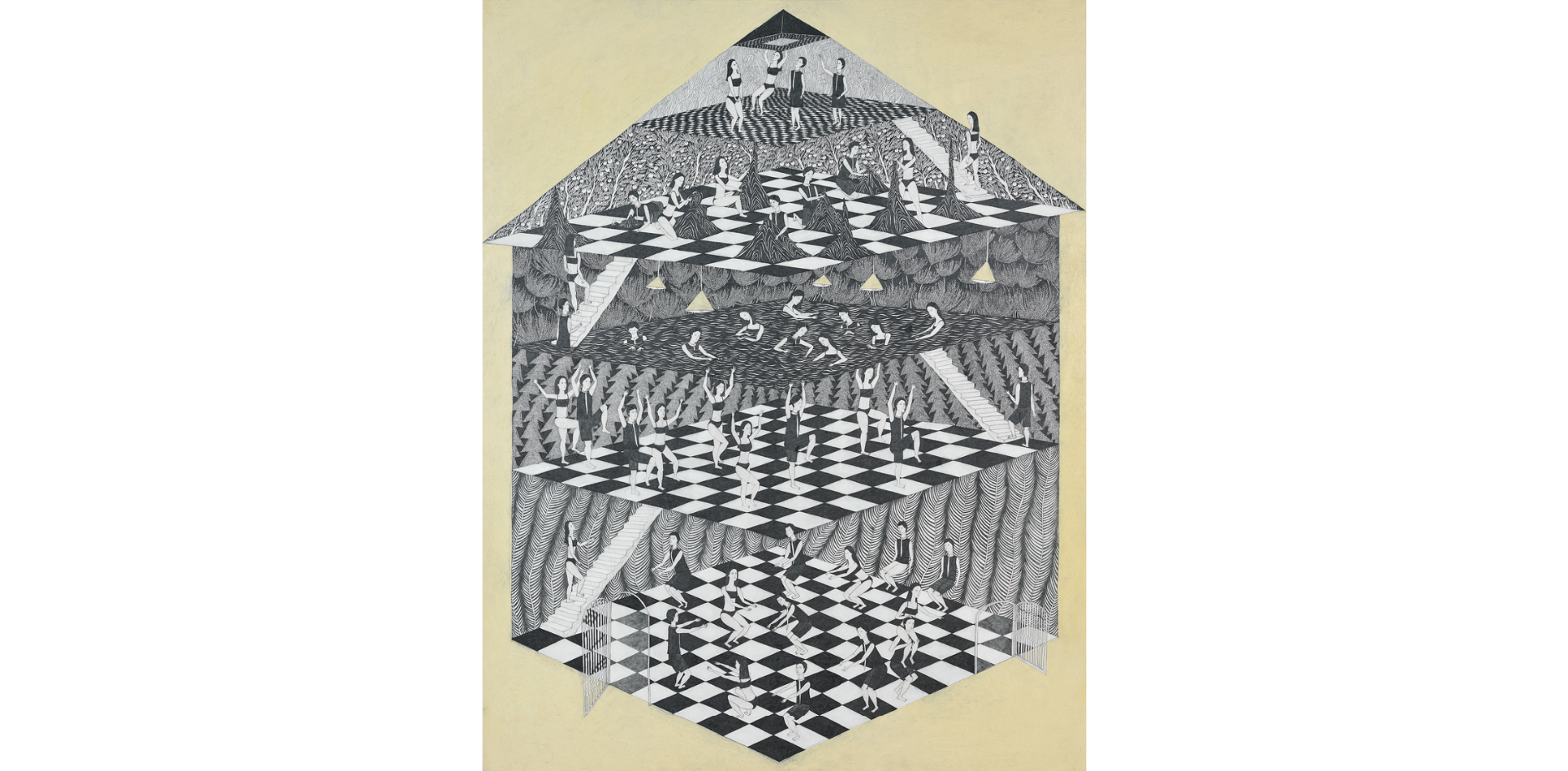
In 5 Story House (2020), Lee explores the layers of femininity as a performative stage. The feminine performance is enacted in hierarchical layers, where the participating actors shed their previous roles to assimilate to a higher level. Within Lee’s exploration of the feminine role, audiences can see how the different characters interact with themselves, their ‘stage’ and their peers. The audience may notice that the piece critiques societal structures and their tendency to produce homogenized group identities, in which individuals are confined by shared norms that exclude differences, ultimately morphing them into uniformity. Lee showcases layers of homogeneity within culture, where society expects one to perform accordingly and to assimilate into hierarchical stages. Lee limits the exploration of self-actualization in this piece, focusing on the idea of homogeneity in the expected performance of femininity.
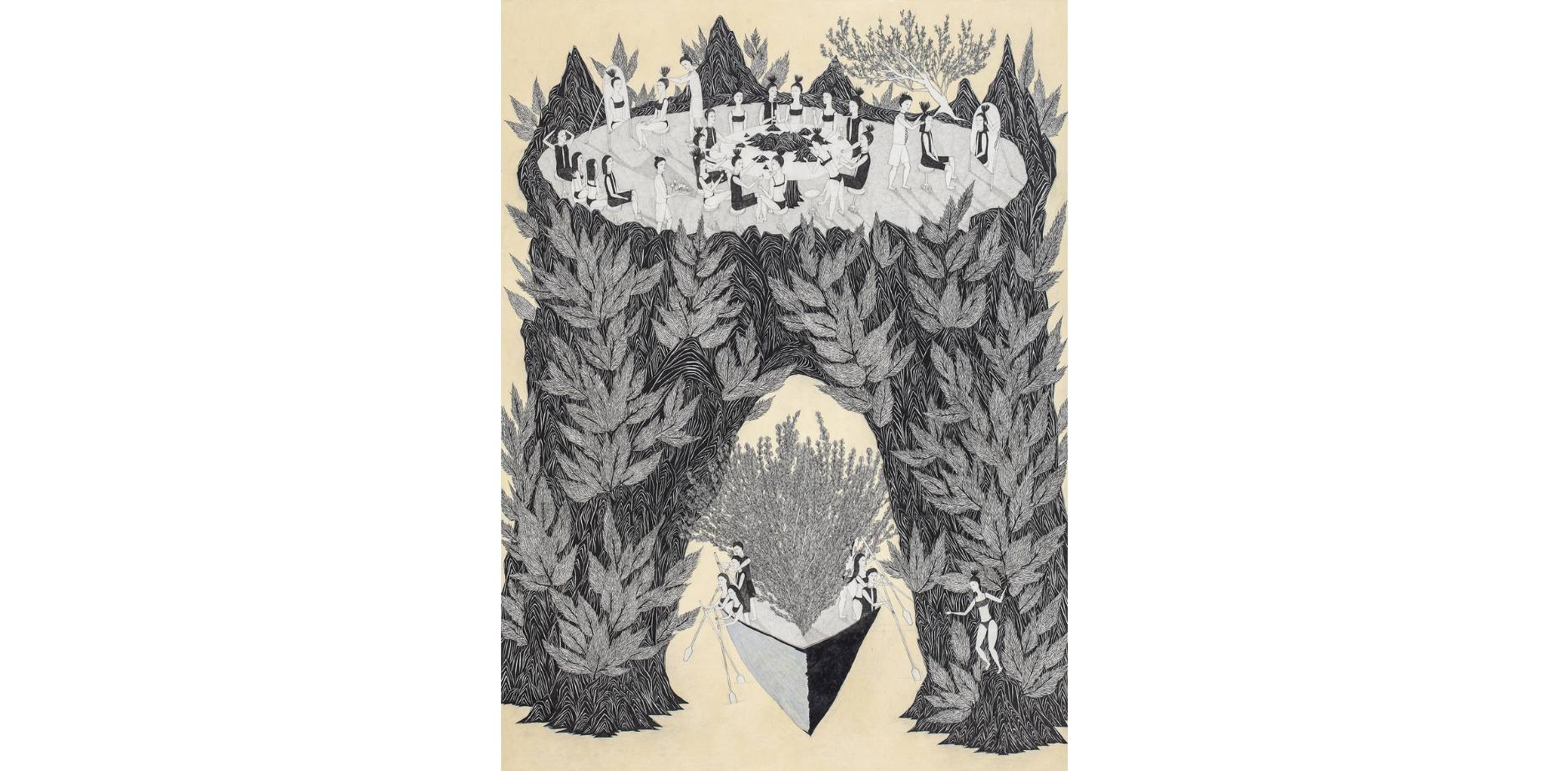
Furthermore, her explorations of performance, societal homogeneity, and grouped identity are present in her earlier 2016 Human Zoo series. Lee particularly explores the duality of performing an identity while reflecting on the impact of said identity performance as a whole. In Human Zoo-Two Groups (2016), Lee explores feminine performance through the iconography of feminine communal practice. One group is seen tending to each other’s hair while the other sails underneath the arch, carrying crops. Both groups are connected in how they perform acts of nurturing, despite their obvious visual separation in composition. Their shared performance showcases the transversal nature of feminine practice, regardless of its environment. When viewed through a Korean cultural context, the iconographic setting of a cut tree deeply rooted in the ground in the piece evokes the enduring cultural potency of ancestral rootedness in post-colonial South Korea, exploring the idea that lineage persists as sites of meaning even when its structures are severed.
Conversely, in Human Zoo-Realization (2016), Lee explores the concept of self-identity, reflecting on the performance of identity in the absence of an audience. One’s identity is often related to one's position within the social structure. McCall and Simmons defined individual identity as self-ideas abstracted from one’s biographical details and framed within broader social categories. Because identity is self-descriptive and internalized, it becomes part of one’s self-concept, predicated on recurrent interactions with others, and provides the self with meaning, carried by how one's identity is recognized through role expectations. Our identity is often shaped by how we perform the narrative of existence. Andreea Deciu Ritivoi writes, “The narrative shape of self-identity emerges as a strategy for performing such roles and positions and is the result of an interpretive operation that selects various aspects of experience.” Thus, even when we are not performing our identity on the stage of society, aspects of our performance still linger, shaping our personhood even in the absence of an audience.
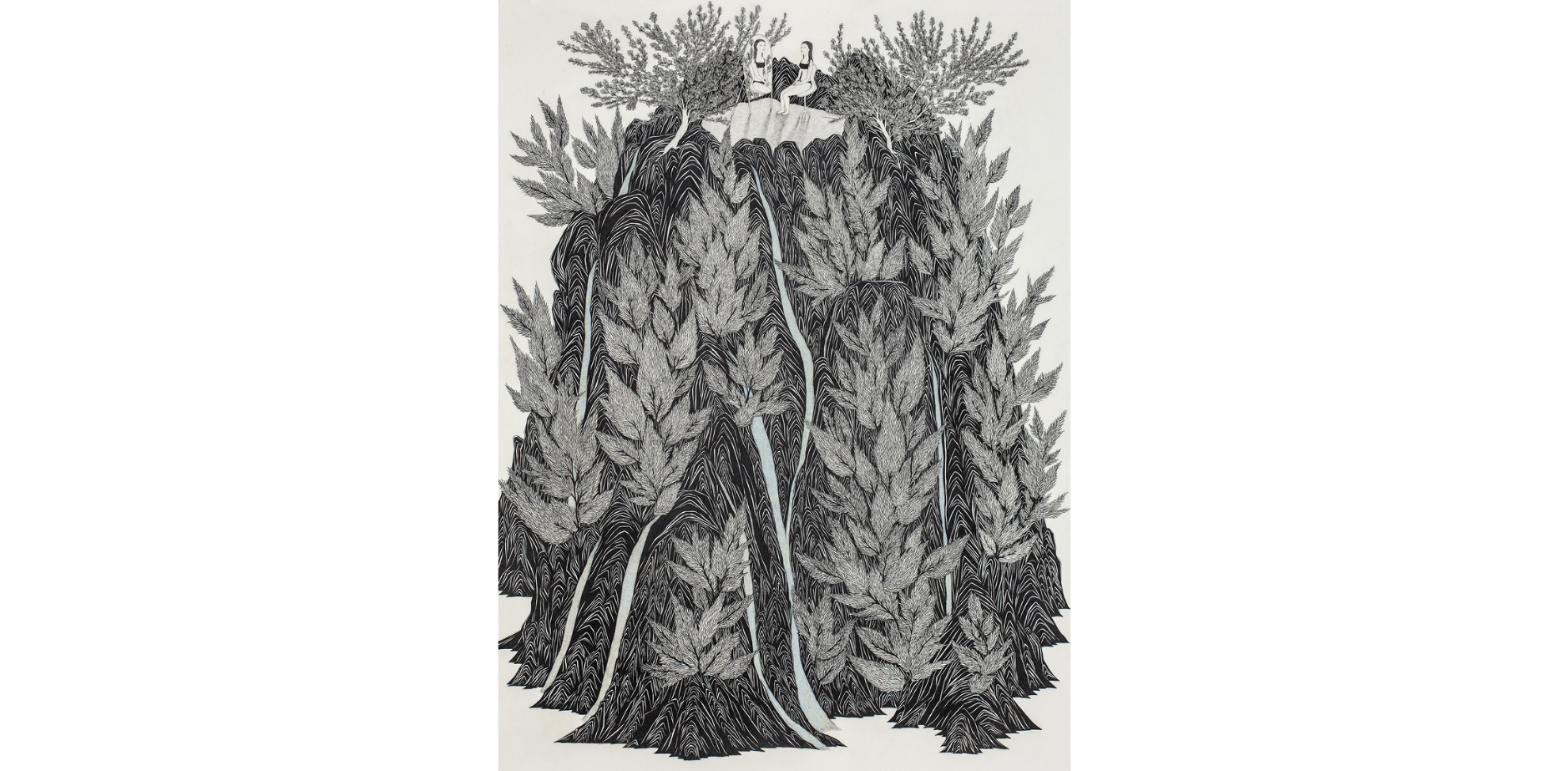
When analyzed in a cultural context, the impact of image-making in South Korean culture is evident in Lee’s idea of human performance. With the rise of Social Media, the person and the idea of personhood have become brands, with ‘personal brand’ becoming one of many methods of commercialization in modern capitalist societies. South Korea often cycles through trends in rapid succession. For example, food trends such as the Dubai Chocolate Chewy Cookie being beaten by Butter-Tteok in less than a year, backed by the historical food trend Mint-Choco Mania of 2025, giving rise to Mint Choco flavoured pasta. South Korea also has a history of image-making through its entertainment sector. From K-pop to K-dramas to K-reality shows, creating stars out of seemingly ‘normal’ people, image-making serves a high importance in South Korean societies in many ways. Lee’s exploration of the performative aspect of identity serves as a showcase of the levels of personhood within image-making culture, giving her audience a chance to look beyond the person’s
Lee’s creative exploration of human performance in her Human Zoo series showcases a balanced study of humanity and society as a whole. Through her layered, segmented exploration of identity, culture, and their impact on the individual in her caricatures, she invites her audience to look both internally and externally at how our individual human performance reflects on us and our society. Her work, albeit also critical, in a way, celebrates how culture and identity are performed in spite of how mundane it can seem, bringing philosophical light to how everything we do has an effect on us, both internally and externally.